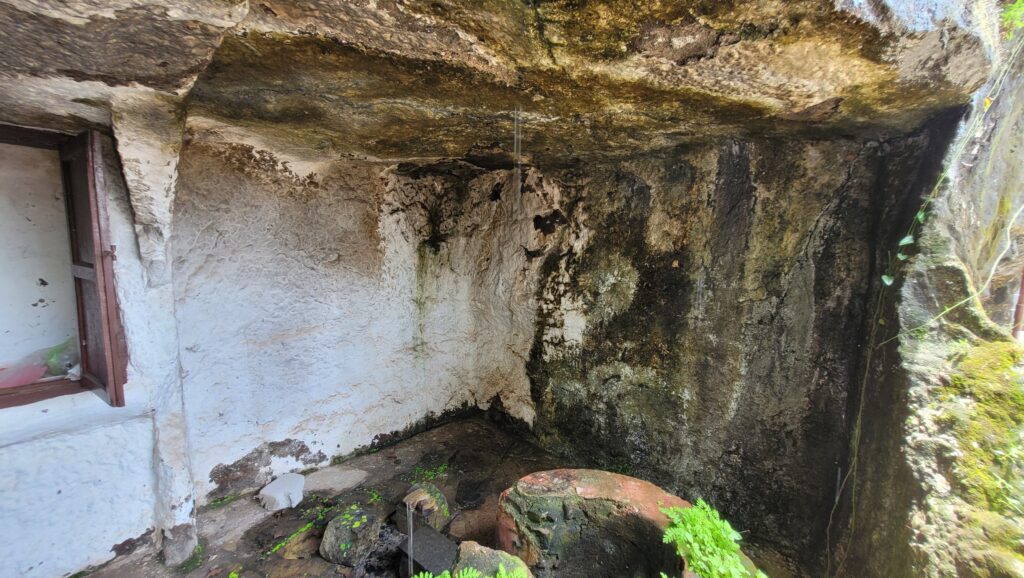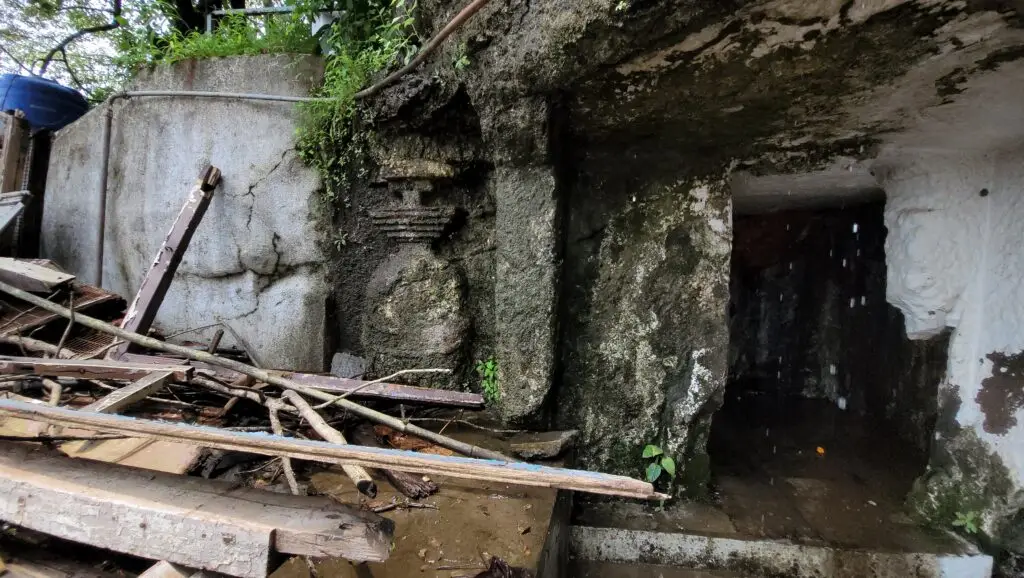
Chaul Buddhist Caves Group 1
(Waghdevi Temple at Chinchoti)
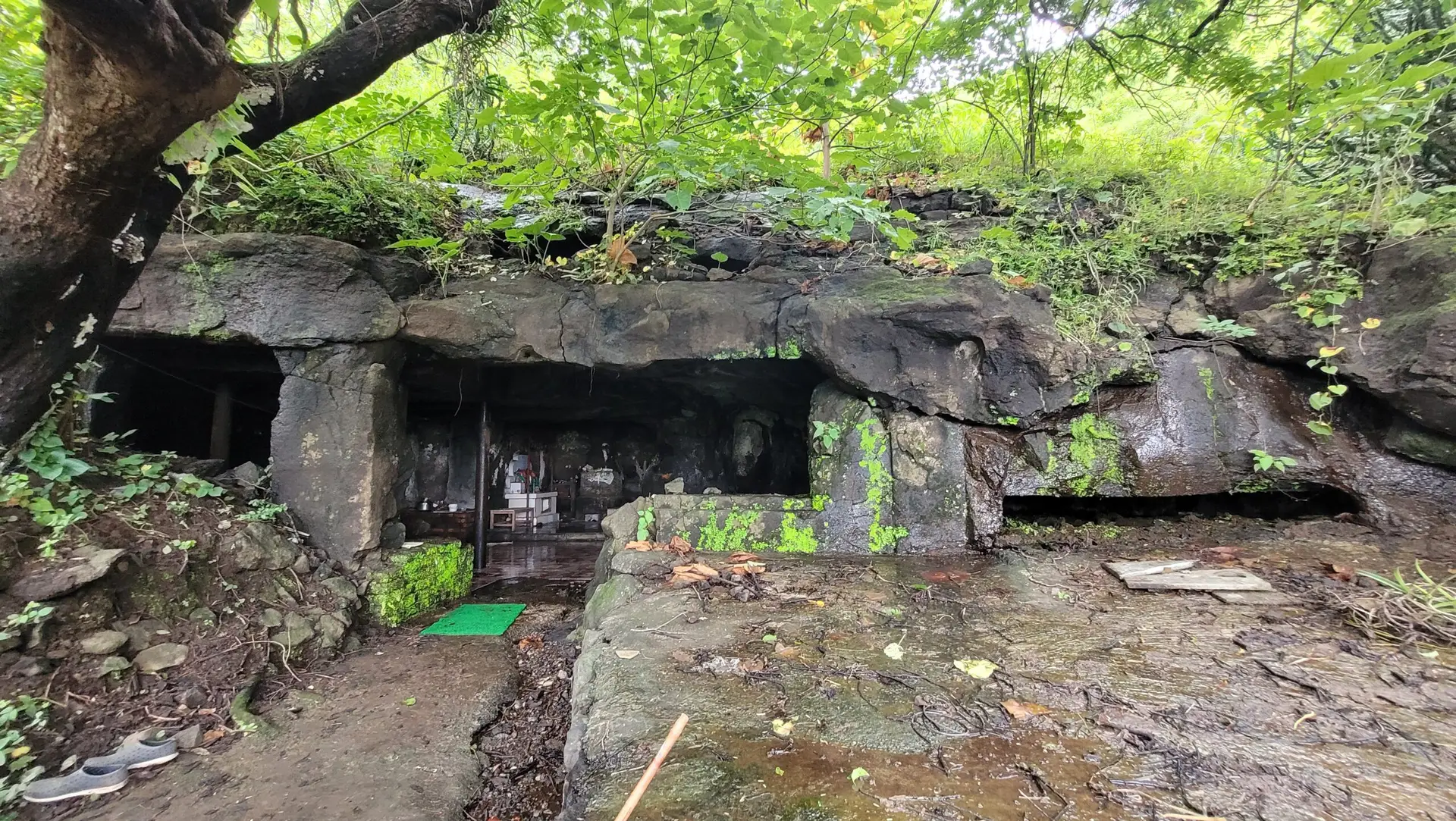
The Chaul Buddhist Caves are best described as an abandoned and partially complete archaeological site.
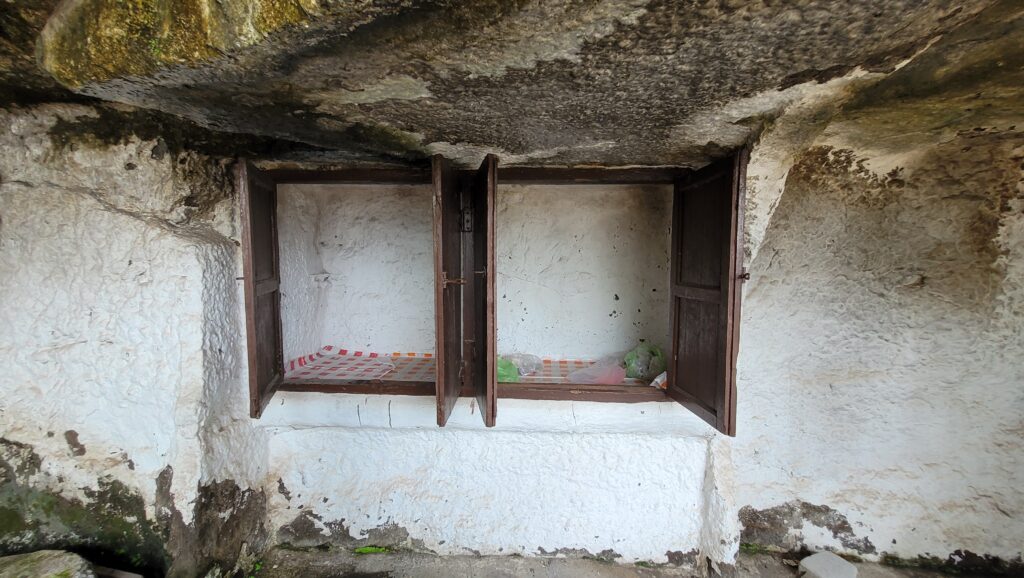
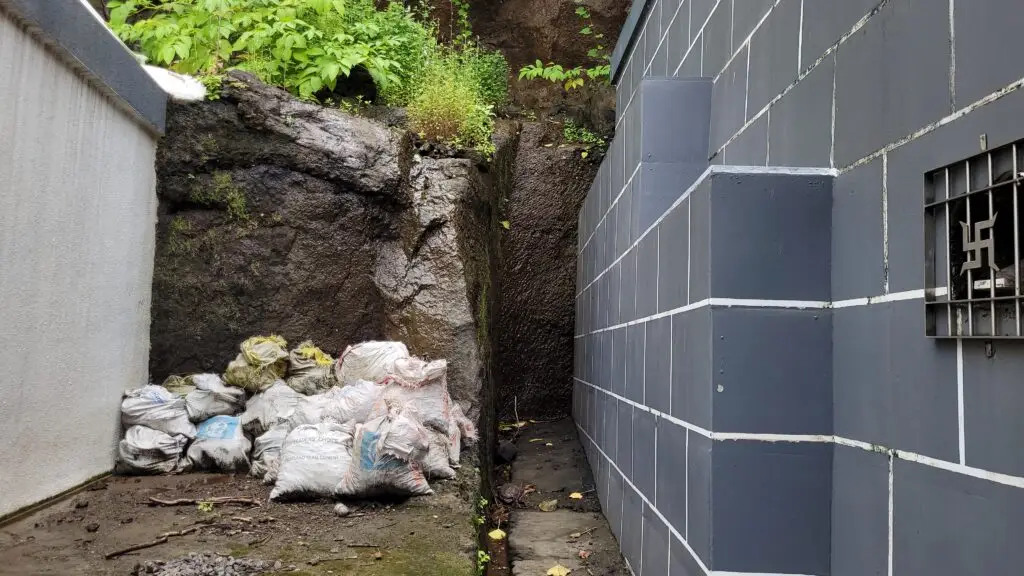
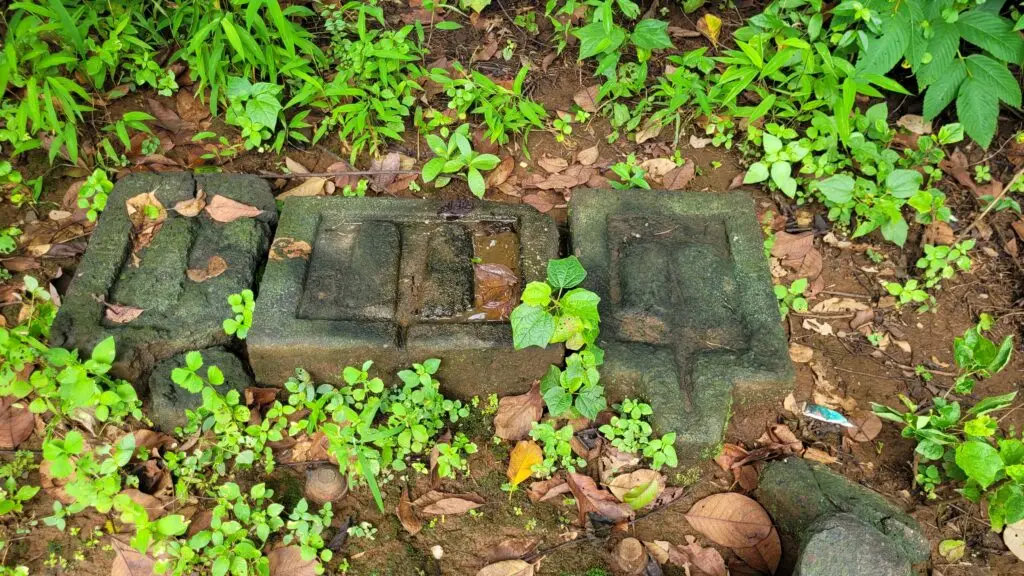
Now this hijack by others and presently called as Waghdevi Mandir at Chinchoti.
The caves are generally dated to between the 1st century BCE and the 2nd century CE, placing them in the late Hinayana (Theravada) phase of Buddhism, a period contemporary with the more famous Karla, Bhaja, and Bedse caves.
The caves are not easy to find. presently called as Waghdevi Mandir.
They are located on a hillock behind the Portuguese-era Korlai Fort village, across the Revdanda creek at Chinchoti village. There are no prominent signposts. Directions often involve asking local villagers. Reaching the caves requires a 20-30 minute scramble over laterite rock formations and through light vegetation. It is not a paved path. It is essential to wear sturdy, non-slip shoes. The overwhelming atmosphere is one of isolation and forgotten history. It is silent, peaceful, and slightly melancholic. You will likely be the only visitor there.
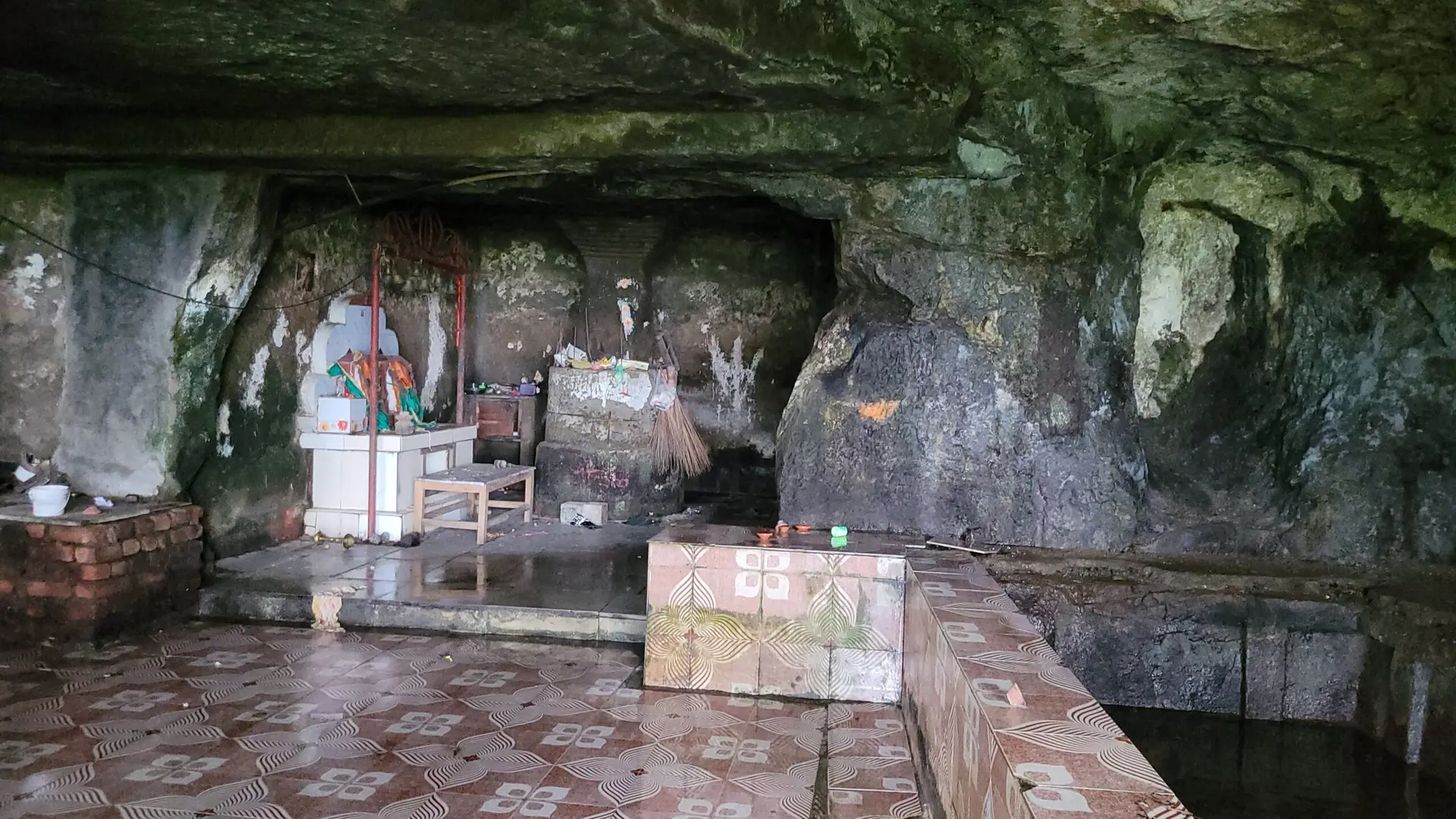
Cave 1 (The Main Chaitya Griha):
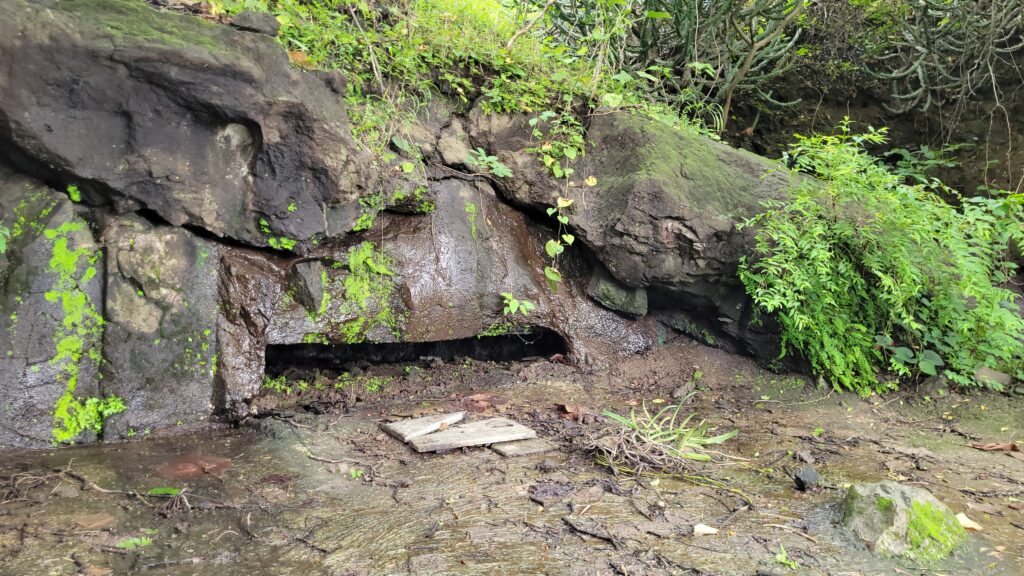
Present Layout: A large, shallow, apsidal hall cut into the cliffside. The floor is uneven natural rock.
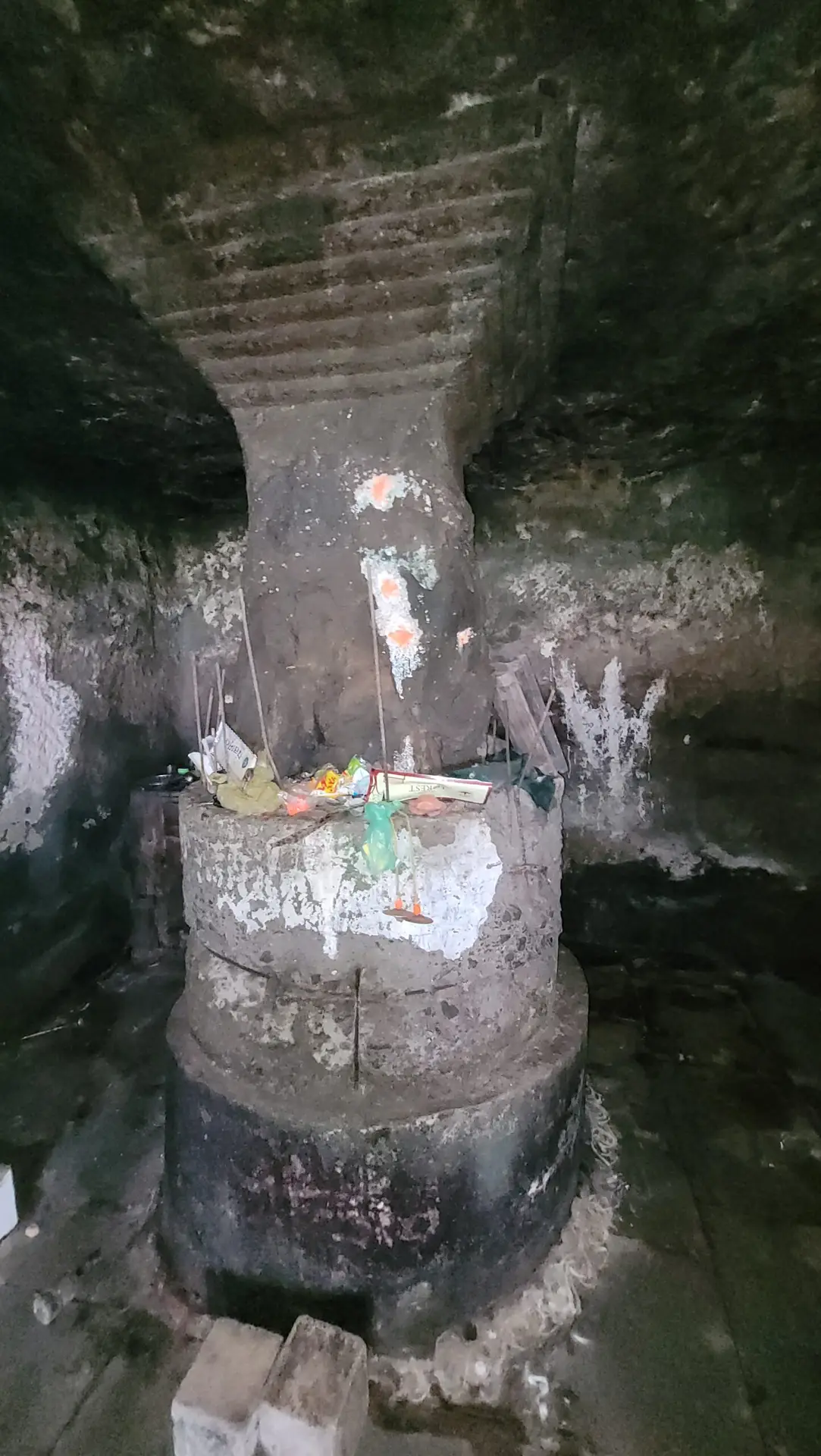
The Stupa: The hemispherical dome of the stupa is completely un-sculpted. It resembles a large boulder within the cave, with only its basic form blocked out. The harmika (the square railing on top) and the chhatra (umbrella) are not even attempted.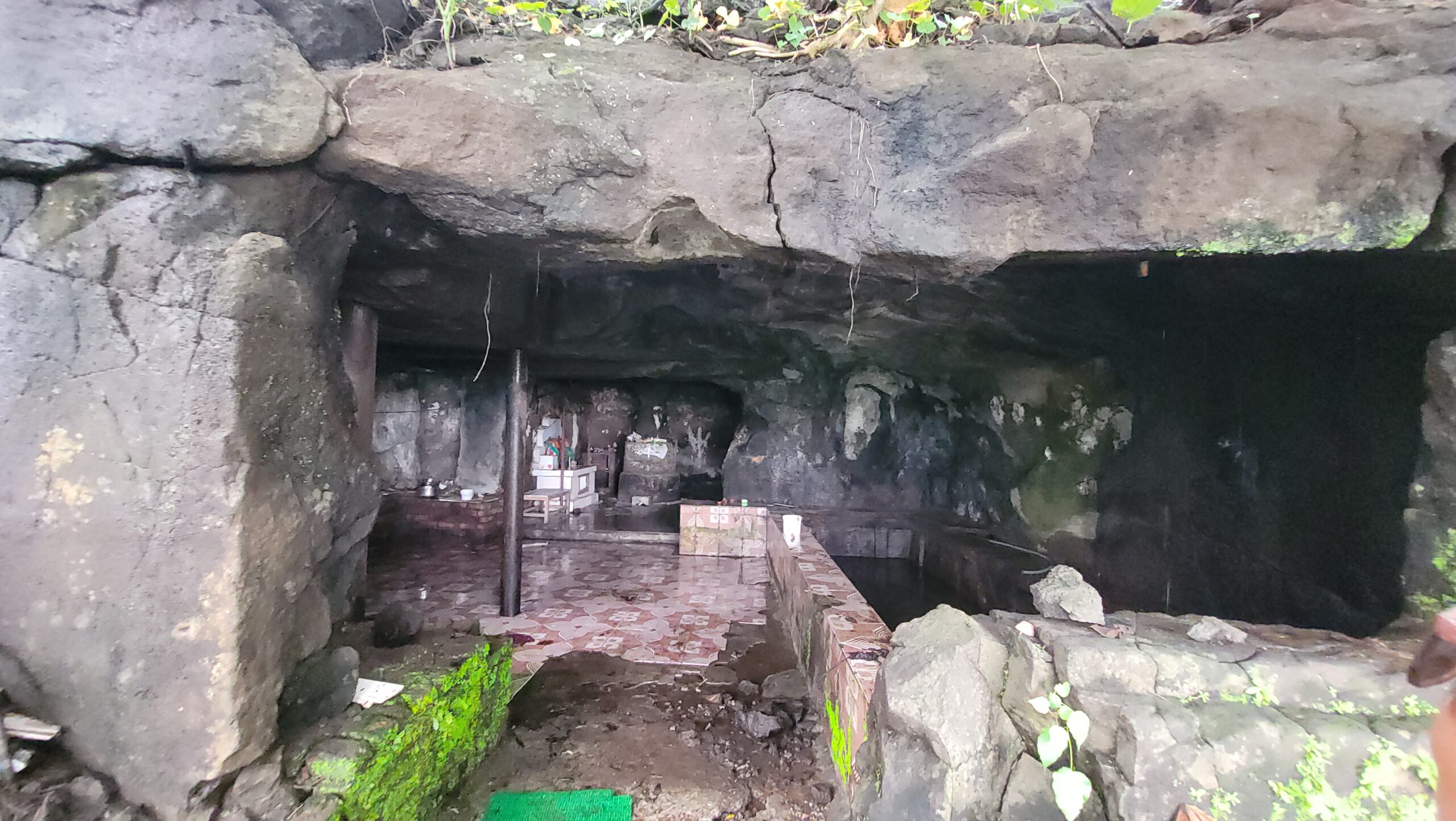
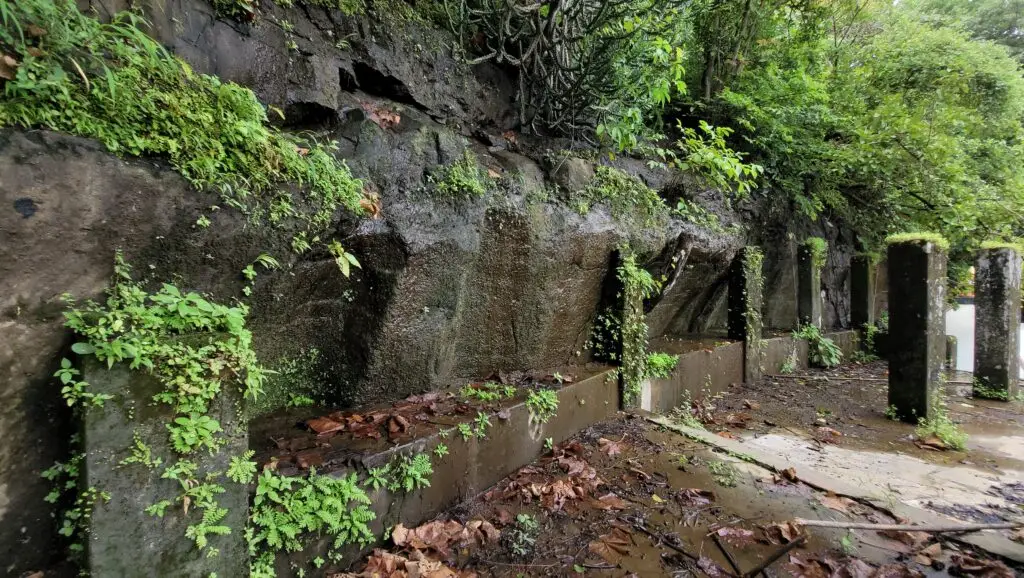
Pillars: The colonnade that would typically line the aisle is absent. Only the beginnings of a few pillar bases can be discerned from the rock.
Facade: The front of the cave is plain and stark. The great arch (chaitya window) that usually dominates the façade of such caves is missing. The entrance is a simple, rough opening.
Cave 2 (The Vihara):
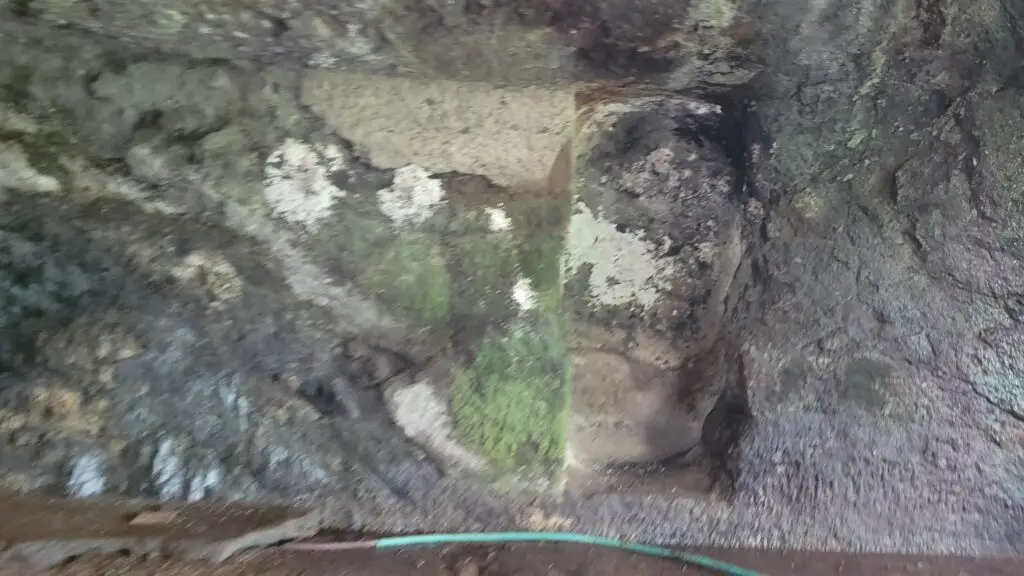
A single, square, and plain hall with a low ceiling. It is small and austere.
There are three small doorways leading into rudimentary rock-cut cells. These cells are bare, with no platforms or decorative elements.
This cave is particularly prone to collecting water and debris during the monsoon, making it often muddy and damp.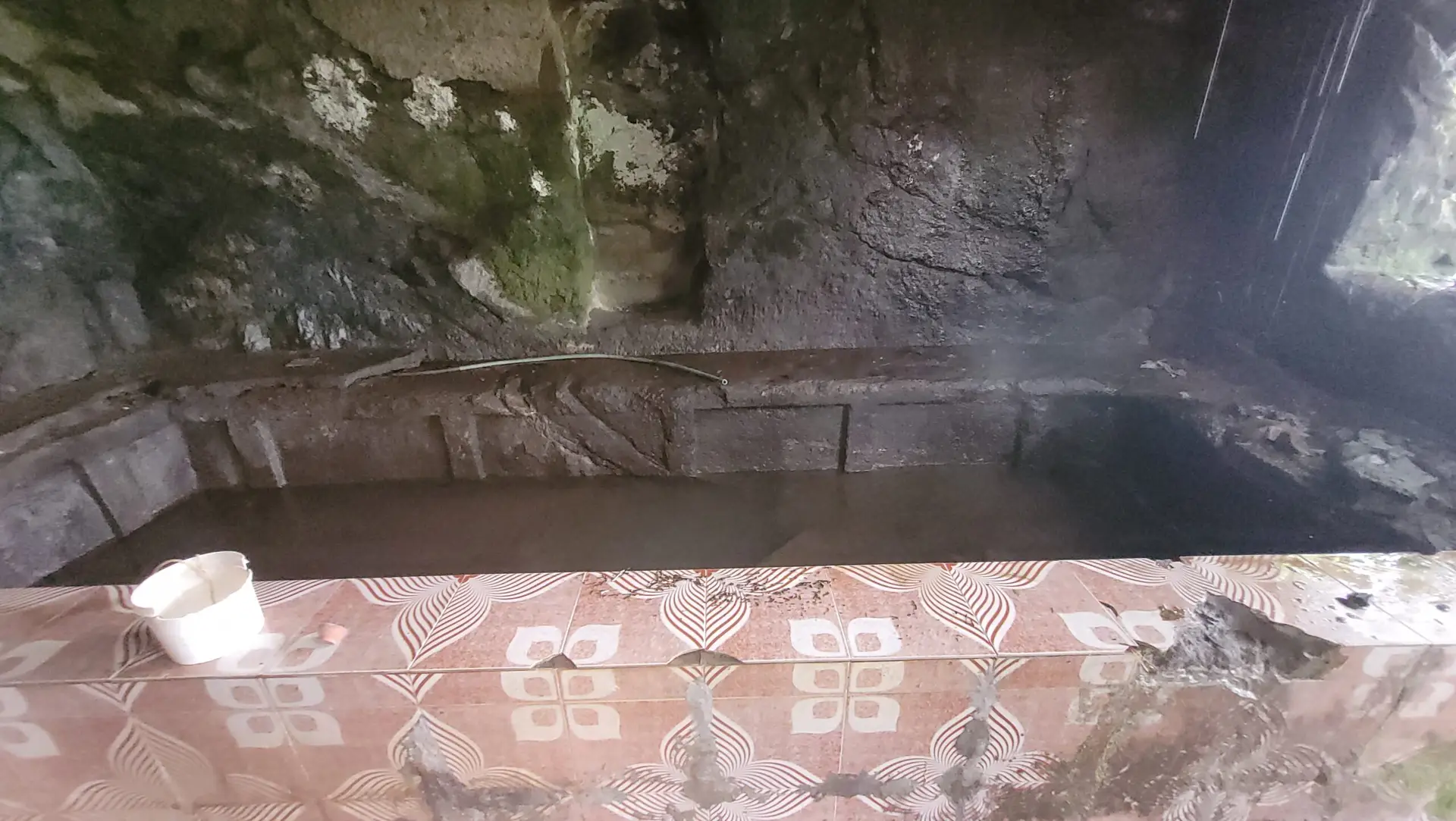
Cave 3 (The Water Cistern):
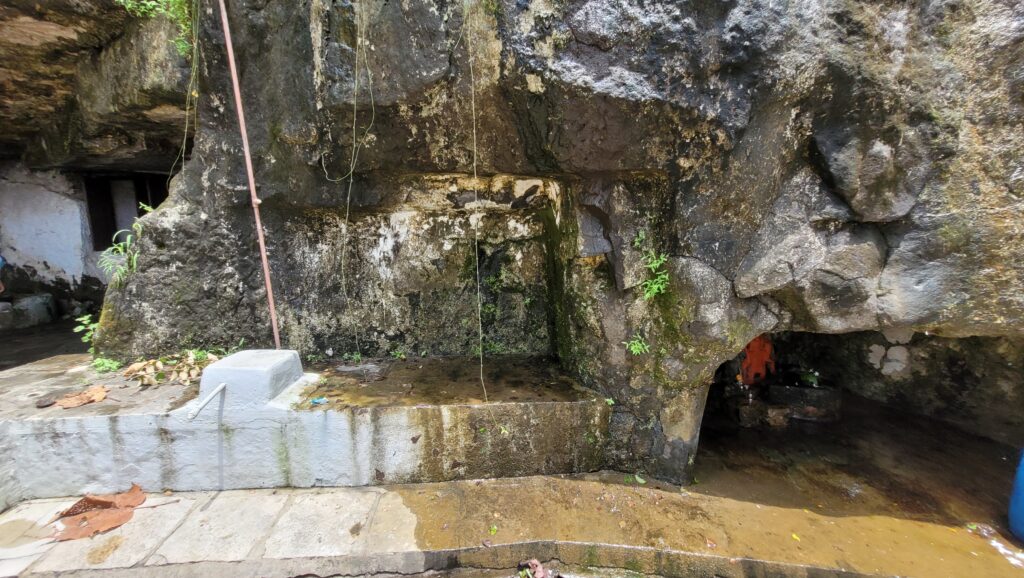
A small, functional tank cut into the rock. It still holds water during and after the rainy season.
It is functional but filled with stagnant water, leaves, and algae.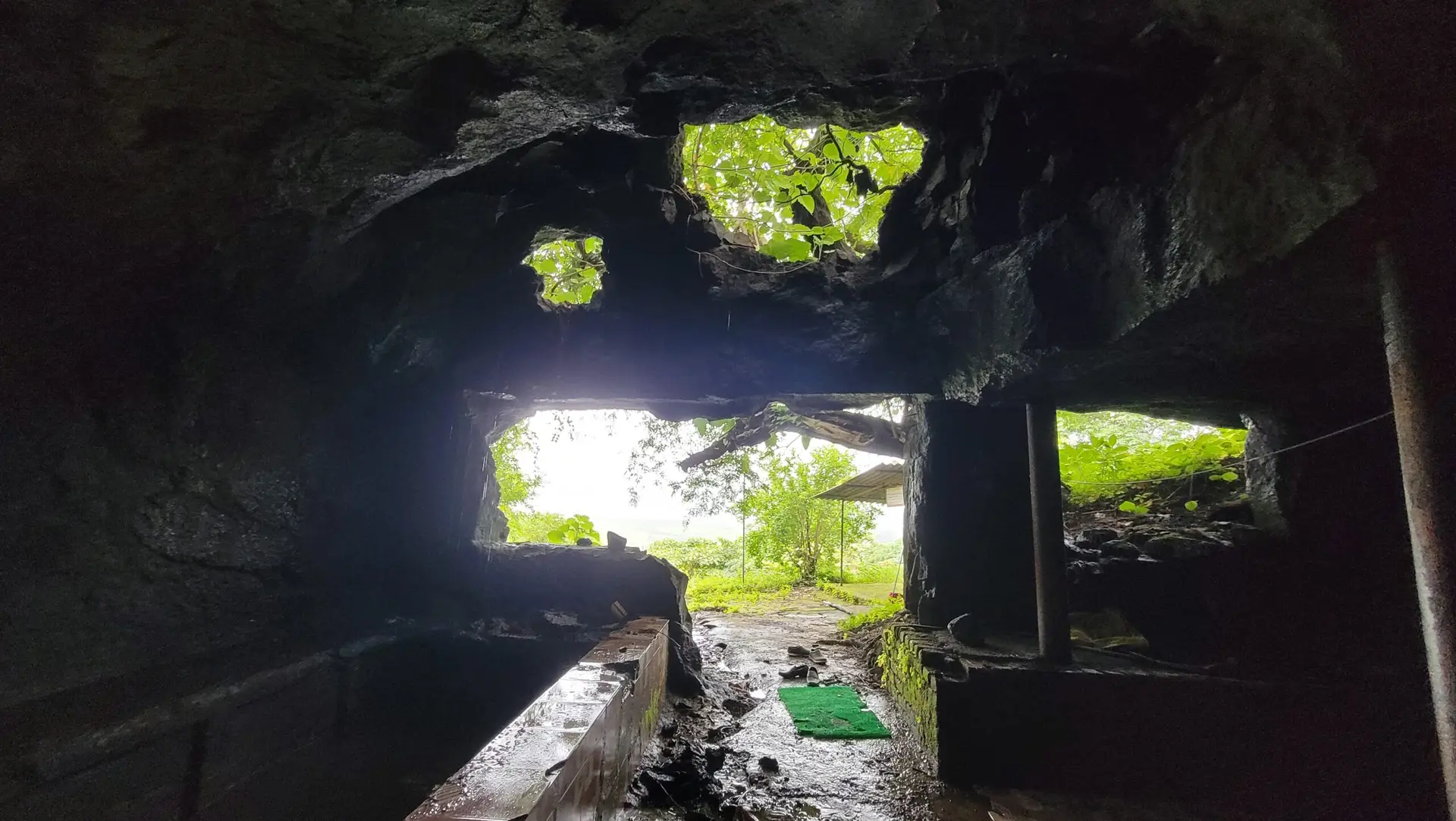
Chaul Buddhist Caves Group 2
(Hinglaj Mata Temple)

The Buddhist caves are carved in the small hill very close to the Hinglaj Mata temple.
These caves date back to the Hinayana Buddhism period, around the 1st-2nd century CE (approximately 2000 years ago). This was a time when Chaul was a flourishing port on the Arabian Sea trade route.
After the decline of Buddhism in this region, the site was not abandoned. The local spiritual importance continued. The existing caves were absorbed into the later Hindu tradition. The Buddhist site was “re-consecrated” as a seat of the Goddess.
The ancient port of Chaul (Saimur/Simur) was a major international trading hub. Wealthy Buddhist merchants would have donated money to carve these caves for monks to earn merit.
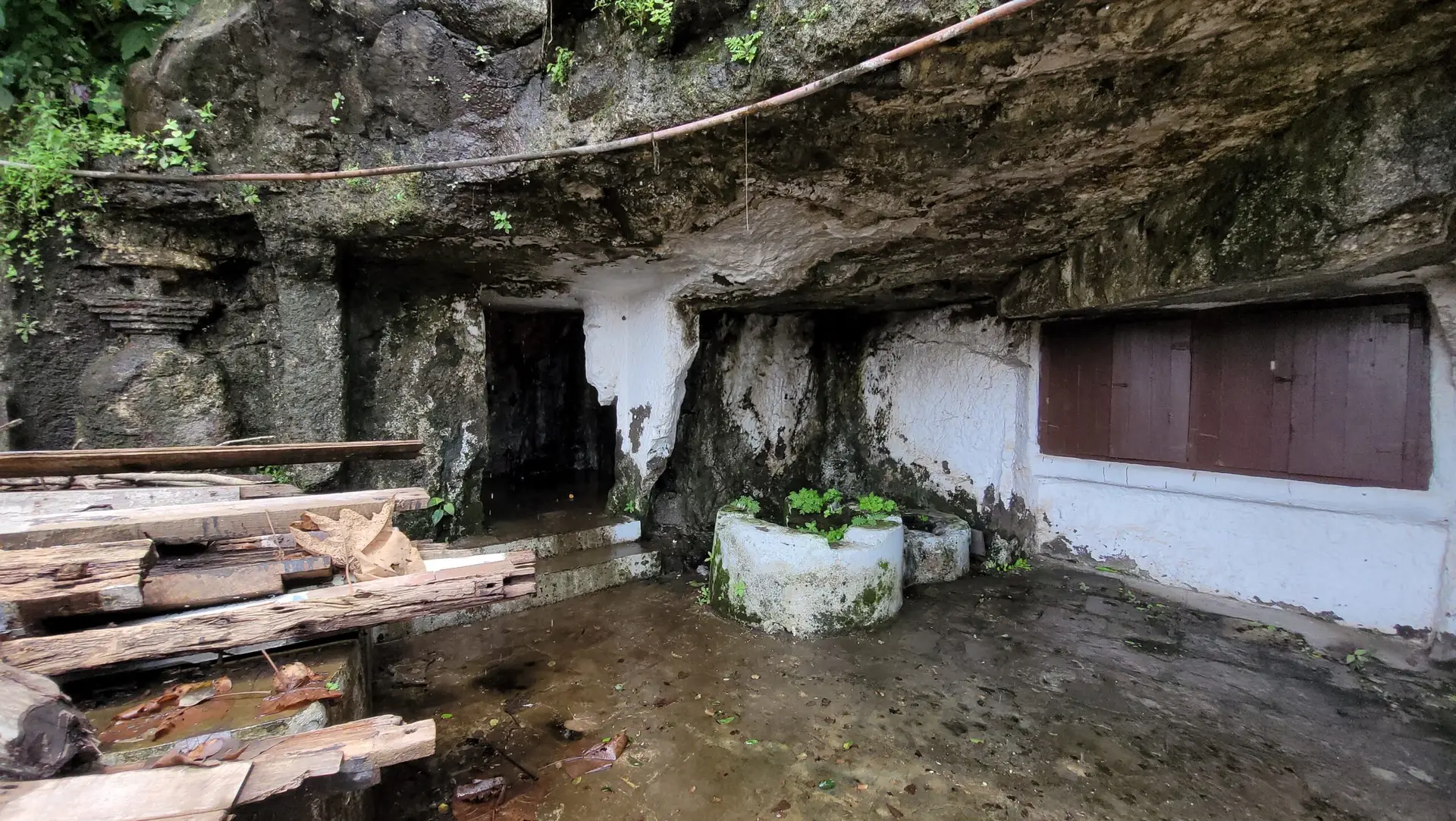
Vihara (Monastery): The main cave is a Vihara – a residential hall for Buddhist monks. It consists of a central hall surrounded by small, simple rock-cut cells where the monks lived and meditated.
Carved Stupa: This is the most important archaeological feature. Inside the central hall of the Vihara, you will find a stupa carved directly out of the living rock. This stupa was the object of worship for the monks. It has a simple, hemispherical dome (anda) on a cylindrical base (medhi), characteristic of early Buddhist architecture.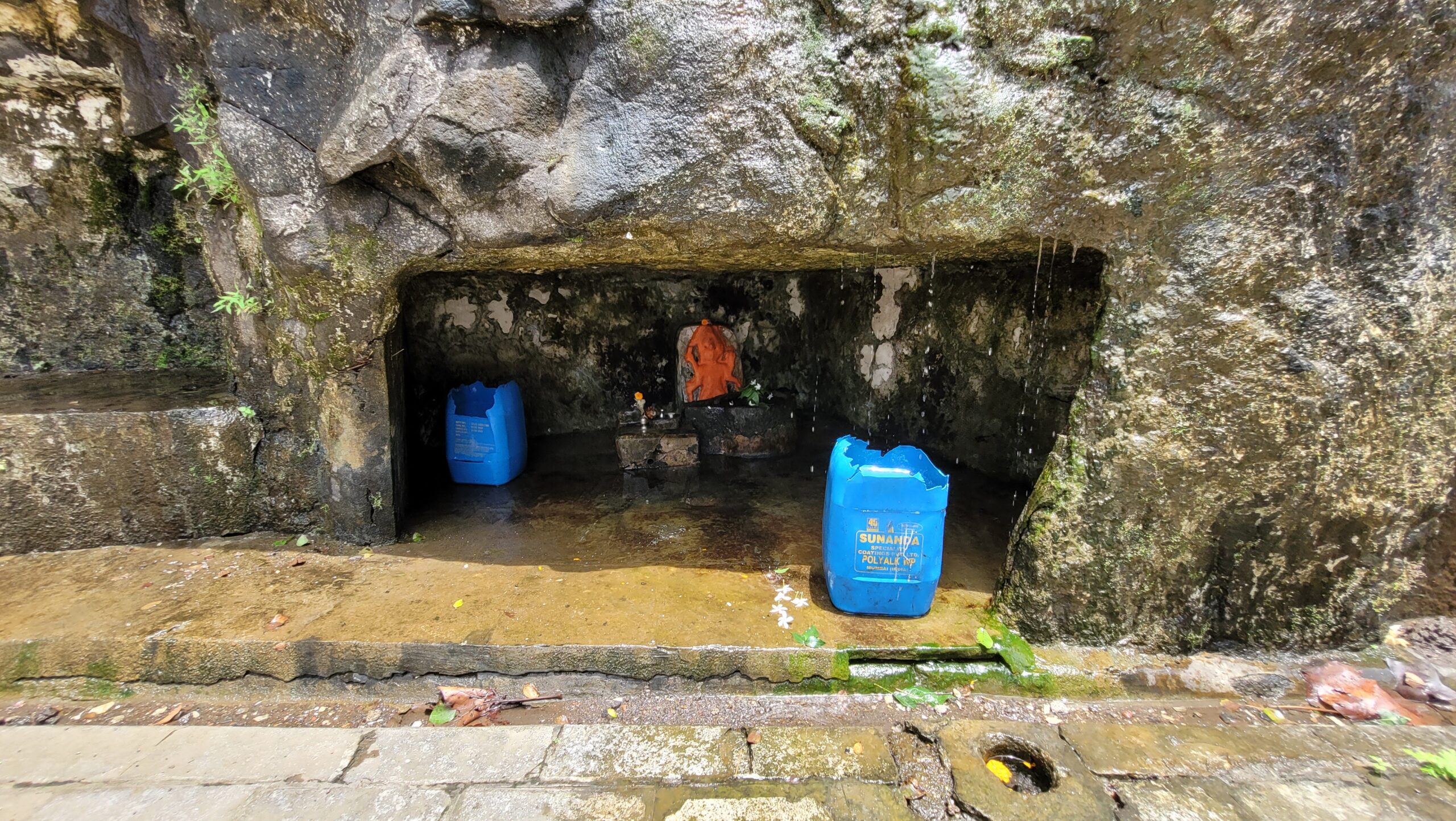
Water Cisterns: As with all monastic settlements, there are cleverly carved water tanks to collect monsoon rainwater for year-round use.
Some of the caves have Brahmi inscriptions mentioning donations by laypeople and merchants, a common feature of Buddhist caves funded by the prosperous trading community. We unable to locate any such inscriptions.