
The Mysterious Fort
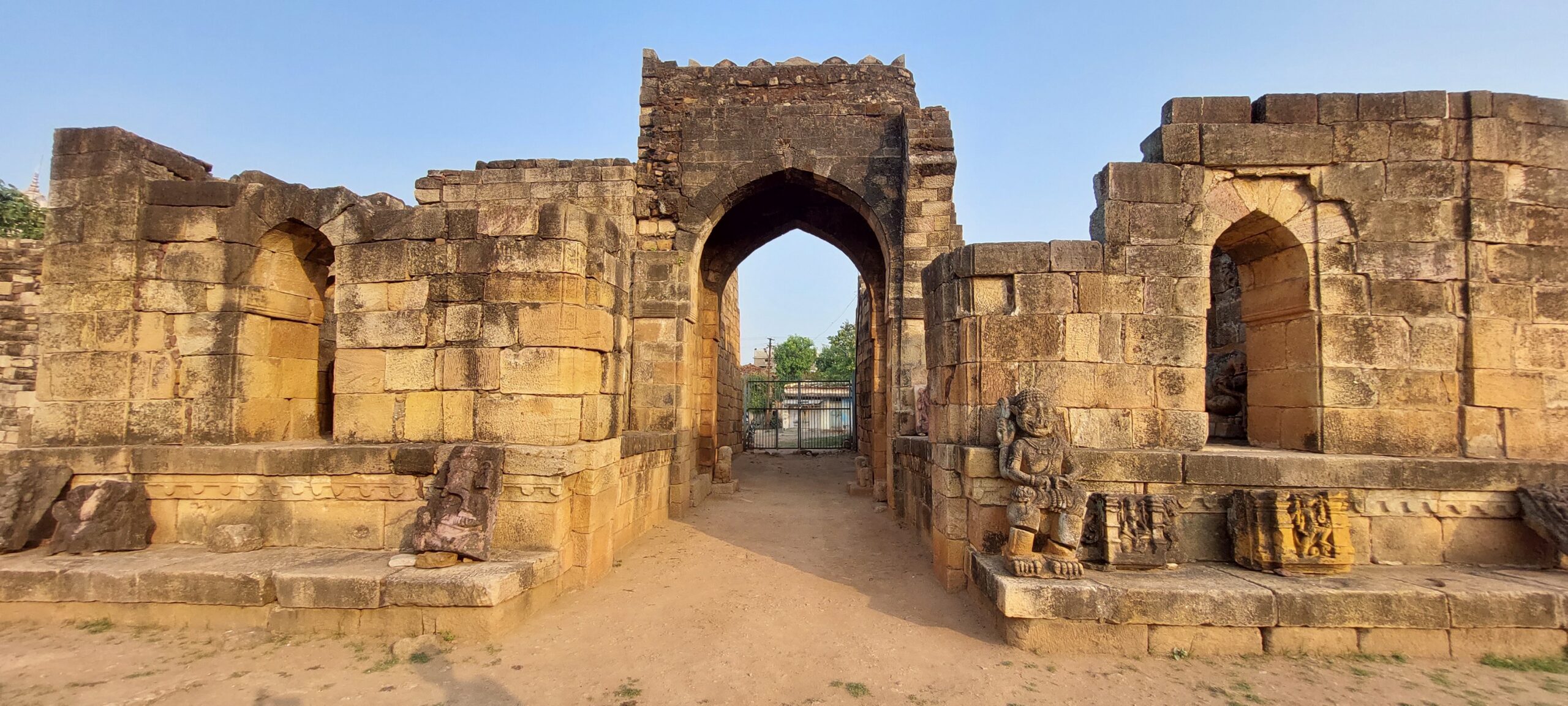
Near the north end of the town is a large enclosure everyone calls “the fort.” It’s a stunning structure built entirely with large, squared stones, fitted together perfectly without any mortar, just like our ancient Hindu temples.
Its measurements are huge:
Outside, it is 804 feet long (north-south) and 276 feet broad (east-west).
The walls are a massive 14 feet thick and stand 25 to 30 feet high.
It has strong square bastions (buttresses) that project 15 feet out from the wall. There are three on each long side and two on the shorter sides.
Inside, there are only two small buildings, making its original purpose a mystery. Because it was so costly to build (using over half a million cubic feet of stone!), the explorer believed it must have been the Raja’s palace. The stones at the gateway, however, are joined with lime mortar. At first, he thought it might be a Muslim stronghold built from temple ruins, but he found no evidence they ever occupied Bhandak. 
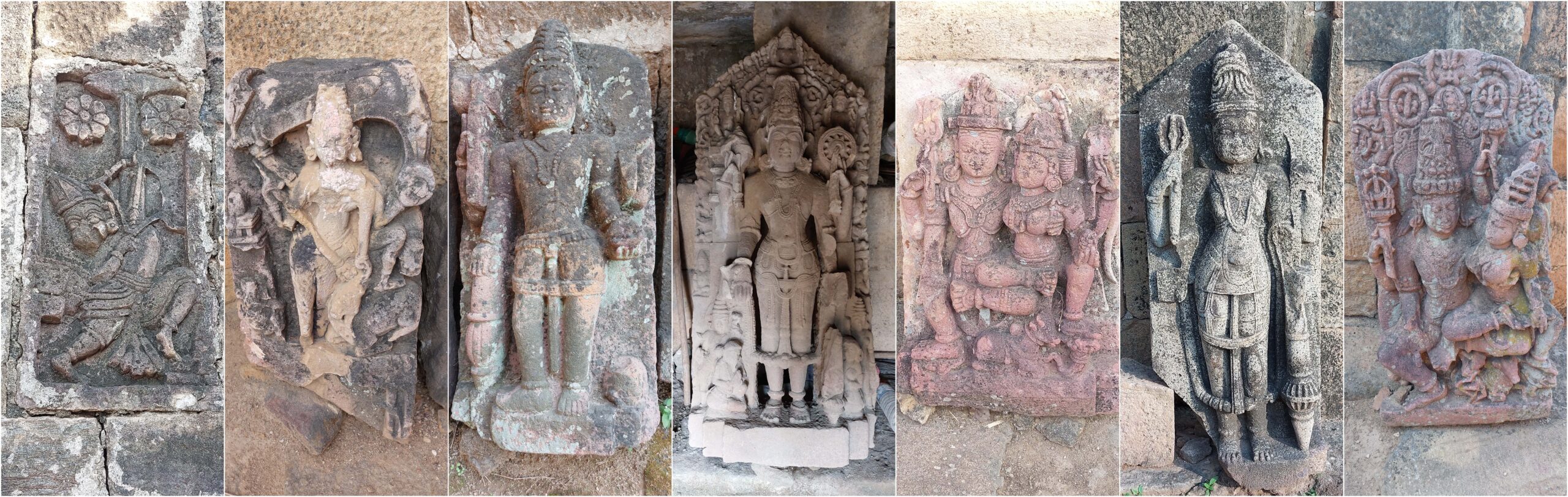
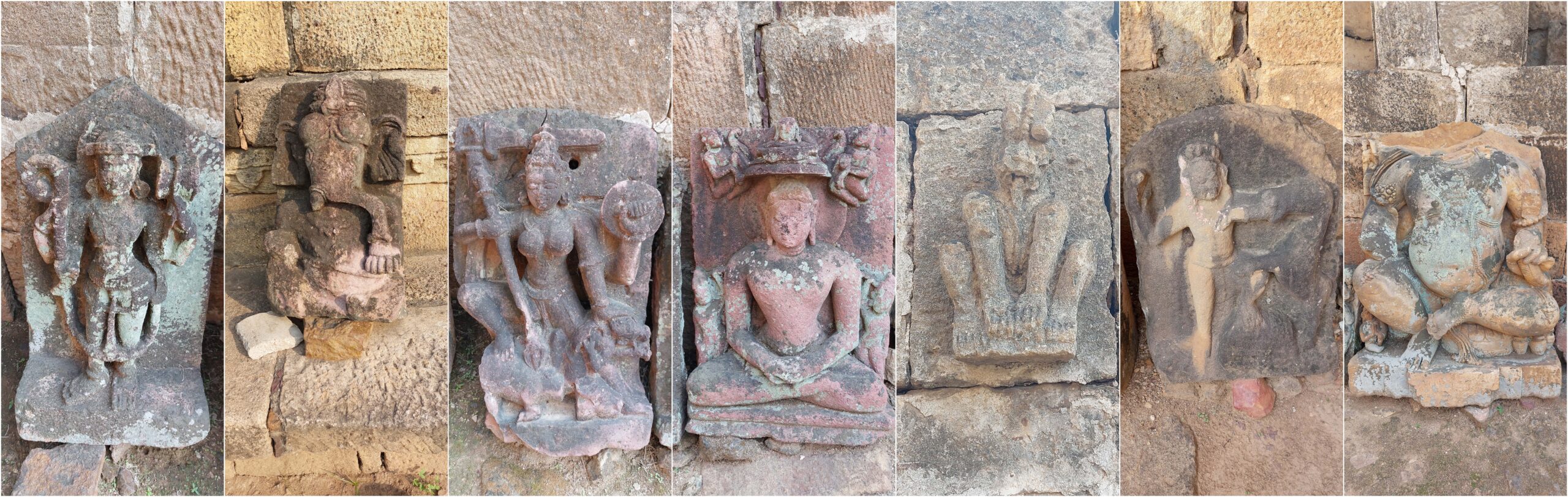
The presence of carvings of Lord Ganesha and other gods on the gateway made him believe it was actually built by the Gond Rajas of Chanda. A local did mention a Muslim governor named Ismail Khan, but the Hindu gods carved into the walls make that story unlikely.
Temples of Bhandak
Nestled in the heart of India, near the modern town often associated with Bhadrawati in Maharashtra, lies the ancient site of Bhandak. Today, it stands as a silent but powerful testament to a glorious past, where skilled artisans and devoted kings built magnificent temples that echoed with prayers for centuries. While time and human action have left many of these structures in ruins, their stories are waiting to be told. This blog is a deep dive into the architectural and spiritual treasure trove of Bhandak, piecing together the history from the remains of its caves, temples, and tanks.
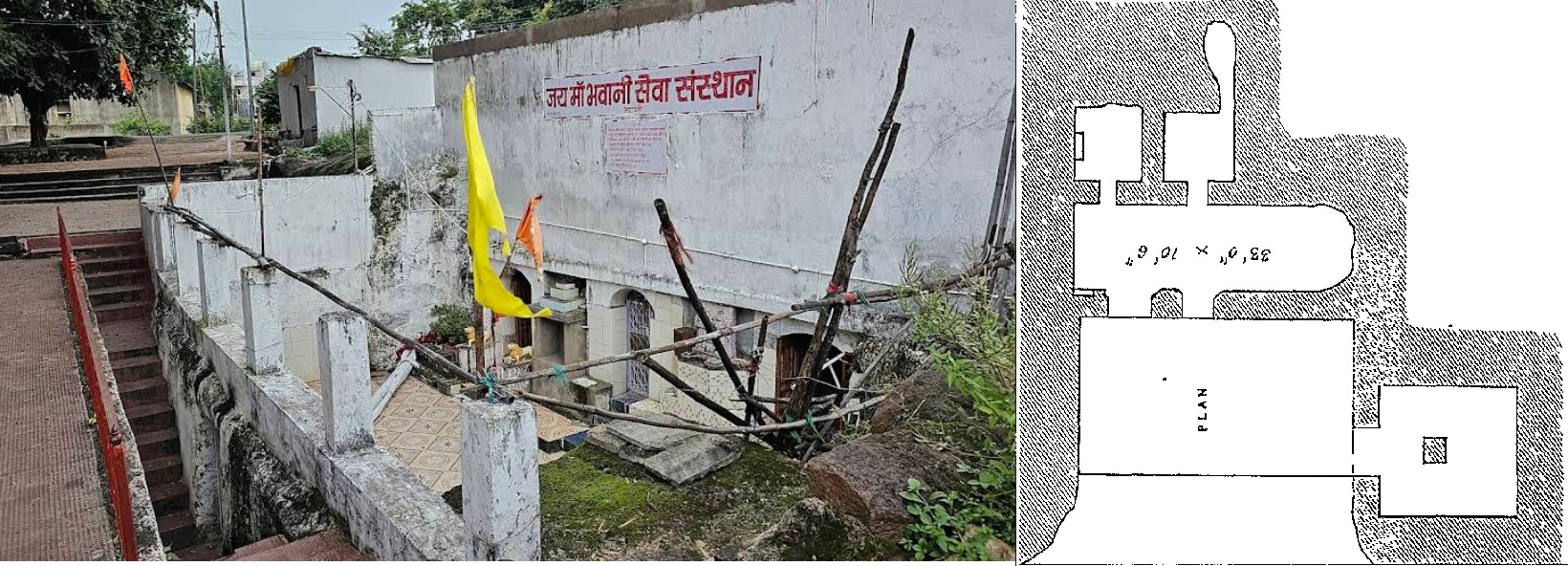
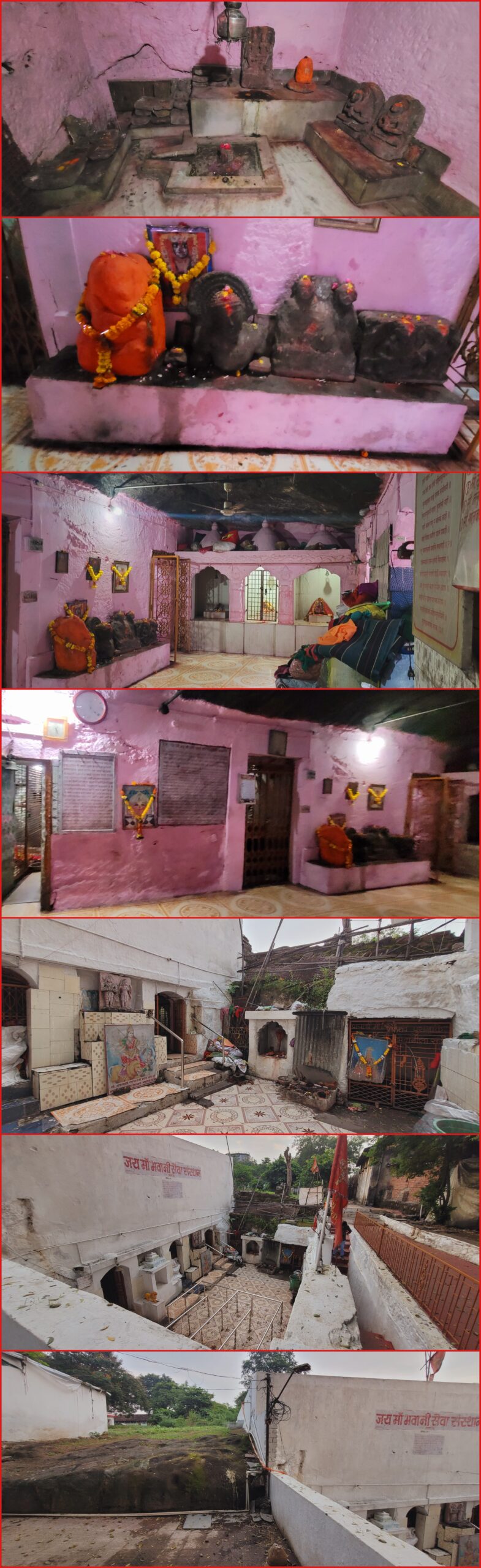
Our journey begins not with a grand temple, but with a cave quietly excavated into a low ridge near the famous Badarinag temple. This cave is a fascinating puzzle. It features a large open court, about 35 feet long, from which doorways lead into a series of rooms.
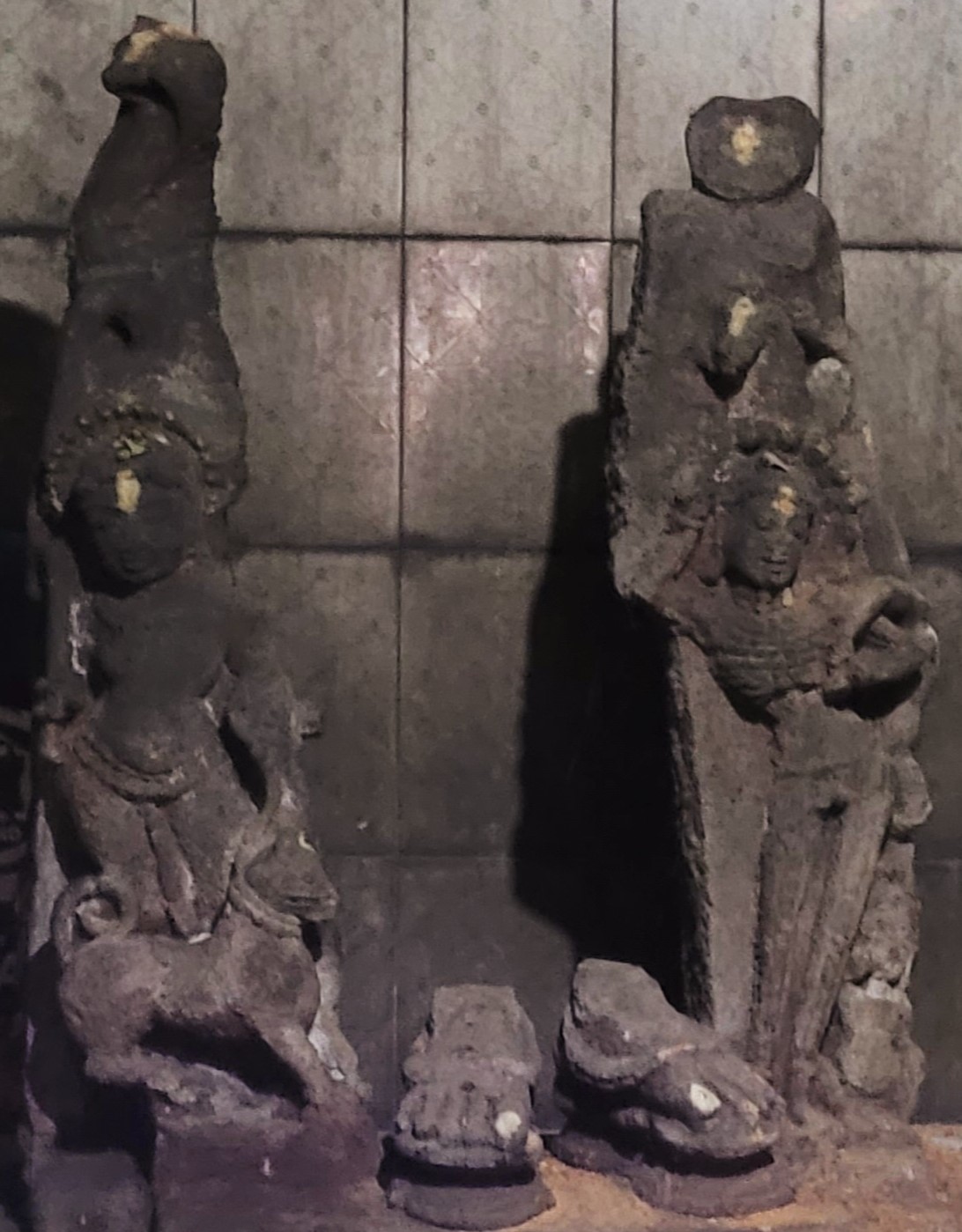
Inside, the walls are adorned with clues to its past. In one hall, there is a niche with a figure of Goddess Lakshmi, interestingly holding the club and discus – weapons typically associated with Lord Vishnu. This mix of attributes is a unique feature. Further in, two separate chambers house powerful deities: one enshrines a ten-armed seated figure of Goddess Durga, a symbol of divine strength, and the other has a four-armed Lord Shiva, recognizable by his trident and a three-headed snake canopy.
There is no written inscription to date this cave. However, experts who have studied the style of the carvings believe they were made around the same time as the grand Brahmanical temples of the area, placing its construction in the 11th or 12th century AD.
The Grand Brahmanical Temples: Pillars of Faith
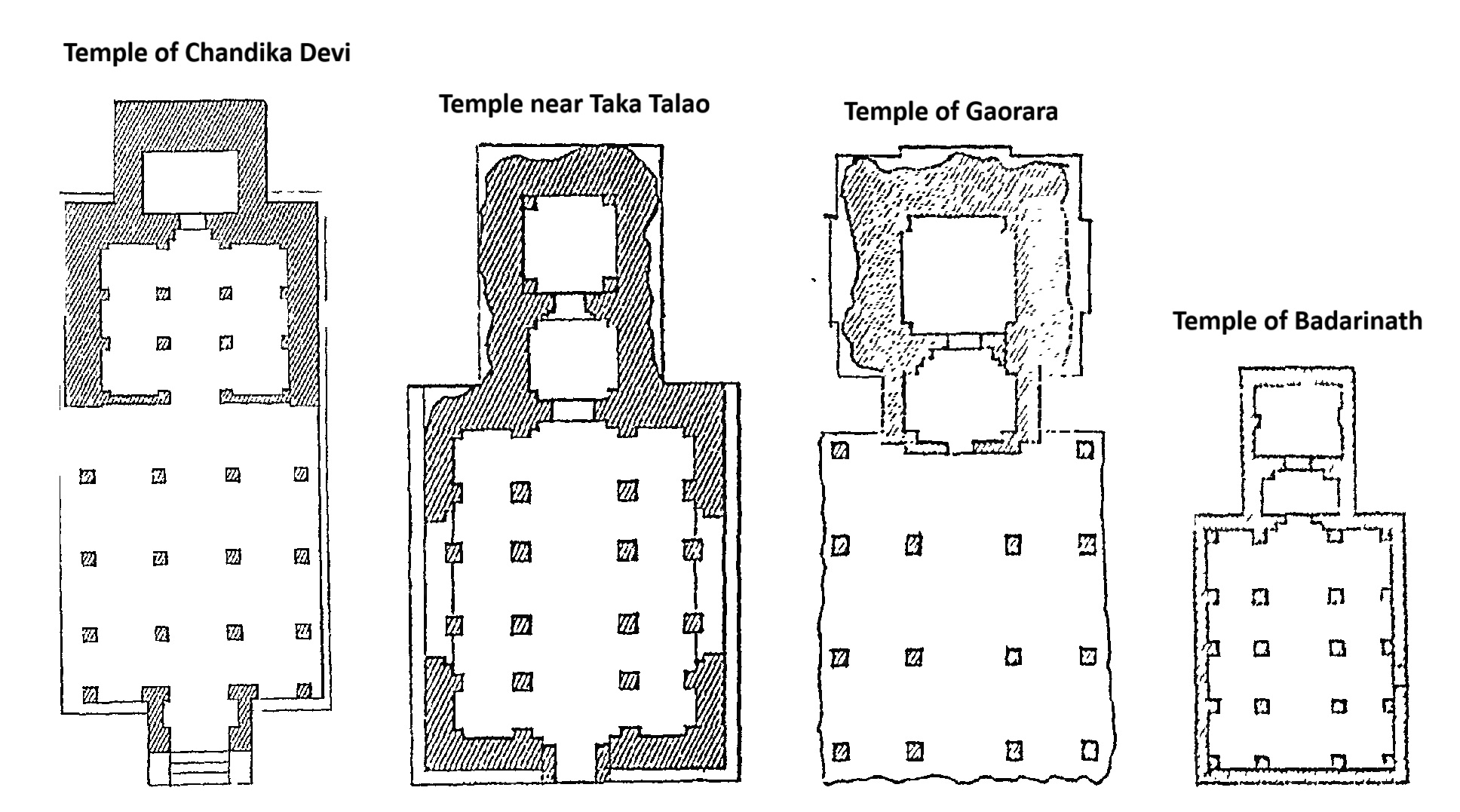 Though many are now ruins, the Brahmanical temples of Bhandak are the main attraction, each with its own story.
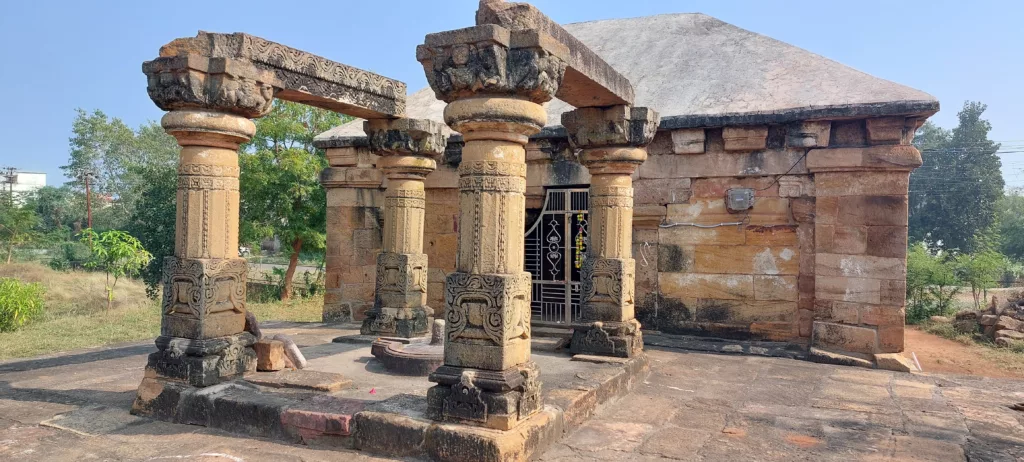
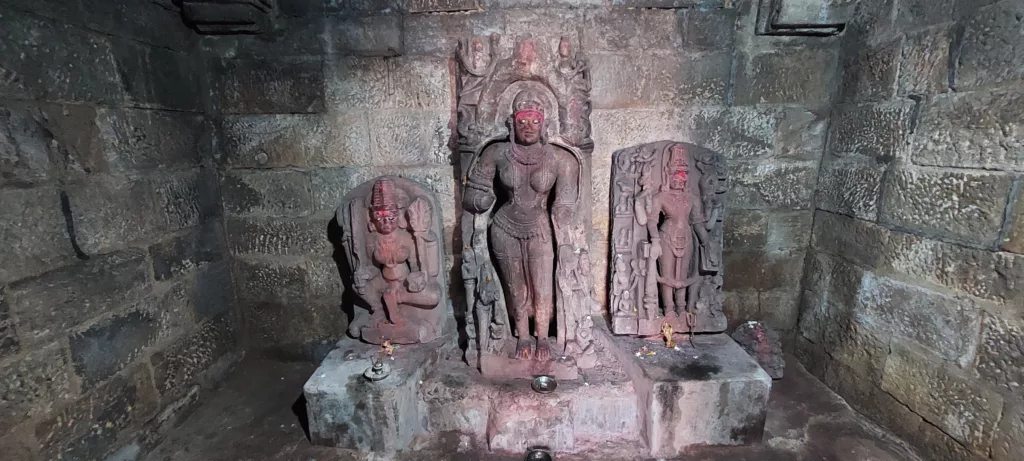
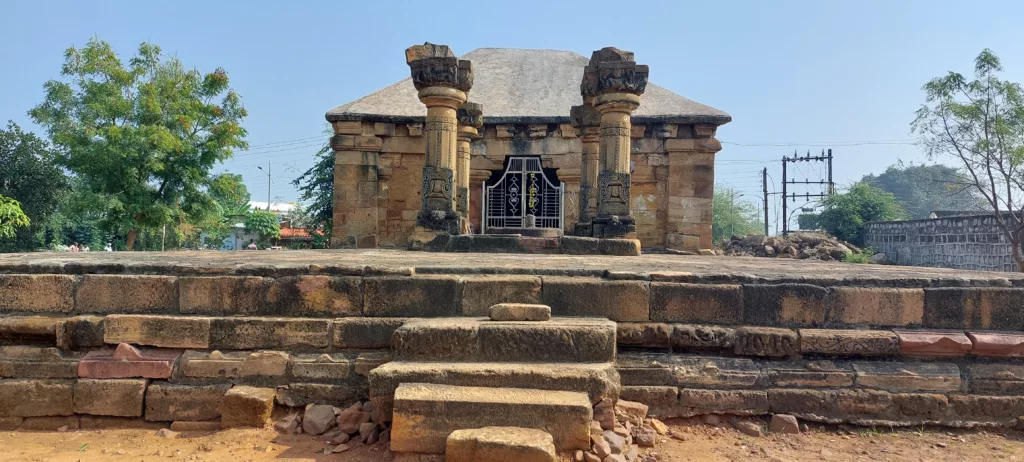
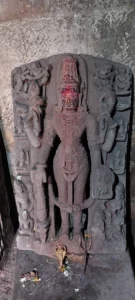

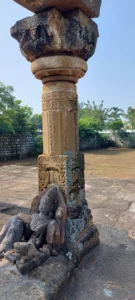
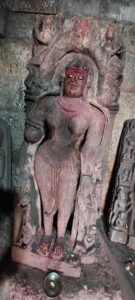
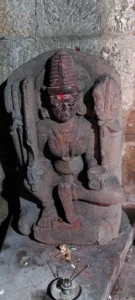
Located on a rising ground in a forest to the south-east of the town, this temple is a crucial historical marker. A short inscription on one of its pillars tells us its real name is Chandrika Devi and, most importantly, it was built in the Samvat year 1133, which is 1076 AD. This inscription helps historians date other structures in the region.
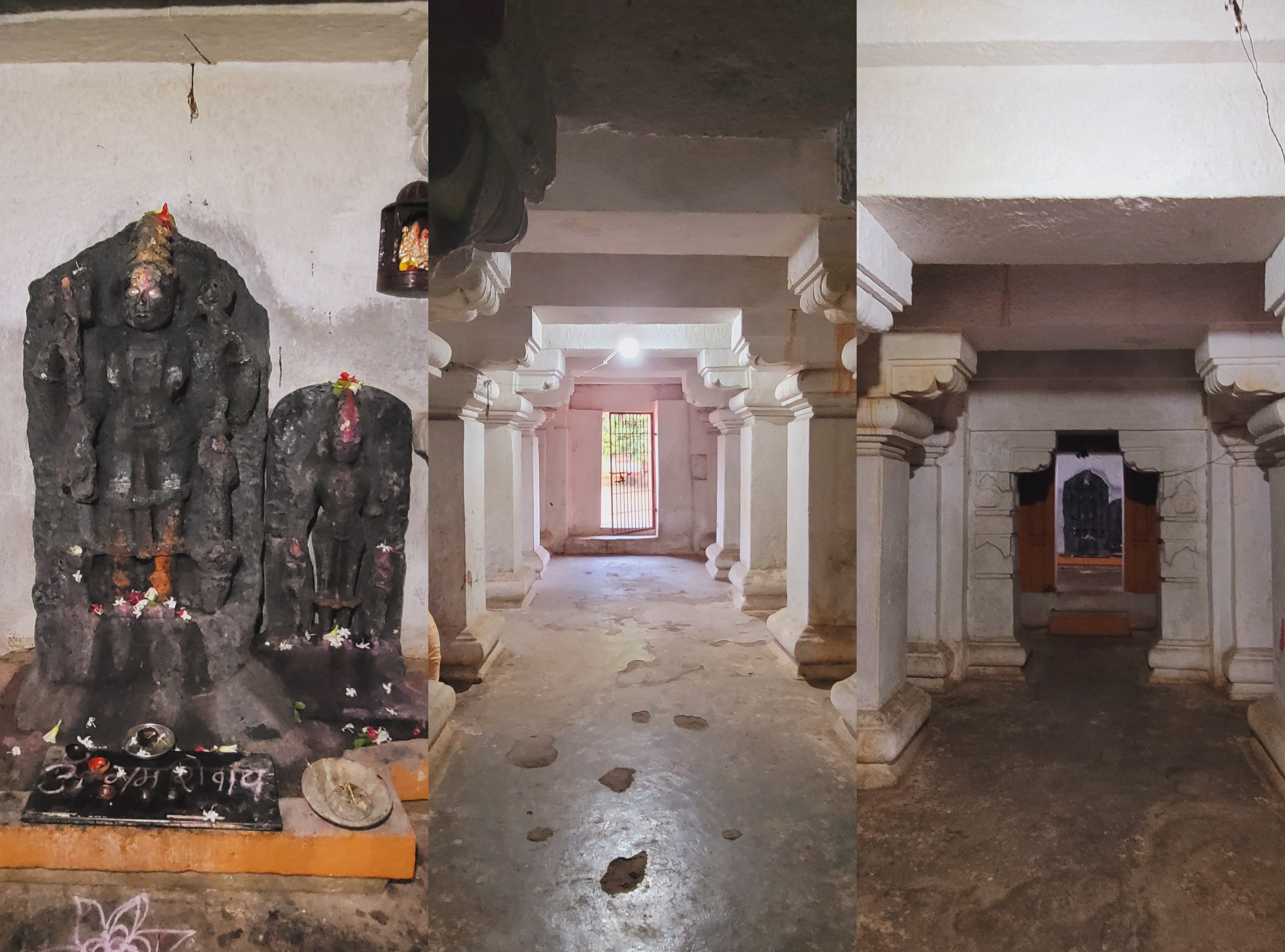
The temple’s design is unique in Bhandak. It has not one, but two pillared halls, though the outer one might have been added later. You enter from the west into a square portico, which leads to a large open hall supported by 16 square columns, each nearly 8 feet high. A doorway from here takes you to a second, slightly smaller hall with 8 pillars and 8 pilasters holding up the roof.
The innermost sanctum (garbhagriha) houses a 4-feet-4-inches tall standing figure of a goddess with two arms. This is believed to be Chandika Devi herself. The temple was also adorned with figures of Ganesha, Mahesasuri Devi, and a beautiful group of a god, goddess, and child, showing the temple’s importance for family worship.
A sad note from history is that a road officer once began to dismantle this temple for its stones and had even taken down two architraves (main beams) before the civil authorities stopped him. This shows how vulnerable our heritage has been. The carved stones intended for a bridge were found lying unused, a silent reminder of what was almost lost.
2. The Lost Temple of Dolara Tank
 Just a mile east of the town, next to the high road, is the Dolara tank. In the middle of this tank was an island, and on that island stood a temple, now completely lost. Its stones were carried away to build road bridges. Even its name is forgotten; only the bridge is remembered, called Chumarika-Dolara.
The bridge itself is an ancient marvel of engineering. It is 157 feet long and over 5 feet broad, built to connect the bank to the island temple. It stands on 16 pairs of square pillars, placed 4 feet apart, with stone beams spanning the gaps. The pillars have beautifully designed spreading capitals (the topmost part), giving the long viaduct a very elegant and pleasing look. It’s a masterpiece of simple, strong design that has stood the test of time.
3. The Akhara Mound and the Jain Temple
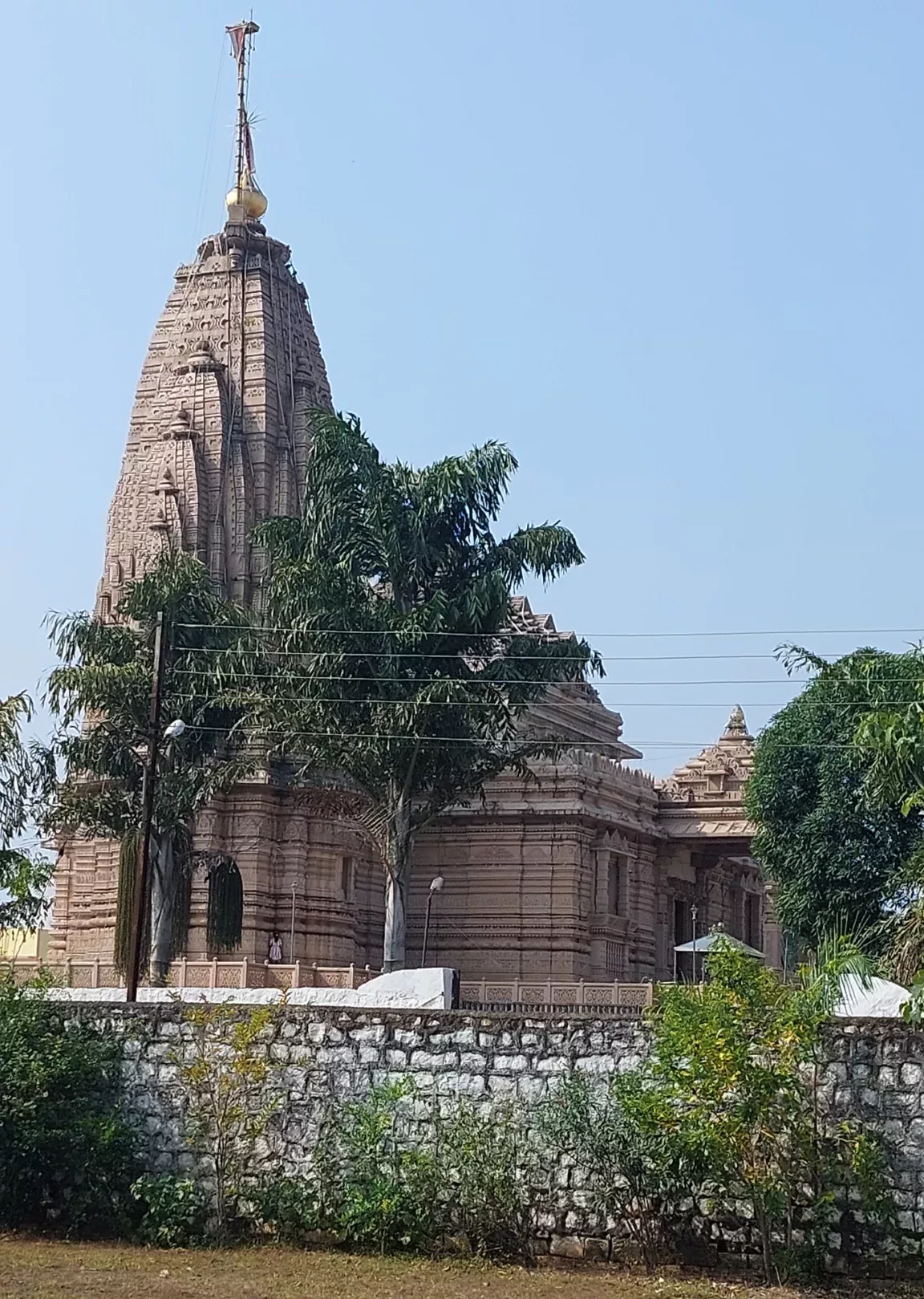
The Akhara mound is a sad story of reuse. It is the cleared and levelled ruin of an old temple, now used as a wrestling ground. Nothing is known about the original temple. The only figure placed on top is a seated statue holding a club, which was actually brought from the Chandi Devi temple. It was chosen because club exercise is a daily practice for the wrestlers there.
Just 330 paces away, in the north-east forest, are the remains of a Jain temple dedicated to Parsvanath. The sanctum still stands, housing a naked figure of the Tirthankara Parsvanath, sheltered by a seven-headed snake canopy. The statue is over 5 feet tall. Beyond it are the ruins of a hall, indicating it was once a complete place of worship for the Jain community.
4. The Famous Badarinag (Snake Temple)
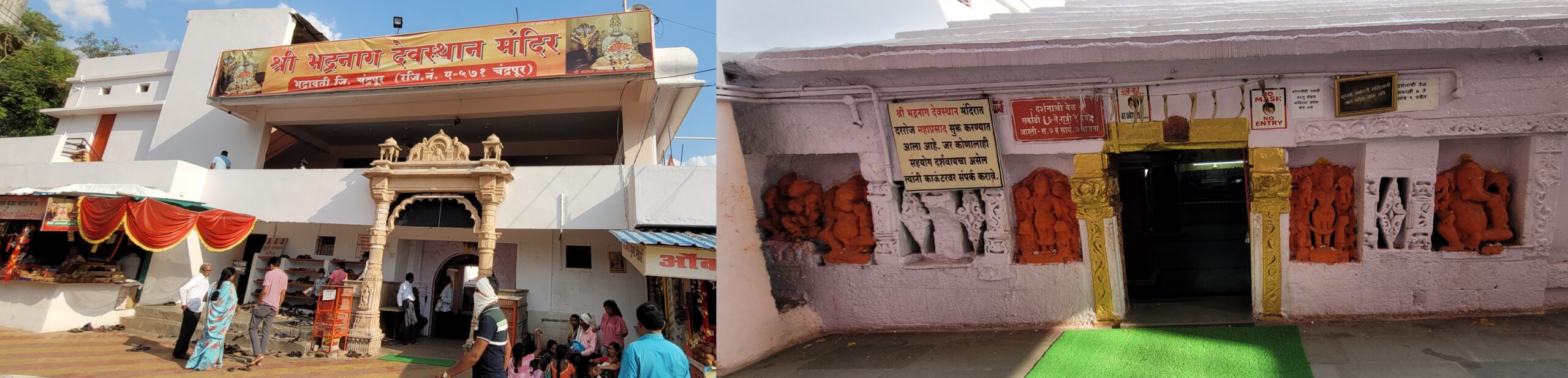 The only temple in Bhandak that has kept its fame alive is the Badarinag temple, popularly known as the “Snake-temple.” Its fame comes not from its beauty but from the holiness of the Naga (snake deity) that is worshipped here.
The current temple is a hasty reconstruction using old materials. It has a half-open hall supported by 20 pillars and a small sanctum. The object of worship is a Naga, which is said to appear on public occasions. Inside the sanctum is a very curious brass cover, shaped like a cone and corrugated to look like a snake’s coils – it almost looks like a puffed crinoline! This vessel was donated to the temple over a hundred years ago and is carried in processions during the annual fair.
The courtyard has several impressive statues standing against the wall, including:
A large statue of Vishnu in his Varaha (boar) Avatar, with other small incarnations around him.
A four-armed Vishnu holding his classic symbols: the club, discus, conch shell, and lotus.
Vishnu and Lakshmi riding on Garuda.
Hara-Gauri (Shiva and Parvati).
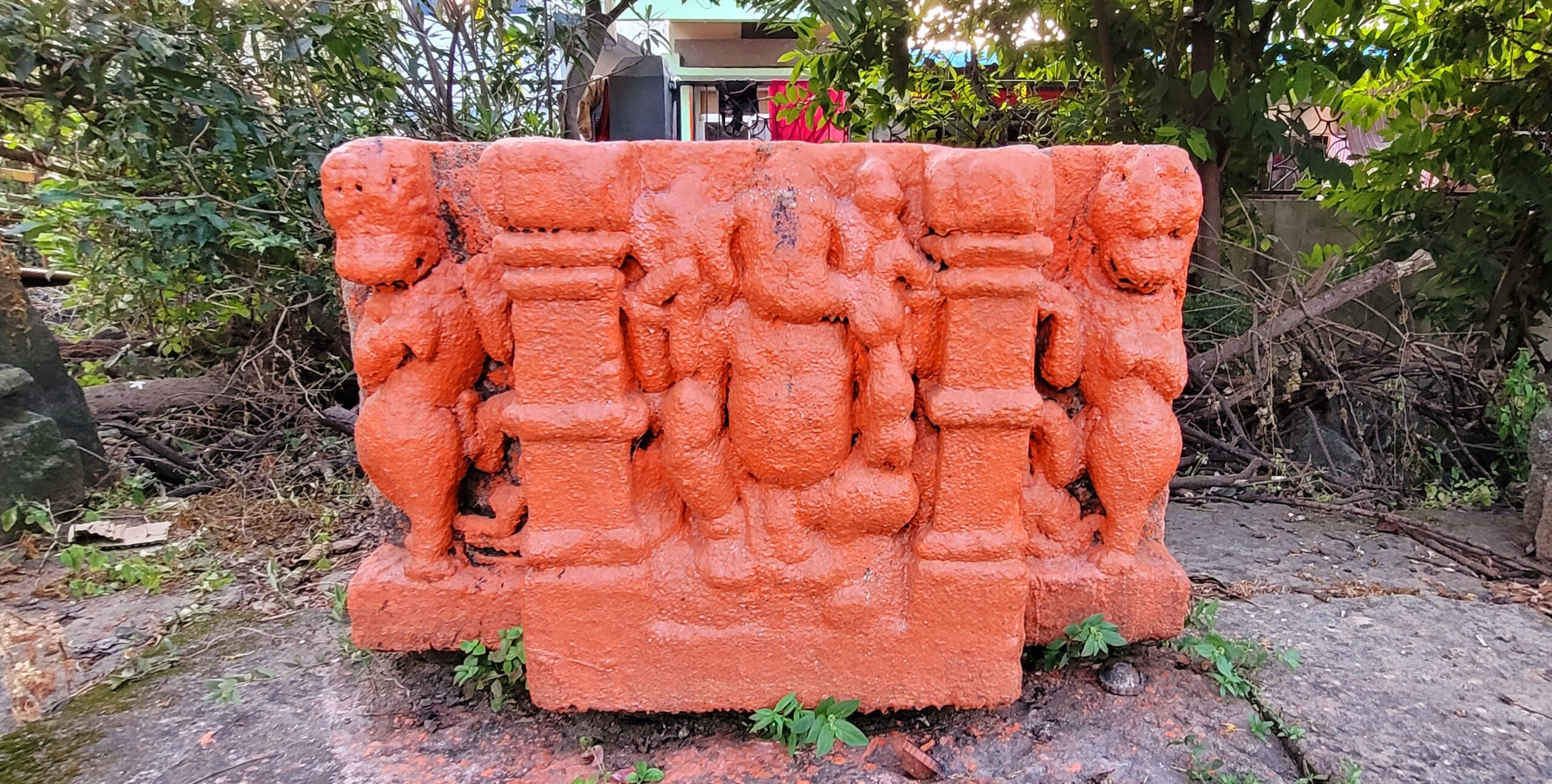
Ganesha.
Two rudely carved lions.

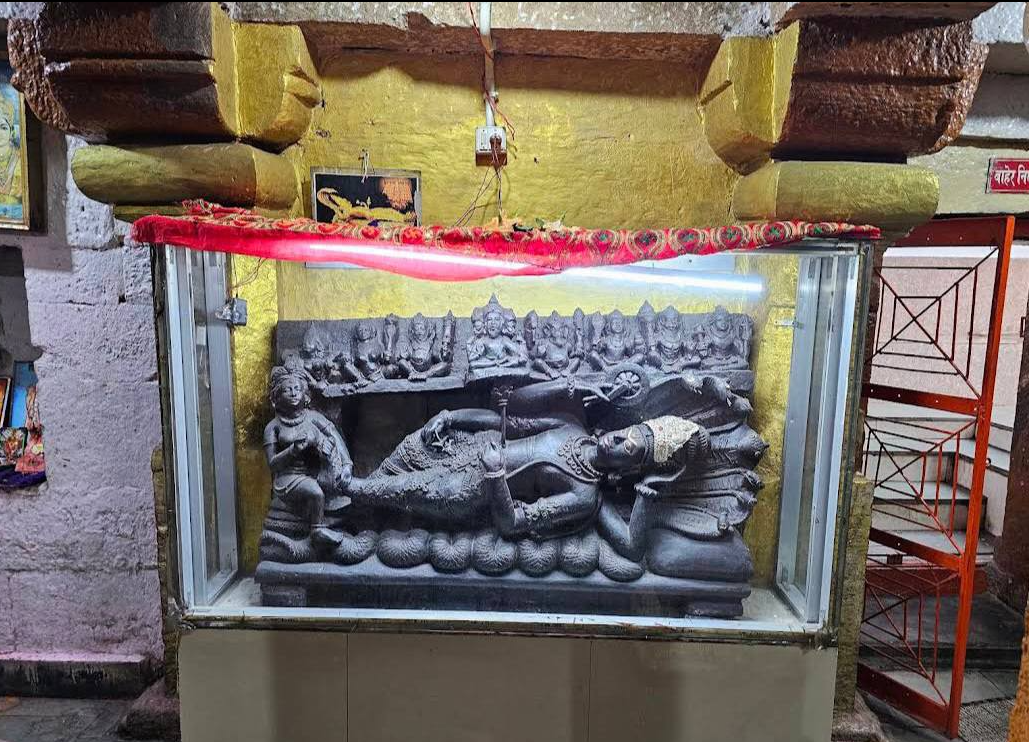
An inscribed slab found here is dated to either 1386 or 1446 AD. It records the dedication of a statue of Jagan-narayana (likely a form of Vishnu). Since the main outside figures are of Vishnu, it’s highly probable the original temple was dedicated to him, and the current snake worship came later.
5. The Taka Talao Temple
Close to a large, beautifully built tank (water reservoir) on the north-west side of town lies the Taka Talao Temple. The tank itself is 300 feet square and 20 feet deep, built with finely cut stones.
The main temple was nearly intact until recently when engineers from nearby coal works began to dismantle it for its stones. The fresh marks of removal were visible during the observer’s visit. Thankfully, the people appealed to the Deputy Commissioner, and the demolition was stopped.
The temple’s design is unique. It has one large hall with three aisles. Interestingly, the central aisle leading to the sanctum is wider (7’3″) than the side aisles (4’2″). The spacing of the pillars is also unusual, with the central space being narrower. The observer cleverly guesses that this might have been a practical decision to prevent the long stone beams from breaking under the heavy weight of the roof. He notes that the beams on the Dolara Bridge, with a similar span, are all intact, while temple beams of the same length are often broken.
The hall is supported by eight pillars and twelve pilasters, famous for their bracket capitals that have a great splay (they spread out widely). The design of these capitals is unique to this region of India and is different from anything found in the north.
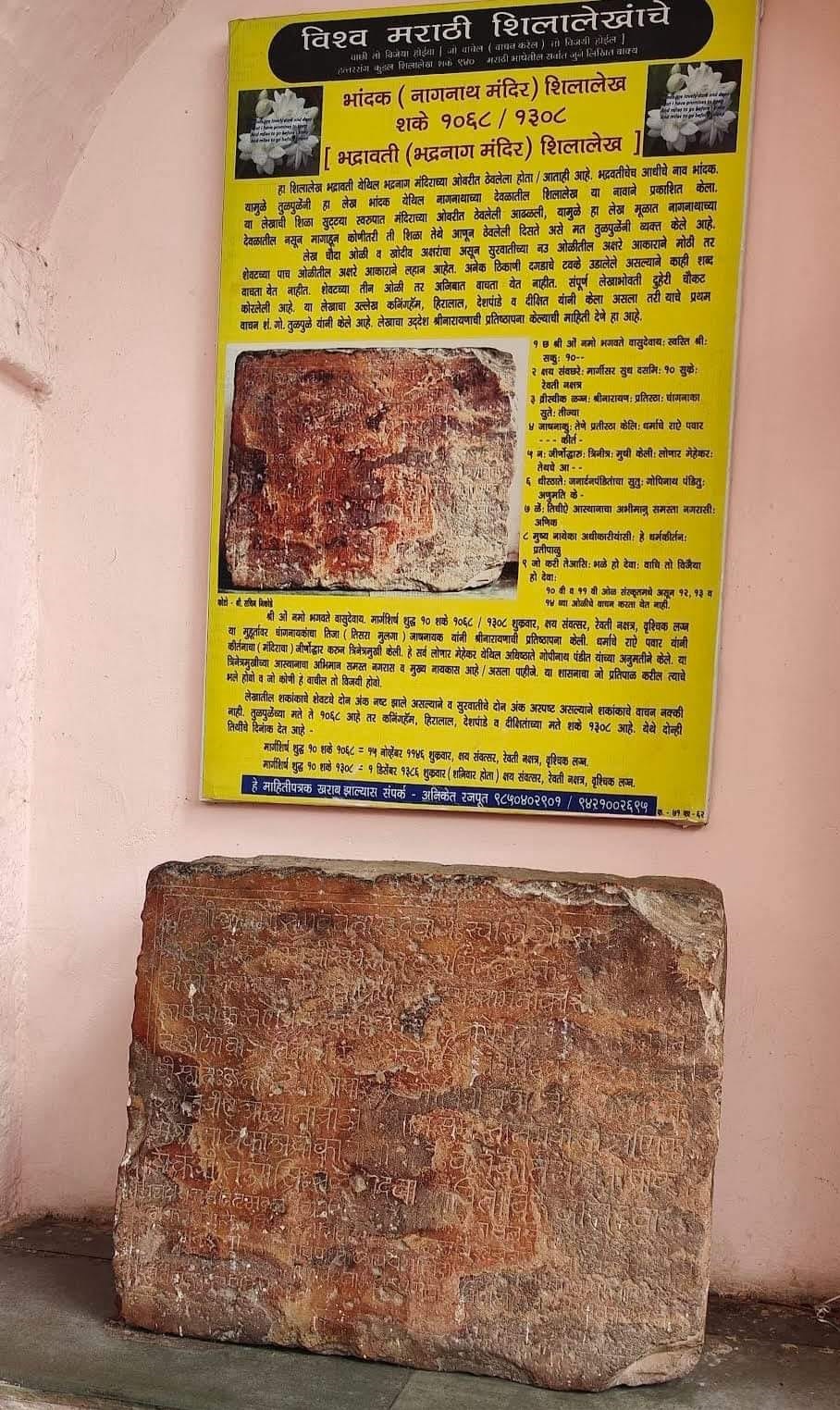
Inside, the temple’s purpose is clear: a large 6-feet-long statue of Vishnu sleeping on the serpent Ananta (Shesh Naag). This confirms the temple was dedicated to Lord Vishnu.
The Final Clue: The Four Pillars of a Lost Grand Temple
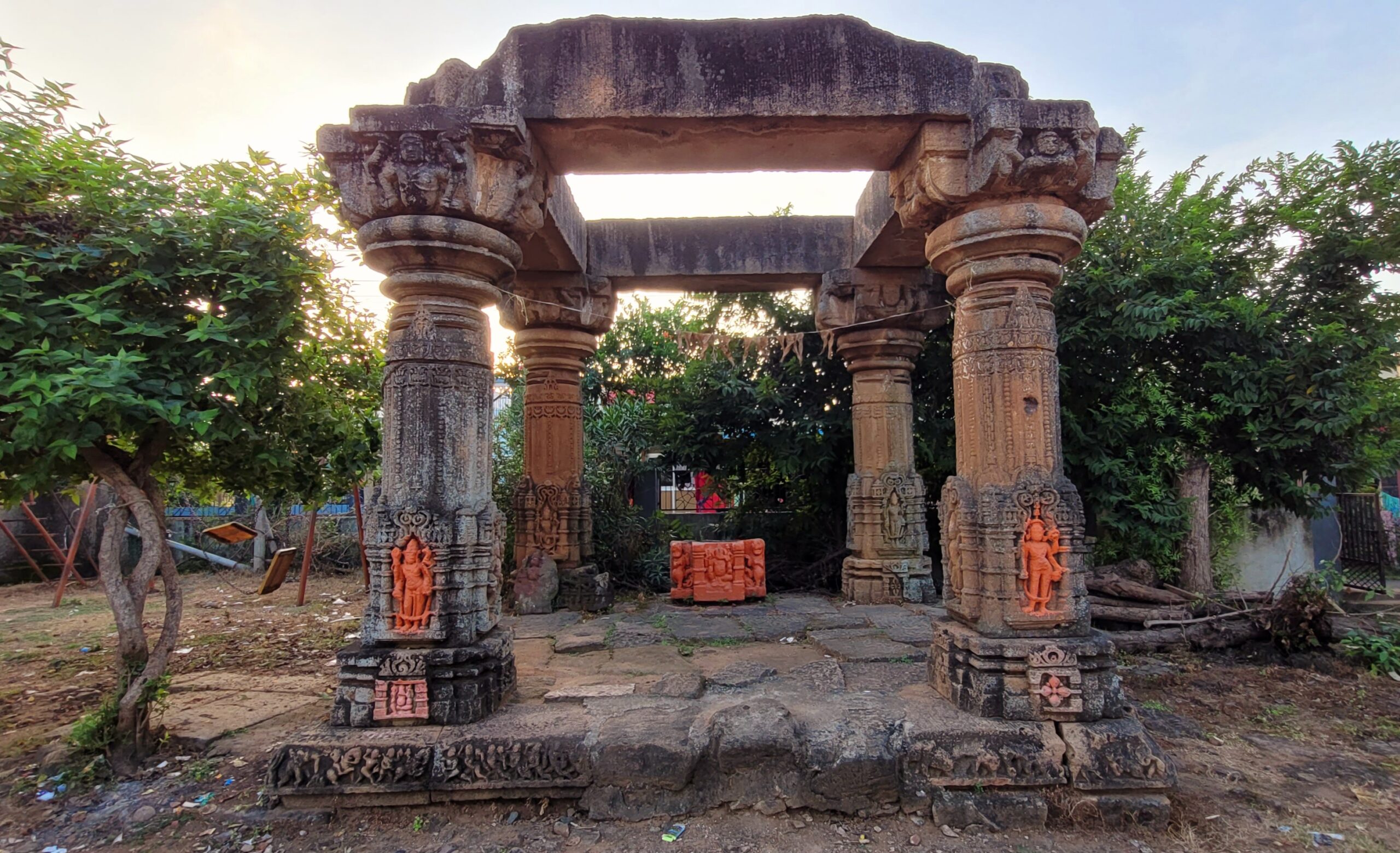
To the east of the Taka temple, in a field, stand four richly carved pillars. They are majestic, each over 8 feet tall and 1.5 feet square at the base. They form a square and were once the central part of the Mahamandapa (the great hall) of a huge and important temple. The mouldings on their capitals combine features from the Taka Talao and other local temples, representing the peak of the local architectural style. They stand alone today, a proud but lonely reminder of a grandeur that has completely vanished.

Vijasan: The Ancient Buddhist Caves of Bhandak
Nestled in the landscape of India, just over a mile to the south-west of the town of Bhandak, lies a small hill known as Vijasan (or Winjhasan). This unassuming hill is home to a remarkable secret: a series of ancient Buddhist caves that have stood the test of time, whispering stories of devotion, art, and history from over a thousand years ago. Unlike the more famous cave complexes of Ajanta or Ellora, the Caves of Vijasan offer a unique and intimate glimpse into Buddhist monastic life, preserved in stunning detail thanks to the extreme dryness of the rock.
The Setting: A Hill of Learning and Legend
The hill of Vijasan itself is part of a beautiful and historically rich area.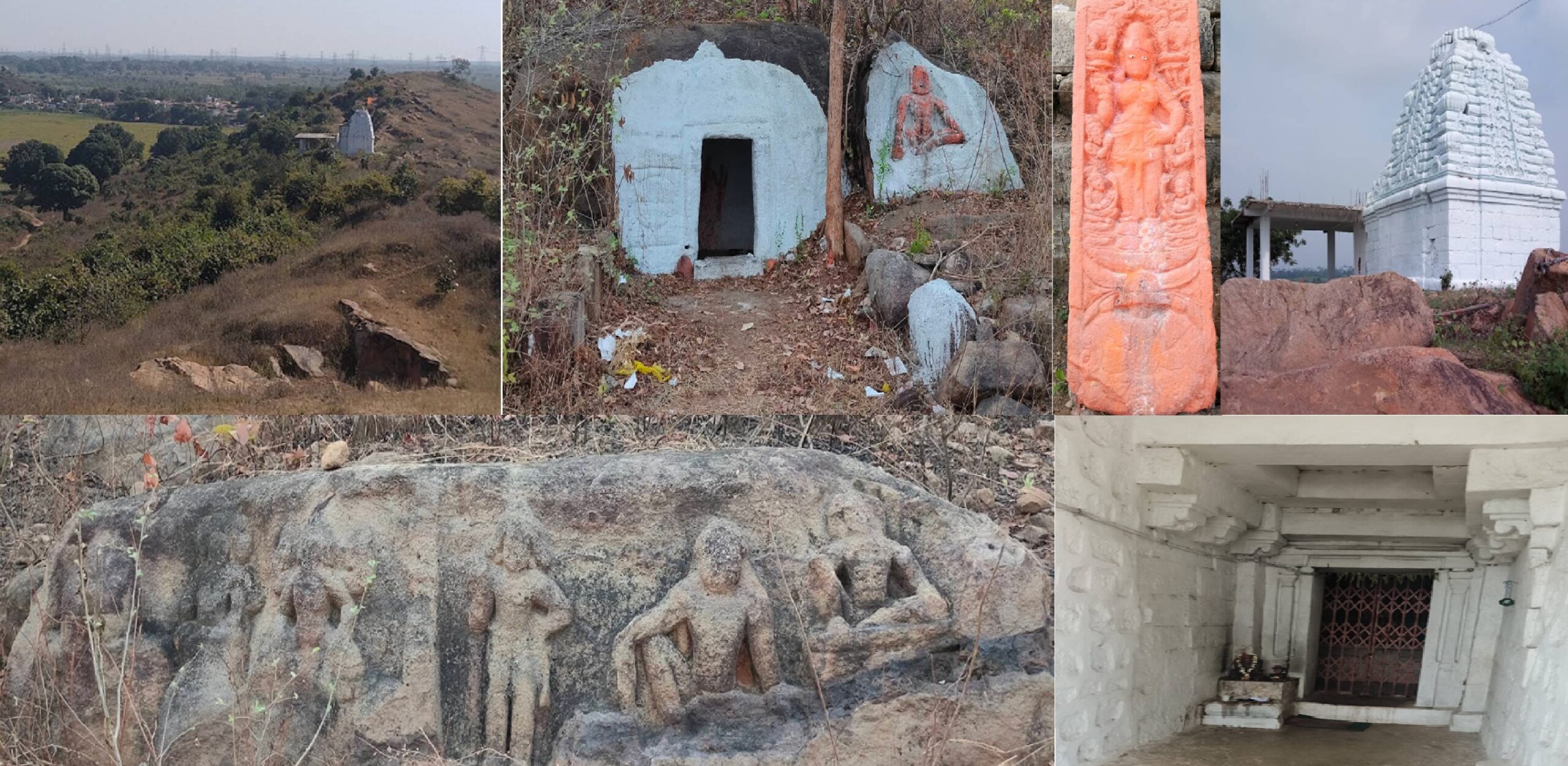
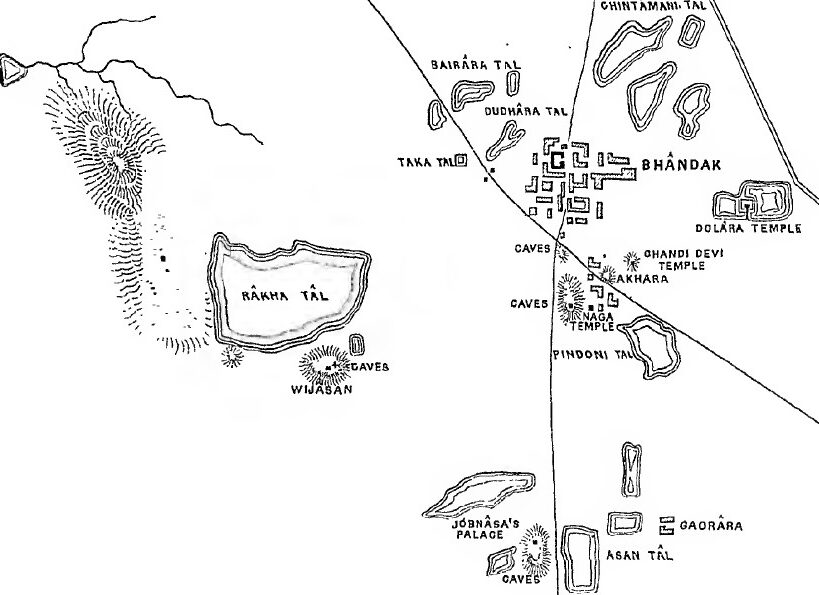
To its north lies a fine, large lake called Rakha Tal, nearly a mile square. To the west of this lake stands a lofty two-mile-long hill, crowned with the ruins of a fort and a Brahmanical temple.
The Vijasan hill has its own ruined temple at the top, but the true treasures are hidden within its rock face – the Buddhist caves.
The name ‘Vijasan’ is intriguing. Some believe it is derived from ‘Vidya-asan’, meaning ‘the abode of learning’—a fitting name for a place of spiritual study. Another spelling, ‘Winjhasan’, might connect it to the Vindhya mountain. Locals, however, simply know the main cave as ‘Bhimsen’s house’ and no strong local traditions about the caves origins remain, adding to their mysterious aura.
A Unique Architectural Plan
What makes the Vijasan caves special is their unique design. They are different from other major cave groups because they have no large halls for communal meetings (like a chaitya griha) and no circular paths for meditation. Instead, the complex is centered around three principal excavations that form a cross shape.

Imagine a cross cut into the rock:
The long lower part is an open passage running east to west, about 63 feet long.
The upper arm is a long, enclosed gallery cave stretching 74 feet into the hill.
The right and left arms are two smaller gallery caves, 47 feet and 35 feet long respectively.
The main open passage is about 20 feet wide. Down its center is a 9-foot-wide walkway, flanked on both sides by raised stone platforms, each 6 feet wide. This passage itself is like a small museum of religious evolution.
A Walk Through History: The Open Passage
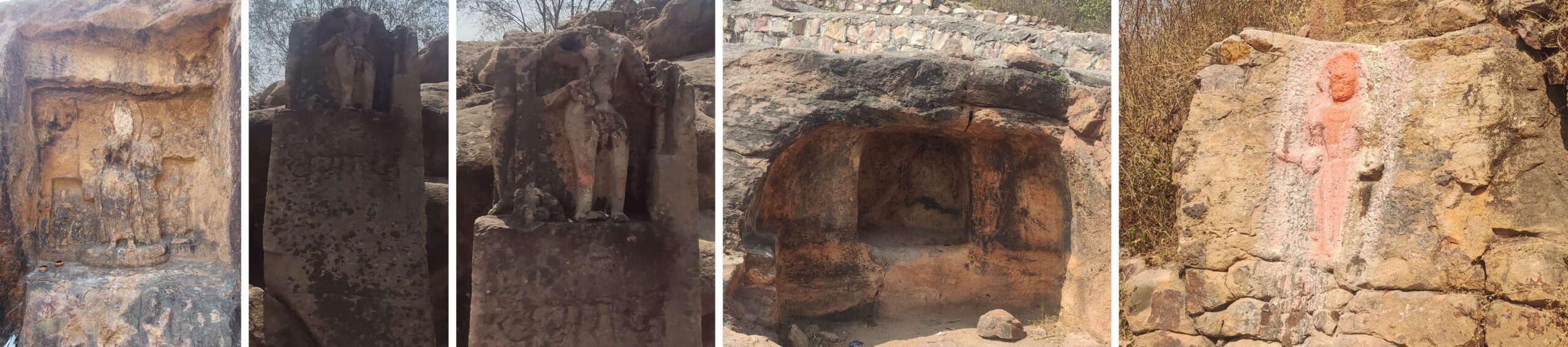
As you walk through this open passage, you see evidence of how the site was used by different faiths over centuries. On the left (south) wall, there are four small shrines, all empty now. In front of them stands a square stone pillar with two carved faces. One face shows a magnificent four-armed Goddess Durga in the act of slaying the Buffalo-demon, Maheshasur. A mutilated inscription on this pillar, based on the style of its letters, shows it was added much later, confirming that Brahmanical followers used the caves after the Buddhists had left.
Further down the same wall, a shallow recess holds a three-headed Brahmanical figure, and right beside it is a Buddhist Stupa carved in high relief. This side-by-side placement is not a coincidence.
On the opposite (north) wall, there are three beautifully carved Buddhist Stupas. Above the largest one, you can see a rough, empty oblong space outlined by a chisel. This empty panel is directly opposite the three-headed Brahmanical shrine on the south wall and is exactly the same size. This is the clearest proof possible: the Buddhist carvings came first, and the Brahmanical ones were added later, often by roughly preparing a space over the original art.
This north wall also has traces of several ancient inscriptions, though most are too damaged to read. The shapes of the few perfect letters suggest the caves were originally excavated as far back as the 2nd or 3rd century A.D.
The Three Doors and the Main Cave (74 ft Gallery)
At the west end of the open passage, you arrive at three doorways cut into the rock—one straight ahead, one to the right, and one to the left. These are likely the ‘ trisile mukha ’ or ‘three rock-cut doors’ mentioned in a famous inscription from the area.
Passing through the central door, you enter a small, flat-roofed chamber (9×4 ft). This leads to a large, main chamber 32 feet long and 8-10 feet wide. The roof here is a beautiful pointed arch. On the left side of this chamber is a small square room (6.9 ft x 6.9 ft) with a low, pointed roof. Beyond it is a niche containing a serene, four-armed statue of Goddess Saraswati, the deity of knowledge and music, holding a book and a lute (Vina).
On the right side are two even smaller rooms. These are the humble cells of the monks who once lived here. They are simply stone beds, raised about 1.5 feet off the floor, with a rock pillow at each end. One can almost picture a meditative monk resting here centuries ago.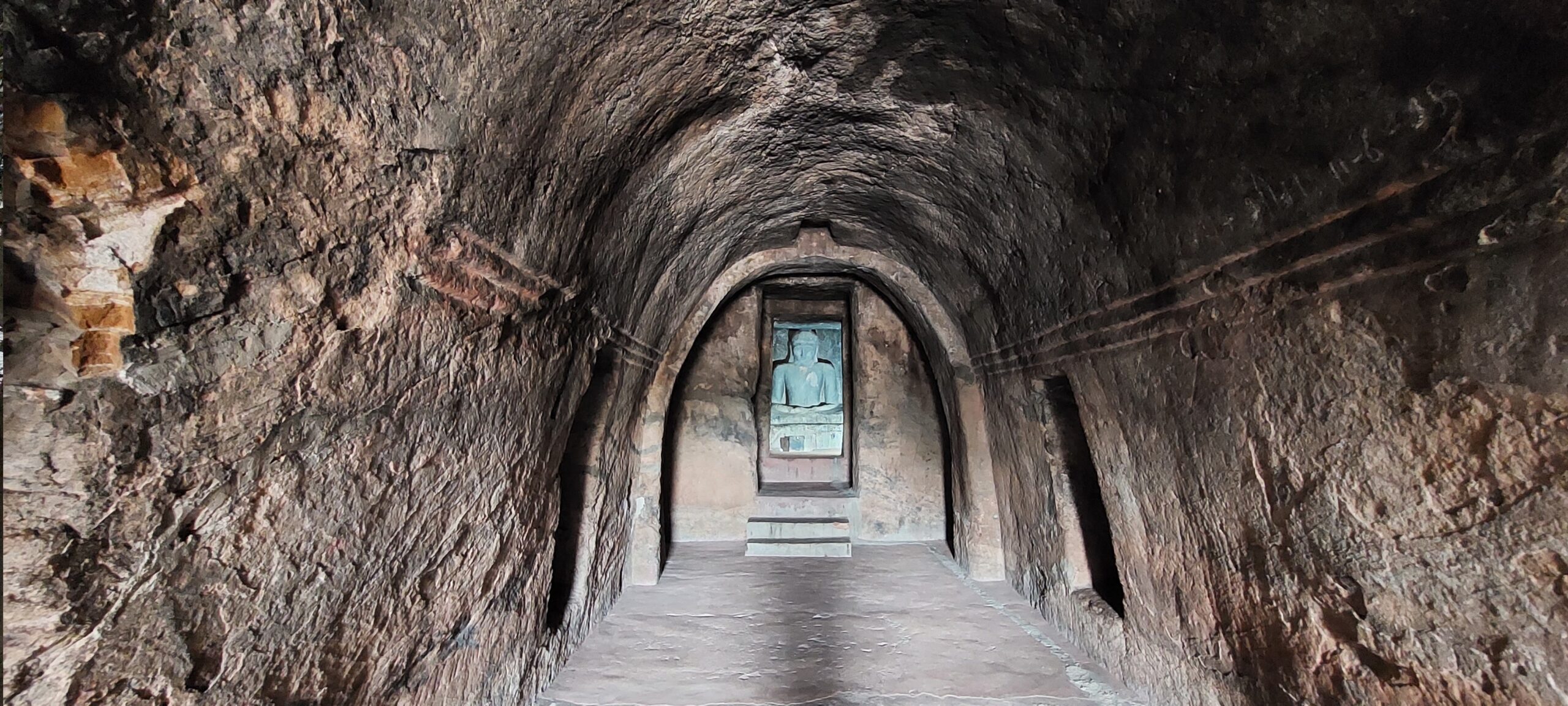
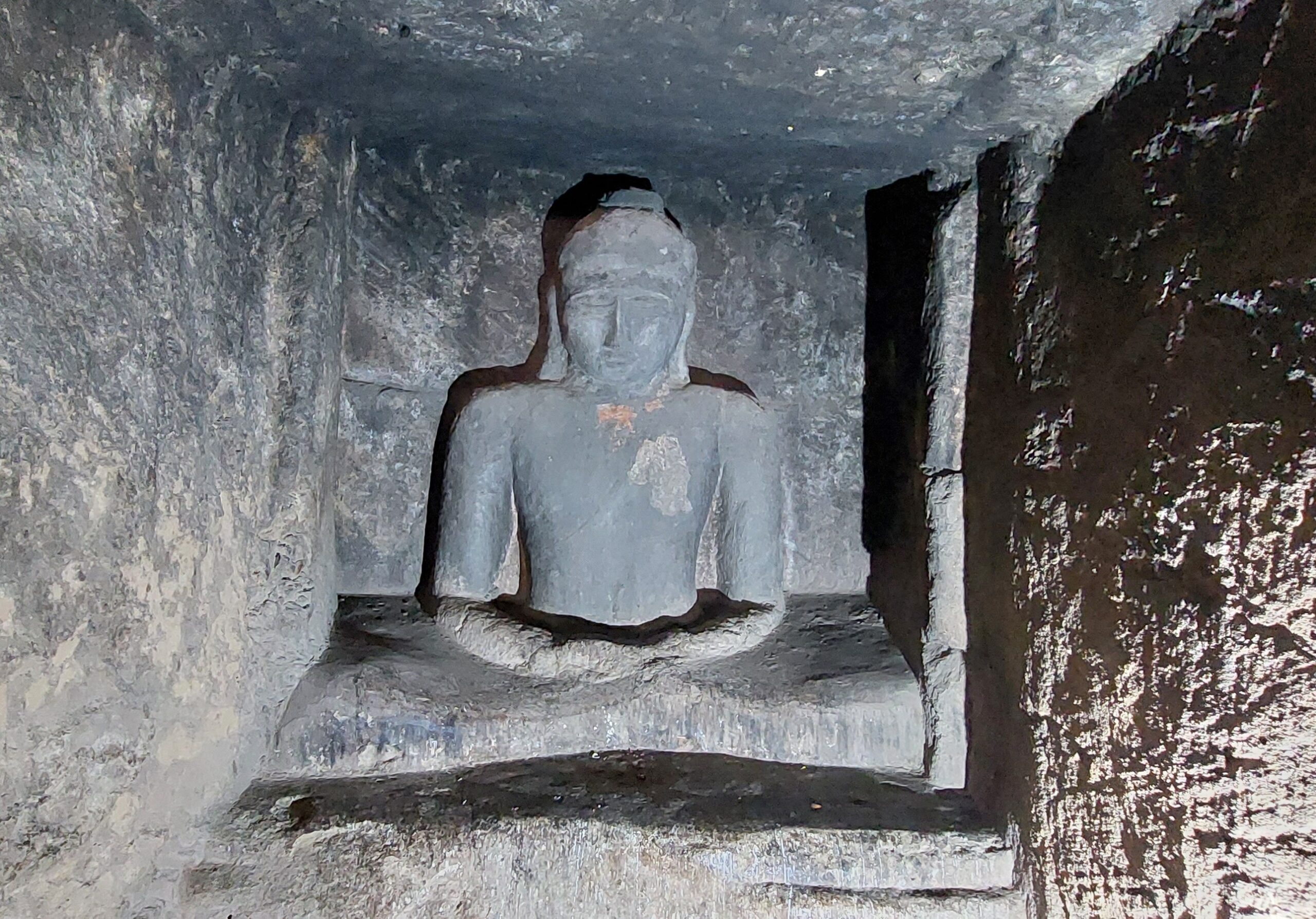
At the head of this long chamber, a few short passages finally lead you to the sanctum sanctorum—a small, sacred room (11.3 ft x 7.1 ft) with a flat roof. Here, dimly visible in the faint light filtering down the 74-foot-long gallery, sits a mutilated but peaceful figure of Buddha, seated on a throne. It is a powerful and moving sight.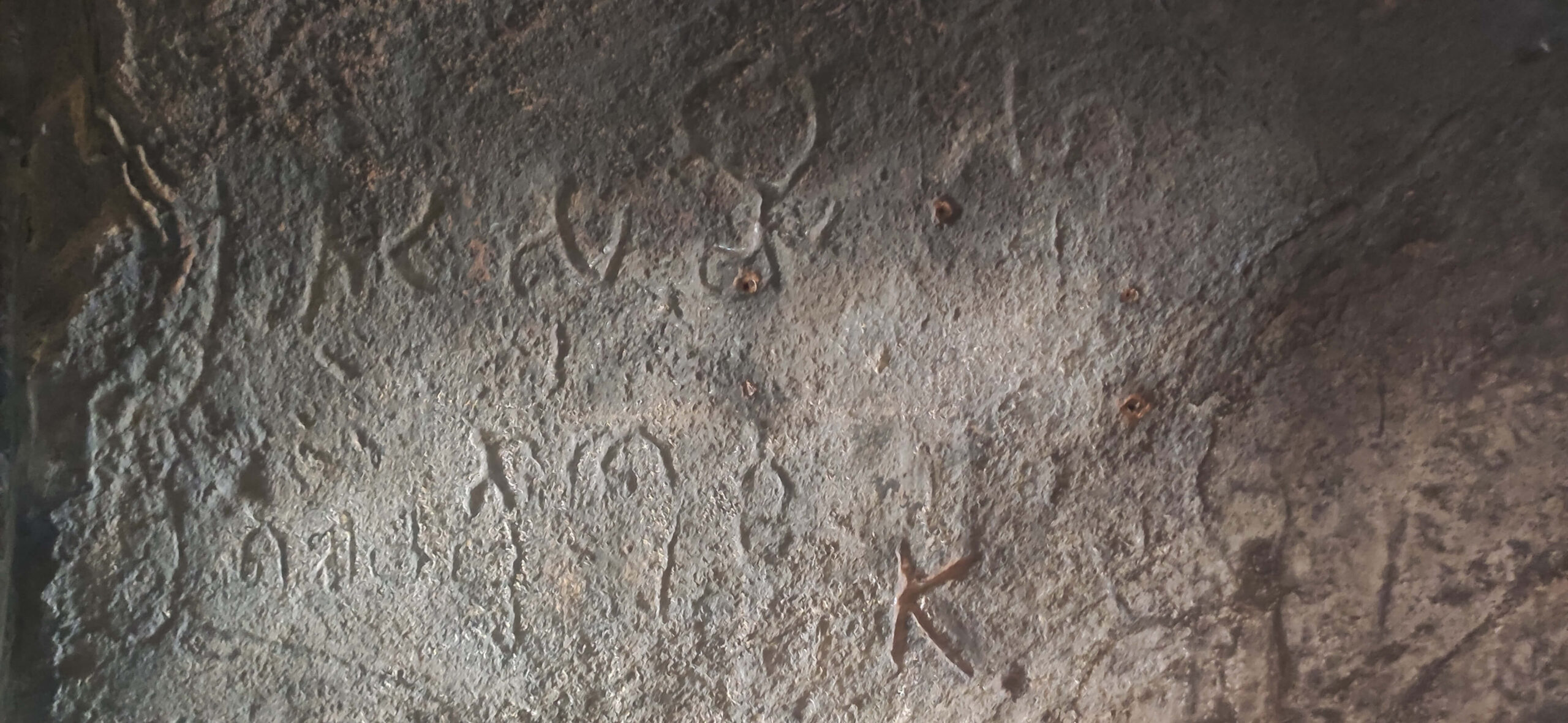 On the right door jamb of this sanctum is a short, six-letter inscription. It seems to read ‘Sri Rudasachi-hu ’, which is probably the name of a pilgrim, Rudra, who visited the cave long ago. This simple graffiti is incredibly valuable. The style of the letters is of the Gupta type, which helps date this part of the cave to a time earlier than 500 A.D.
The Right and Left Caves
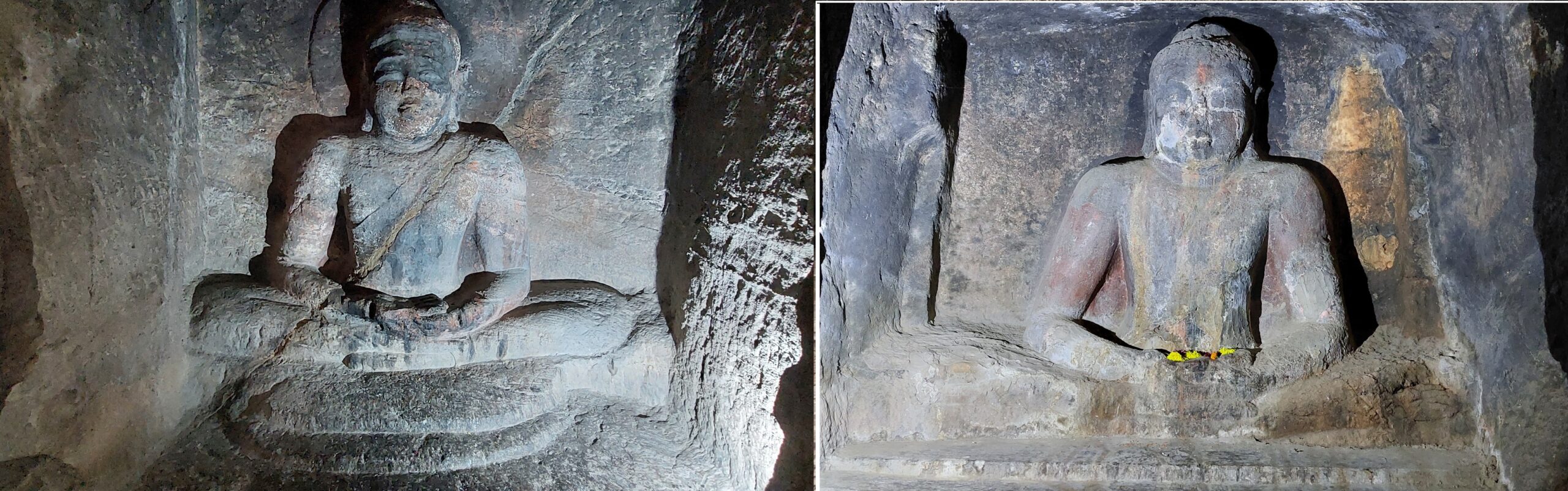
The right-hand (north) cave is similar to the main cave but smaller (47 ft long). It has a chamber with a round arched roof but no side rooms or niches. Its sanctum is empty. On its entrance door, the gigantic Devnagari script character ‘Bi’ is engraved, a massive 10 inches high and 6 inches broad. This might be the initial syllable of ‘Bijasan’, another possible name for the hill.
The left-hand (south) cave is the smallest (34.9 ft long) but has a slightly higher arched roof (9.5 ft). It contains one small cell for an attendant monk and, most importantly, its sanctum still holds the statue of Buddha seated in its original place.
All three caves follow the same master plan: a narrow entrance leads to a cross-chamber, followed by a long vaulted gallery, then another cross-chamber, and finally a narrow passage opening into the holy sanctum where the Buddha image resides.
The inscriptions on the north wall of the open passage are unfortunately too much injured to be readable. A few of the letters are quite certain, and their forms show distinctly that they belong to two different periods ; the earlier to the Gupta period before A. D. 500, and the later to the 7th or 8th century, when the attached vowels and the feet of the consonants were prolonged into barbed flourishes.
The Story of the Great Lost Inscription
The history of these caves was almost lost. The first known European to visit them was Dr. S.G. Malcolmson in May 1838. His brief account is valuable because he makes no mention of a large inscription, suggesting it was already gone. He described the sitting Buddha figure and noted the presence of both Buddhist and modern-looking Brahmanical figures, like Durga.
The mystery of the missing inscription was solved by the author of our text. During his visit in December 1873, the locals of Bhandak told him that about 40-50 years earlier, during the time of the Raja, a ‘Long Red Slab’ inscription had been taken to Nagpur by ‘Wilkinson Saheb’. Major Wilkinson was indeed the British Resident at the Nagpur Court at that time. The author confirmed that this very inscription—a long slab of the same fine-grained reddish stone as the Vijasan hill—is now in the Nagpur Museum.
This inscription is crucial. It was translated by Dr. Stevenson, who recognized it as Buddhist. It records that the reigning sovereign, Bhava Deva, had become a ‘Bodhisattva’ (a Buddhist sage). It also calls the cave the ‘house of Sayata’ and the ‘abode of Jana’, two well-known names for Buddha, directly linking it to the Vijasan complex.
However, the author questions some of Dr. Stevenson’s conclusions. Stevenson thought the king was from Orissa and dated the inscription to the year 711. The author, after studying actual paper impressions of the stone, argues the script’s letter forms point to the 7th or 8th century A.D. He also finds it puzzling that a Buddhist inscription would open with an invocation to Lord Shiva, suggesting the original copy used for translation might have had inaccuracies due to the worn-out nature of the stone.
I humbly request the Archaeological Survey of India and the Nagpur Museum authorities to kindly ensure that this historically valuable Long Red Slab inscription of Vijasan Buddhist Cave (Bhandak) is placed on public display inside the Nagpur Museum.
A Legacy Carved in Stone
The Caves of Vijasan are a fascinating palimpsest of Indian history. They began as a vibrant Buddhist monastic site around the 2nd-3rd century A.D., flourished during the Gupta period (before 500 A.D.), and were later occupied and modified by Brahmanical followers, as seen by the carvings of Durga and Saraswati. The inscriptions on the walls, from the pious scribbles of pilgrims to the grand royal record, tell a story of changing times, faiths, and rulers.
Today, they stand not just as archaeological wonders but as a silent testament to India’s layered spiritual heritage. They remind us that history is not always found in grand palaces but often hidden in the quiet hills, waiting in the dim religious light at the end of a long gallery, for those who seek it.
Gaorara: A Hidden Gem of Ancient Temples and Mysterious Caves
Nestled in the heart of India, just a short distance of one and a half miles to the south of the town of Bhandak, lies the small and historically rich village of Gaorara. Also known by the name Gavarara, this place is far more than just a village. It is an open-air museum, a sacred site whispering stories from a thousand years ago, filled with the remains of magnificent temples, intriguing rock-cut caves, and serene ancient tanks (water reservoirs).
For anyone interested in history, archaeology, or simply the spiritual heritage of India, Gaorara is a place that captures the imagination. Let’s take a deep dive into the fascinating details of this special location.
The Setting: Tanks, Hills, and Temples
As you approach Gaorara, the landscape sets the stage for what’s to come. To the west of the village, you will find several fine, well-built tanks. Among these, the Asan Tal stands out as a particularly beautiful one. Beyond this peaceful water body, the land rises into a low hill. This hill is not just a simple mound of earth; it is crowned with the ancient ruins of several temples, their broken structures silhouetted against the sky, telling us about a glorious past.
Adding to the unique scenery are many huge, detached rocks scattered around. These aren’t just natural formations; many of them have been carefully hollowed out by human hands centuries ago to create caves and religious niches, making the entire area feel sacred and mysterious.
The Rock-Cut Niches: A Row of Divine Carvings
One of the most interesting features in Gaorara is a group of these huge, rounded stones that form a more or less uniform front wall about 40 feet long. In this wall, ancient artisans carved out a series of niches, each holding (or once holding) sacred symbols and statues.
Starting from the left side:
The first niche contains a lingam, the iconic symbol of Lord Shiva.
The second niche is especially significant. It holds a row of figures known as the Ashta-Sakti – the eight forms of Divine Feminine Energy, represented by eight female effigies.
The third niche features a seated figure of Lord Ganesha, the remover of obstacles.
The fourth niche is now empty. The statue that was once here has been removed from its socket, but if you look closely at the back wall, you can see a lingam scratched onto its surface.
The sixth niche contains another lingam and also has a space meant for a second figure.
The seventh niche only has a mutilated, or badly damaged, figure remaining.
All these niches are carved roughly, showing a simple but powerful style of rock-cut architecture.
The “Big Fowl-house”: A Cave of Mystery
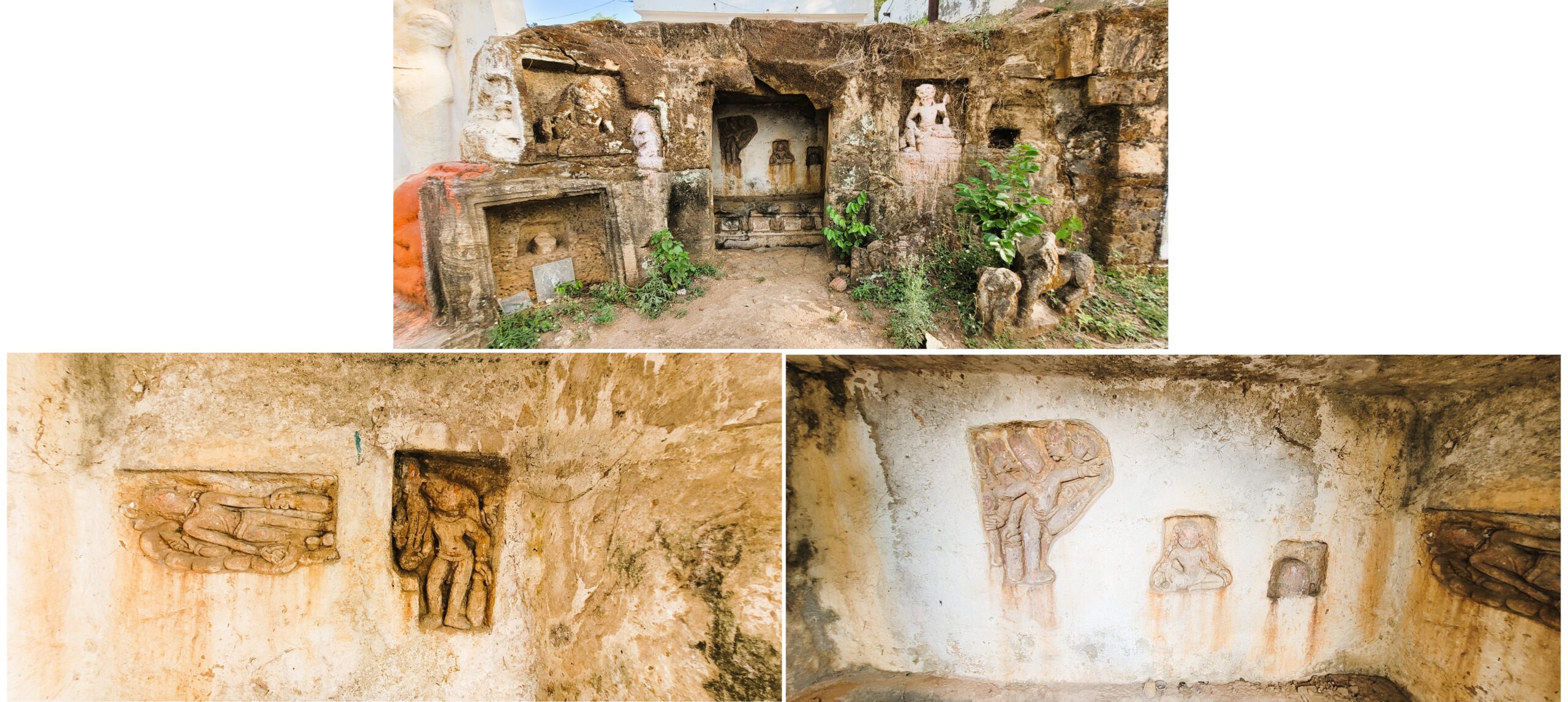
This curiously named cave, called the “Big Fowl-house,” is actually a very carefully and precisely cut room. It is 9 feet long, 5 feet 2 inches broad, and over 7 feet high. The entrance is 3 feet 7 inches wide, and there are even traces on the ground that suggest a structural porch once stood in front of it, welcoming visitors inside.
The most striking feature of this cave is a raised platform that runs around its three walls. This platform was clearly designed for the reception and display of statues. It is very finely hewn, with decorative mouldings both above and below the platform. Most importantly, there are eight large sockets (marked in records with the letters A to H) cut into this platform, meant to hold eight large statues.
Today, the cave doesn’t have those original large statues. Instead, there are a few smaller, loose figures that seem to have been placed there later. These include:
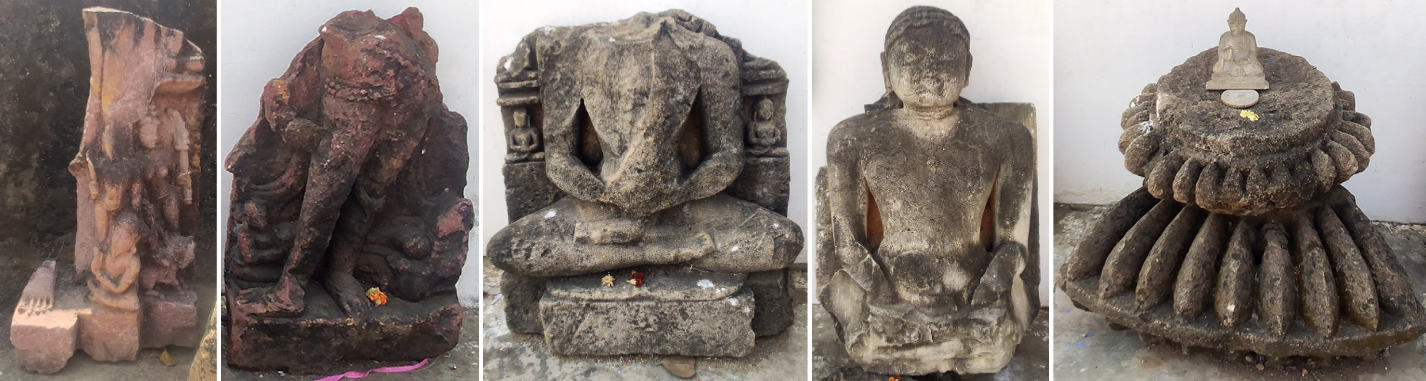
A figure of Lord Vishnu resting on the serpent Ananta-Shesha.
Figures representing two of Vishnu’s ten incarnations (Dashavatara): the dwarf (Vamana) and the boar (Varaha) incarnations.
An unidentified seated figure.
Another lingam.
This mix of statues creates a historical puzzle. The eight sockets suggest it was designed for a specific set of eight statues. If it were for Vishnu’s ten incarnations, we would expect ten sockets. Perhaps more than one incarnation was carved on a single stone—a practice that was known to happen, like having the fish (Matsya) and tortoise (Kurma) avatars one above the other on the same slab.
Whatever the original statues were, the presence of the Vishnu figures shows that his worship was popular here at a later time. There’s also a fascinating possibility that this cave was originally Buddhist. The arrangement of statues on a platform around the walls is very typical of Buddhist caves, a tradition still seen in places like Burma (Myanmar) today. A strong clue for this theory is that a draped figure of Buddha was found lying at the foot of the same hill. Furthermore, the nearby “Little Fowl-house” seems to have been a monk’s cell, which we will discuss next.
The “Little Fowl-house”: A Monk’s Humble Abode
Very close to the Big Fowl-house is a smaller cave called the “Little Fowl-house.” This cave is much smaller, measuring 5 feet 5 inches long by 3 feet 3 inches broad. These are almost the exact usual dimensions of rock-hewn cells used by Buddhist monks for meditation and living. It is, therefore, almost certain that this small, simple cave was once the quiet home of a devout monk, adding weight to the idea that Gaorara had a significant Buddhist presence before becoming a Hindu pilgrimage site.
Jobnasa’s Palace: The Grand Brahmanical Temple
Standing proudly on the hill above these two caves is the main temple of Gaorara, known as Jobnasa’s Palace. Although the outside of the temple is in ruins, the interior arrangement is surprisingly well-preserved.
The original southern entrance is gone, but most of the pillars of the Mandapa (the great hall for gatherings) are still standing strong. The walls of the Antarala (the vestibule or connecting chamber) and the Garbhagriha (the sanctum sanctorum, the most sacred inner room) are also intact.
The roof of the great hall was supported by 16 pillars, each standing 7.5 feet tall. These pillars are noted for their beautiful and graceful design. They are actually considered more proportionally elegant than the pillars found in the famous temples of Bhandak nearby. They achieve this beauty by cleverly avoiding a “pinched neck” design (a thinner section at the top of the shaft) that can make other Hindu pillars look weak. The architects here made the pillars look strong and graceful by adjusting the bulk of the main shaft itself.
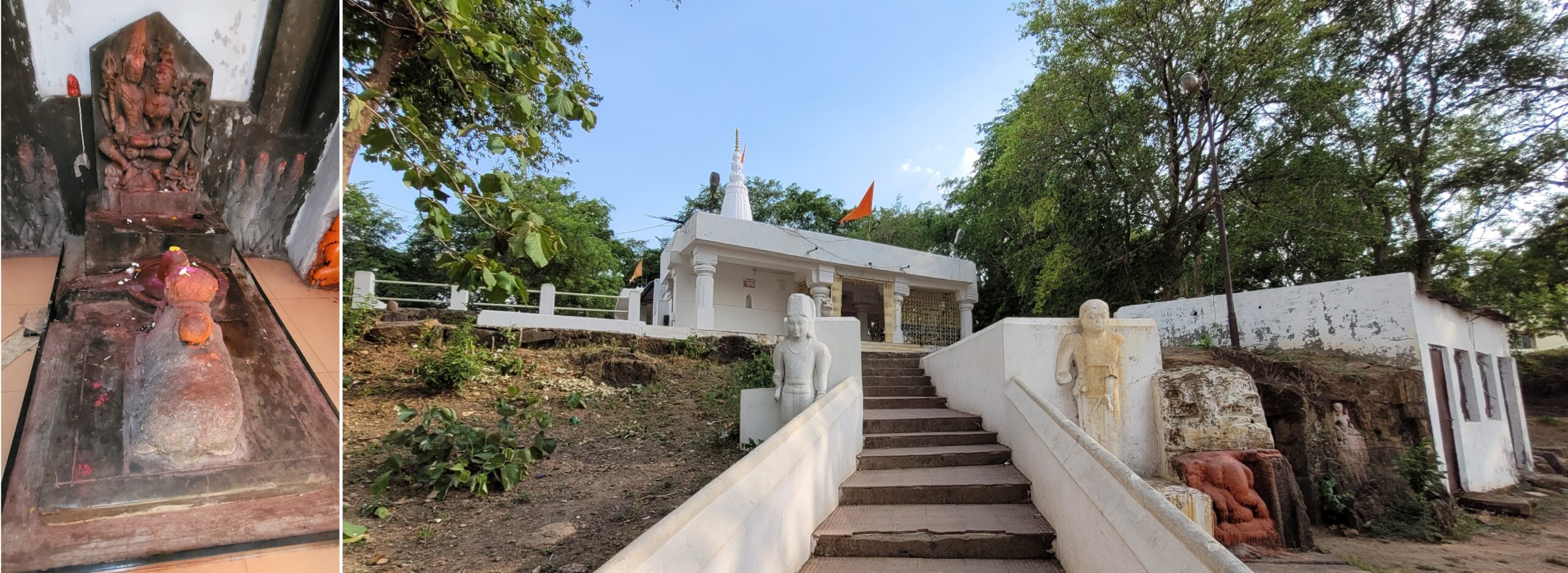
The Antarala and Garbhagriha of this temple are also larger than those in the Bhandak temples. Today, they are empty, but the great hall contains figures of Lord Ganesha and the Bull Nandi (the vehicle of Lord Shiva).
A crucial piece of evidence that helps us date this temple is an inscription found on the left-hand door jamb of the Antarala. It is dated to the Samvat year 1166, which translates to 1109 A.D. This means this grand temple was built in the early 12th century, making it somewhat later than the famous Chandika Devi temple.
The Surrounding Temple Complex
The spiritual importance of Gaorara is highlighted by the fact that Jobnasa’s Palace was not alone. The area was a full-fledged temple complex:
Just 21 feet to the south of the main temple is a small side temple dedicated to Lord Ganesha. It consists of a single room, 16 feet 4.5 inches long and nearly 7 feet wide, with its entrance facing the main temple.
About 500 feet to the south, lie the foundations of a large Saiva temple (dedicated to Shiva), suggesting an even larger structure once stood there.
On low spurs of the hill to the east and north-east, about 400 feet away, there are traces of two other temples.
To the north, traces of three more temples have been found.
This shows that Gaorara was once a thriving and important centre of religion and architecture, with not one or two, but many temples attracting devotees from all around.
Dewalwara – Forgotten Fort, Caves and Legends
Just six and a half miles west of Bhandak lies the hill of Dewalwara, a place full of history and mystery. On its top stands a small square fort with high walls, now in ruins. Inside this fort, four ancient pillars of an old temple are still standing, resembling the style of Chandika Devi temple. Nearby is a dry tank known as Tanka, and to its east is a natural rock mark, believed to be Bhim Sen’s Charan (footprint), measuring 15 inches long and 6 inches broad.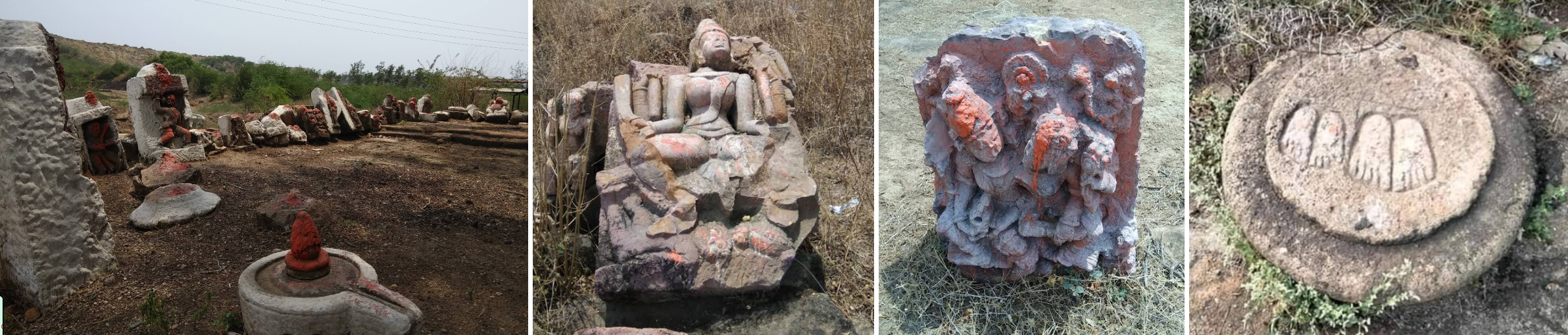 The hill also has several caves. The largest is the Narsinh Cave, a narrow natural-looking passage, about 32 feet long and 4 feet wide, with a small chamber near the entrance. This chamber holds an image of the goddess Devi.
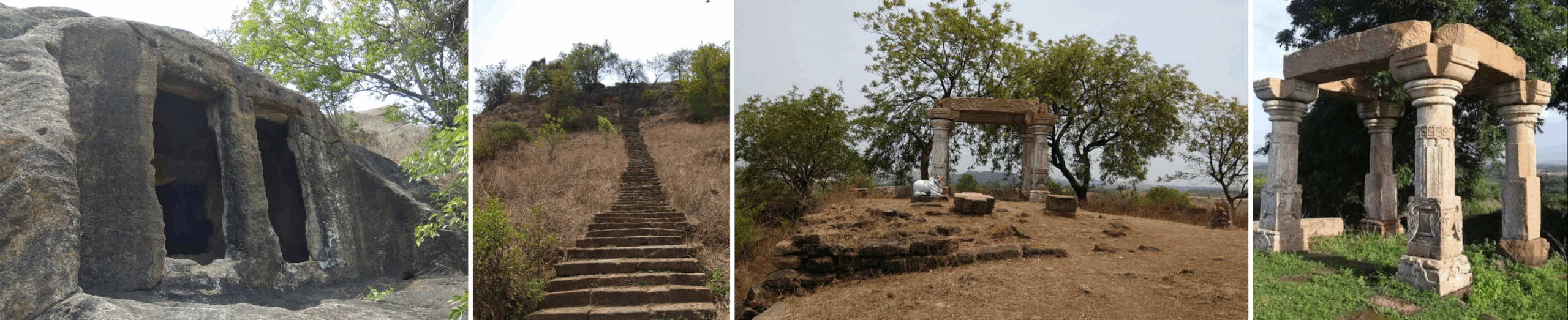 Around 100 feet south of Narsinh Cave are four small rough caves or cells, not of much importance. Another 100 feet further south lies a more interesting double-roomed cave with straight sides. The outer room is about 8 feet 9 inches by 4 feet 3 inches, while the inner room measures 6 feet 3 inches by 6 feet. Both rooms are very low in height, only about 4 feet 7 inches, showing that the excavation work may have been left unfinished.
Thus, Dewalwara combines ruined forts, ancient legends, and unfinished caves, making it a silent witness of the past.
