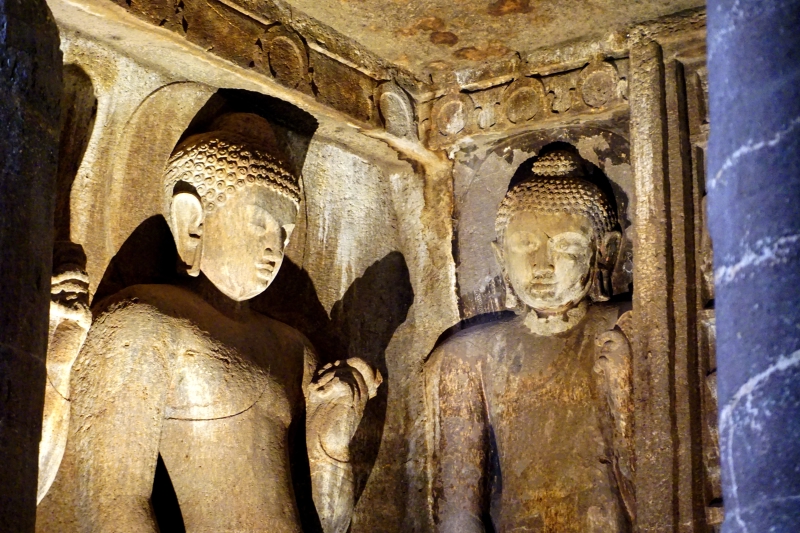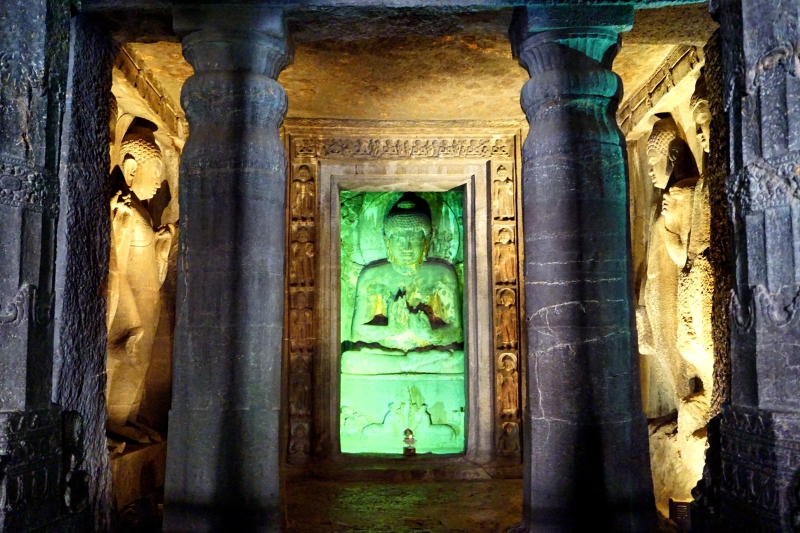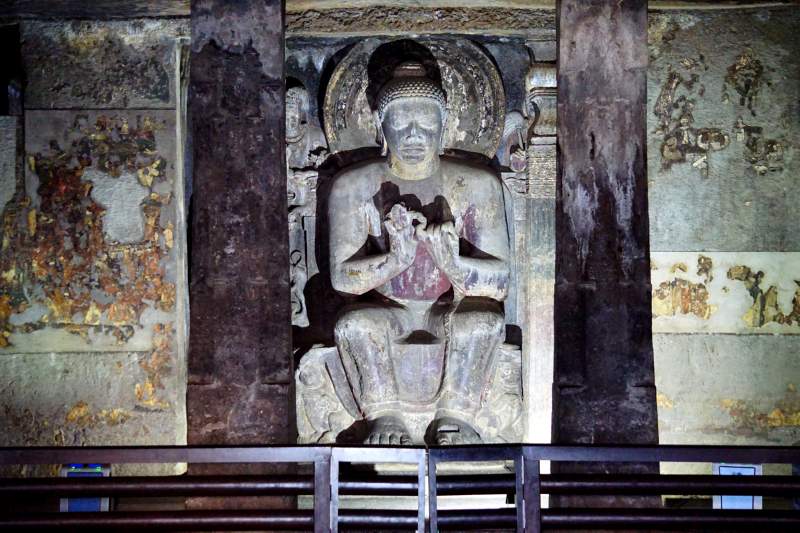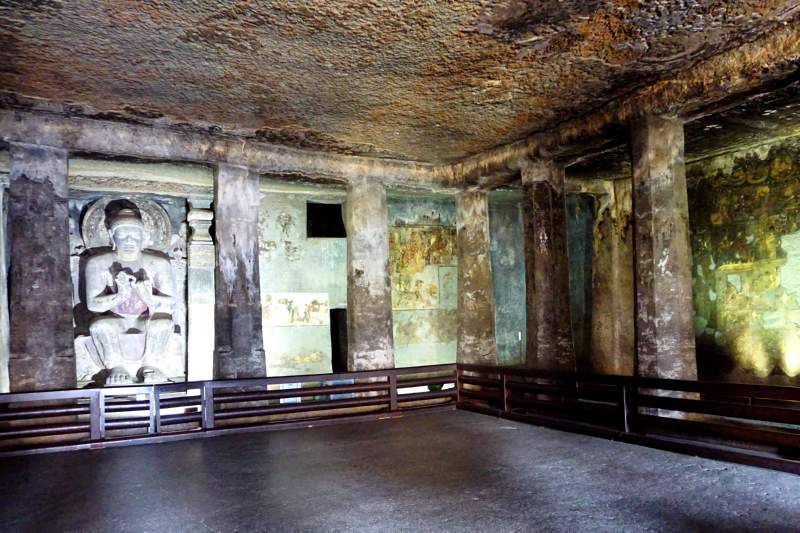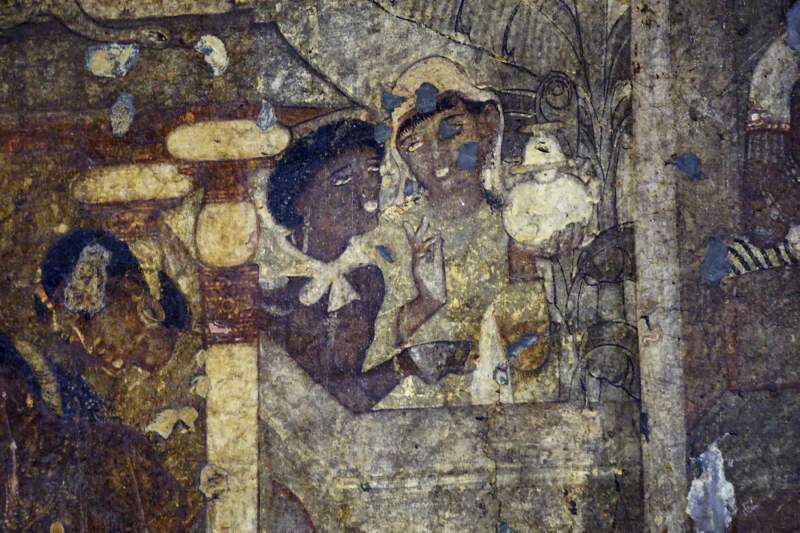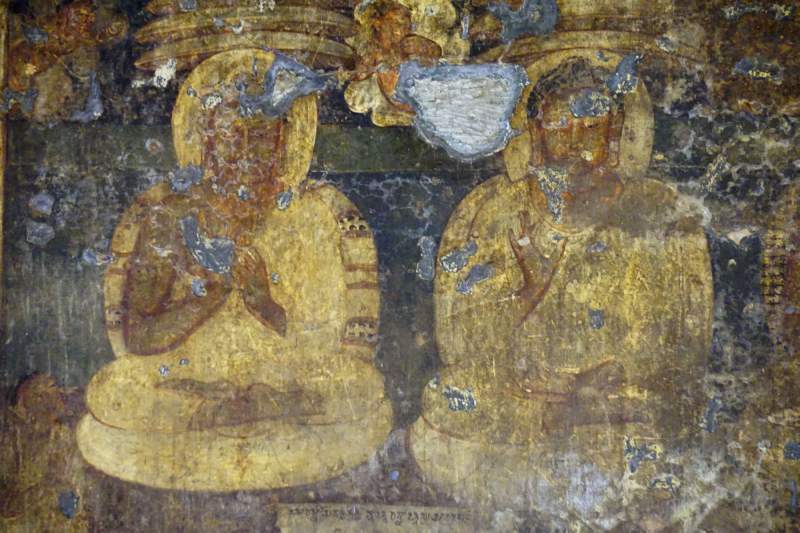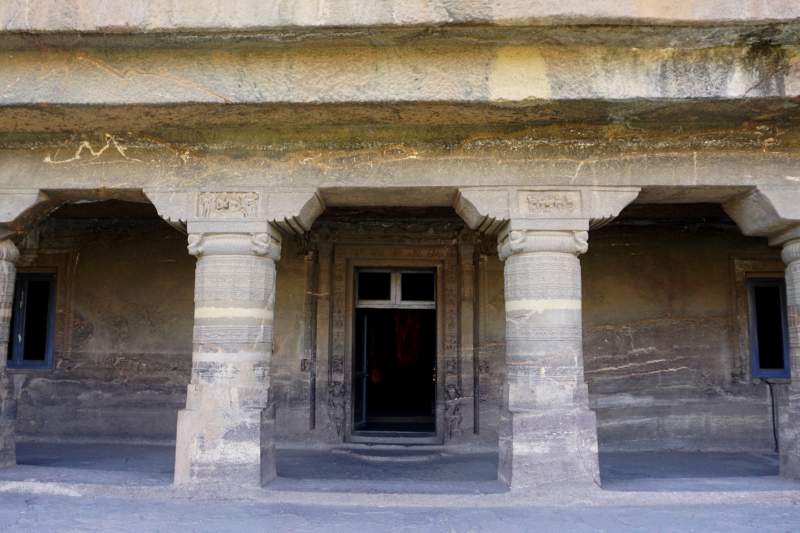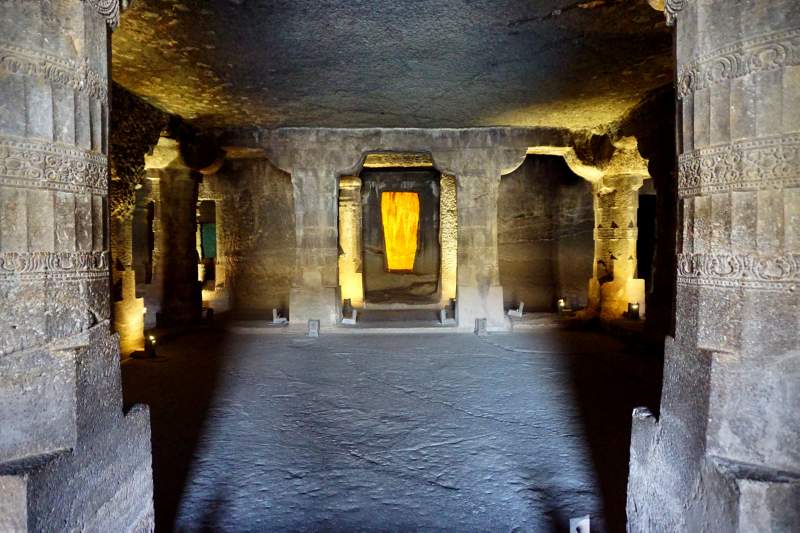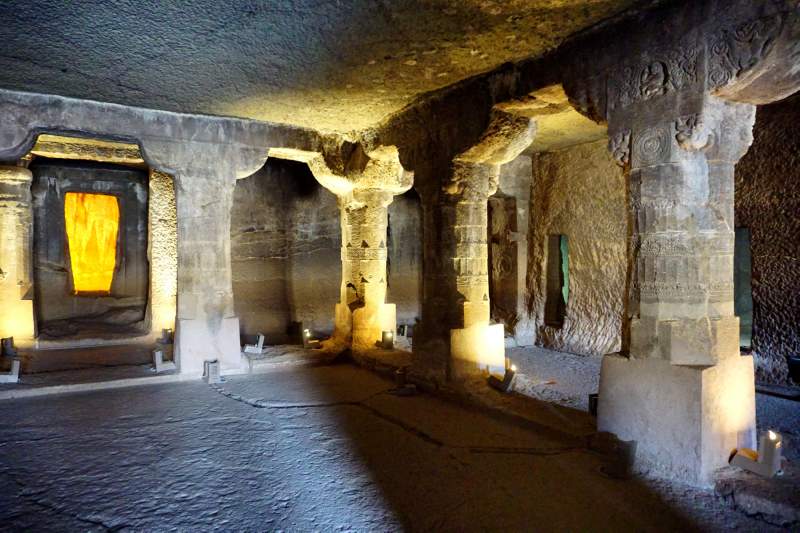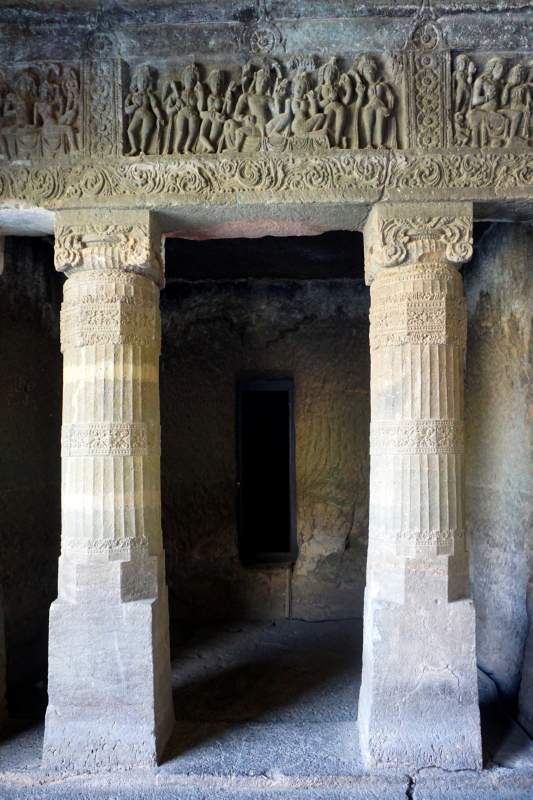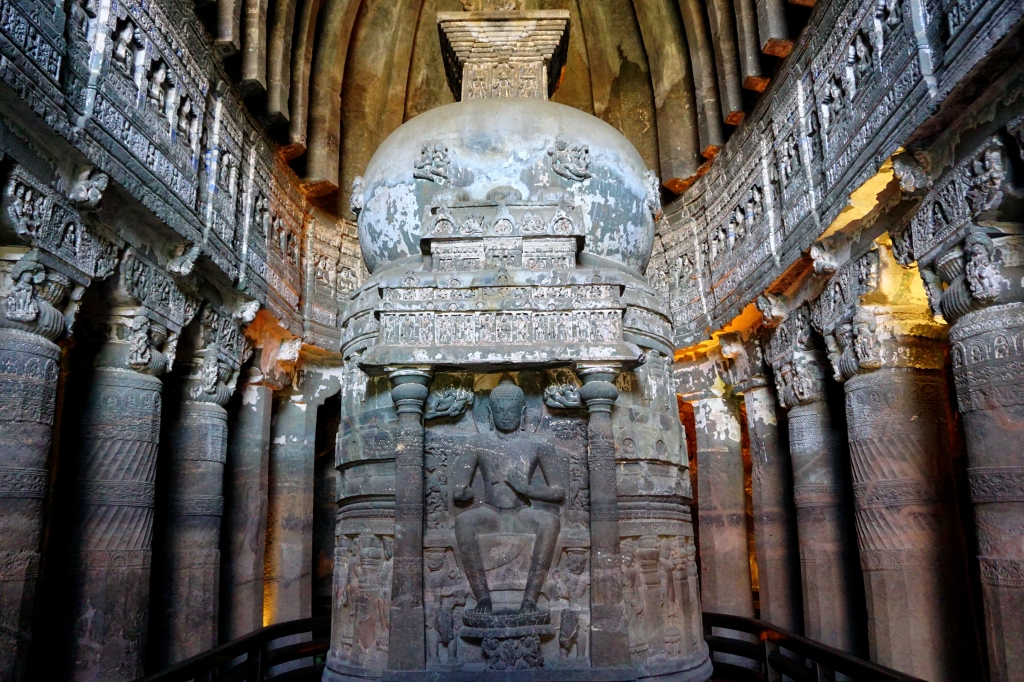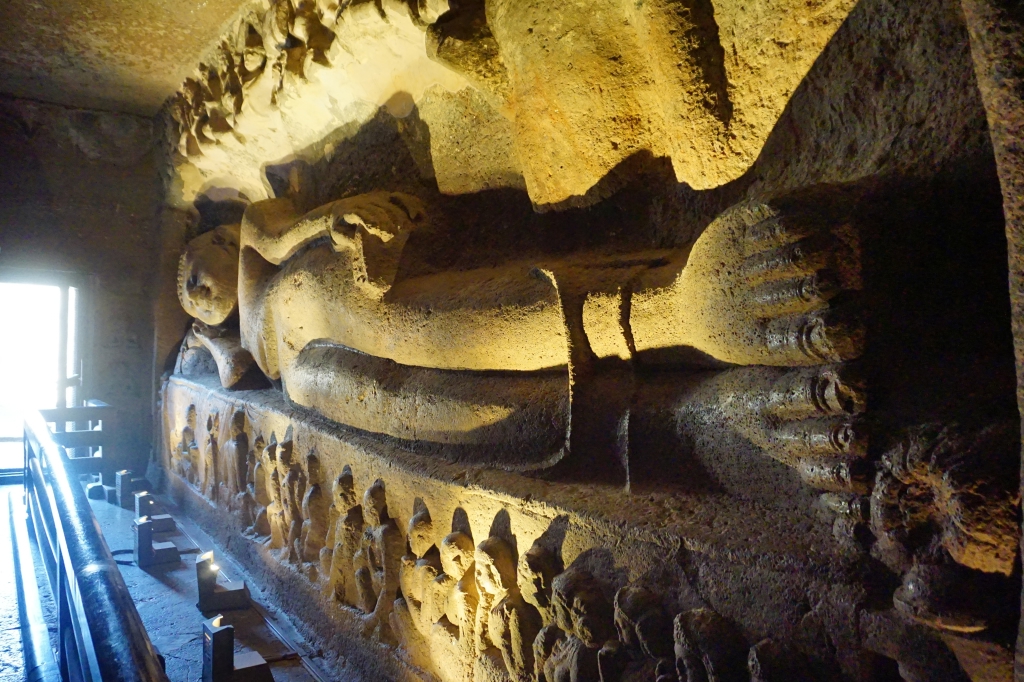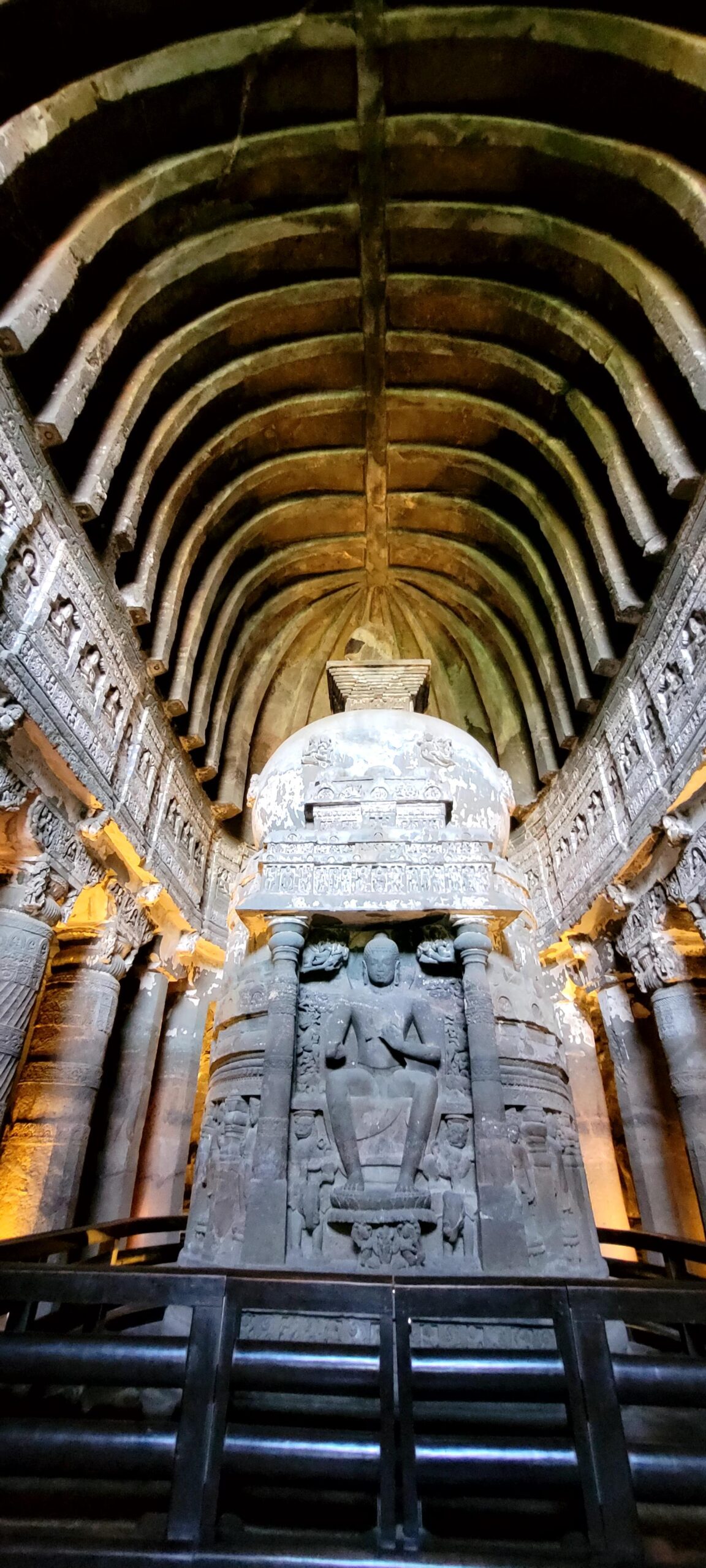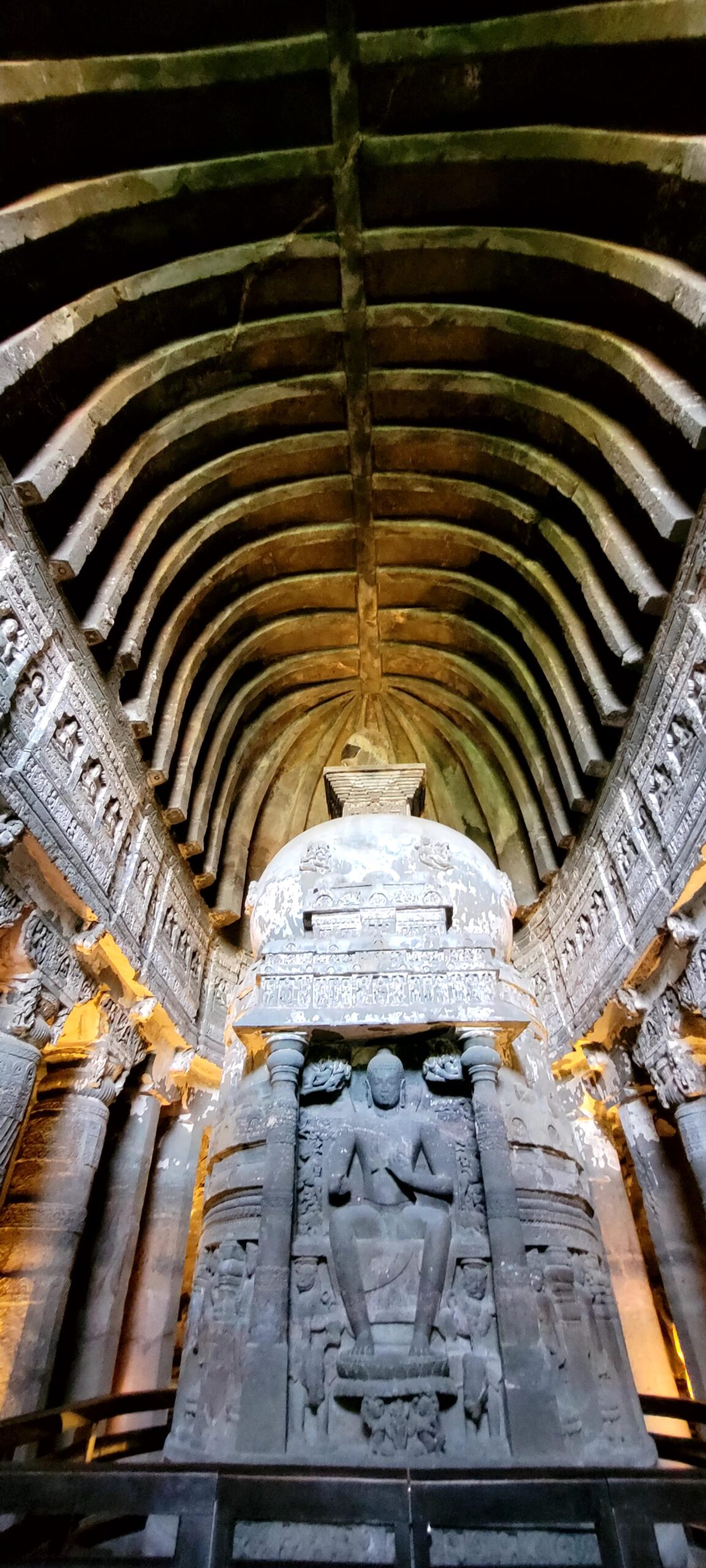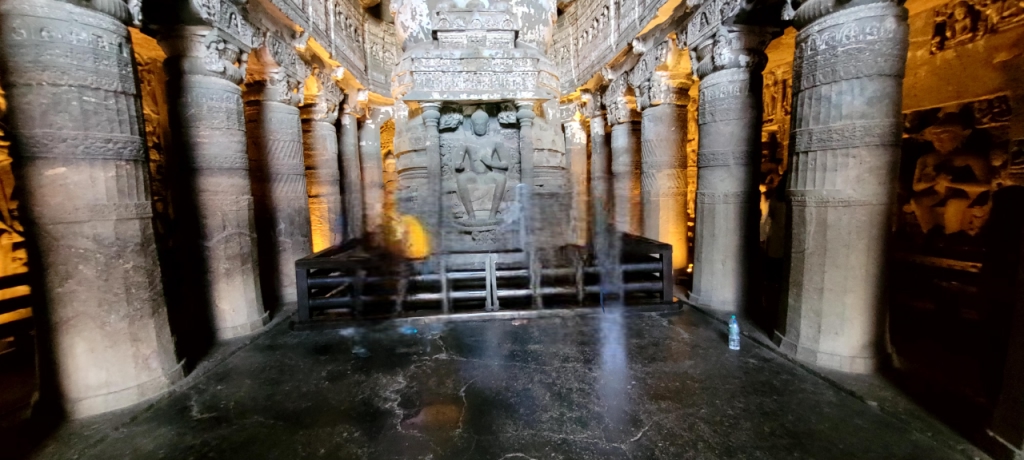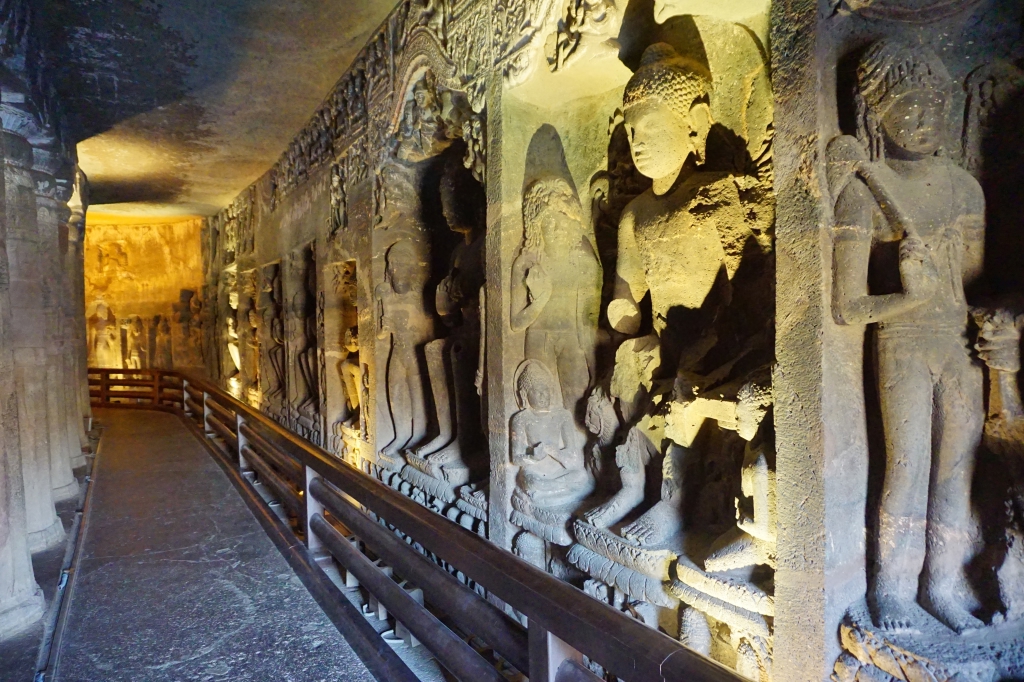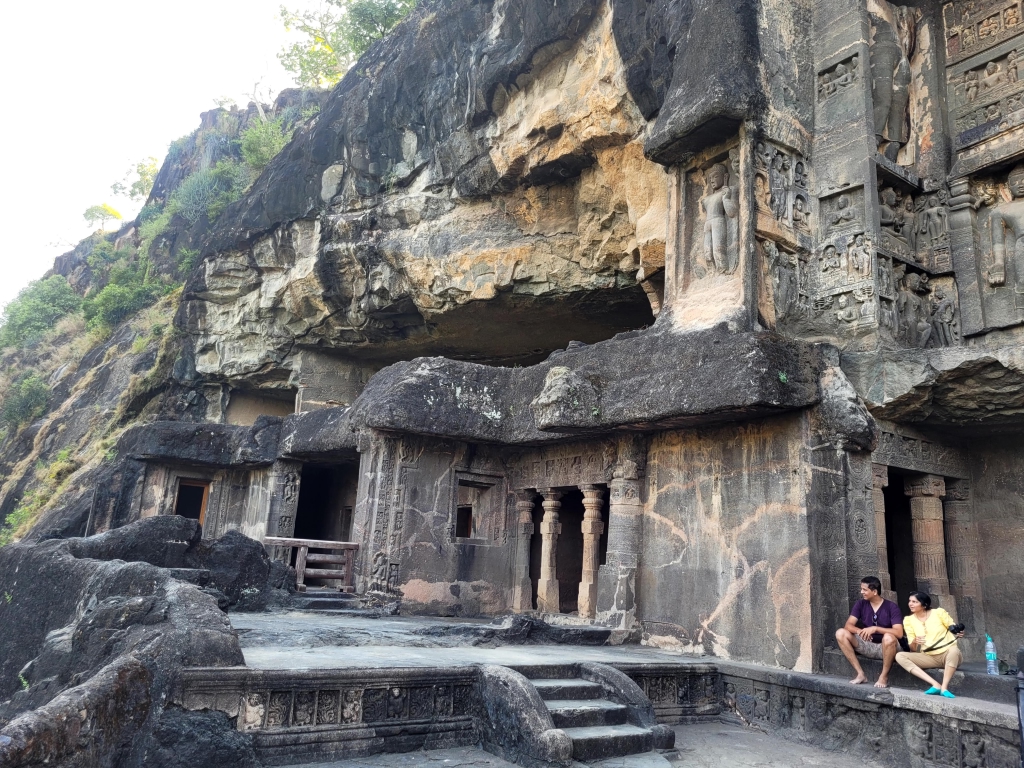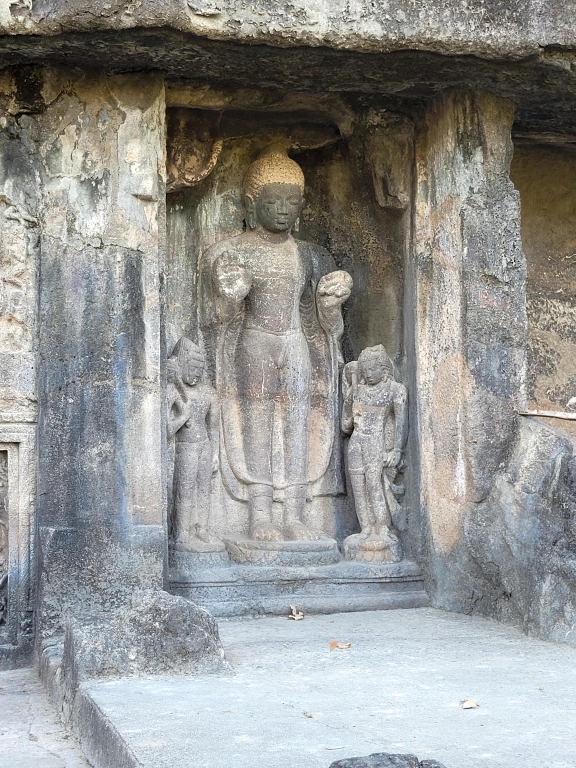
Ajanta Buddhist Caves 

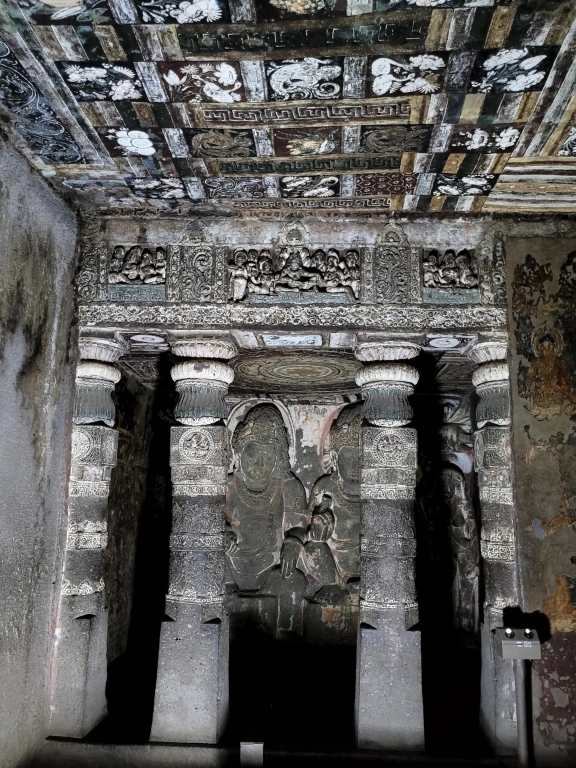
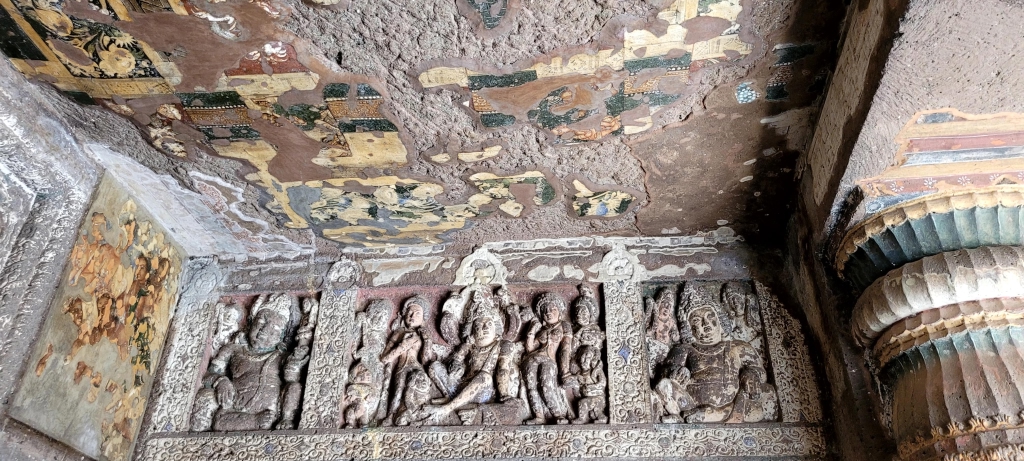
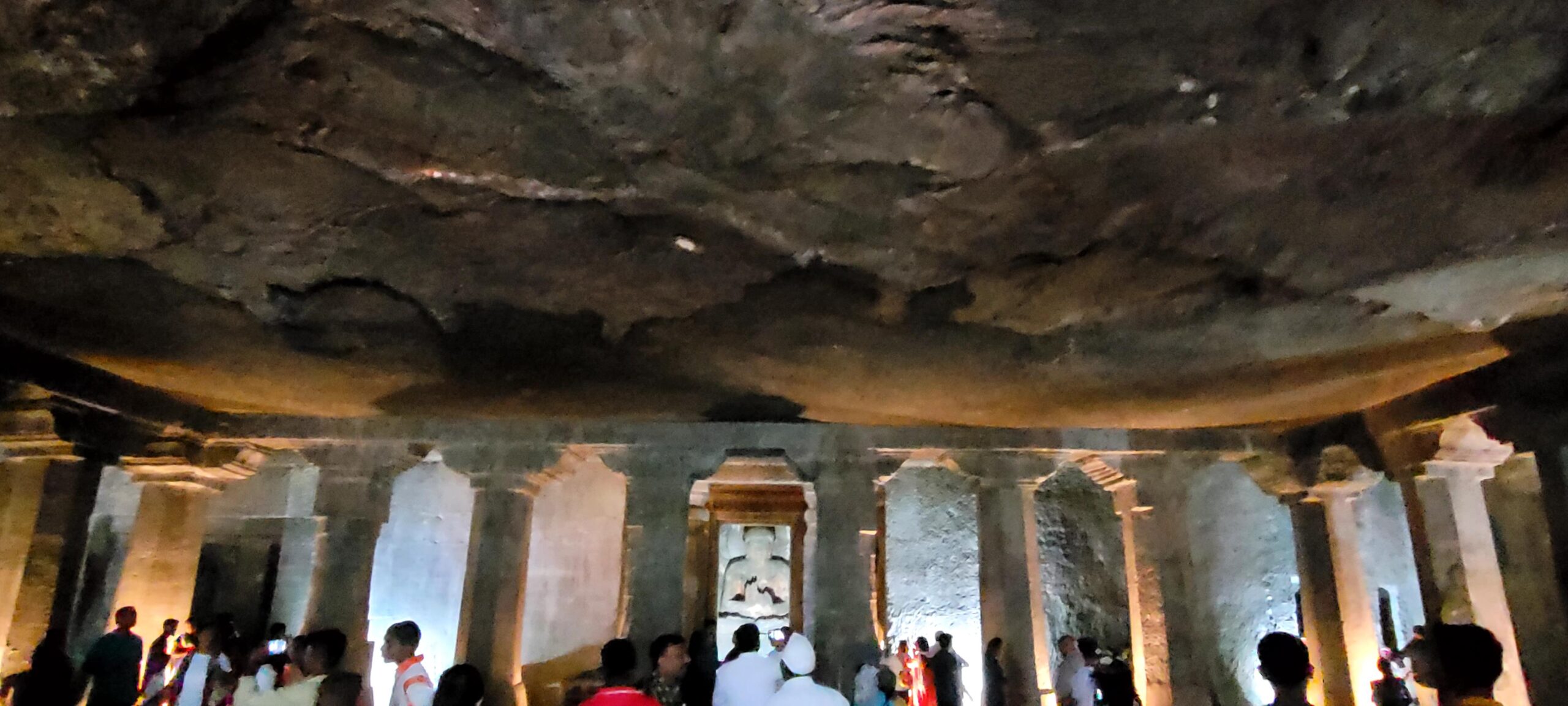
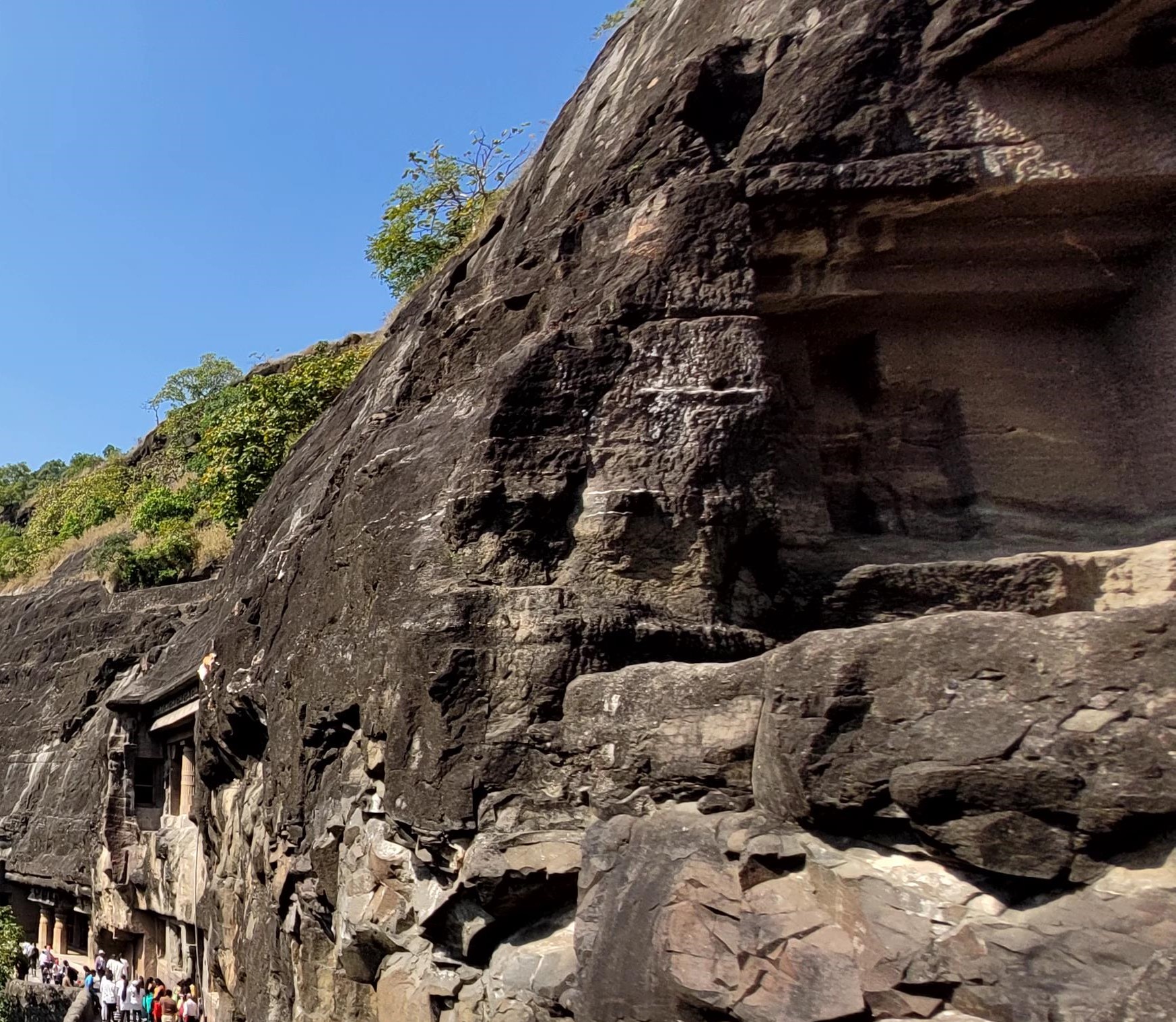
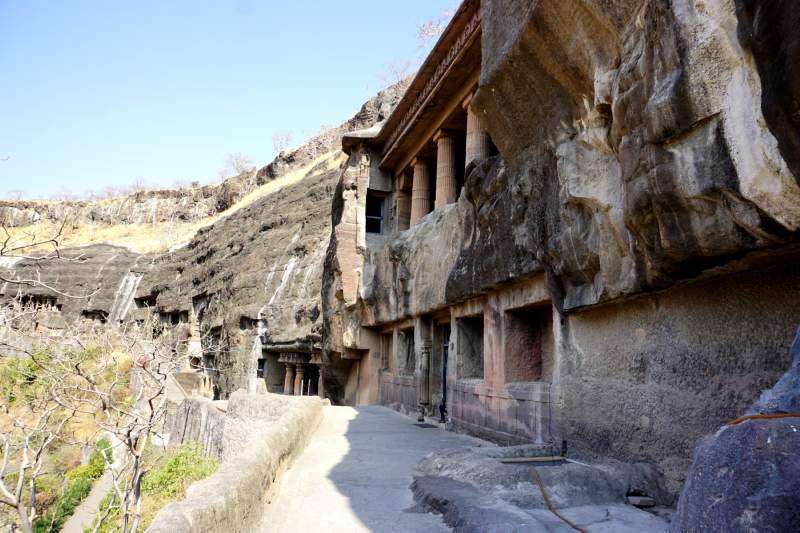
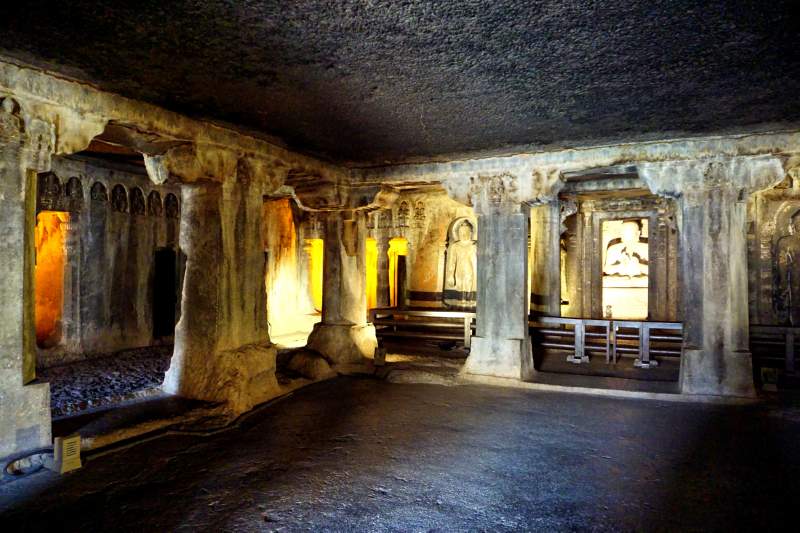
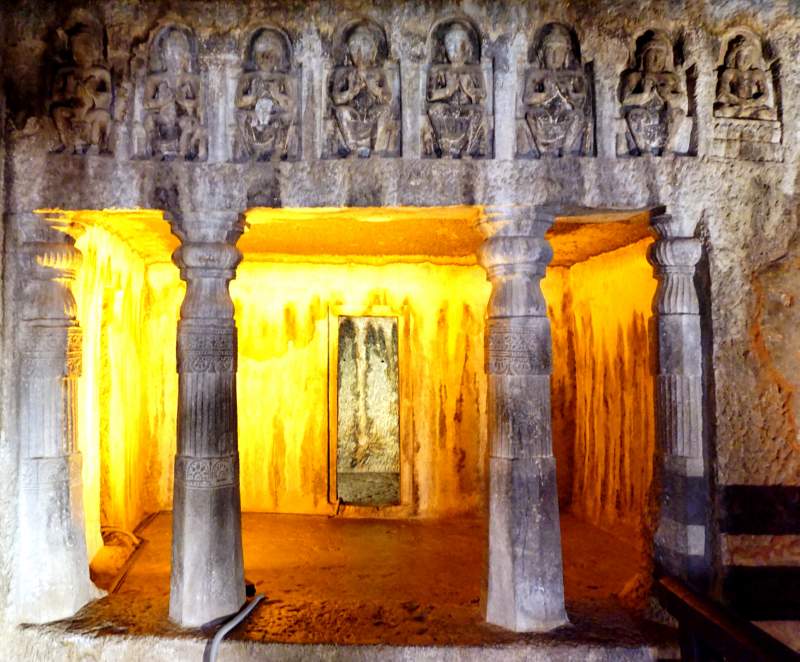
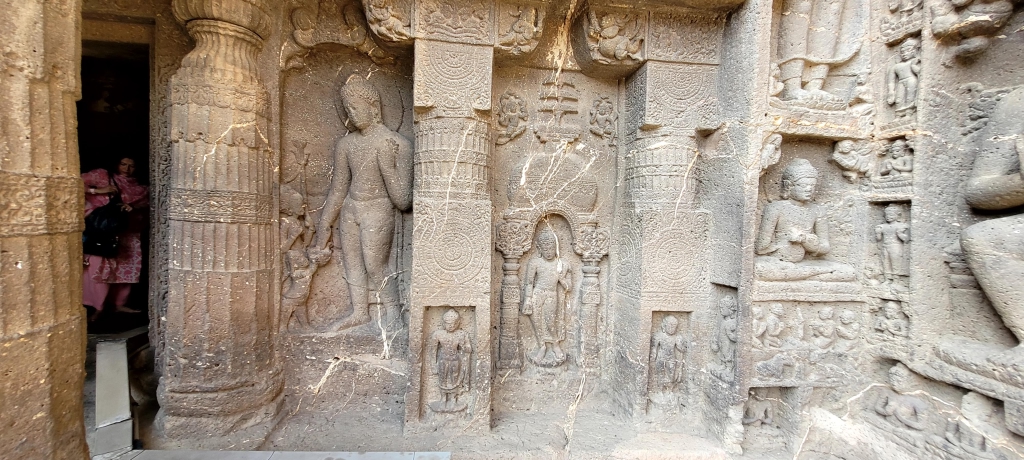
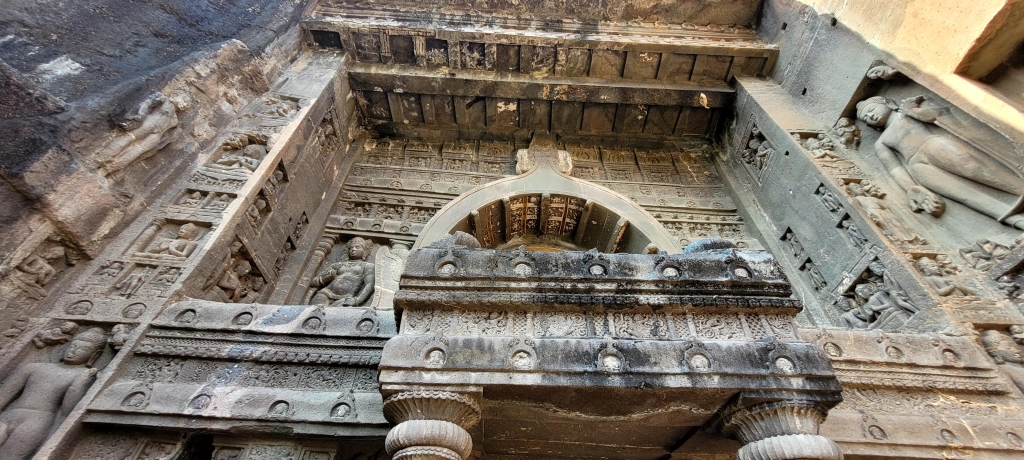
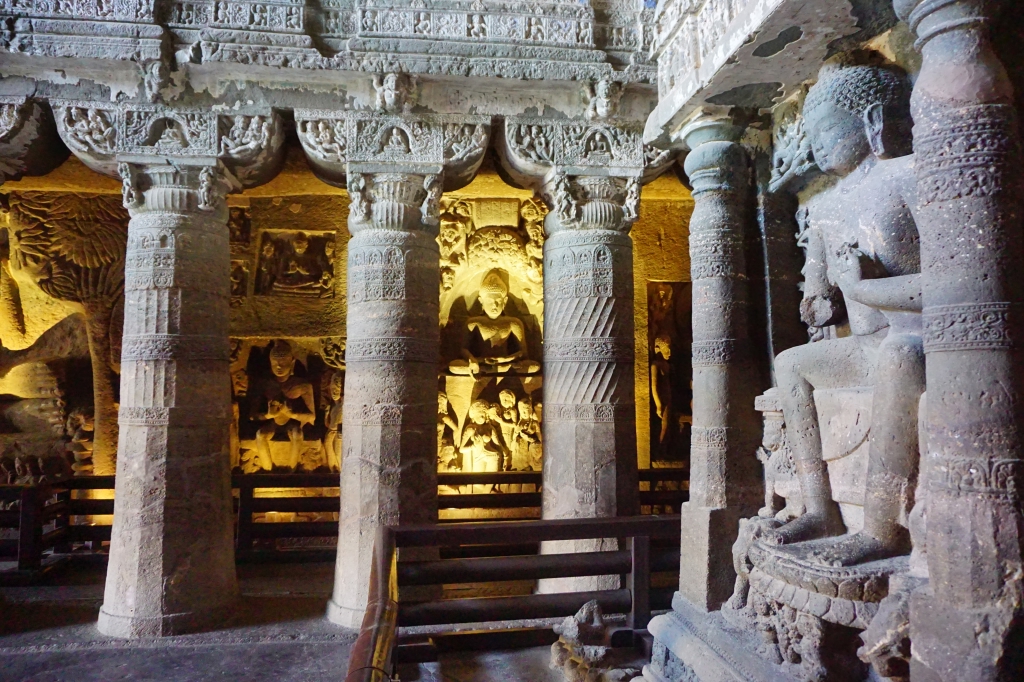
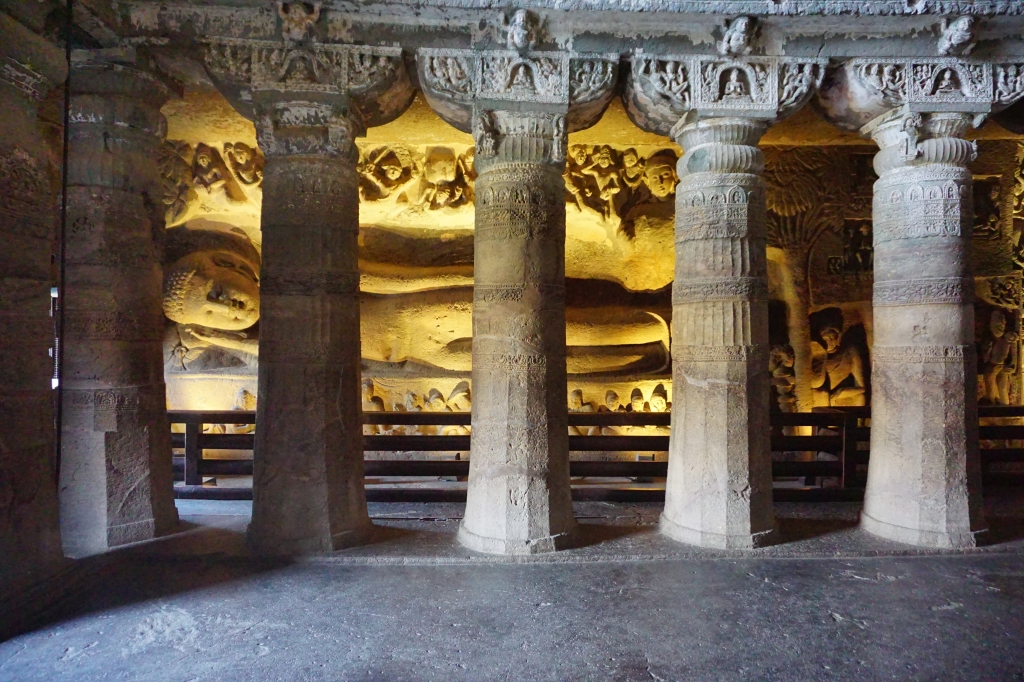
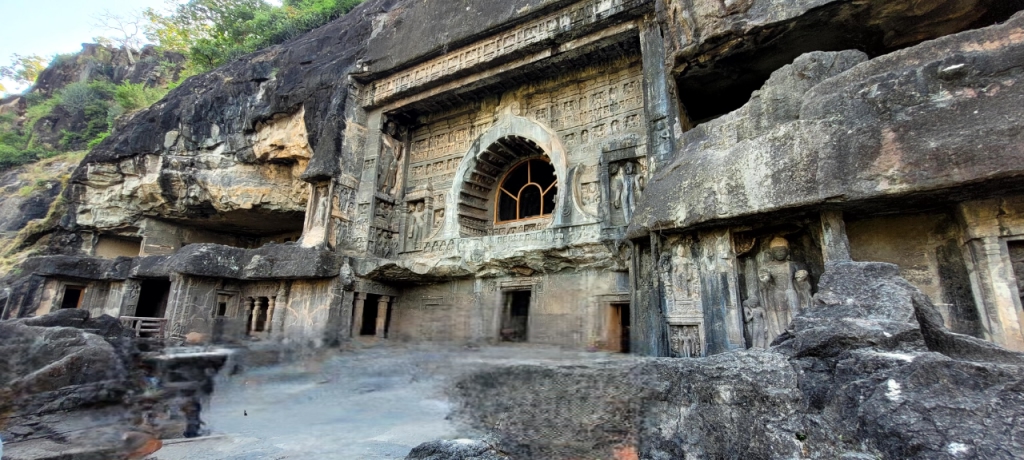
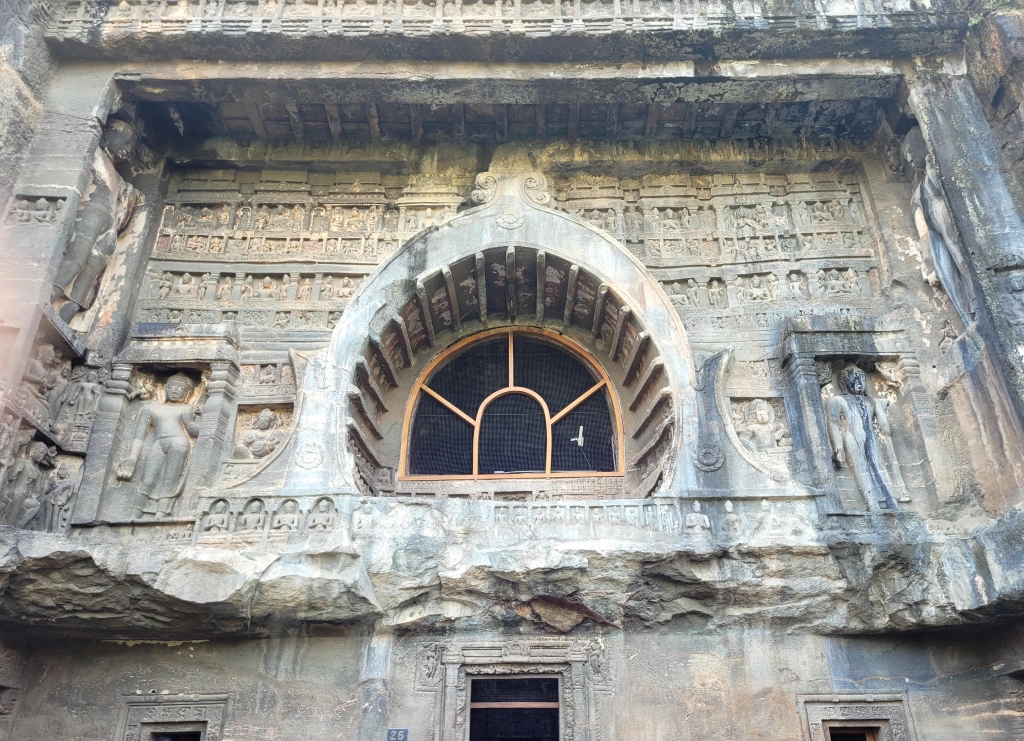
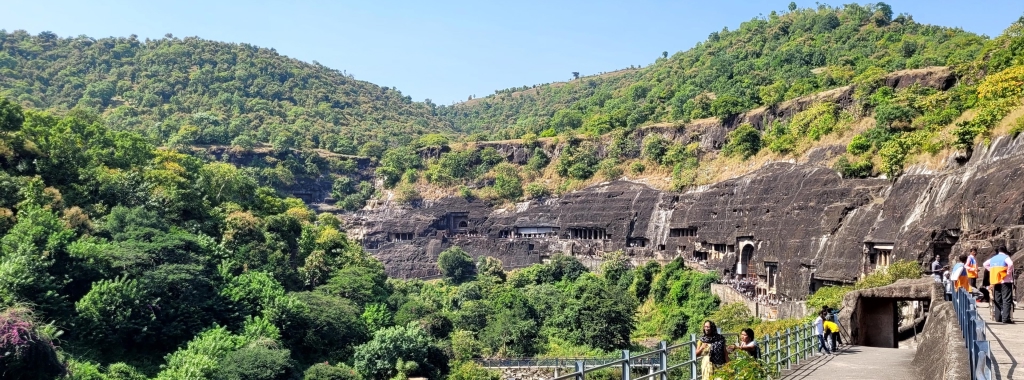
The Ajanta Buddhist Caves are located in the Sahyadri mountain range on the banks of the Waghur River in the Aurangabad district of Maharashtra. These world-famous rock-cut caves were carved between the 2nd century BCE and the 7th century CE.
There are 30 caves in total, created in two phases — the first phase from the 2nd century BCE to the 1st century CE, and the second phase from the 5th to 7th century CE.

Among these, caves 1, 2, 4, 7, 9, 10, 19, 26, and 29 are Chaitya halls (prayer halls), while the rest are Viharas (monastic dwellings). These caves were used by Buddhist monks for meditation, study, and performing religious rituals.

Chinese travelers such as Fa Hein, who visited during Chandragupta II’s reign, and Hiuen Tsang, during Harshavardhana’s rule, documented their awe-inspiring experiences at Ajanta in their travel accounts.

The Ajanta Caves represent the two main schools of Buddhism — Theravada and Mahayana.
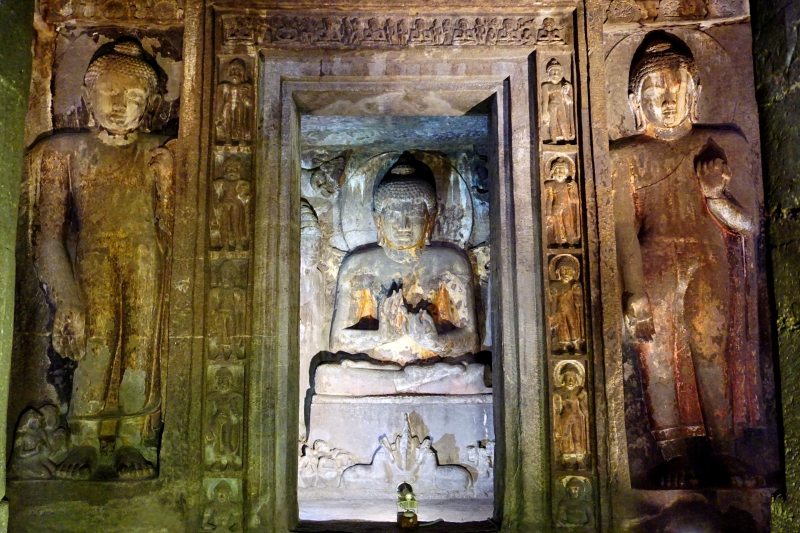
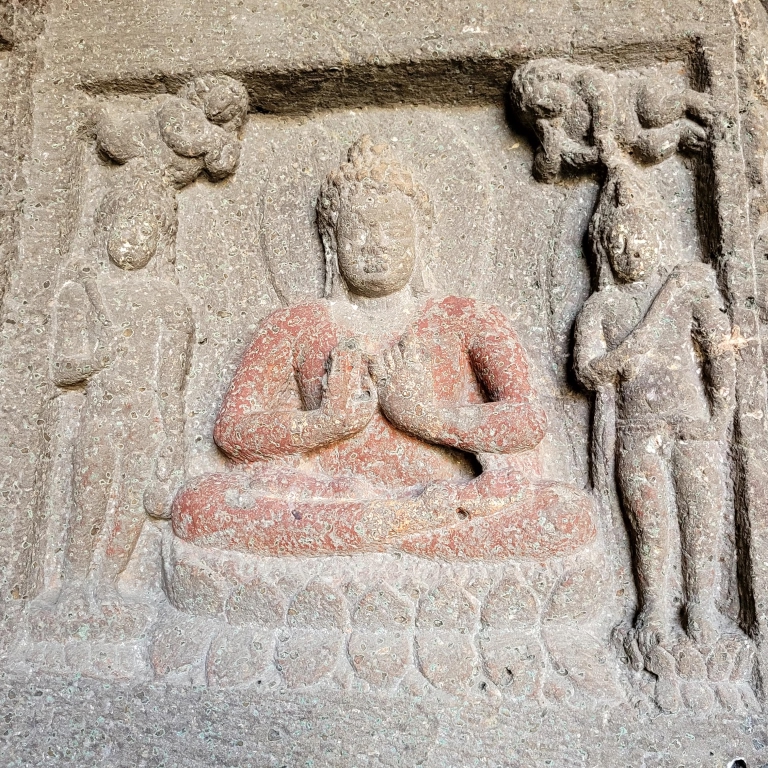
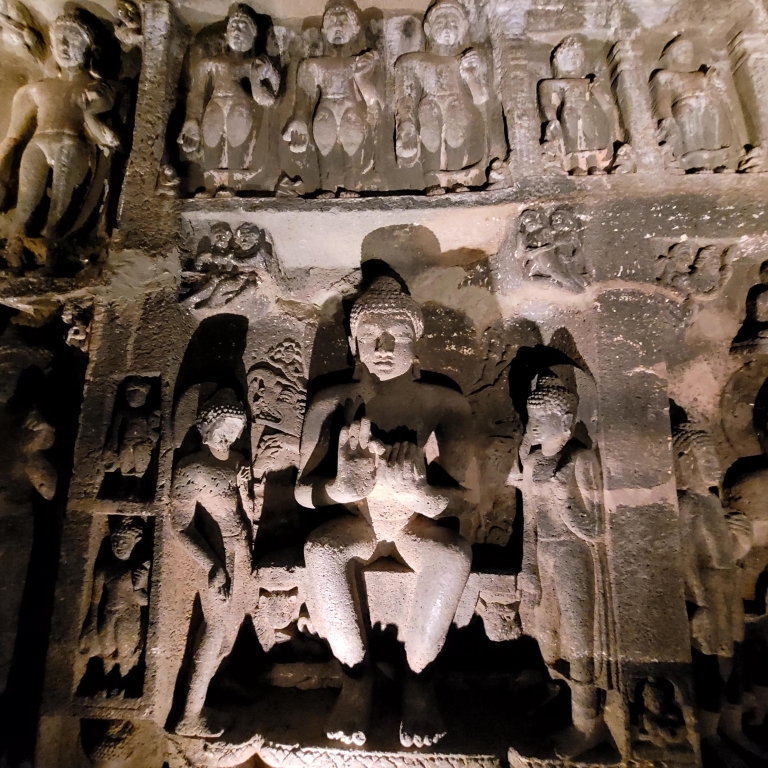
Caves of the Theravada tradition are simpler and less ornate, while the Mahayana caves are adorned with Buddha statues, Bodhisattva figures, murals, and intricate carvings.

Ajanta Caves is around 300-year-old rock-cut caves. The Ajanta caves are carved out of flood basalt rock of a cliff. Ajanta caves were a part of the Deccan traps formed due to volcanic activity during the Cretaceous period.

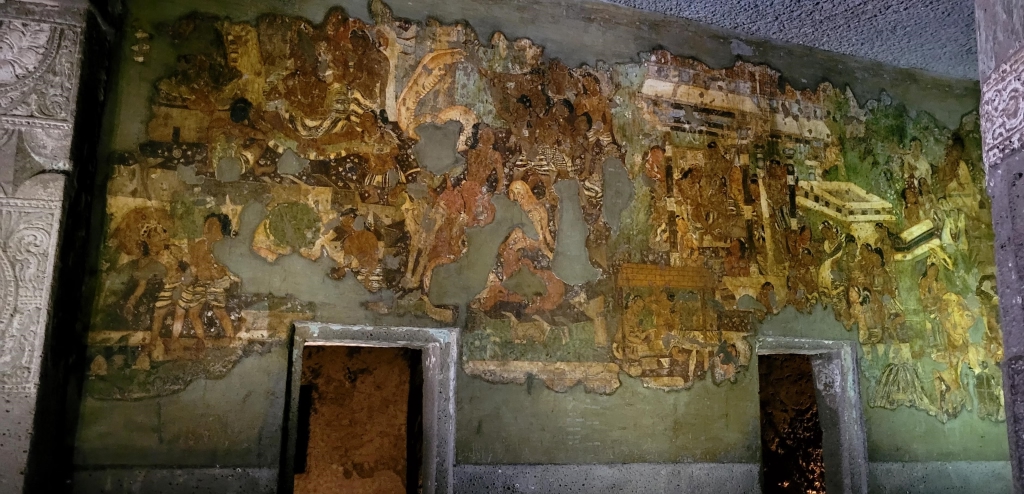
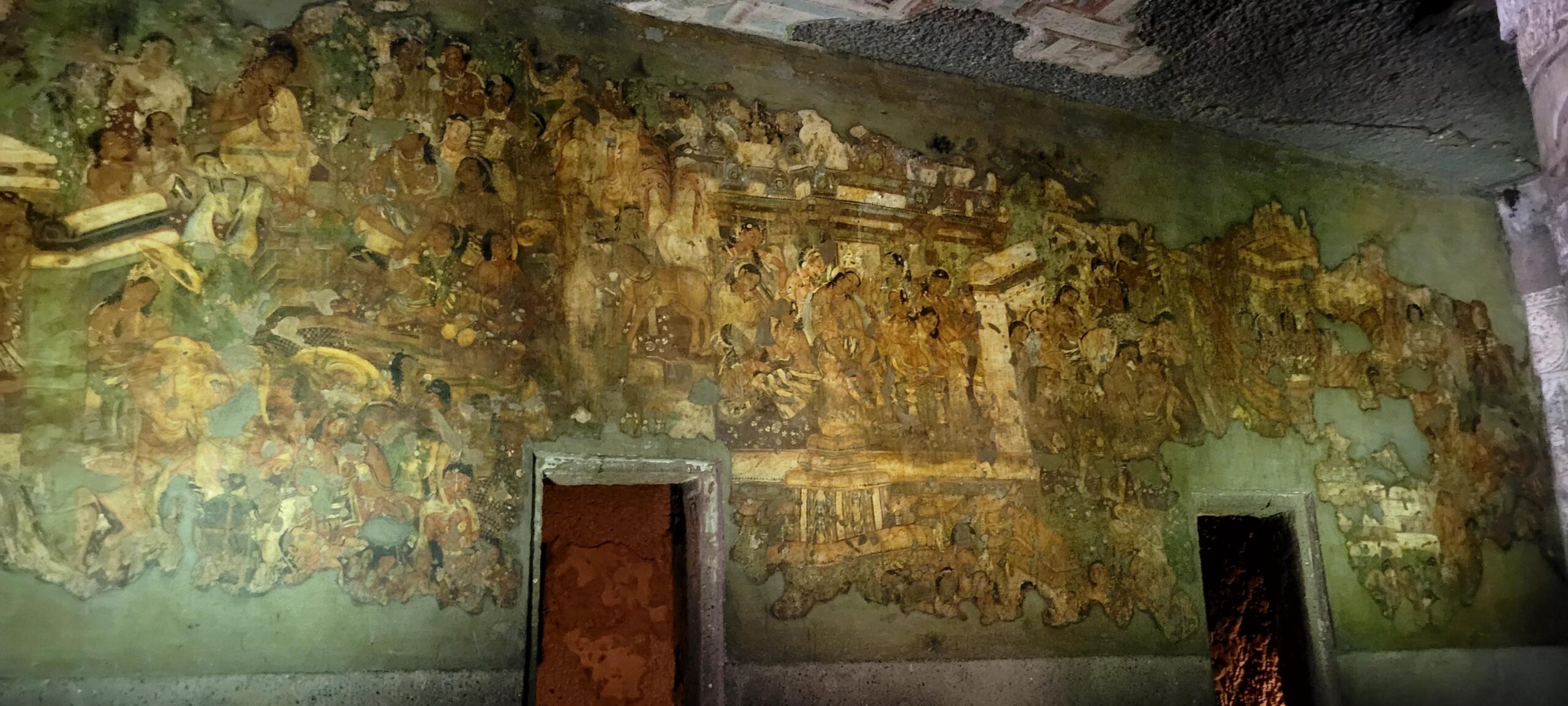
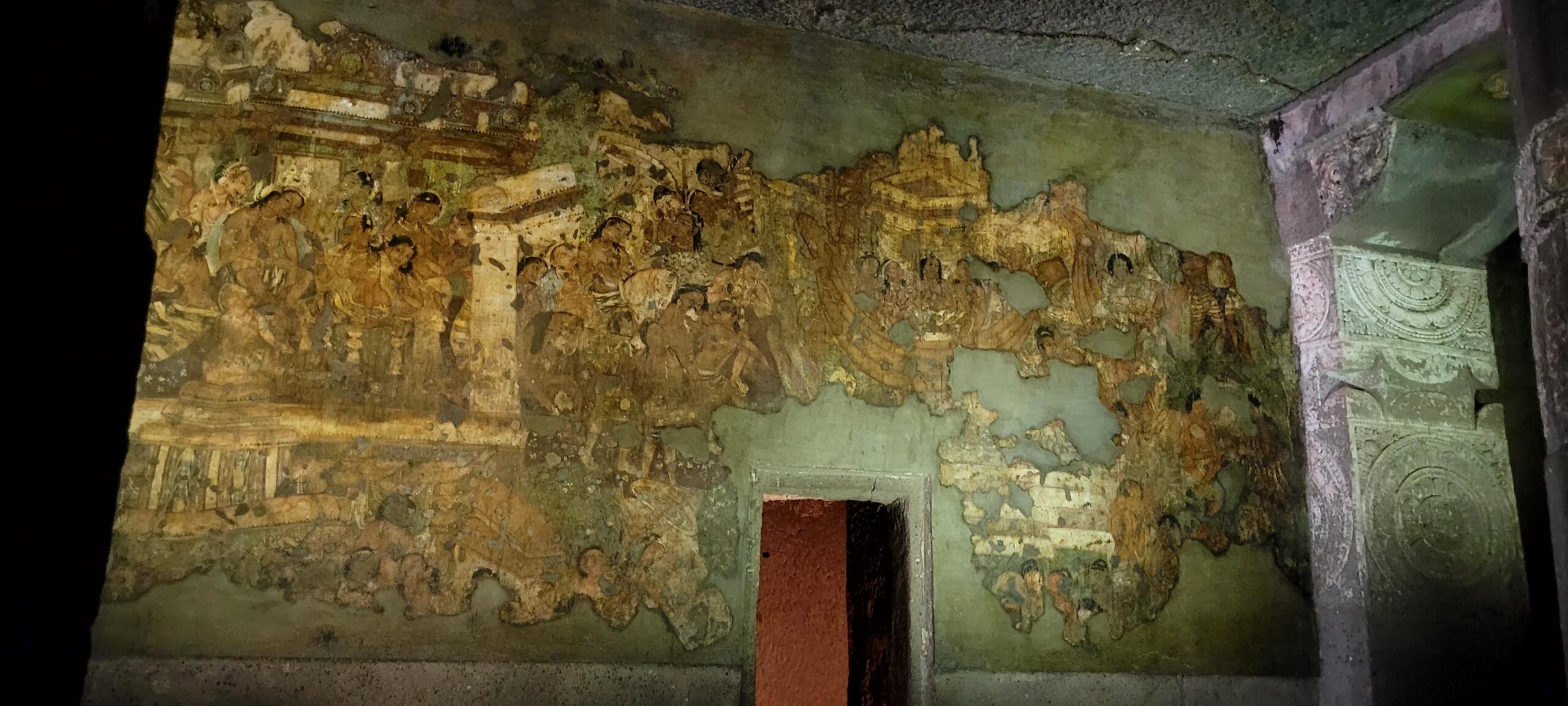
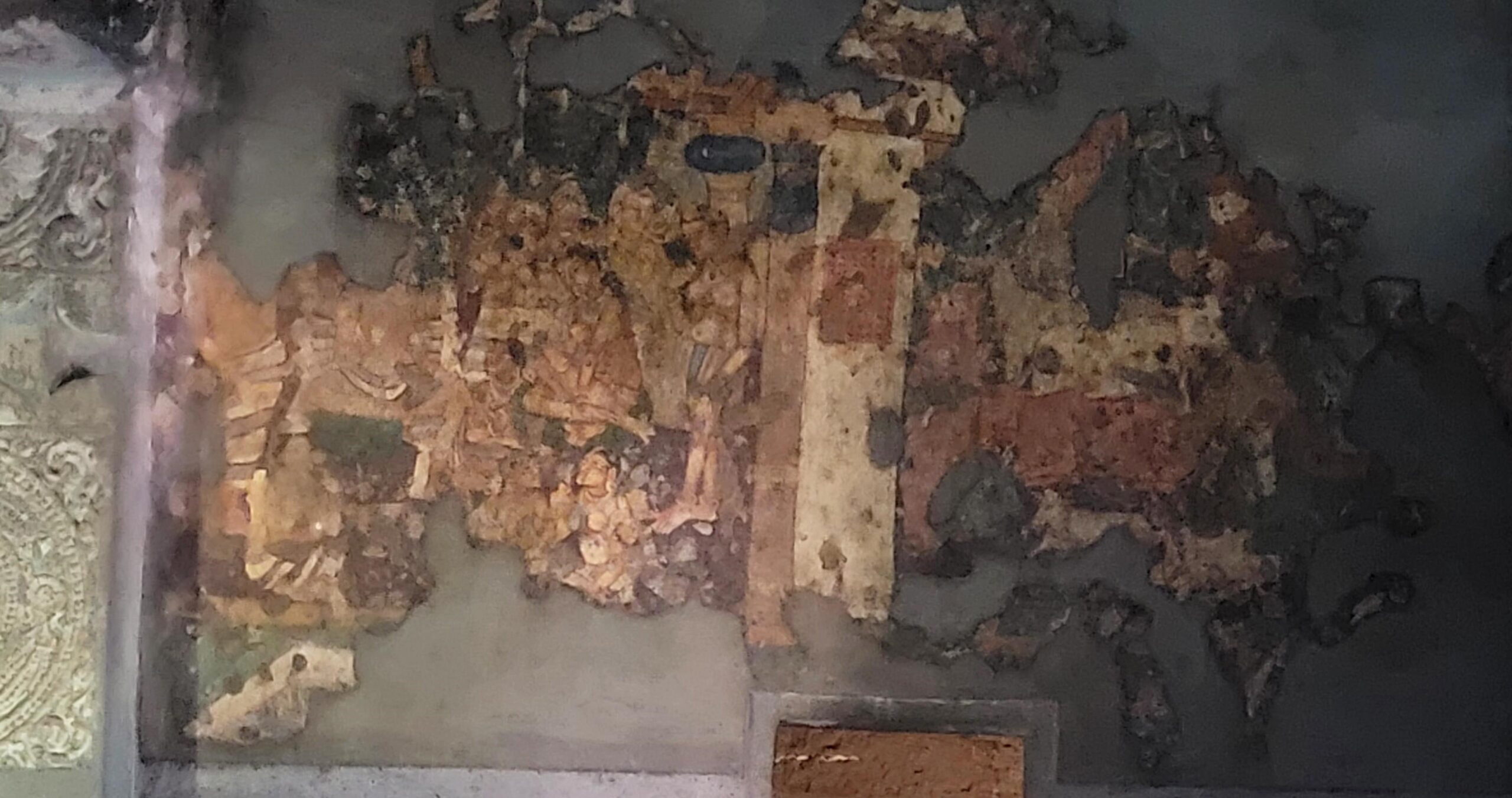
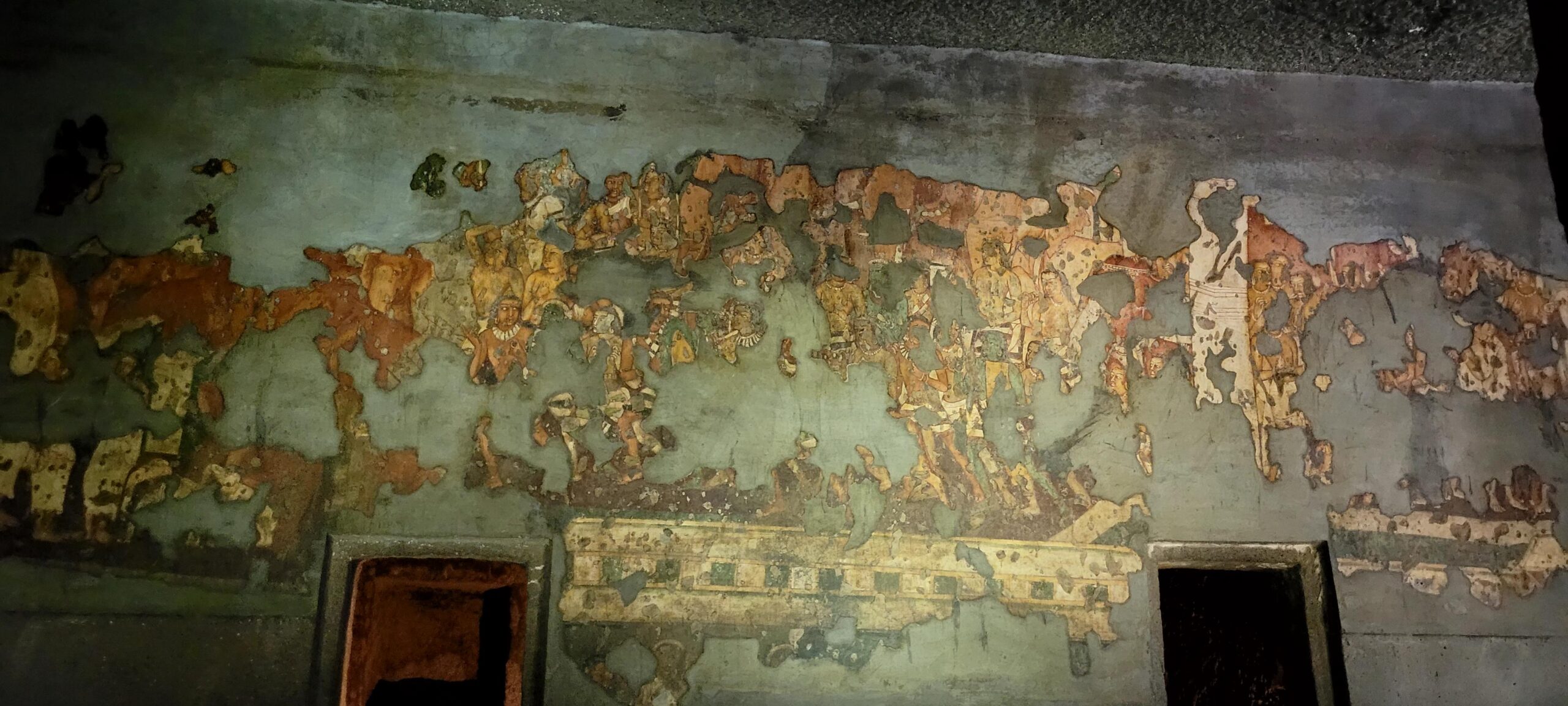
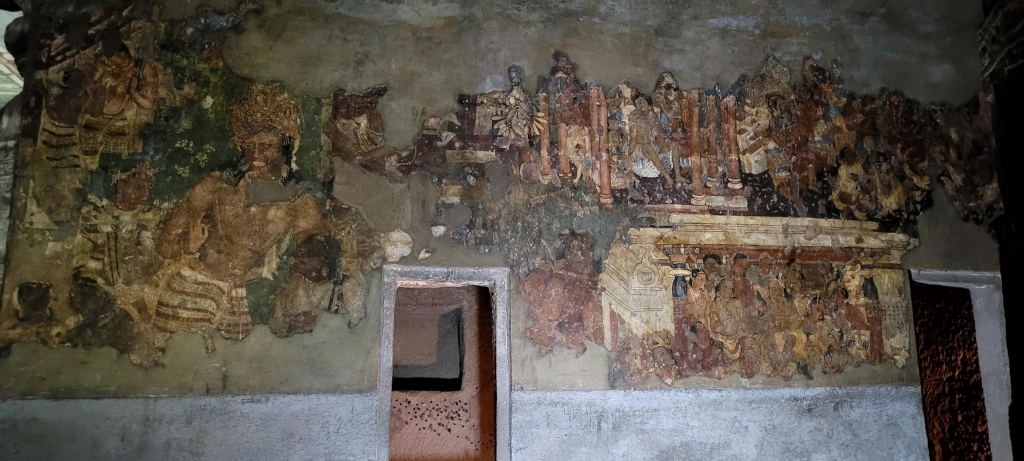
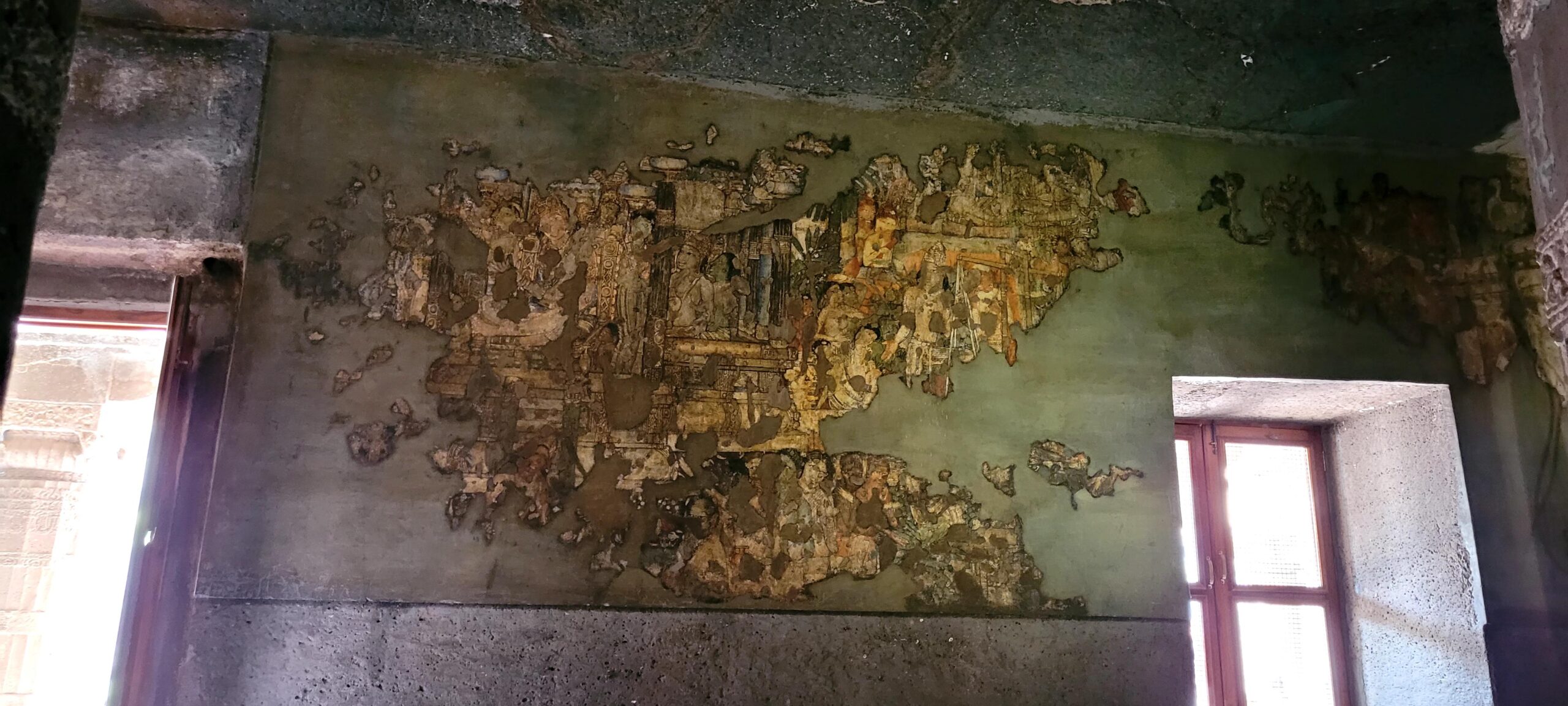
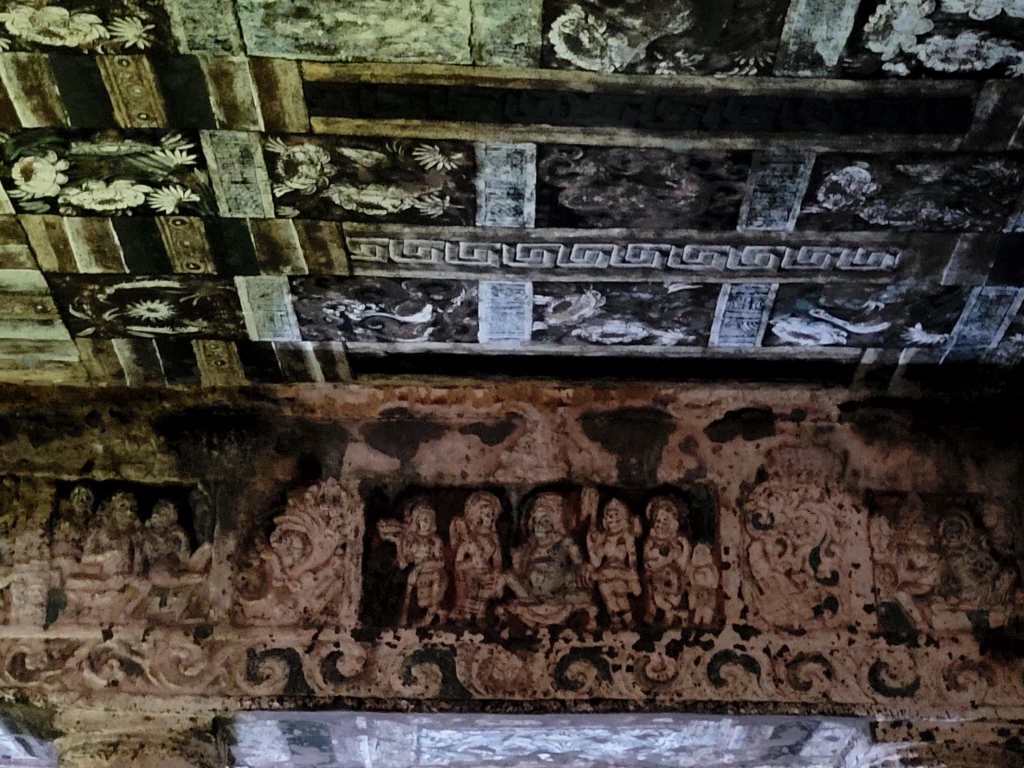
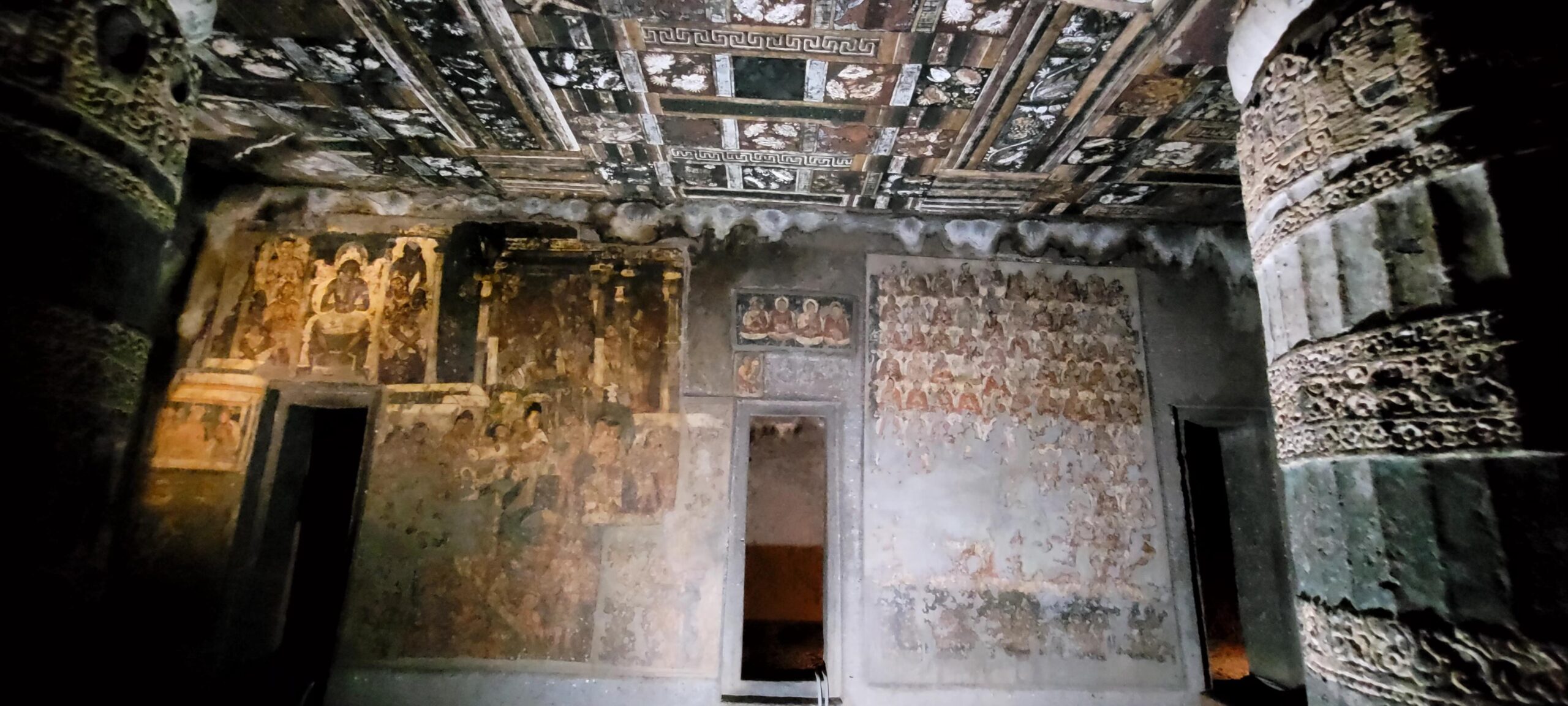
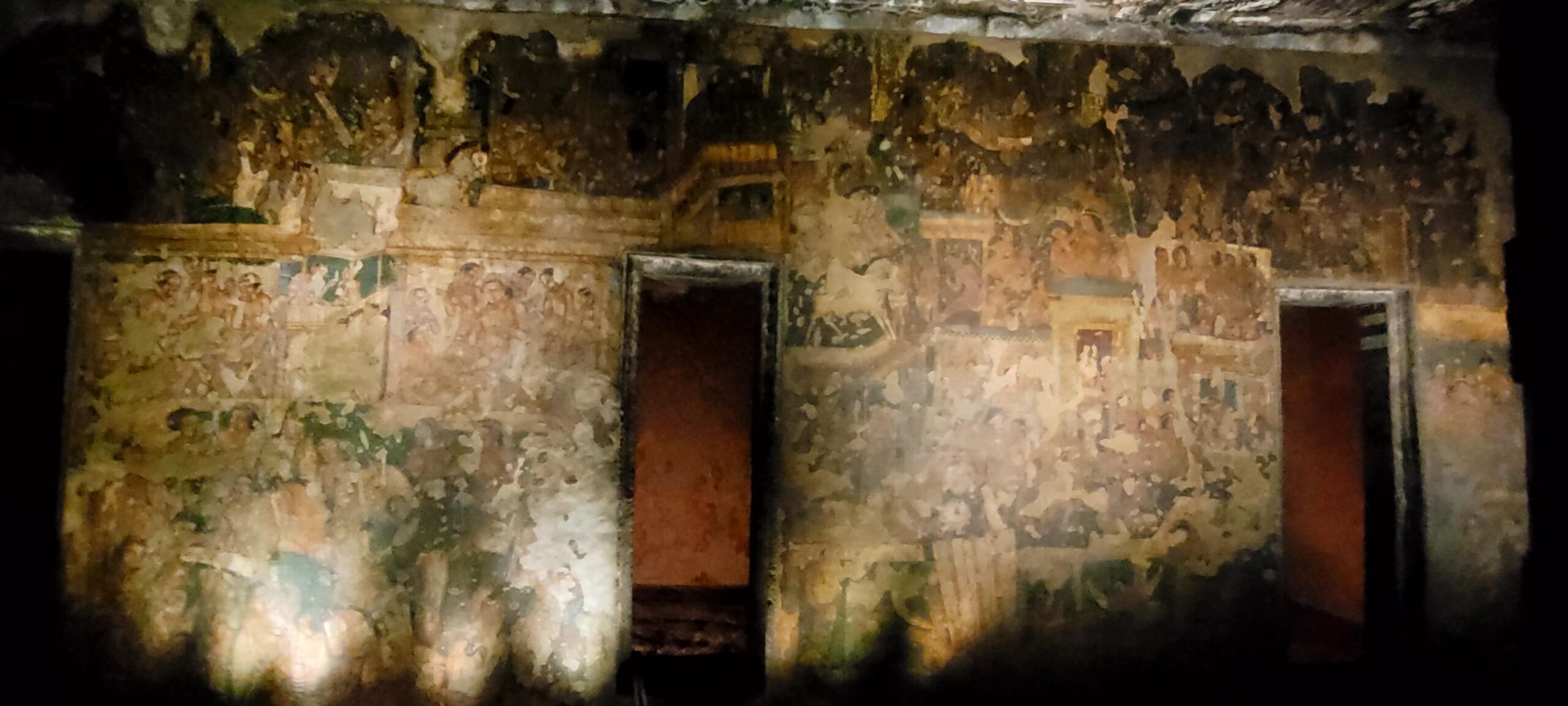
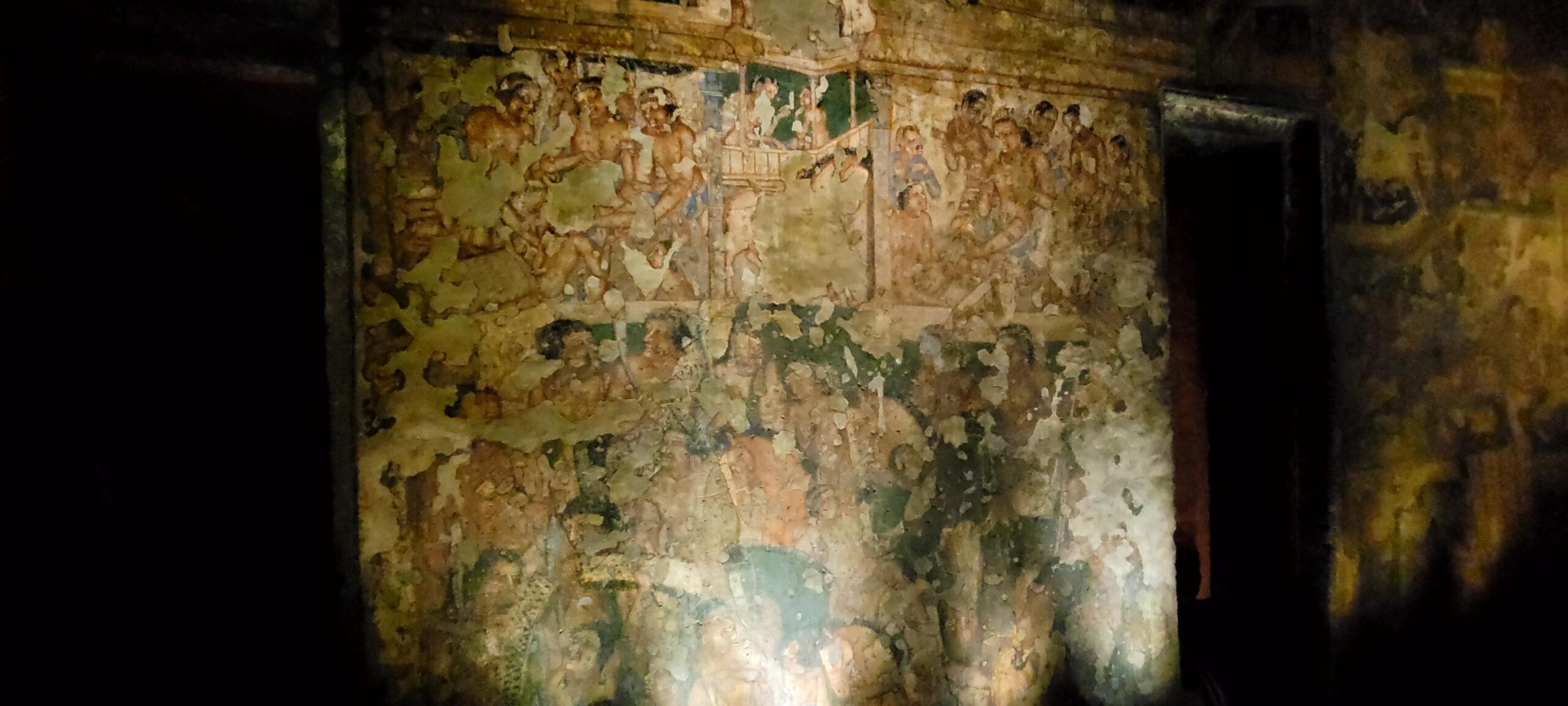
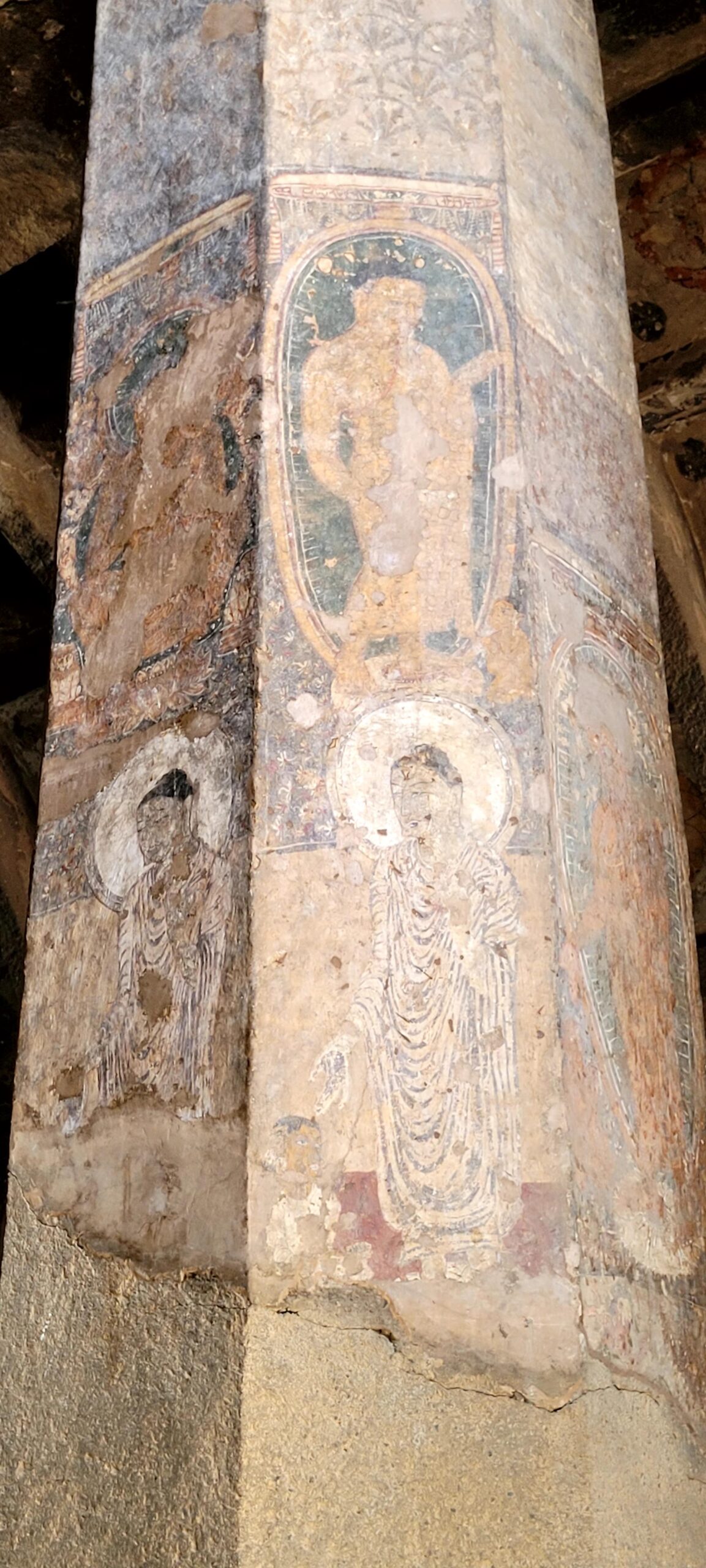
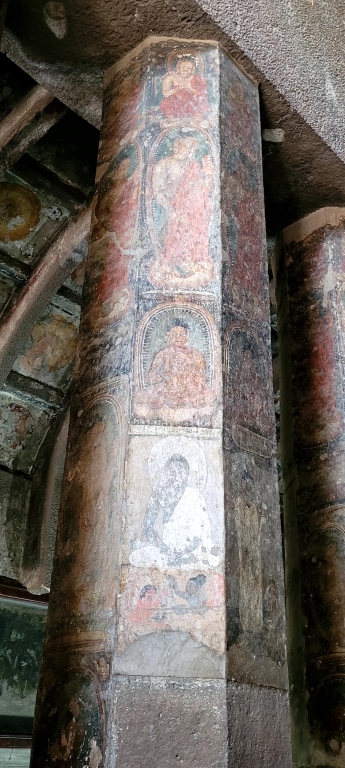
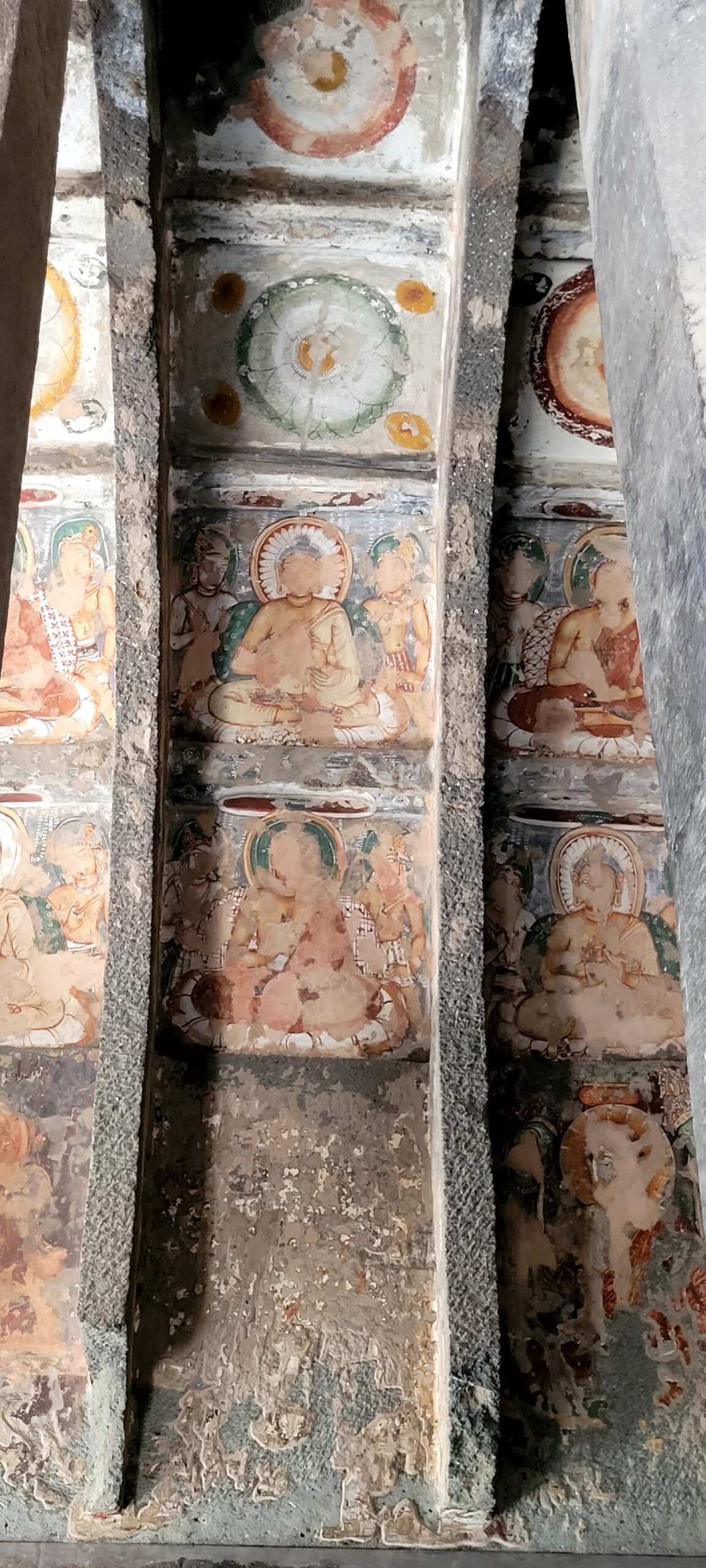
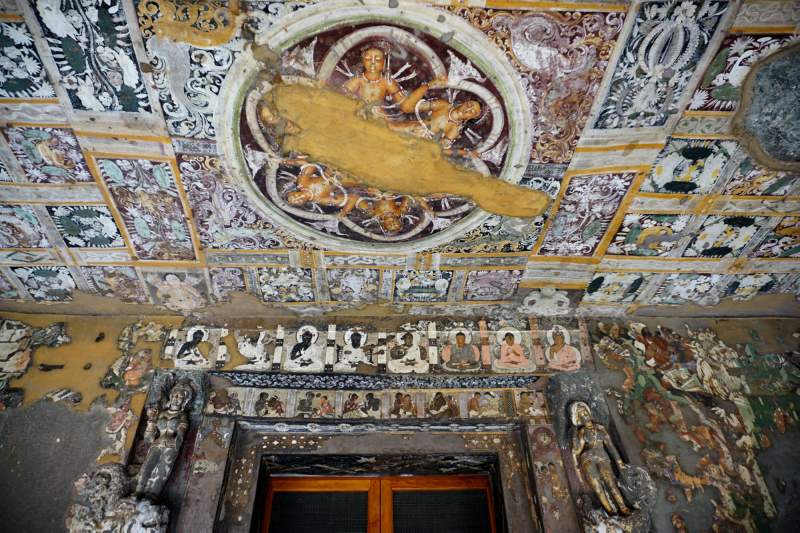
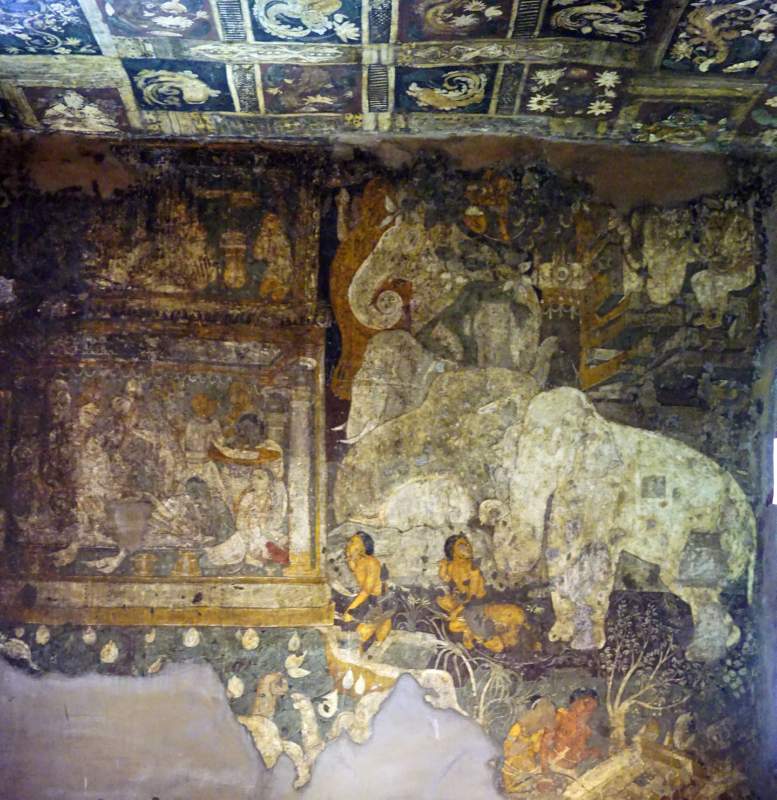
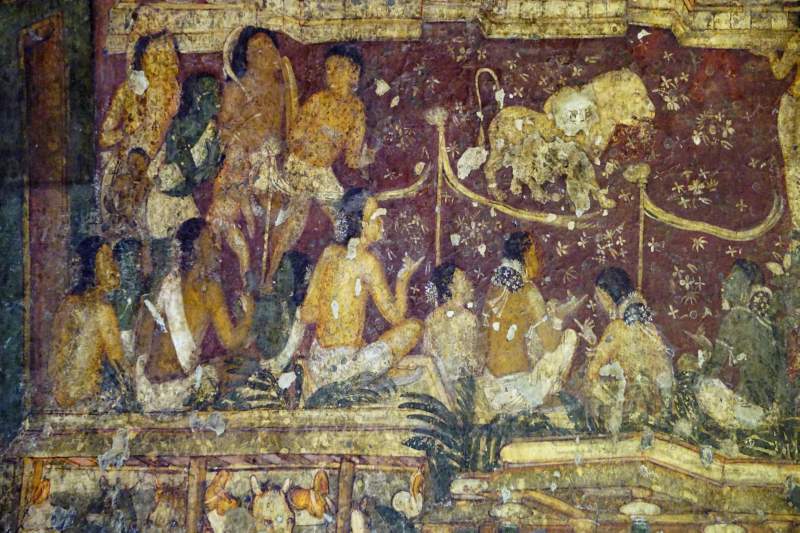
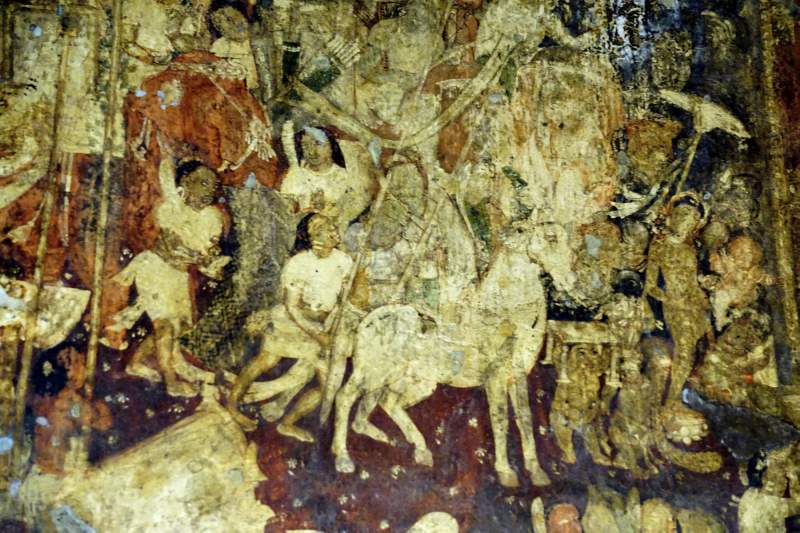
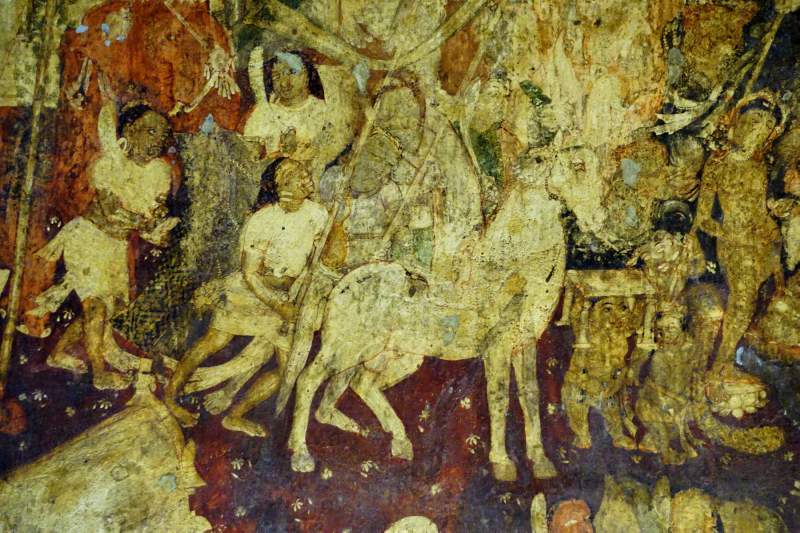
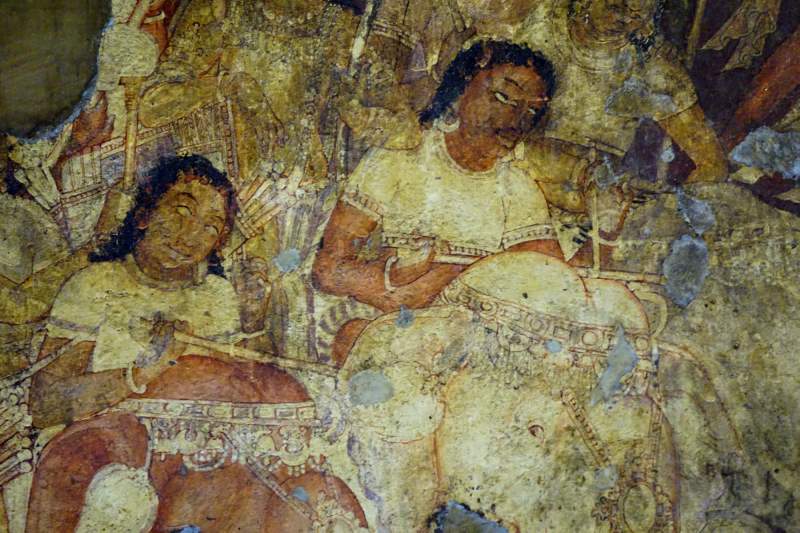
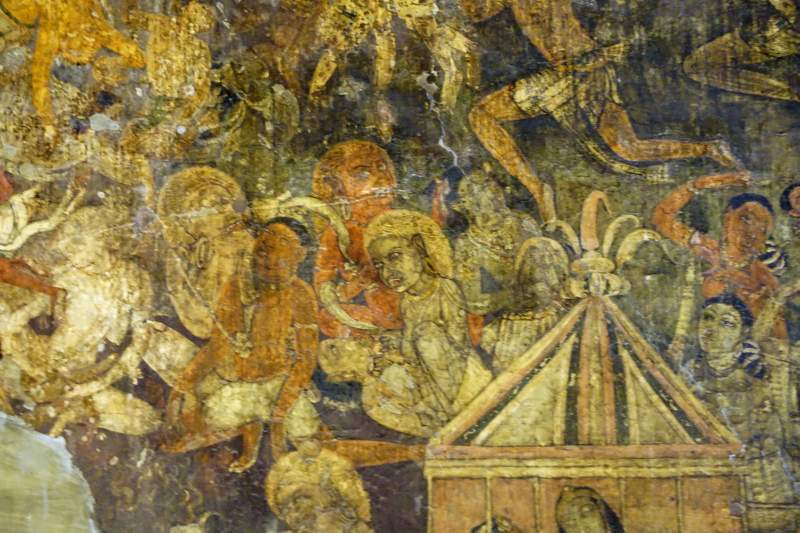
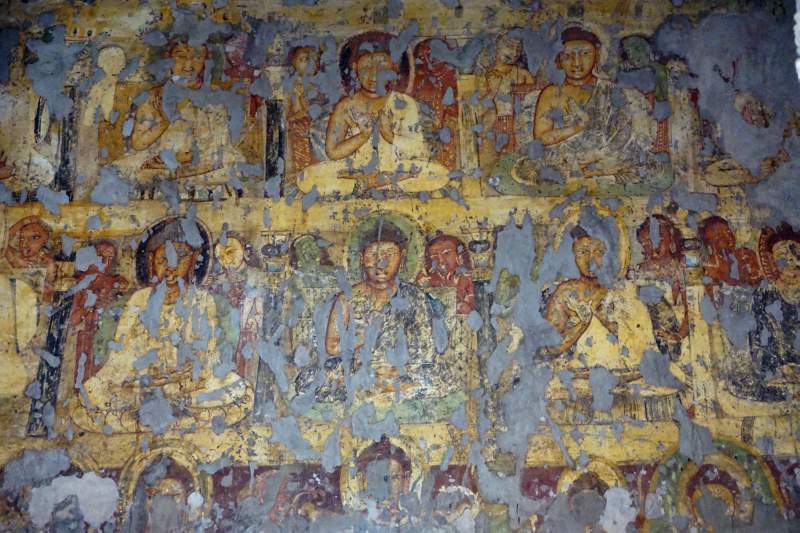
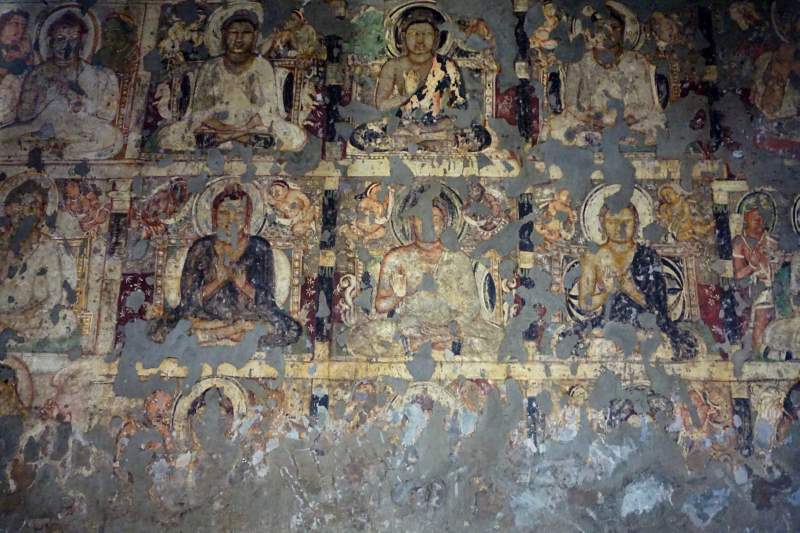
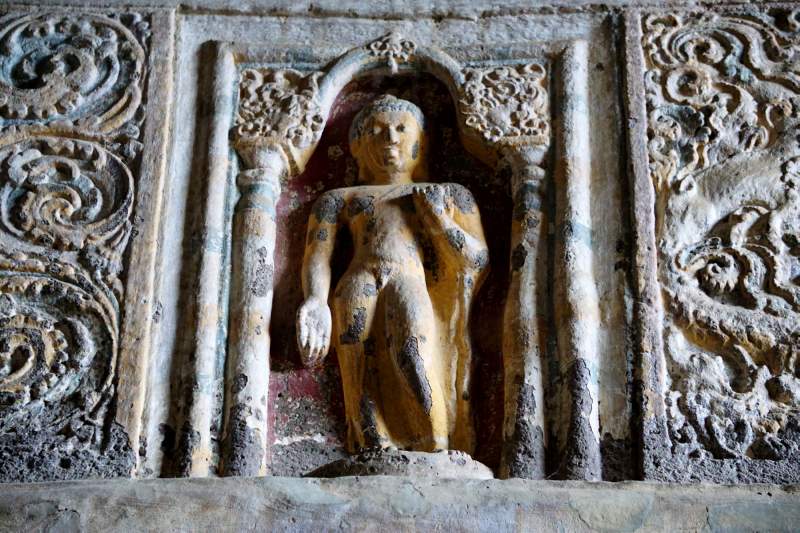
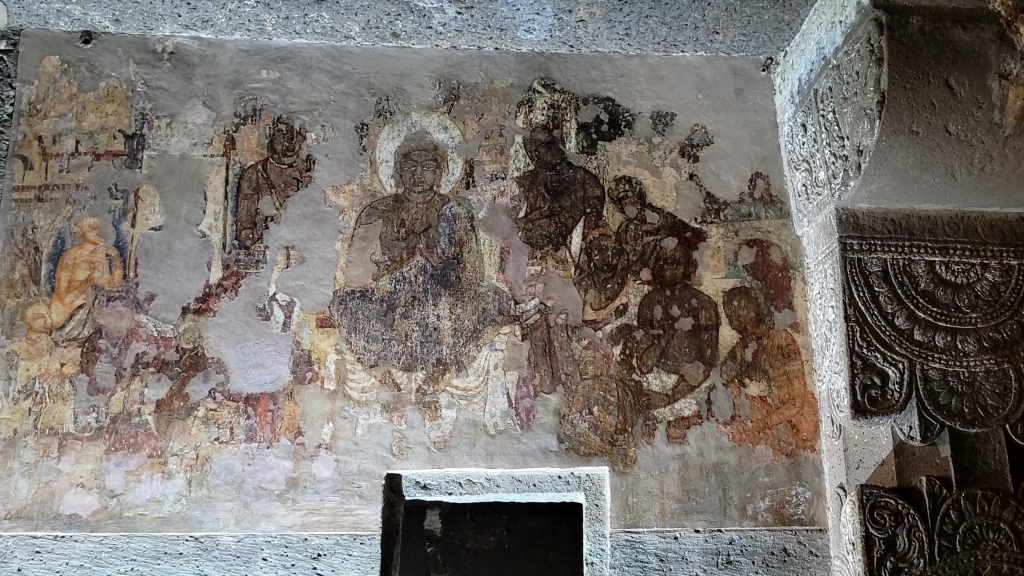
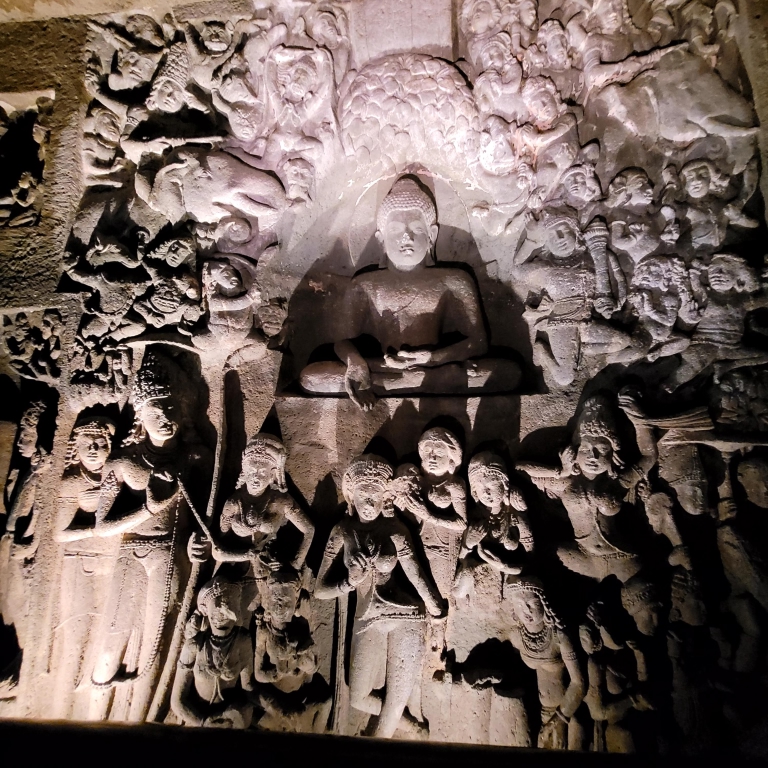
The paintings and sculptures of Ajanta stand as magnificent examples of ancient Indian art and craftsmanship. The murals depict various episodes from the life of the Buddha, Jataka tales, and scenes from everyday social life.
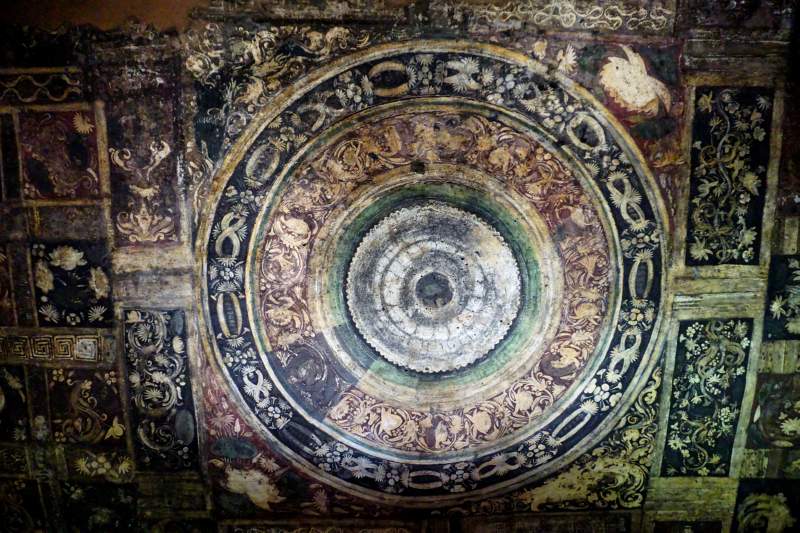
These paintings are remarkable for their use of natural colors, expressive human emotions, and delicate brushwork, making Ajanta’s art truly unique.

Ajanta Heading

Notable Caves:

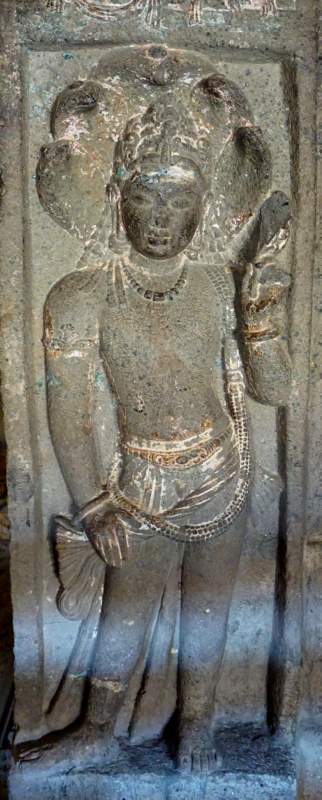
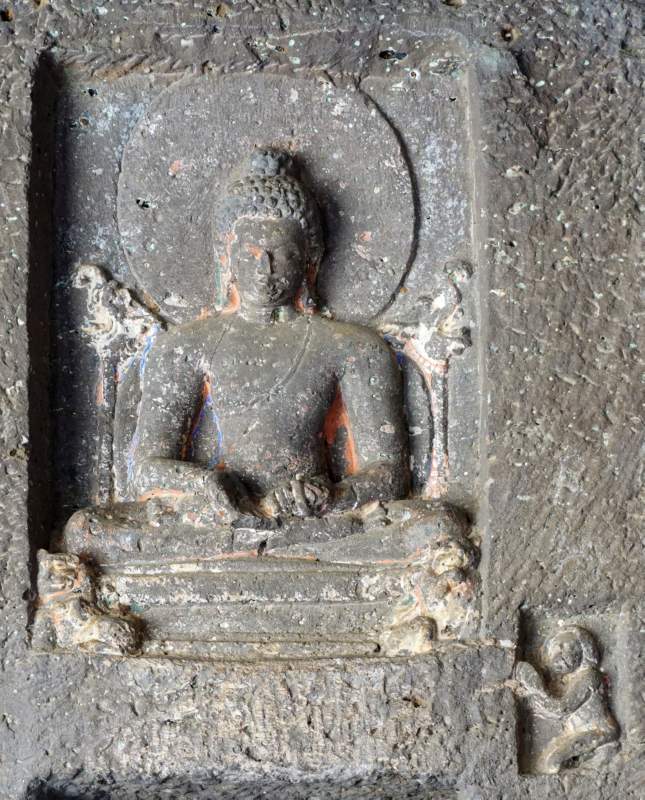
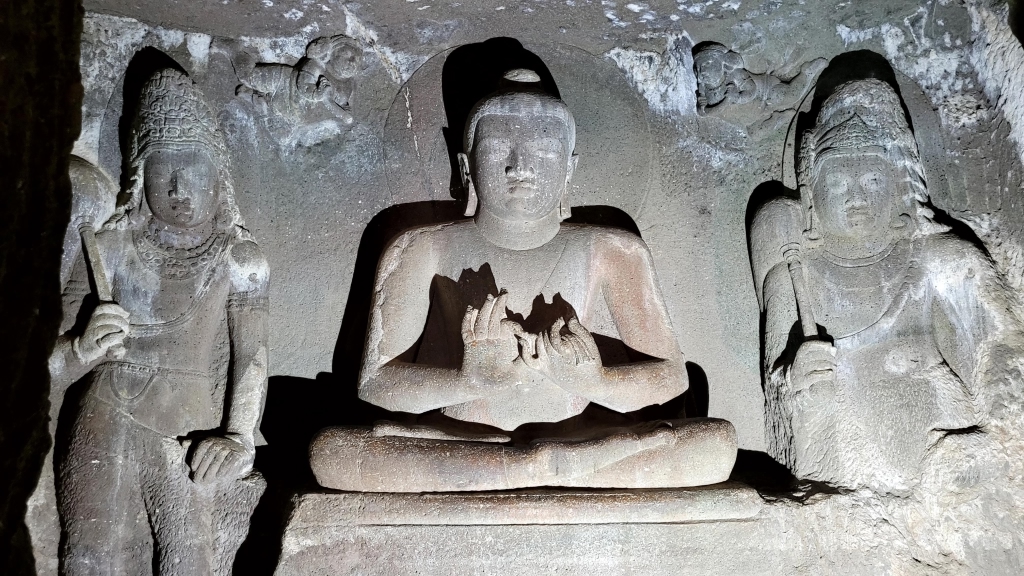
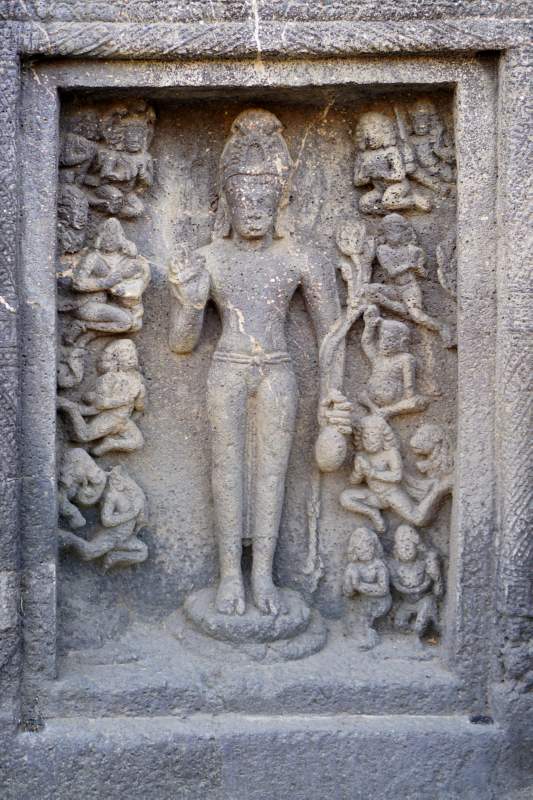
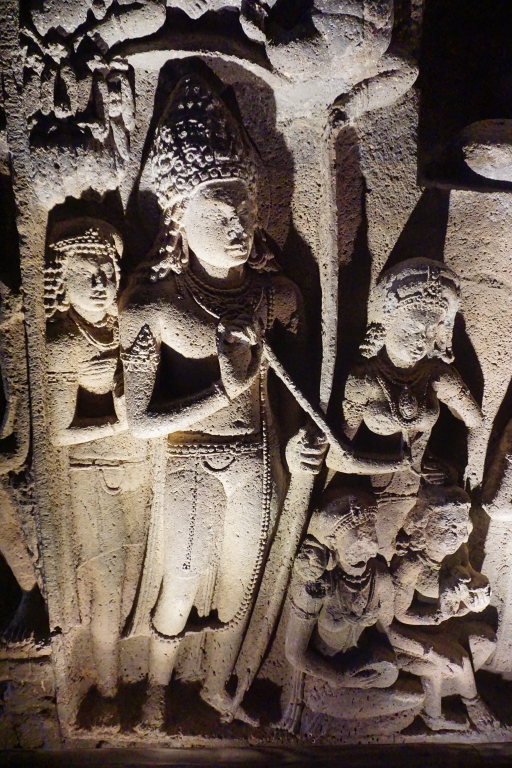
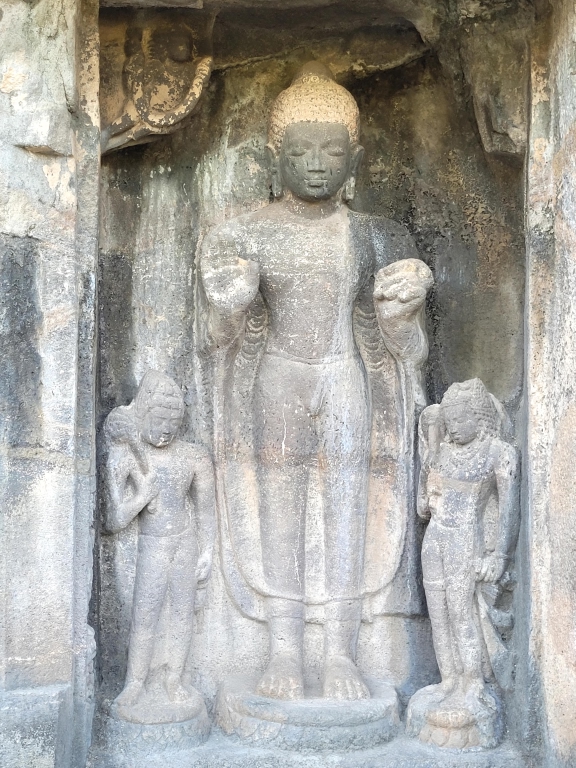
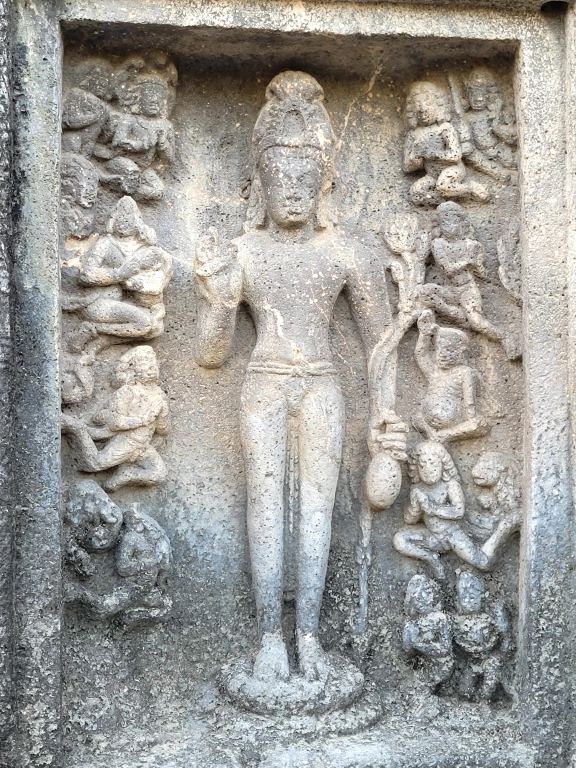
  • Caves 1 and 2 belong to the Mahayana period and feature images of Buddha, Bodhisattva Padmapani, and Avalokiteshvara.
  • Caves 9 and 10 are Chaitya halls of the Theravada period.
  • Caves 19 and 26 have Mahayana-style Buddha images within the Chaitya halls.
  • Cave 17 is especially famous for its beautiful wall paintings.

Ajanta Caves During Satvahana Period:

  • The earliest caves are 9, 10, 12, 13 and 15A.
  • The murals here depict the Jataka literature.
  • The artistic influence on the Gupta period.
  • Cave numbers 9 and 10 are stupas containing the halls of chaitya griha.
  • Chaitya grihas are worship halls.
  • The Satvahana period caves emphasised more on stupas more than cave sculptures.
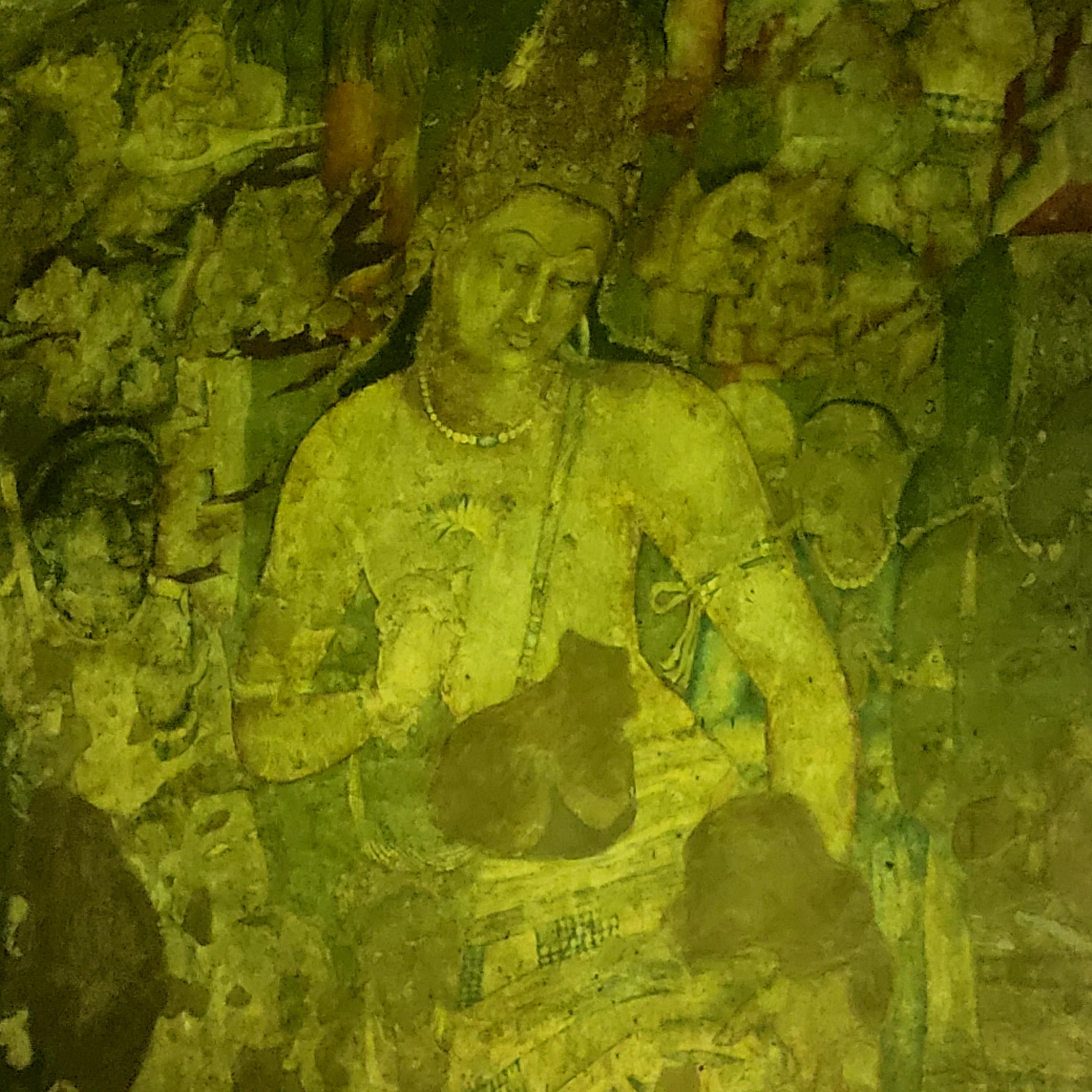
Ajanta padmapani

Ajanta Caves During Vakataka Period:

  • This is the second phase of the construction of the Ajanta caves. They were constructed during the 5th century AD.
  • A few of the later caves were made around the 5th century CE.
  • This phase is attributed towards the theistic Mahayana or Greater Vehicle tradition of Buddhism.
  • Cave numbers 1-8, 11 and 14-29 are some extensions of the caves built earlier.
  • The Vakataka dynasty ruled between the 3rd and 5th centuries CE.
  • They were patrons of art and architecture.

Ajanta caves built during this reign were used as a place of worship.

Ajanta First1

The Ajanta Caves were rediscovered in 1819 by British officer John Smith, who found them accidentally while on a hunting expedition in the Waghur valley. Since then, their historical and artistic importance has gained recognition across the world.

In 1983, Ajanta Caves were included in the UNESCO World Heritage List. They are a proud symbol of India’s cultural heritage.

The murals were created using natural pigments such as red ochre, black, blue, yellow, and white. The paintings not only depict Buddhist stories but also reveal aspects of contemporary society, including clothing, ornaments, architecture, music, dance, and instruments.

Today, visitors from around the world come to admire the art, architecture, tranquility, and natural beauty of Ajanta.
A visit to Ajanta is both a spiritual and artistic experience, spreading the timeless message of compassion, friendship, and wisdom taught by the Buddha.

The Ajanta Caves remain a shining symbol of India’s artistic and spiritual legacy — a place every Indian should visit at least once in a lifetime.
Ajanta first3


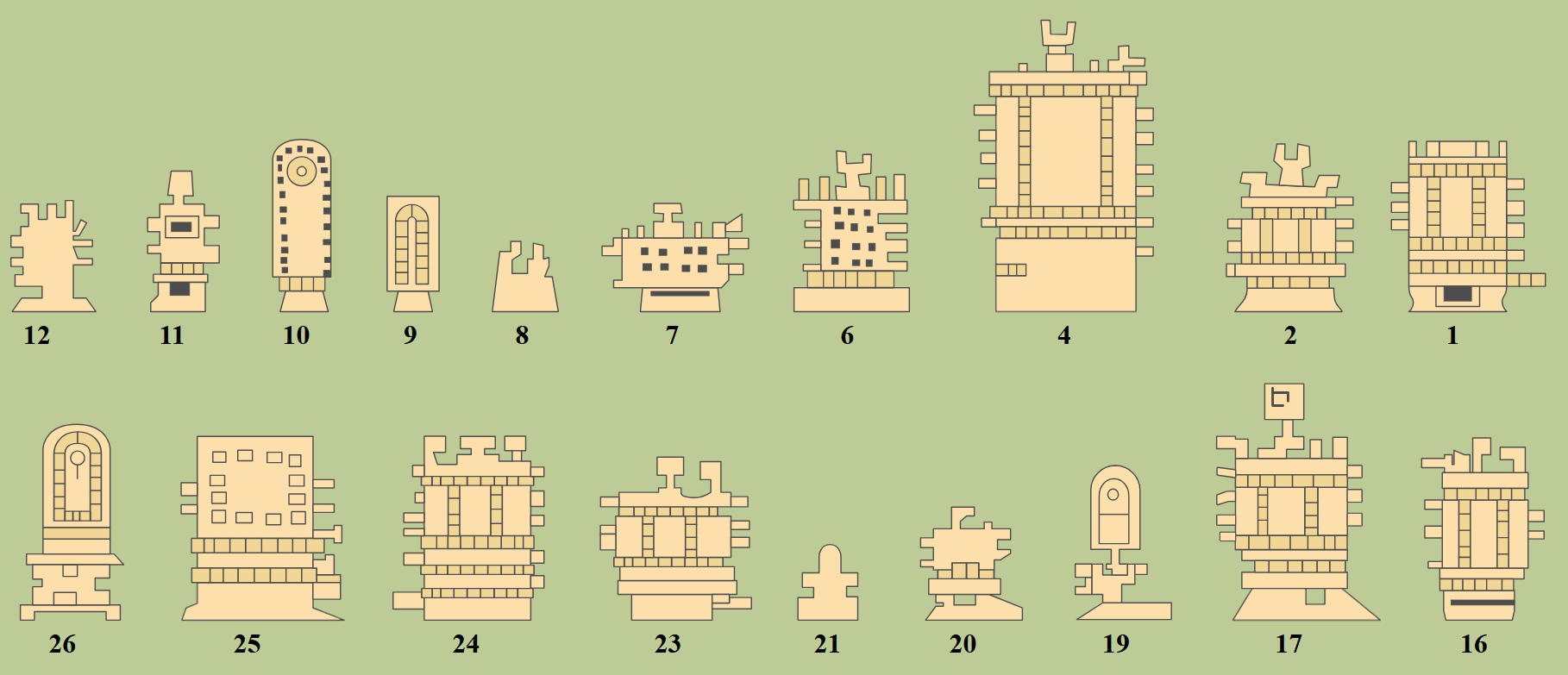
Layout of Ajanta Caves

🏛️ Detailed Cave-by-Cave Summary

🛕 Ajanta Cave 1 – The Jewel of Ajanta Monasteries


Ajanta Cave 1
is one of the finest and most elaborately decorated monasteries at Ajanta, belonging to the 4th–5th centuries CE (Gupta period). It represents the mature phase of Buddhist rock-cut architecture and painting in India.

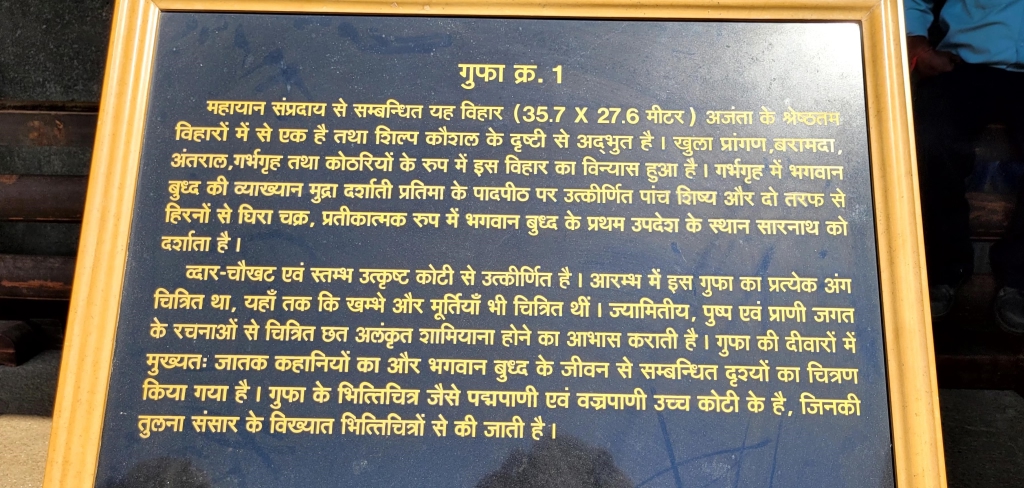
This squarish monastery (35.7 × 27.6 m) includes: a spacious hall with 14 monk cells, a verandah (19.5 × 2.82 × 4.1 m), a vestibule, a sanctum (shrine) housing a colossal image of Buddha and an open courtyard with side cells.

📐 Layout and Dimensions

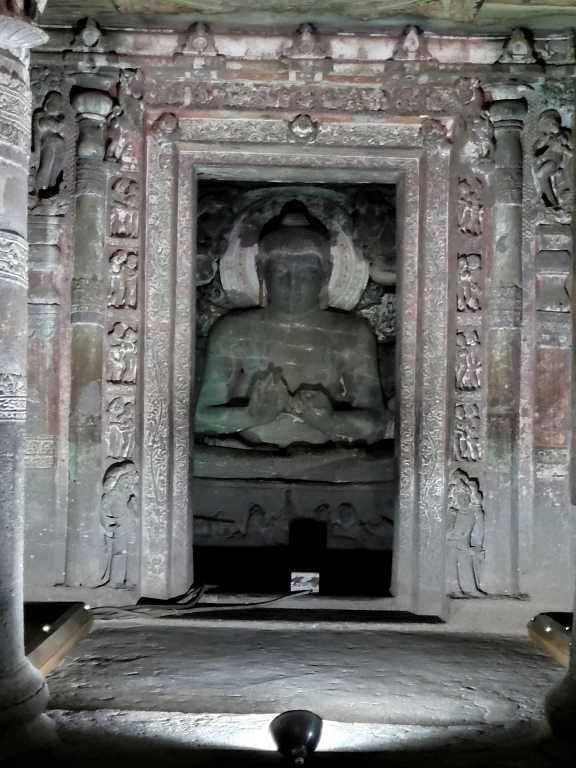
This squarish monastery measures 35.7 × 27.6 m and includes a spacious hall lined with fourteen monk cells, a richly carved verandah, a vestibule, a sanctum with a colossal Buddha, and an open courtyard with side cells. The sanctum enshrines Buddha in dharmachakrapravartana mudra, symbolizing the First Sermon at Sarnath.

🏛️ Verandah and Facade

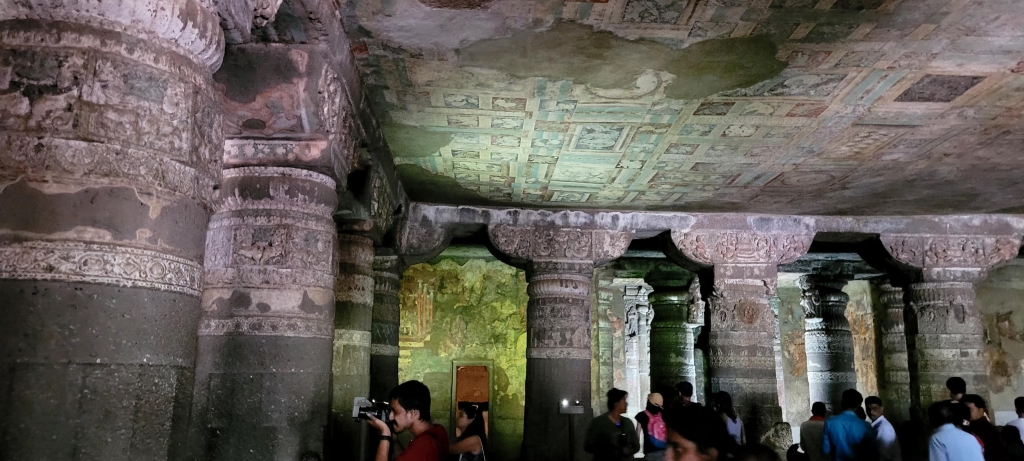
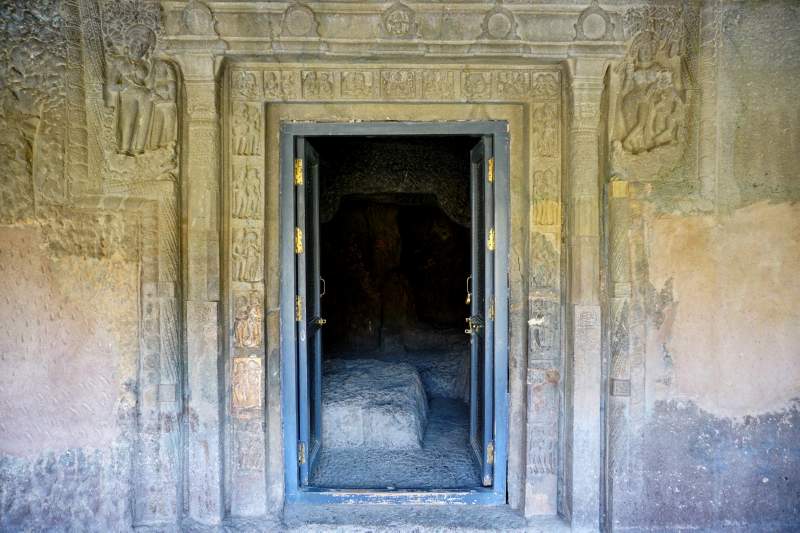
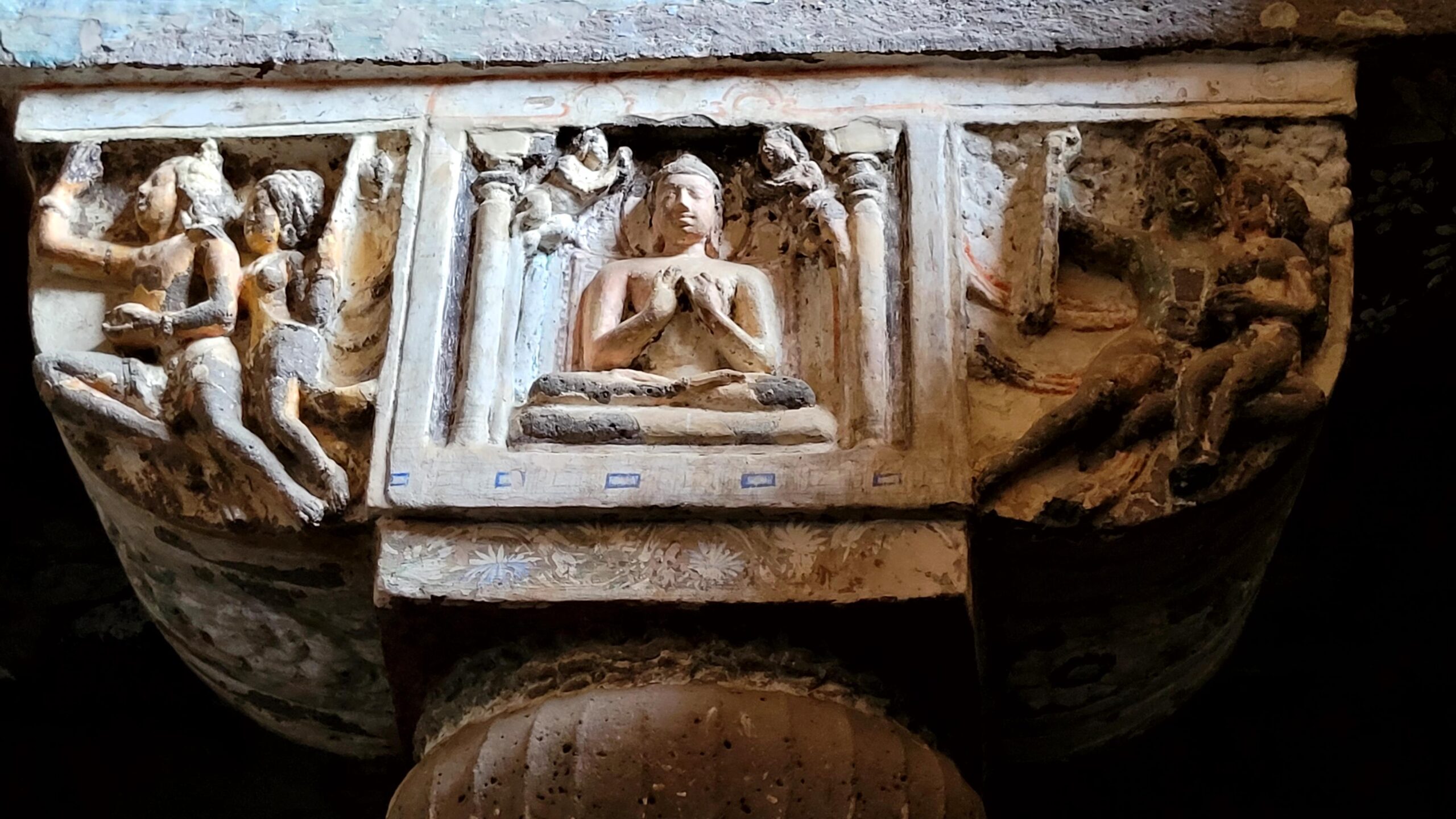
The verandah, measuring 19.5 × 2.82 × 4.1 m, is richly decorated though its portico has collapsed. Six elegant pillars with square bases feature dwarf figures and ornate bracket-capitals. The central pillars stand out with octagonal, sixteen-sided, and fluted designs embellished with flying couples bearing garlands. Makara motifs, amalaka-like elements, and Buddha images adorn the capitals.
The architrave displays vivid scenes of elephants, buffalo fights, human figures, and a depiction of the “Four Ominous Sights” that inspired Siddhartha’s renunciation. Each end of the verandah contains a cell, and traces of an additional pillared porch remain.

🏠 Hall

The large hall is supported by twenty pillars and surrounded by fourteen monk cells. The central pillars are artistically carved with scenes from Buddha’s life, decorative figures, and stupa motifs. Among the unique designs is the remarkable depiction of four deer sharing a single head.

🙏 Sanctum and Shrine Image

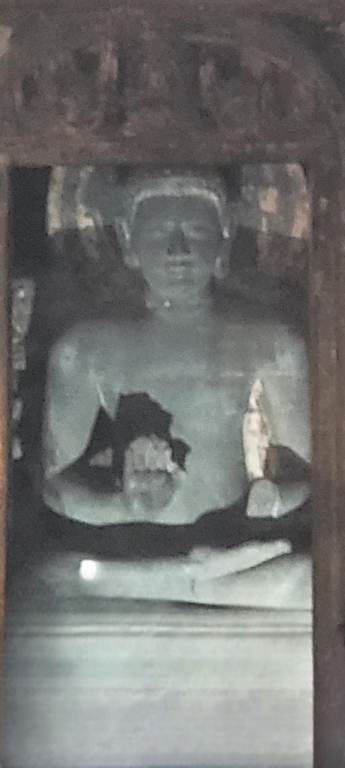
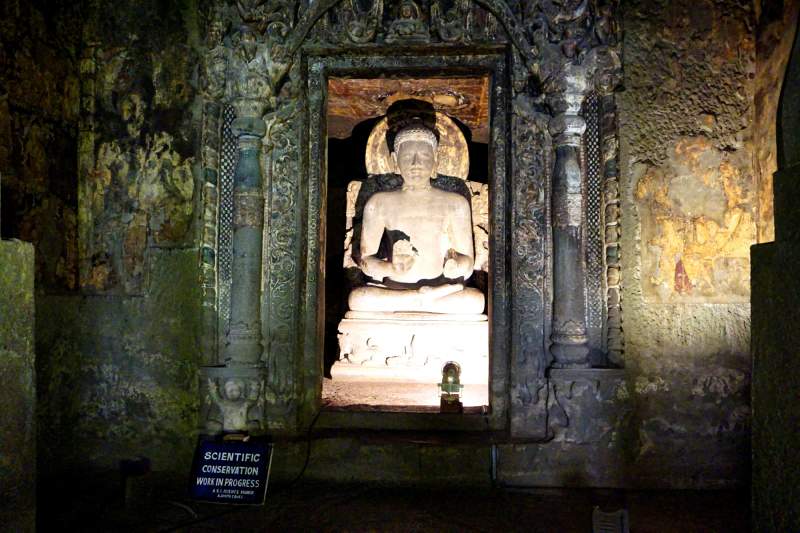
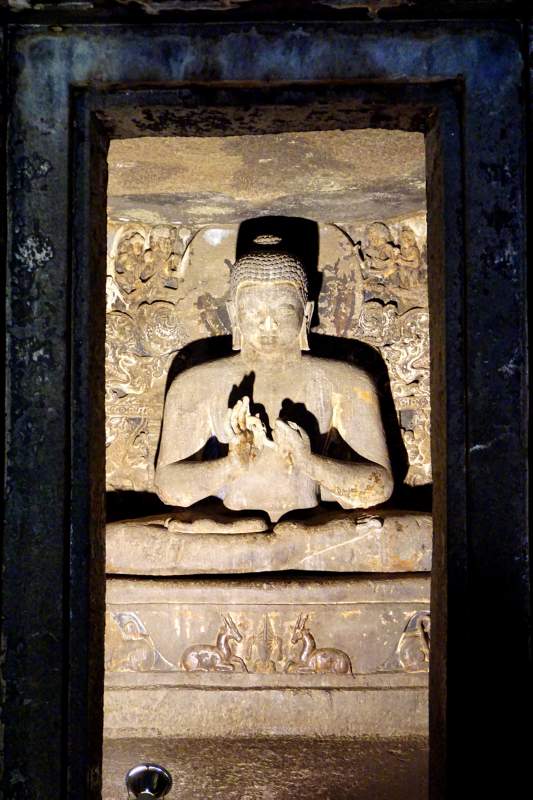
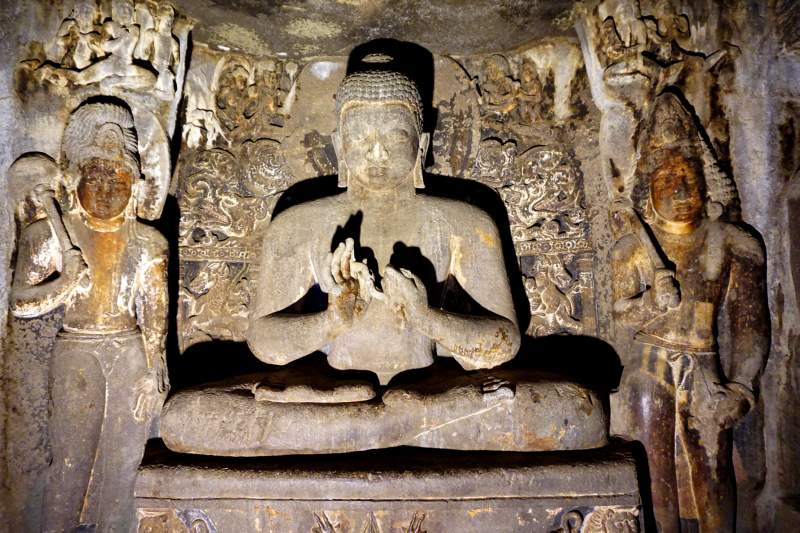
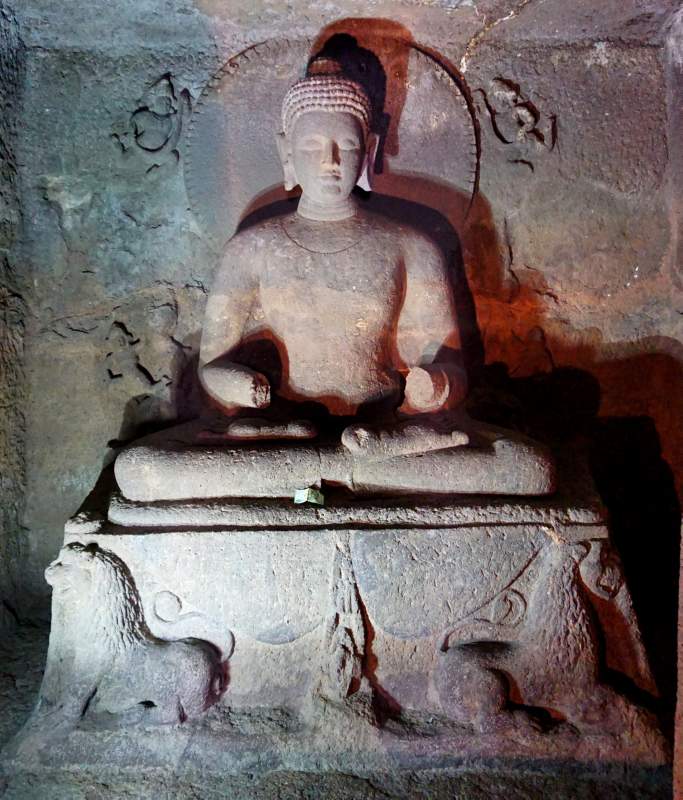
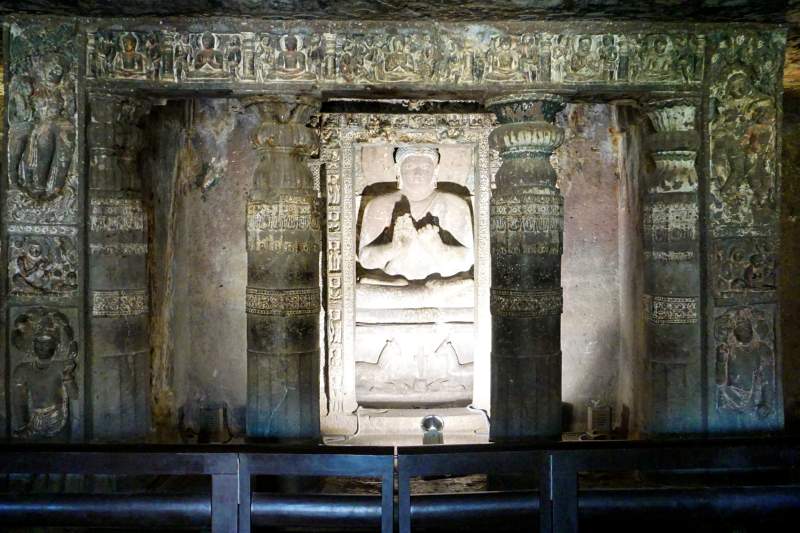
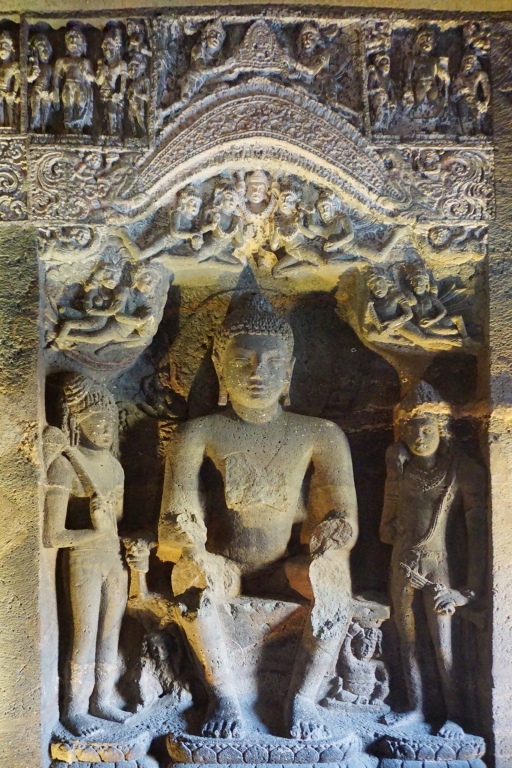
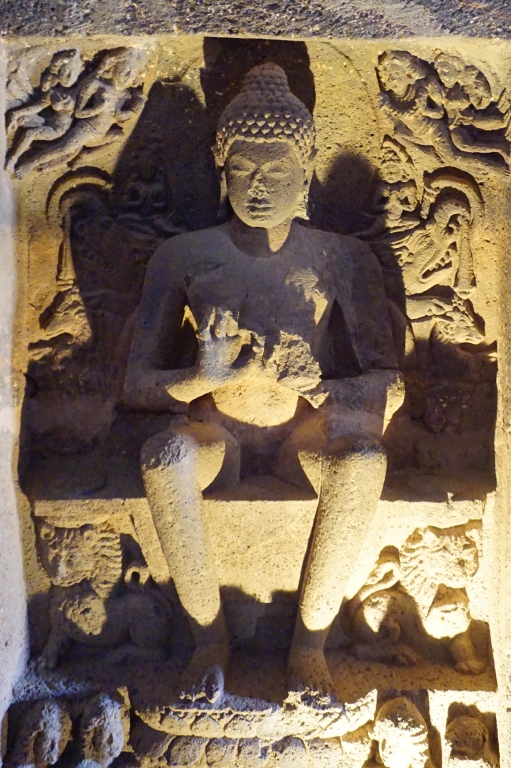
The sanctum houses a colossal seated Buddha in vajraparyankasana and dharmachakrapravartana mudra. Padmapani and Vajrapani stand on either side as attendants with fly-whisks. Above the halo are celestial beings holding garlands. The pedestal shows the Dharmachakra between two deer, representing the First Sermon, with the five disciples nearby.
The doorjambs feature intricate carvings of nagas, floral scrolls, couples, and makaras, while the antechamber displays graceful nayika bracket-figures. Stylistically, the cave aligns with the Ghatotkacha cave at Gulwada, excavated slightly earlier.

🎨 Paintings

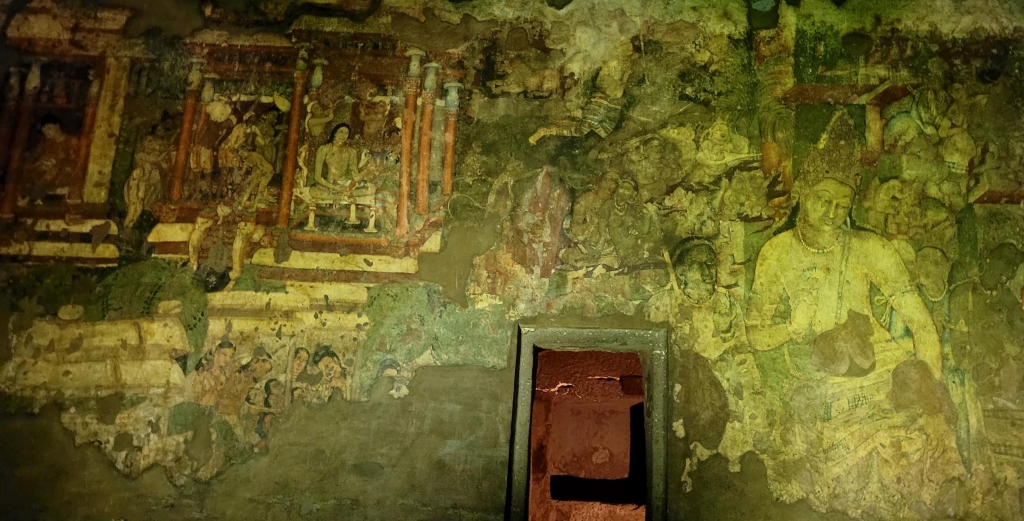
Ajanta Cave 1 was once fully painted, and the surviving murals are among the most celebrated creations of ancient Indian art. The iconic Bodhisattvas Padmapani and Vajrapani are depicted as serene, divine figures of immense emotional depth.
Major themes include scenes such as the Temptation of Mara, the Miracle of Sravasti, and several Jataka tales like Sibi, Samkhapala, Mahajanaka, Maha-Ummagga, and Champeyya. Painted ceilings feature floral, geometric, and animal motifs, and scenes such as bullfights and festive gatherings suggest cross-cultural influences in the region.

🌸 Iconic Artworks

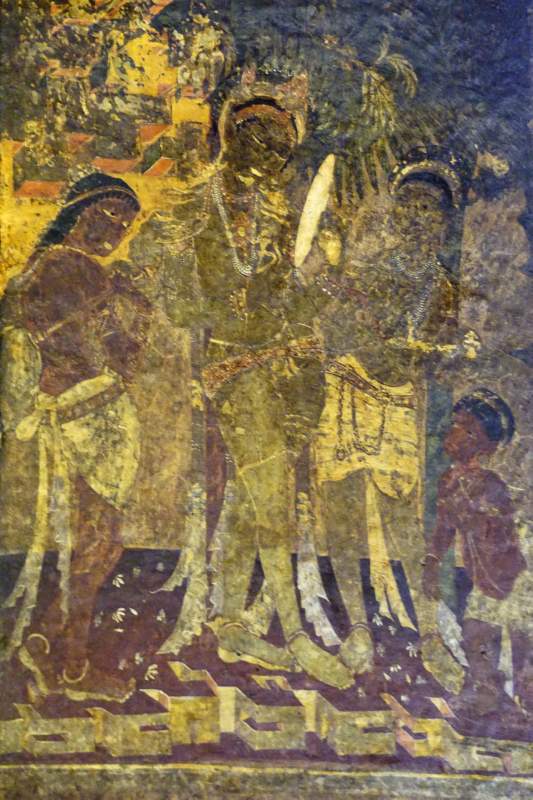
Padmapani Bodhisattva appears as a compassionate figure holding a lotus. Vajrapani Bodhisattva stands as a powerful protector holding a vajra. The renowned “Dark Princess” painting captures delicate emotion and remains a masterpiece of Ajanta’s artistic legacy.

🛕 Ajanta Cave 2 – A Jewel of Buddhist Art and Architecture

📐 Dimensions and Dating

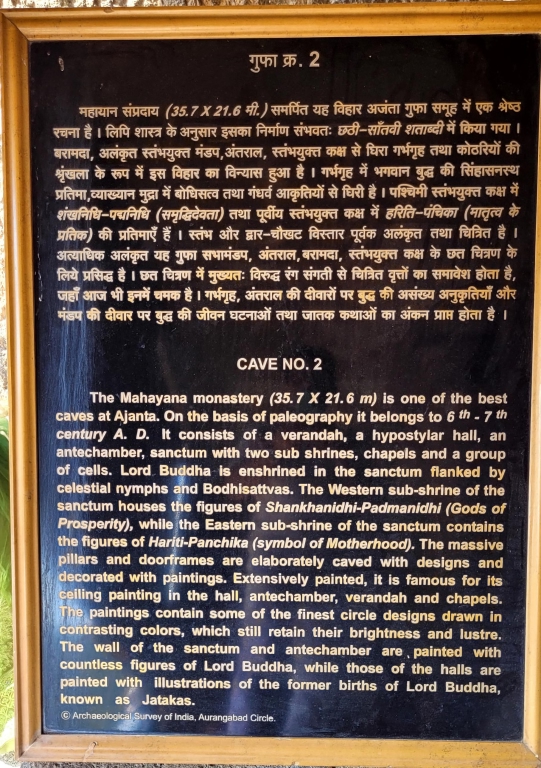
Ajanta Cave 2 is a monastery (Vihara) measuring 35.7 × 21.6 m. It consists of monk cells, a sanctum sanctorum, and two pillared sub-shrines. The cave is datable to the early sixth century CE and closely resembles Cave 1 in overall planning.

🏛️ Architectural Layout

Ajanta Cave 2 features a verandah with a small cell at each end. Each cell is fronted by a pillared porch, and the architrave above these pillars is divided into three decorated compartments.
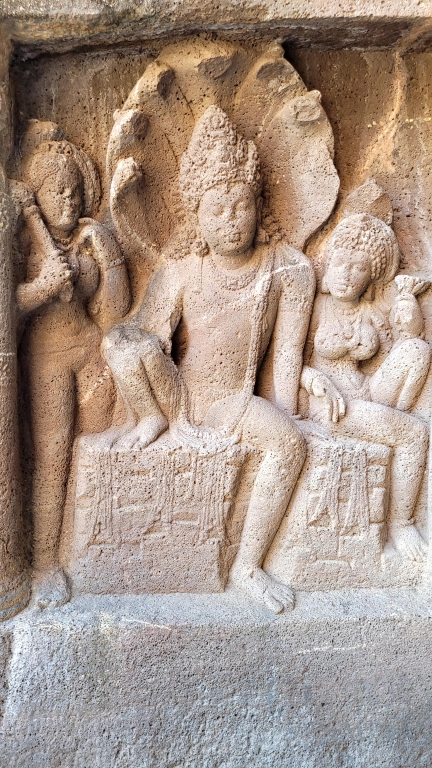
On the right porch, the central panel displays a seated Nāga king surrounded by attendants, while the side panels show pot-bellied Yakshas, one of whom is interpreted as the Buddhist form of Kubera.
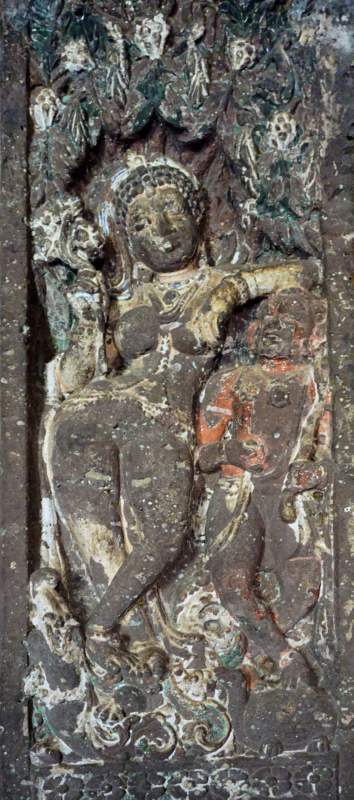
The left porch presents a female figure holding a child on her lap, identified as Hariti, the Buddhist goddess of fertility and protection.

The verandah pillars differ from those of Cave 1. They stand on moulded bases, with shafts that taper from sixteen sides to thirty-two flutes. These are embellished with tracery bands and crowned with double-lotus capitals supporting an amalaka-shaped member.
A richly carved doorway, flanked by ornamented windows, leads into the main hall, which contains twelve pillars. These pillars display exquisite carvings, and the central pillars on the front and back rows are finely ornamented, almost to excess. Ten monastic cells line the hall on its two sides.

🏠 Shrine and Sculptural Programme

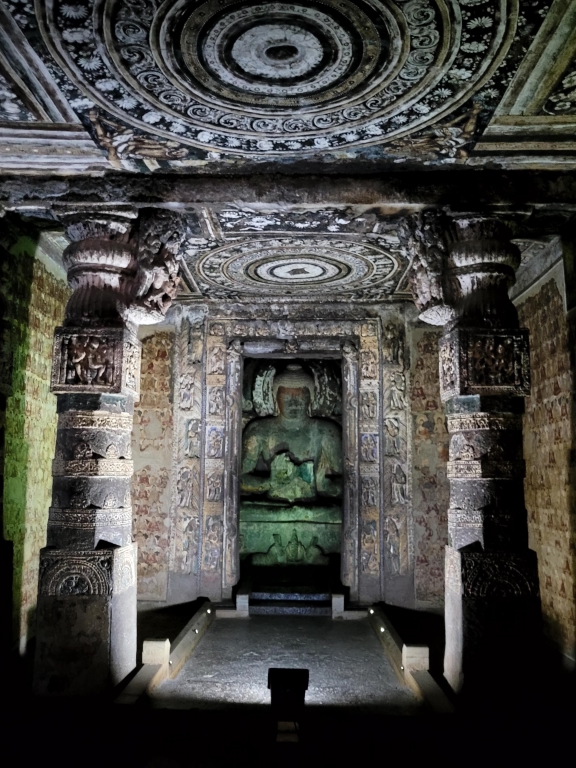
The sanctum houses a seated Buddha in dharmachakrapravartana mudra, symbolizing the turning of the Wheel of Dharma. He is accompanied by attendants including Padmapani.
The antechamber is elaborately decorated. Its pillars and door frames are carved with meticulous precision. Bracket-figures of dancing nymphs (nayikas) project from the capitals of the central pillars, attended by companions.

Each side of the antechamber contains a subsidiary shrine.
The right chapel enshrines Hariti and Panchika, accompanied by attendants and narrative scenes showing Hariti’s attack on Buddha and her subsequent conversion. Below these scenes appear lively depictions of boys studying, boxing, and goading rams—offering a charming glimpse of ancient daily life.
The left chapel holds two corpulent Yakshas with attendants, recognizable by their luxuriant curly hair, a typical Ajanta coiffure.

The sub-shrines beside the main shrine contain the Yaksha figures Sankhanidhi and Padmanidhi on one side, and Hariti and Panchika on the other—symbolizing prosperity, abundance, and protective blessings.

🎨 Murals and Painted Decorations

Ajanta Cave 2 is renowned for its magnificent ceiling and wall paintings. The ceilings are divided into decorative panels filled with floral motifs, fruits, birds, celestial figures, and geometric patterns. Many central panels feature concentric circles and flying figures rendered with exceptional refinement.
A celebrated ceiling motif is the procession of twenty-three geese in the left chapel, known for its precision and artistic beauty.

The walls of the hall, antechamber, and shrine are adorned with countless Buddhas in various attitudes, reminiscent of the “Cave of a Thousand Buddhas” at Dunhuang in Central Asia. An inscription here mentions the donation of “a thousand painted Buddhas,” confirming this theme.

Among the major paintings are three large Bodhisattvas—one on the back wall of the hall and two at the entrance of the shrine. The Avalokitesvara to the left of the shrine door is presented as the saviour from the Eight Great Perils: lion, elephant, fire, snake, robber, water, fetters, and demon.
Scenes from Buddha’s early life also appear prominently, including the Nativity and Maya’s Dream, depicting the white elephant entering Queen Maya’s womb and the later birth of Buddha, received by the god Sakra.

📜 Jataka Tales Depicted

Ajanta Cave 2 preserves several important Jataka stories presented with rich narrative detail.
The Hamsa Jataka tells the story of the Golden Goose King and his loyal companion Sumukha, who teach Dharma to the King of Varanasi.
The Vidhurapandita Jataka narrates the tale of the wise minister taken to the Naga world by the Yaksha general Punnaka, where he meets the Naga princess Irandati.
The Ruru Jataka recounts the compassion of the Golden Deer who rescues a drowning man and forgives his betrayer.
The Purna Avadana describes Purna’s conversion, divine interventions saving his brother Bhavila, and the construction of the Sandalwood Monastery visited by Buddha.

Although parts of the verandah paintings have perished, the surviving fragments exhibit the same graceful lines, delicate colour schemes, and refined modelling that make Ajanta’s art world-famous. The paintings in the Hariti chapel, particularly the female votaries set against rocky landscapes, are often compared to Renaissance compositions for their artistic elegance.
🛕 Ajanta Cave 3 – An Incomplete Monastery

This is an incomplete and unfinished monastery with dimensions 10.08 X 8.78 m likely late phase of excavation at Ajanta.

🏛️ Architectural Description

Ajanta Cave 3 represents an unfinished excavation of what was intended to be a monastery (vihara). The cave lies close to Cave 2 and can be reached via a modern flight of steps constructed for visitors today.

The excavation work was abandoned in its initial stage, and only the preliminary cutting of the pillared verandah was completed. Beyond this, one can see merely the roughly scooped entrance of what was planned to be the main hall.

No cells, shrine, or decorative elements were executed, indicating that work ceased before the architectural plan took full shape. The incompletion might have been due to structural issues, changes in patronage, or a shift of focus to other caves during the final phase of Ajanta’s development (around the 6th century CE).

Ajanta Cave 3
Ajanta Cave 3

🛕 Ajanta Cave 4 – The Grand Monastery of Ajanta

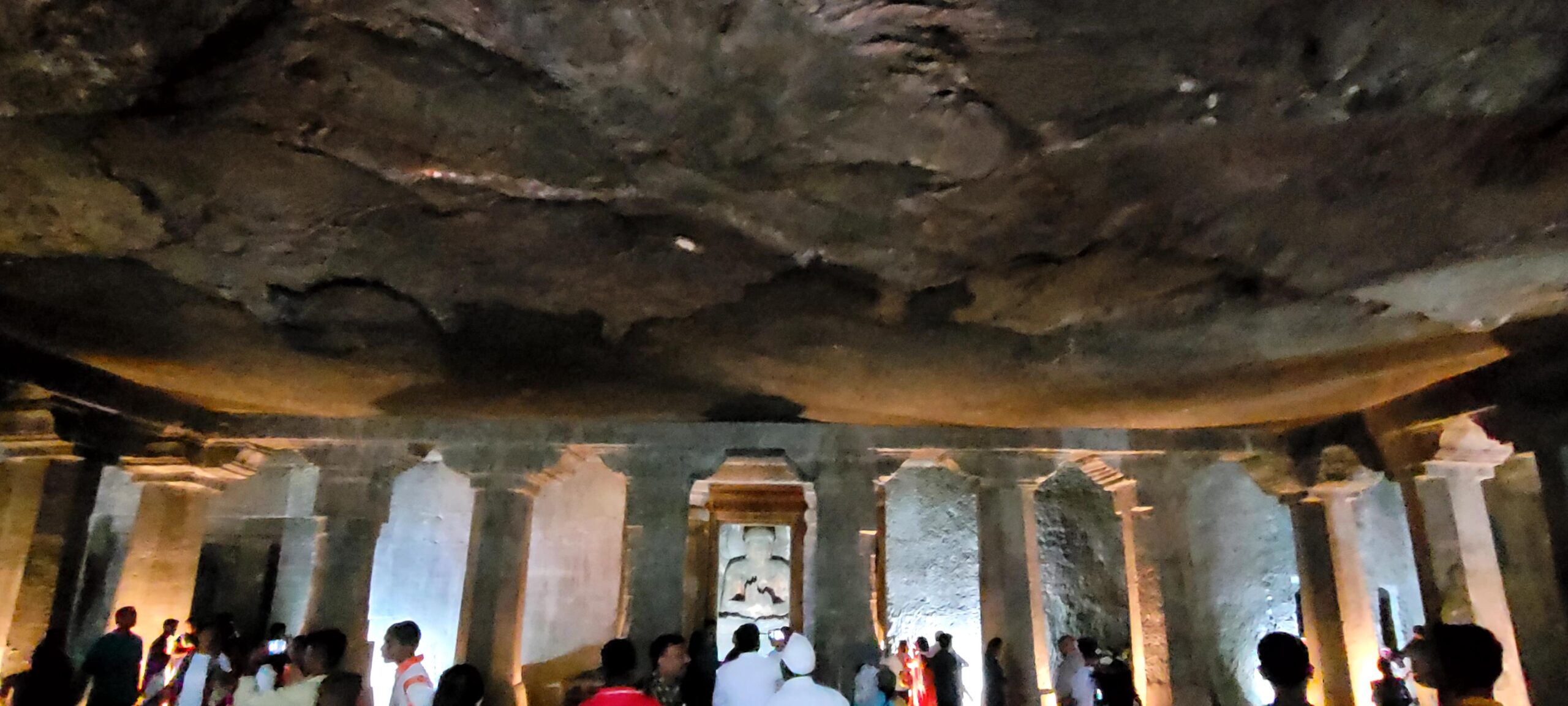
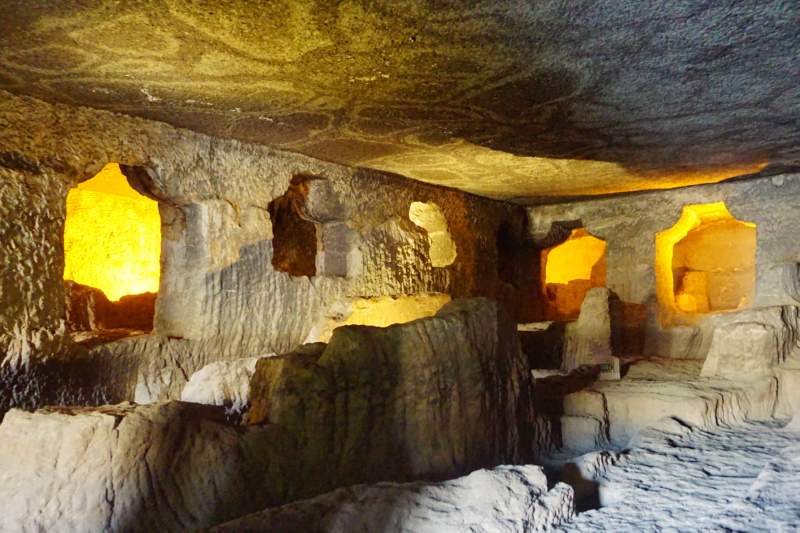
This squarish monastery dates to First half of the 6th century CE. This is the largest monastery at Ajanta measuring (35.08 X 27.65 m). The ceiling of the hall preserves a unique geological feature of lava flow.

🏛️ Architectural Overview

Ajanta Cave 4 is the largest monastery (vihara) at the site, planned on an ambitious scale though never fully completed. Measuring 35.08 by 27.65 meters, it includes a pillared verandah, a large central hall, and a sanctum sanctorum (main shrine).

A modern flight of steps leads to the cave, which is notable for its monumental proportions and rich architectural sculpture. Despite remaining incomplete, Cave 4 stands as a magnificent example of early Indian rock-cut architecture.

🏠 Verandah

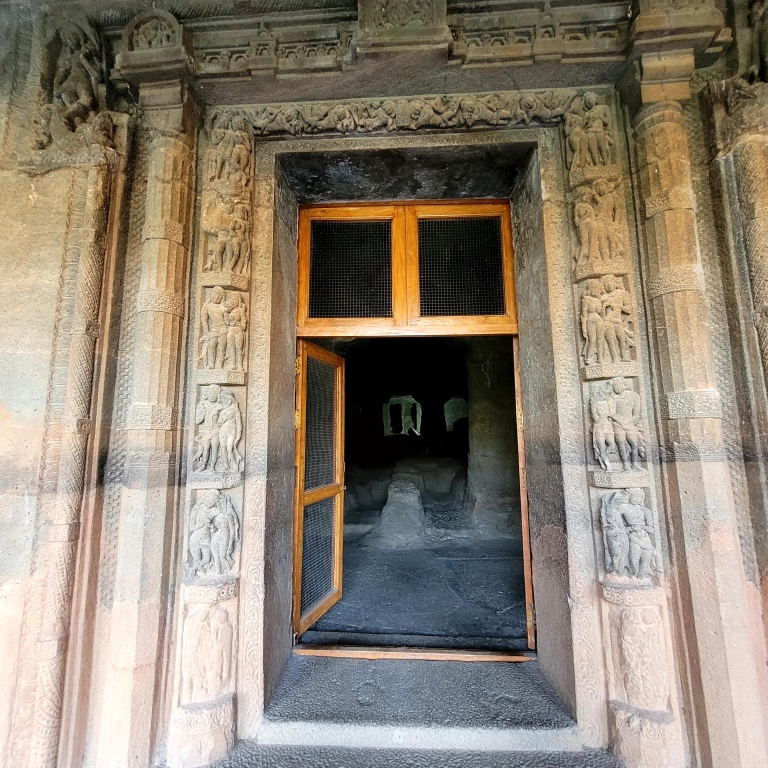
The verandah, supported by eight octagonal pillars with bracket capitals, features a cell at each end. The entrance doorway of the hall, executed in the ornamental style of Cave 1 but bolder and more elaborate, is one of the finest examples of stone carving at Ajanta.

🕉️ Main Door and Ornamentation

The main doorframe of Cave 4 is exquisitely carved:

The outer jambs display female figures with attendants, standing couples, flying celestial beings, and sala-bhanjikas (tree nymphs).
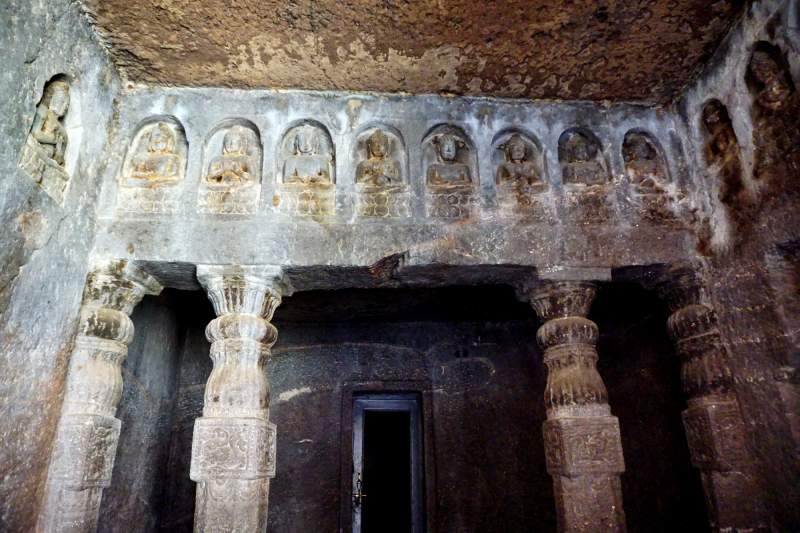
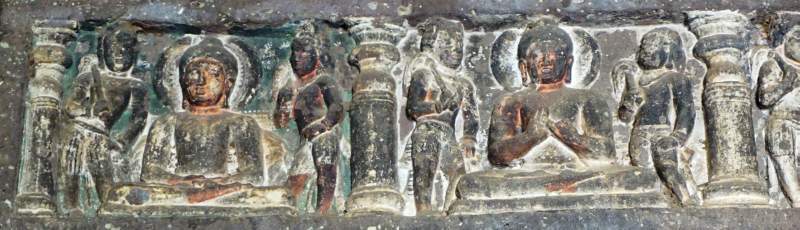
The lintel above is adorned with seated Buddhas and gana figures, while the topmost band carries five chaitya-window motifs, three of which enclose Buddha figures.

The upper corners of the doorframe hold sardula (mythical lion) riders as bracket figures, showcasing the sculptors’ mastery.

To the right of the doorway, a rectangular panel features Avalokitesvara (Bodhisattva) depicted as the Reliever from the Eight Great Perils. Devotees are seen praying to him for protection from dangers such as wild animals, water, fire, and demons.
The Bodhisattva’s jata-mukuta (crown of matted hair) holds a Dhyani Buddha in the Dharmachakrapravartana mudra (gesture of teaching) instead of the meditative pose — indicating that iconographic conventions were still evolving during this period.

To the left of the main entrance, another panel depicts Buddha in a teaching attitude, harmonizing with the central shrine’s theme. The window frames and lintels are also intricately ornamented.

🏠 Hall and Pillars

The main hall is vast and supported by 28 pillars arranged in a square formation. Most pillars resemble those of the verandah — octagonal shafts with bracket capitals — though a few on the rear side exhibit more elaborate carvings.

Along three sides of the hall, numerous cells were excavated, many of which remain unfinished, showing stages of work in progress.

🪔 The Shrine and Sculptures

The shrine is a large, deeply recessed cell that enshrines a colossal seated image of Buddha in the teaching attitude (Dharmachakrapravartana Mudra).
He is flanked by Vajrapani on one side, the guardian with the thunderbolt and Padmapani on the other, holding a lotus (ajina).

In front of the Buddha’s throne is a group of devotees, including monks and lay followers, carved in adoration.

The doorjambs and lintel of the shrine are decorated with additional Buddha figures, continuing the sacred motif.

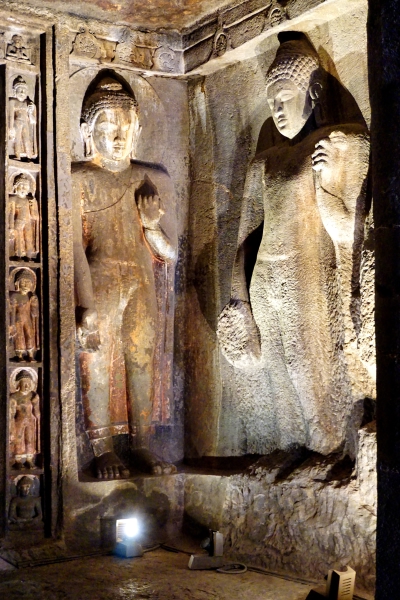
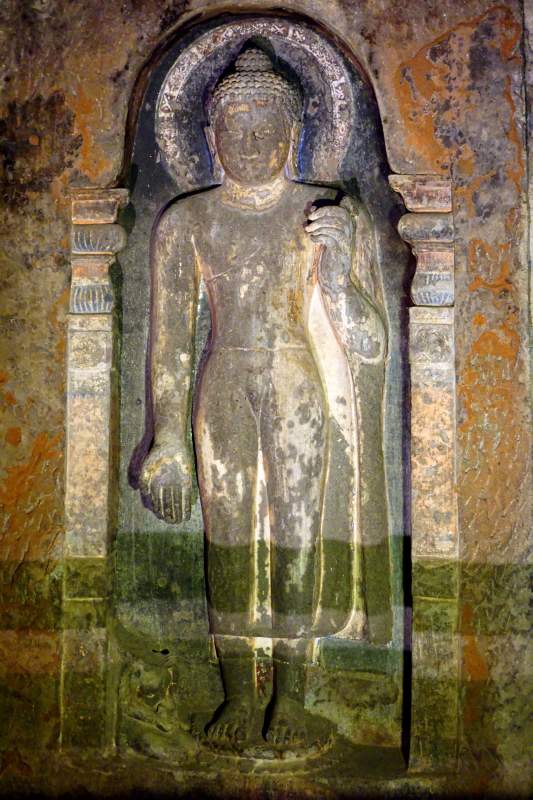
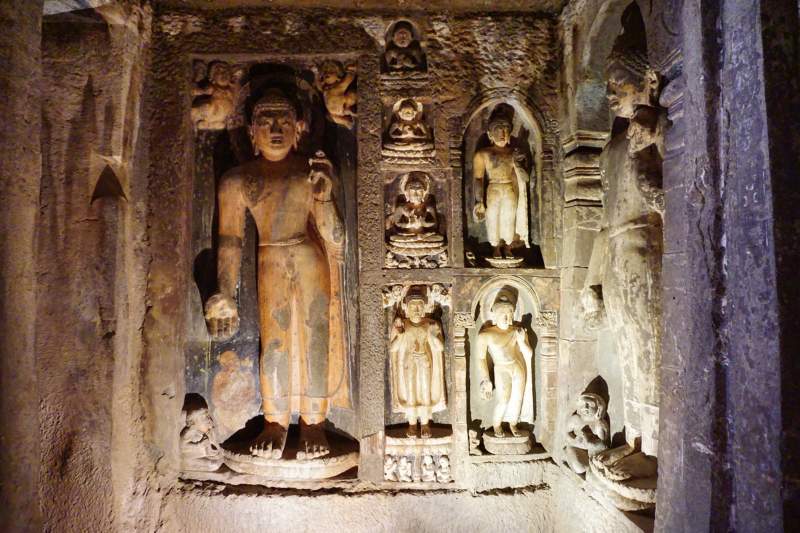
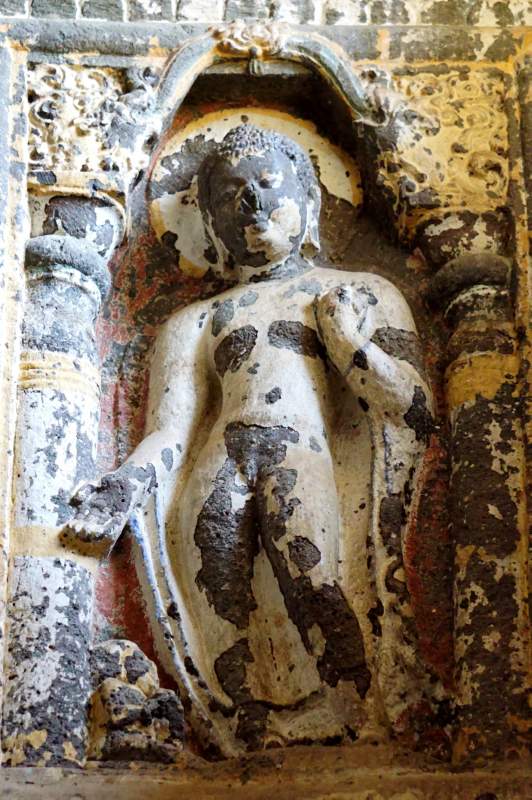
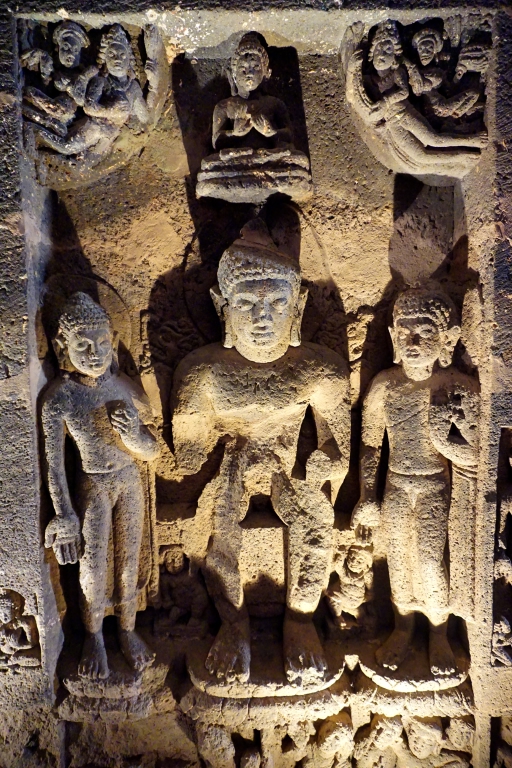
The antechamber walls house six colossal standing Buddhas, two of which remain unfinished. Each figure shows the right hand raised in abhaya mudra (gesture of reassurance) and the left hand holding the robe’s edge.

Traces of ancient paintings still survive on these sculptures, indicating that both the shrine and the antechamber were once fully painted.

🎨 Paintings and Geological Feature

Cave 4, though largely unfinished, was once richly painted. Faint remains of these murals can still be seen on the verandah walls and shrine sculptures, revealing that it once possessed vibrant Buddhist iconography similar to Caves 1 and 2.

A rare and remarkable natural geological feature enhances the cave’s uniqueness — the ceiling of the hall preserves a visible lava flow pattern, a formation resulting from the original basaltic rock’s natural texture.

📜 Inscription and Dating

An inscription on the pedestal of the Buddha image in the shrine records that the statue was a gift from Mathura, the son of Abhayanandin.
Based on palaeographic evidence from this inscription, Cave 4 is dated to the first half of the 6th century CE.

🛕 Ajanta Cave 5 – An Unfinished Monastery with Exquisite Door Frame

This monastery measuring 10.32 X 16.8 m is an unfinished one dates to late 5th to early 6th century CE.

🏛️ Architectural Description

Ajanta Cave 5 is a small, unfinished monastery excavated at a lower level compared to its neighboring caves. The excavation was abandoned early, and therefore, no interior hall, shrine, or cells were completed.

However, despite its unfinished state, the cave is notable for its richly carved doorway, which stands out as one of the most ornamentally refined examples among the Ajanta group.

The door frame is elaborately sculpted, featuring graceful female figures standing on makaras (mythical sea-creatures) that project outward beyond the surface alignment of the wall — a remarkable detail that demonstrates both artistic imagination and technical skill.

The remaining architectural features are minimal, as work ceased before the main hall could take shape.

🎨 Artistic and Historical Notes

Although the cave lacks paintings or finished sculpture within, its ornate entrance indicates that work on the façade and doorway often began before interior excavation — providing insight into the sequence of rock-cut construction at Ajanta.

The door carvings reflect the mature phase of Ajanta art, marked by fluid ornamentation, naturalistic figures, and decorative symbolism.

🛕Ajanta Cave 6 – A Double-Storeyed Monastery with Rich Sculptures and Paintings

This Double-storeyed Monastery (Vihara) measuring 16.85 × 18.07 meters is dates to late 5th to early 6th century CE.

🏛️ Architectural Description

Ajanta Cave 6 is a two-storeyed monastery consisting of a hall, sanctum sanctorum, cells, and subsidiary chapels on both levels. The lower storey includes a pillared hall, a shrine, and a now-lost verandah, while the upper storey has a hall with cells, a shrine, and smaller subsidiary sanctuaries.

The cave’s verandah of the lower level has completely disappeared, though traces such as a cistern on the right end remain. The doorway, once richly ornamented, has suffered damage; yet, its surviving portions display pot-and-foliage motifs, yaksha and elephant supports, and the refined aesthetic typical of Ajanta’s later phase.

Inside, the pillars are arranged unusually — in four parallel rows of four, rather than the typical square layout. These are octagonal for most of their height, becoming sixteen-sided and moulded near the top, supporting imitation beams. There are sixteen cells in total, cut into the sides of the hall.

The sanctum doorway is adorned with an ornamental arch rising from the mouths of makaras (mythical sea creatures), supported by yaksha figures. Above this arch is a naga holding a pot and flying celestial beings (vidyadharas), adding to the cave’s sacred symbolism.

🙏 Sculptural Features

In the lower shrine, a Buddha in preaching attitude is carved detached from the back wall, emphasizing depth and three-dimensional realism. The walls of the shrine and antechamber are covered with numerous Buddha figures, each shown in varied poses — standing, seated, and preaching — illustrating the artistic diversity of Ajanta’s sculptors.

In the upper storey, the shrine again houses a Buddha in teaching posture, with deer at the base of his seat, finely executed to reflect the Dharmachakra (Wheel of Law) setting at Sarnath.

The cave also contains multiple chapels, each with Buddha images, and four of the cells have pillared porches. The left-end porch is distinguished by a sculptured frieze of elephants of exceptional craftsmanship.

A small kneeling figure, drawn near a relief of Buddha on the antechamber wall, holding three lotus buds and a handled cylindrical object, is one of the finest examples of Ajanta line drawing preserved under a lime coat that gives it a marble-like appearance.

🎨 Paintings

Ajanta Cave 6 contains important mural fragments, notably the:

Miracle of Sravasti, depicted on the left wall of the antechamber.
Temptation (or Assault) of Mara, shown on the right wall.

These scenes portray the divine manifestations of Buddha and his spiritual victory over worldly temptations. Although much of the painting has peeled off, these murals are among the significant iconographic themes of the Ajanta cycle.

The shrine walls once carried numerous painted Buddhas, though most have faded over time.

📜 Inscriptions

A painted inscription on the left wall of the upper hall records a donation by a monk, whose name is tentatively read as Taranakirttana. This is one of the few surviving painted records in the Ajanta complex, giving valuable insight into the cave’s patrons and monastic community.

🛕 Ajanta Cave 7 – Monastery with Porticos and Sculptures of Buddha under Nagamuchilinda

This monastery measuring 15.55 × 31.25 meters is one dates to 6th century CE.

🏛️ Architectural Description

Ajanta Cave 7 is a unique monastery distinguished by its unusual plan. Unlike other vihara-type caves that feature a large central hall, this cave has two small porticos instead. Each portico is supported by two heavy octagonal pillars, whose capitals closely resemble those seen on the verandah pillars of Cave 2, indicating stylistic continuity in the late Ajanta phase.

The facade is elaborately decorated with chaitya-window motifs filled with half-lotus or animal-head designs. The verandah pillars are octagonal in shape with bracket-capitals, displaying refined craftsmanship.

At either end of the verandah, two elevated pillared porches open into three rock-cut cells each, while additional cells are hewn at both outer extremities of the verandah. In total, the cave houses eight monastic cells, intended for monks’ residence and meditation.

🙏 Shrine and Sculptures

The sanctum sanctorum contains a seated image of the Buddha in the preaching attitude (Dharmachakra mudra), carved against the back wall within an elliptical halo. The walls of the shrine are richly adorned with six standing Buddhas in vara-mudra (boon-granting gesture), beneath which are several seated Buddha figures, representing various aspects of enlightenment and compassion.

The door-jambs and lintel of the shrine entrance are intricately decorated with Buddha figures, while the upper corners feature female figures seated on makaras (mythical aquatic creatures). The poise and modeling of these female forms, especially the one on the left, are considered among the finest examples of Ajanta’s late sculptural grace.

🎨 Iconographic and Narrative Panels

Both side walls of the antechamber depict the Miracle of Sravasti, a popular scene in Buddhist art representing the miraculous manifestation of the Buddha appearing simultaneously in multiple forms to confound non-believers.

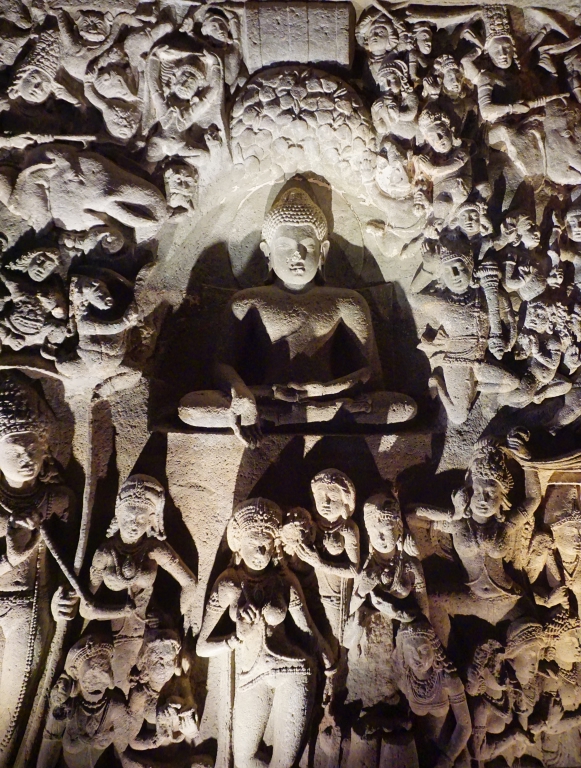
On the back wall of the antechamber are several Buddha images, including a particularly striking one on the upper right, showing the Buddha seated upon the coiled body of the serpent king Muchilinda, sheltered by his seven-hooded canopy — a sculptural portrayal of the Nagamuchilinda episode, where the naga protected the meditating Buddha during a storm.

🎨 Paintings

The cave was once fully painted, but only traces now survive. The remnants indicate that the walls, ceilings, and sculptures were richly adorned with colorful murals, contributing to the overall devotional atmosphere of the monastery.

Some cells and parts of the left porch remain unfinished, suggesting that excavation or decoration was interrupted before completion.

🛕 Ajanta Cave 8 – The Earliest and Lowest Monastery, Now Mostly Lost

This Monastery (Vihara) possibly among the earliest monasteries measuring 15.24 × 24.64 meters is dates to 2nd century BCE – early CE period.

🏛️ Architectural Description

Ajanta Cave 8 is an unfinished monastery situated at the lowest level of the Ajanta rock escarpment. Its position and simplicity suggest that it was among the earliest excavations in the Ajanta complex, possibly belonging to the Hinayana (Theravada) phase of Buddhist rock-cut architecture.

Unfortunately, the major portion of its façade and front structure has been destroyed due to a massive landslide, leaving only partial traces of its original plan. The remaining parts indicate that it was designed as a vihara (monastic dwelling) with a rectangular hall and surrounding cells for monks, though these are now mostly lost.

🪨 Current Condition

Today, Cave 8 survives only in fragments. The rock surface has been heavily eroded, and most architectural details, including pillars or decorative elements, are no longer visible. However, the existing portions still reveal the early attempt at monastic excavation at Ajanta — characterized by plain interiors and the absence of elaborate sculpture or painting.

🛕Ajanta Cave 9 – Early Hinayana Chaitya-Griha

This Chaitya-griha (Prayer Hall) possibly Early Hinayana Chaitya-Griha measuring 18.24 m × 8.04 meters is dates to 2nd century BCE, belonging to the Hinayana phase of Buddhism which continued to use during 5th–6th centuries CE (Mahayana period)

🏛️ Architectural Description

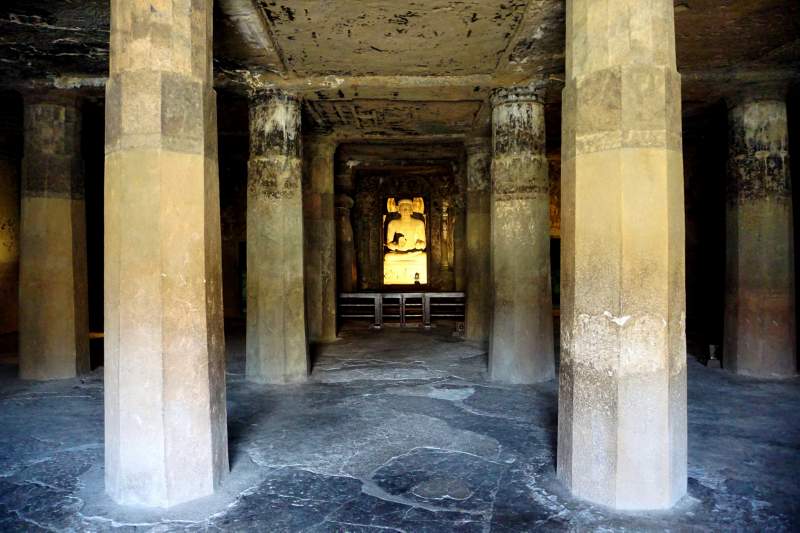
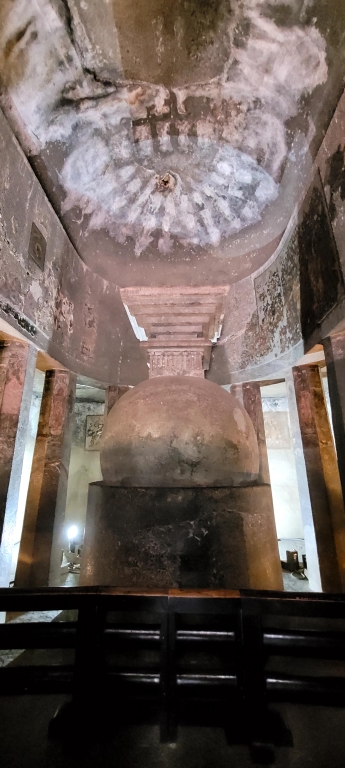
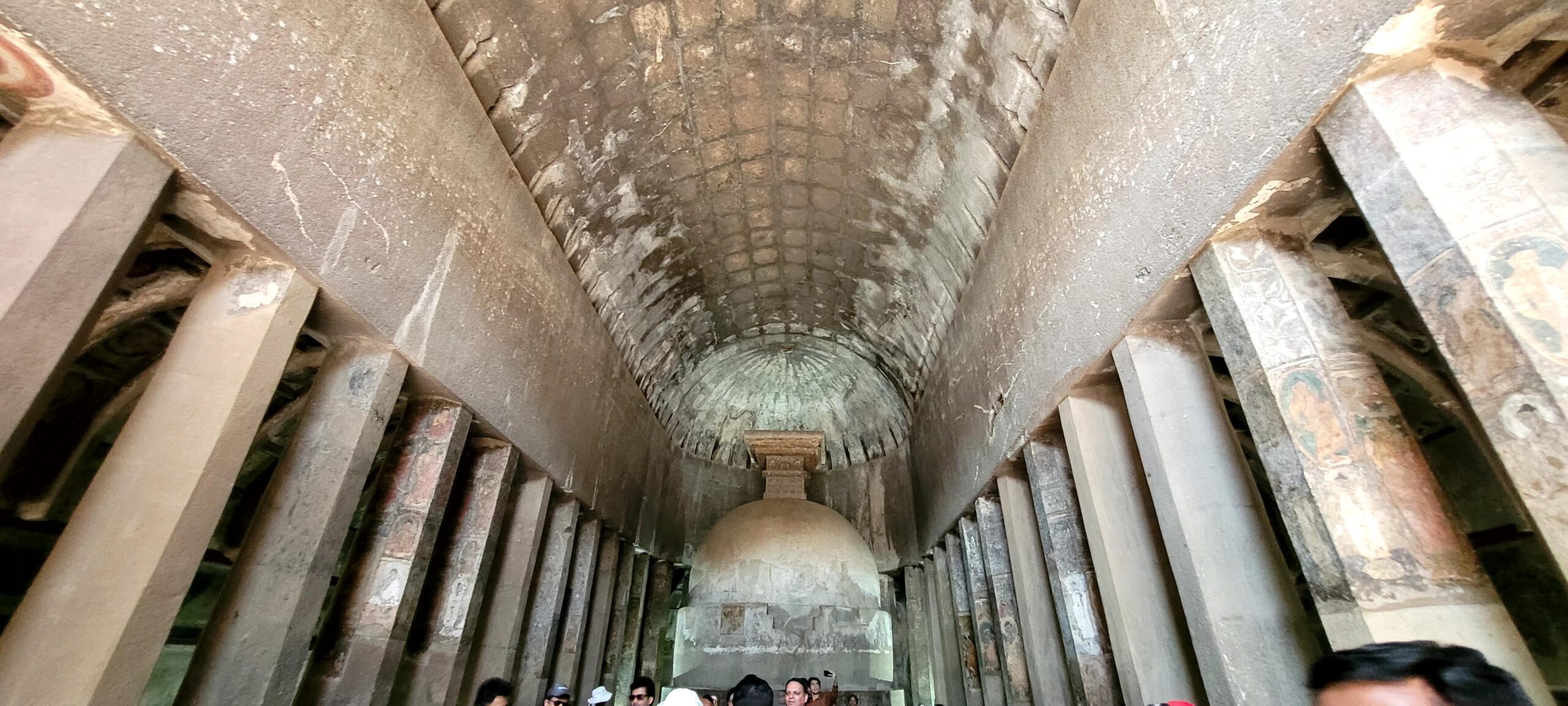
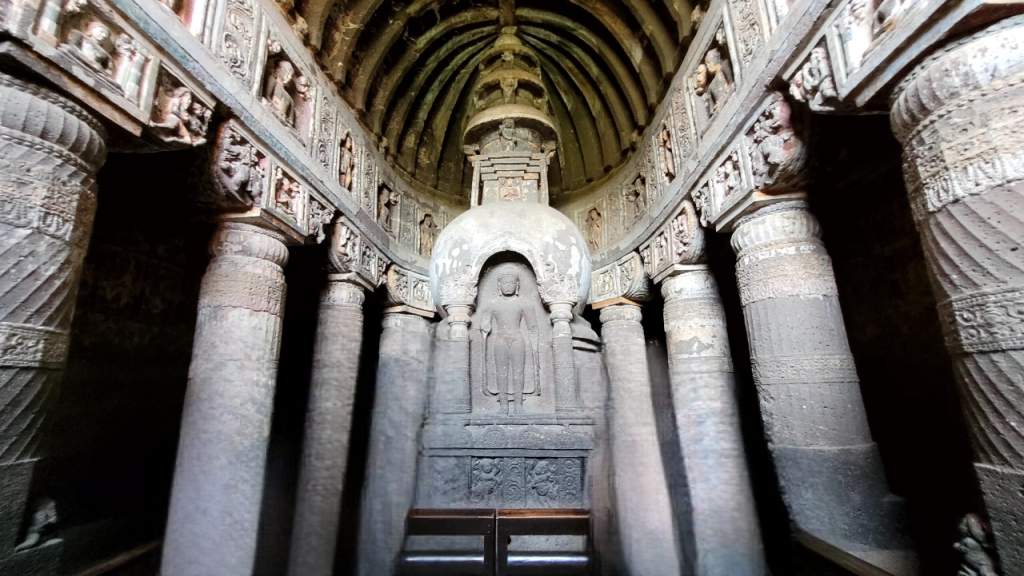
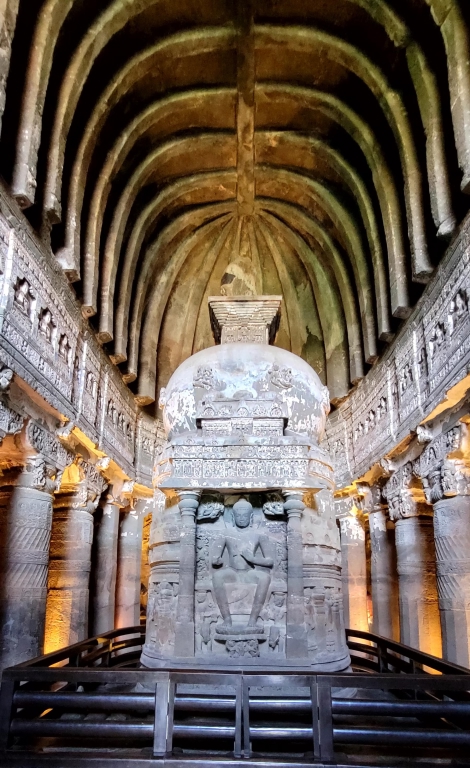
Ajanta Cave 9 is an apsidal (horseshoe-shaped) chaitya-griha, among the earliest excavations at the site. The plan is oblong, divided into a nave, an apse, and side aisles (pradakshina patha) by a colonnade of 23 pillars.

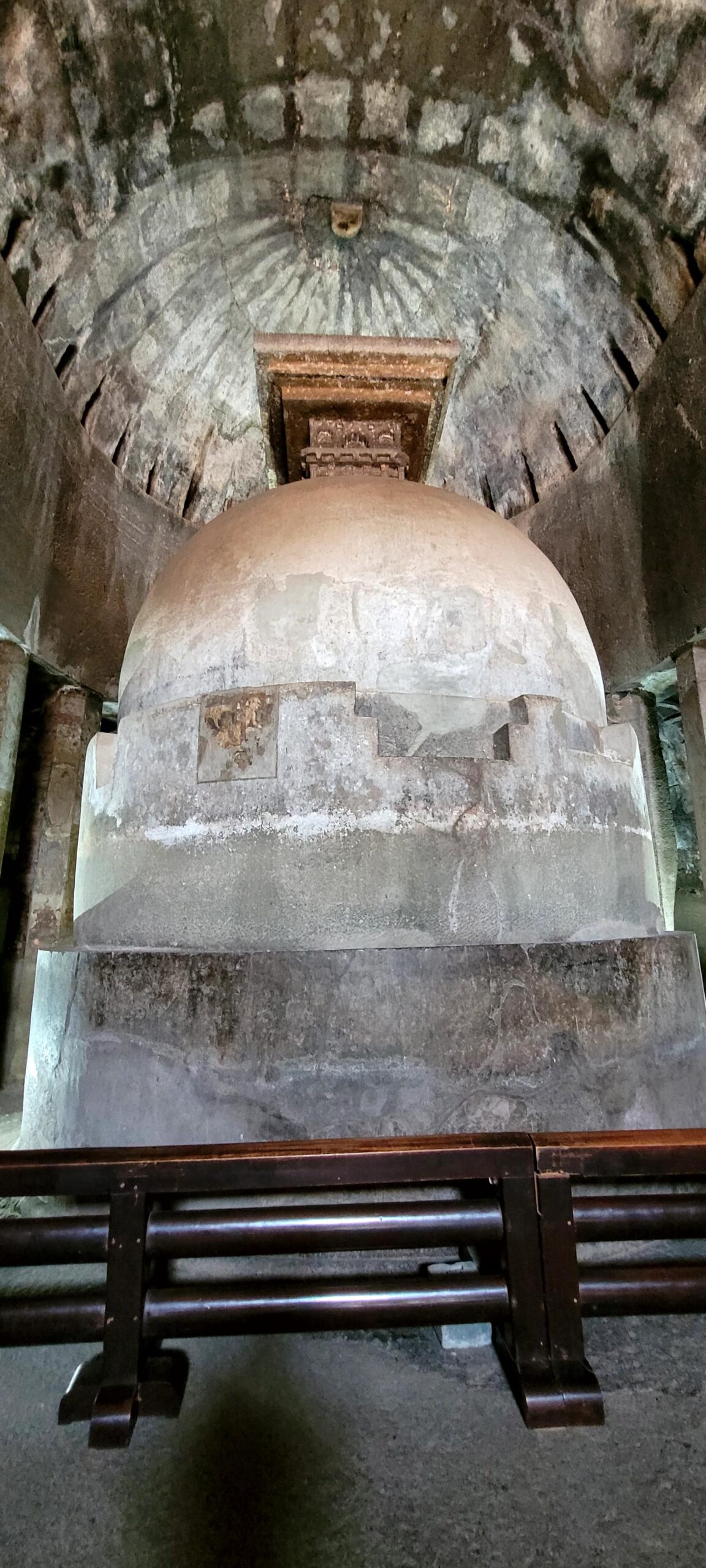
At the centre of the apse stands a globular stupa placed on a high cylindrical base, which served as the object of worship. The crowning elements of the stupa consist of a railing (vedika) and a harmika, expanding above into an inverted stepped pyramid.

Two sockets cut on top indicate the presence of wooden umbrellas (chatras) that once crowned the stupa.

🪶 Pillars and Ceiling

The pillars, except for the two near the entrance, are plain, slightly tapering octagons without bases or capitals. They support a triforium above, from which springs the vaulted ceiling of the nave and apse.

The aisles are covered with flat ceilings, illuminated by two small side windows.
The vaulted ceiling originally had wooden beams and rafters, whose insertion holes remain visible, reflecting the wooden architectural influence in early Buddhist rock-cut architecture.

At the transition point between the square and octagonal sections of the pillars and pilasters, an effective arrised finish can be seen—a characteristic feature of 2nd–1st century BCE craftsmanship.


🏛️ Facade

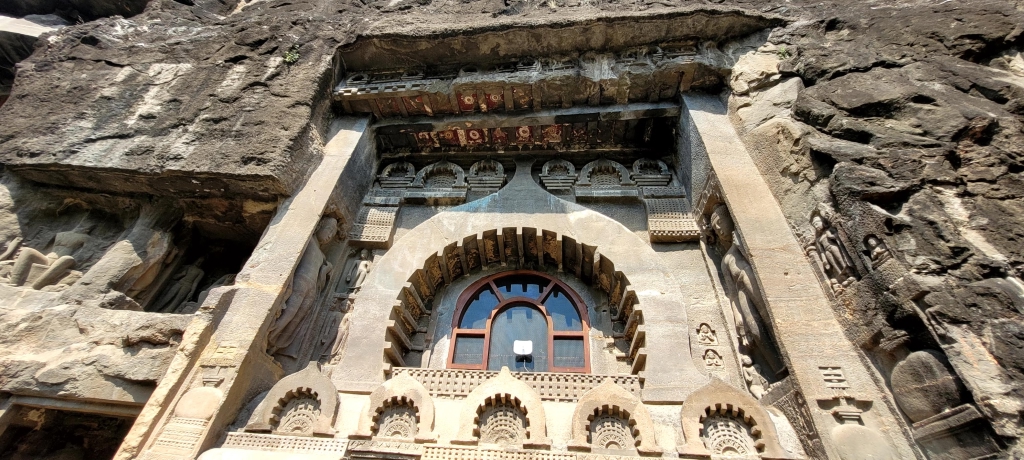
The façade of the cave is dominated by a large ribbed chaitya-window (arch), originally fitted with wooden latticework, traces of which survive. This window not only admits light into the interior but also reflects the timber prototype that early rock-cut craftsmen sought to imitate.

🖼️ Sculptures and Additions

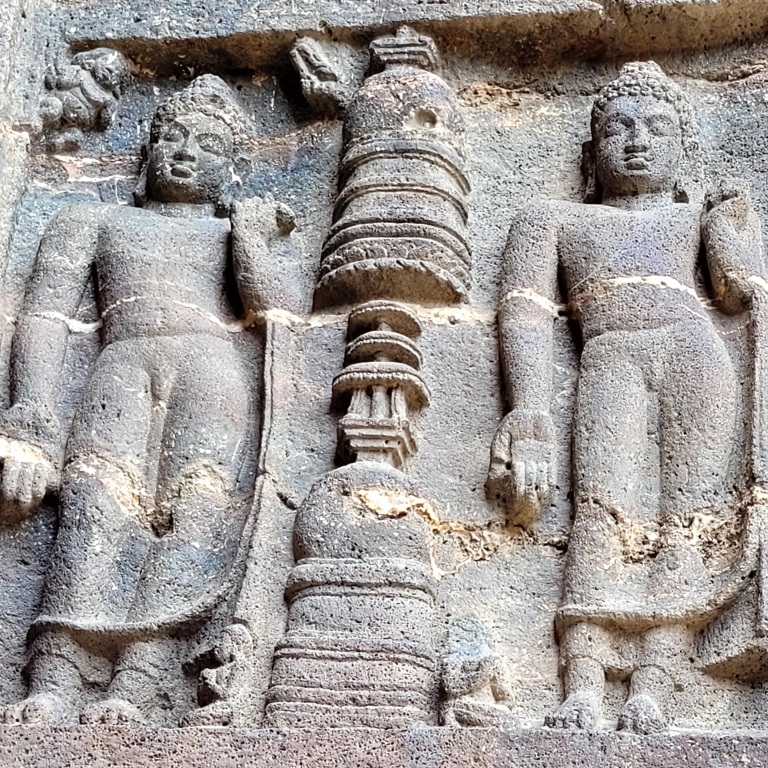
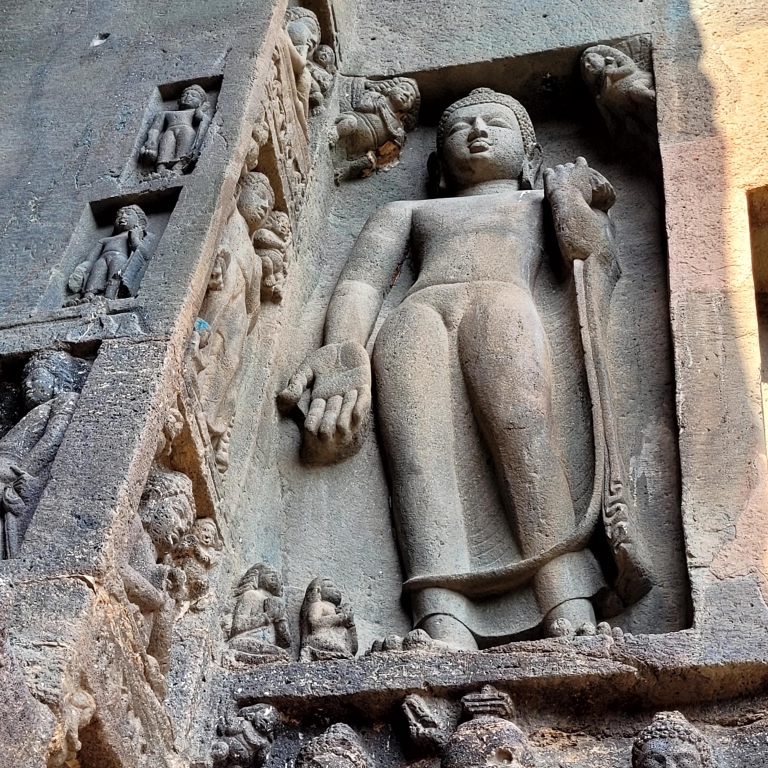
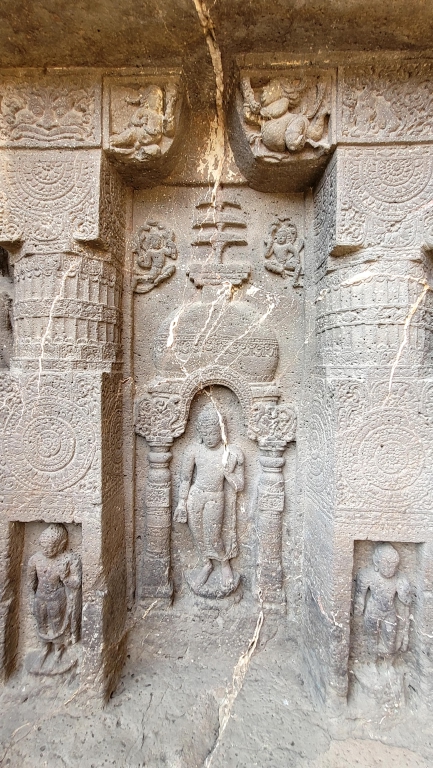
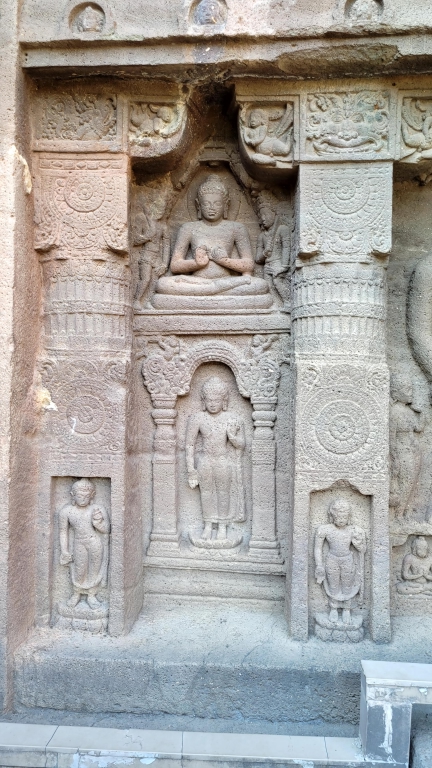
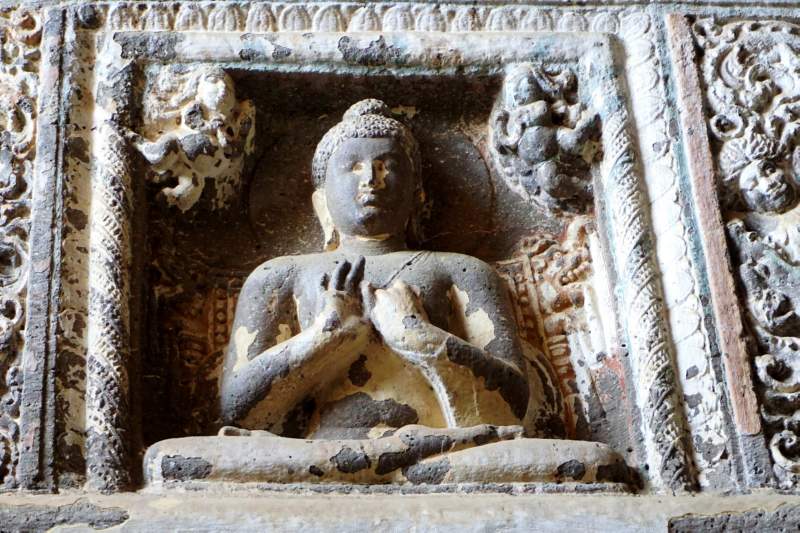
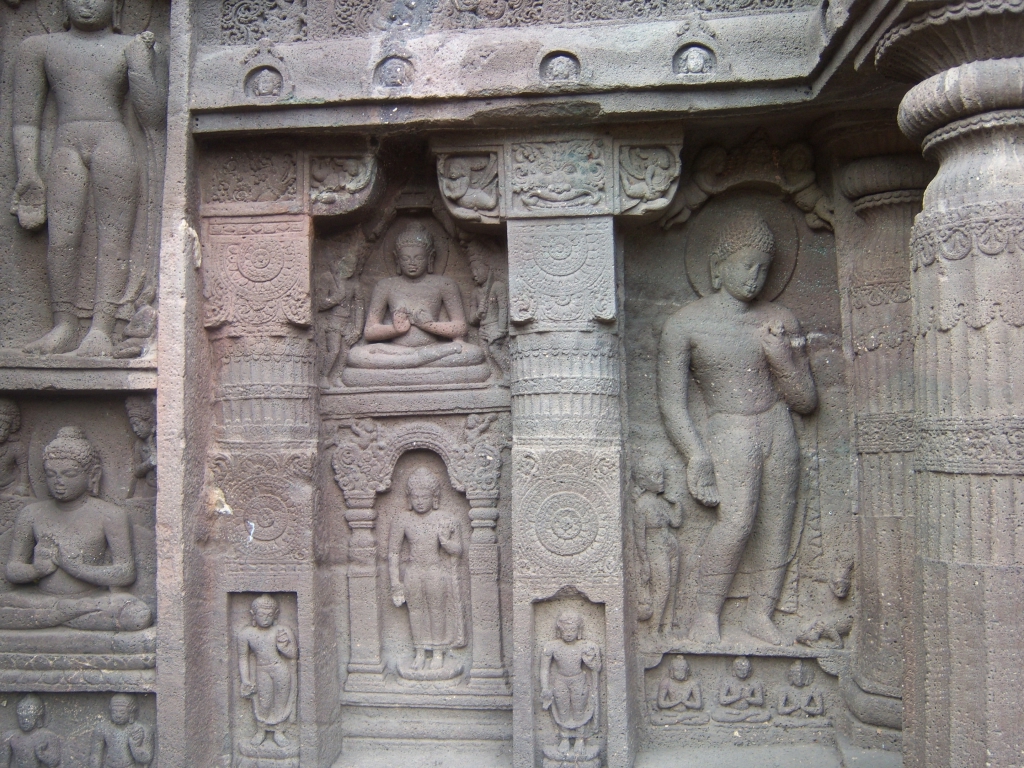
Originally belonging to the Hinayana phase, the cave had no image of Buddha inside. However, during the later Mahayana period (5th–6th century CE), figures of Buddha were added to the façade and side walls facing the courtyard, showing its continued veneration.

🎨 Paintings

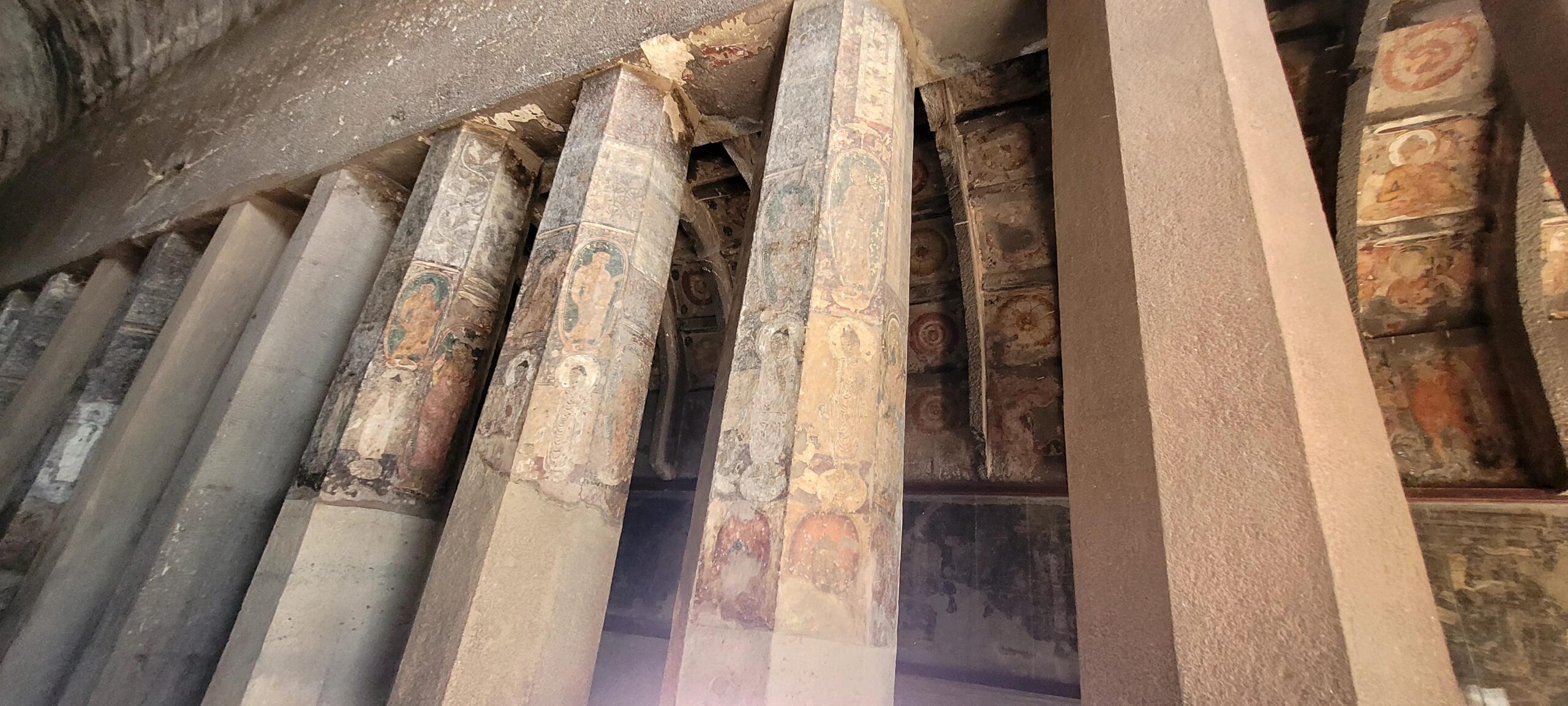
Inside Cave 9 are two distinct layers of paintings:

Earlier Layer (1st century BCE) – Contemporary with the original excavation.
Later Layer (5th–6th century CE) – Belonging to the Mahayana period.

Ancient painters often superimposed new paintings over older ones without removing the originals. This overlapping can be clearly seen above the left window, door, and left wall.

✳️ Earlier Paintings

  1. Depict two nagas seated beneath a tree, one with multiple cobra-hoods—probably the Naga King.
  2. Another damaged scene shows a king listening to petitions from five seated persons, accompanied by a standing couple and a flying celestial figure above.
    The costumes and ornaments resemble those found in the Sanchi reliefs of the same period.

Another important early panel shows a procession of devotees approaching a stupa enclosed by a railing with a torana closely resembling the gateways of Sanchi.
Beyond the gateway is a probable monastic structure, followed by groups of standing devotees and secular scenes with women inside domestic buildings.
These early paintings are distinct in color tone, composition, and technique, contrasting sharply with the later Mahayana works.

A fragmentary early scene survives on the frieze above the left colonnade of the nave, depicting animals being chased by herdsmen—an example of lively, naturalistic art from the early period.

✳️ Later Paintings

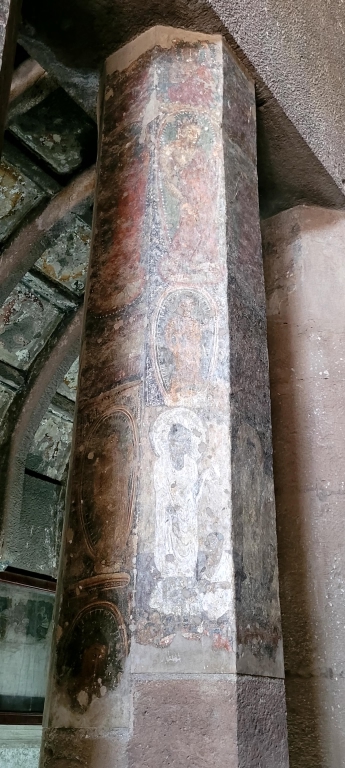
  1. Feature multiple Buddha figures in various postures, symbolic of Mahayana devotional themes.
  2. The aisle ceilings are decorated with lotus motifs arranged in panels.
  3. Twelve painted inscriptions from this phase have been recorded within the cave.

🧘 Additional Features

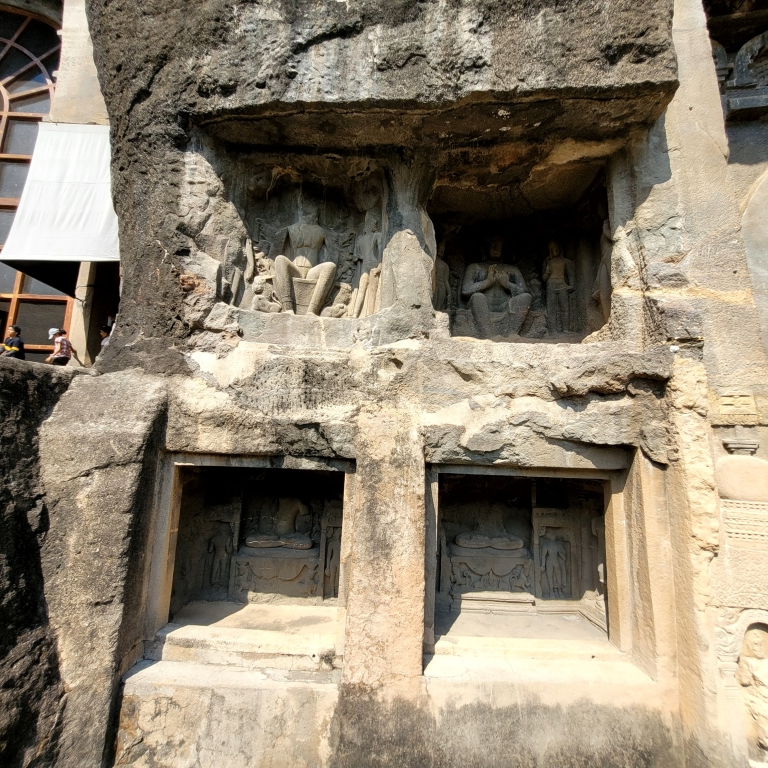
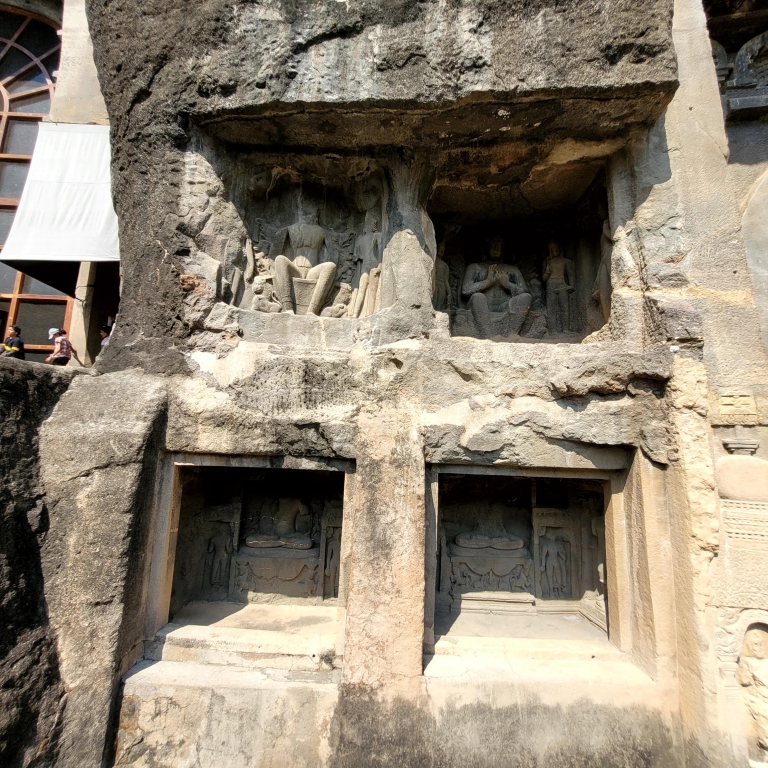
At a slightly higher level, to the right of the modern stairs, are two recesses in the rock wall, each containing reliefs of Buddha figures carved in high relief — possibly later additions.

🛕 Ajanta Cave 10 – The Earliest Chaitya-Griha and the Cave That Revealed Ajanta

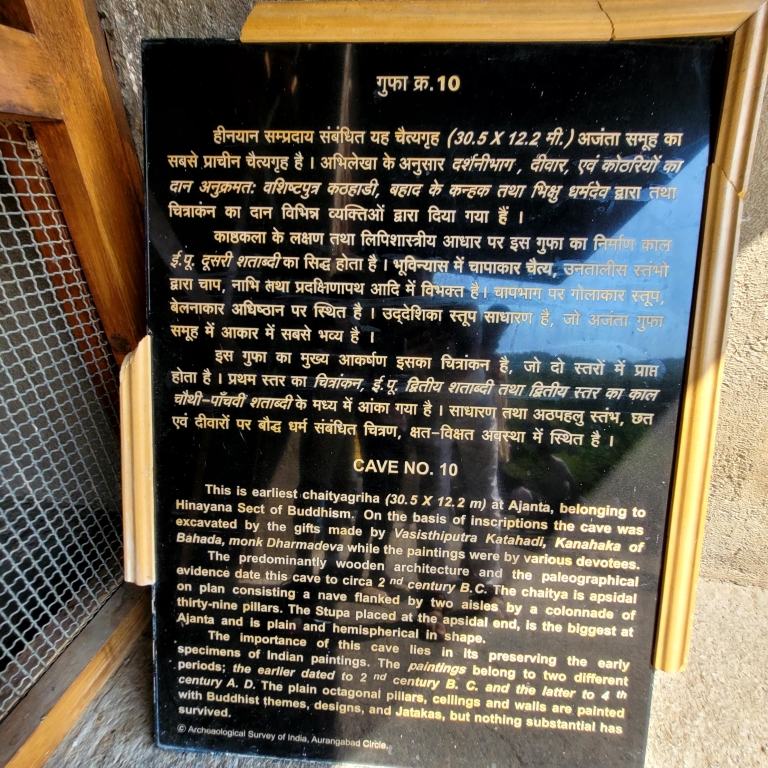
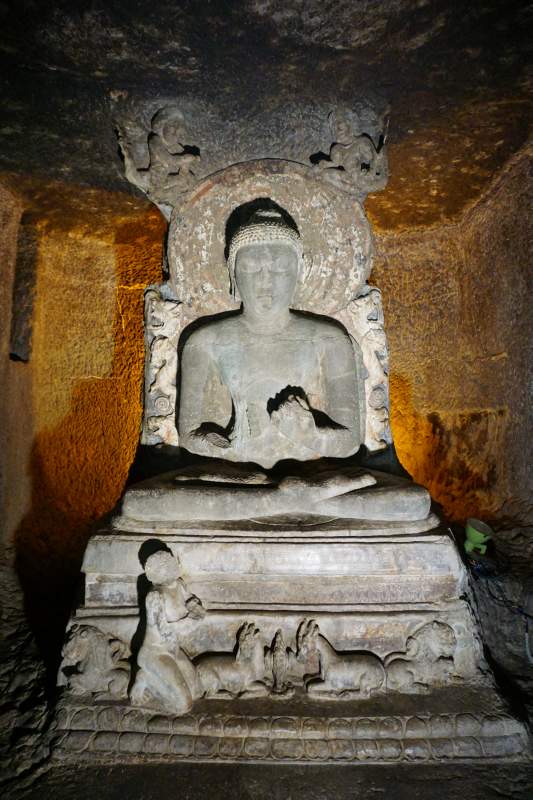
Ajanta Cave 10 is the oldest Buddhist structure at Ajanta, created in the 2nd century BCE during the early Hinayana period. It was later reused between the 4th and 6th centuries CE under the Mahayana tradition. Measuring 30.5 m × 12.2 m, it is an early chaitya-griha (prayer hall) with a large central hall. This is also the cave that led to the rediscovery of Ajanta in 1819.

🧭 Rediscovery in 1819

Ajanta Cave 10 came back to public knowledge when John Smith, a British officer, noticed its large arched façade during a hunting expedition. Covered in thick jungle, the cave had remained hidden for centuries.
A Brahmi inscription on the façade, dated to the 2nd century BCE, reads “Vasithiputa Katahadi”, identifying the donor who gifted the façade.

🏛️ Architectural Features

Cave 10 is the earliest chaitya-griha at Ajanta and a pioneering example of Buddhist rock-cut architecture.
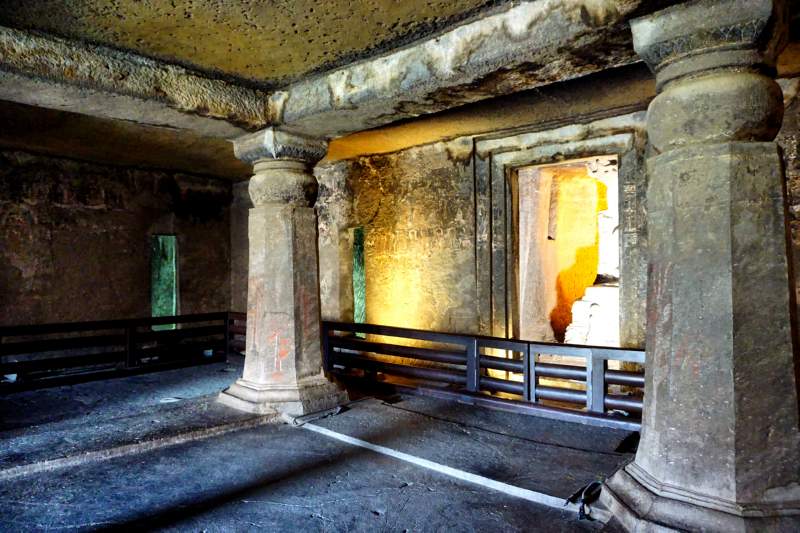
The hall is apsidal in shape, resembling a horseshoe, with a central nave leading to the apse containing a rock-cut stupa which served as the primary object of worship.
Thirty-nine octagonal pillars divide the nave from the side aisles, supporting the entablature and the vault-like ceiling.
The side aisles display carved rafters and beams, imitating early wooden construction traditions.
The entrance floor is reached by a flight of steps, and the stupa drum rises in two tiers.
The original façade, probably made of timber, is now missing but was once an imposing element of the structure.

🖌️ Earliest Inscriptions

Three important early inscriptions are found in Cave 10.
One is inscribed on the façade by the donor Vasithiputa Katahadi, while one painted and one engraved record inside the cave belong to the same early Hinayana period.
These inscriptions are among the oldest epigraphs in the entire Ajanta complex, confirming the cave’s early date.

🎨 Two Phases of Paintings

The cave preserves paintings from two periods separated by over 600 years.
The earlier paintings belong to the 2nd century BCE and reflect Hinayana narrative traditions.
The later paintings belong to the Mahayana period (4th to 6th century CE), featuring Buddha images and devotional themes.

🖌️ Earlier Paintings – 2nd Century BCE

These murals, among the earliest Buddhist paintings in India, were created shortly after the cave’s construction.
A painted record opposite the third pillar confirms their antiquity.
The themes include royal processions, visits to Bodhi Trees, and worship of stupas.
The art style consists of horizontal bands forming narrative sequences, typical of early Ajanta storytelling.
Some of these earlier paintings were partially covered by later Mahayana paintings but are still visible today.

🪔 Jataka Tales Depicted

Several important Jataka stories appear on the walls behind the pillars.

1️⃣ Sama (Shama) Jataka – Jataka No. 540

This narrative appears behind Pillars 11 to 15 on the left wall.
The Bodhisattva appears as Sama, the devoted son caring for his blind hermit parents.
While collecting water, he is accidentally shot by the King of Varanasi.
In remorse, the king serves the blind parents.
A compassionate goddess restores Sama’s life and his parents’ sight.
Scenes include Sama’s shooting, his wounded form with the water pot, the grief-stricken parents, the goddess reviving him, and the forest hermitage.

2️⃣ Chhaddanta Jataka – Jataka No. 514

This story is painted on the right wall behind Pillars 2 to 12.
The Bodhisattva is born as Chhaddanta, the six-tusked noble elephant living near a lotus-filled lake with his two queens.
Out of jealousy, one queen vows revenge and is reborn as the Queen of Varanasi.
She sends the hunter Sonuttara to obtain Chhaddanta’s tusks.
Despite being wounded, the compassionate elephant helps the hunter cut his own tusks.
The queen dies of remorse after seeing them.
Scenes show the elephant at the lake, offering a lotus, the queen feigning illness, the hunt, the sawing of tusks, and the queen fainting.

🎨 Later Paintings – 4th to 6th Century CE

In the Mahayana phase, the cave was adorned with multiple Buddha figures painted on pillars and walls.
These later artworks reflect a matured artistic style with spiritual calmness and devotion.
Cave 10 also contains the highest number of painted records among the early Ajanta caves.

🌄 Nearby Sculptures

At a higher level near the modern staircase leading from Cave 10 to Cave 11 is a recessed shrine.
This shrine contains a Buddha seated in bhadrāsana posture.
On the right wall, Avalokiteśvara appears saving devotees from the Eight Great Perils.
On the left wall, multiple Buddha figures and a graceful female deity, possibly Tara, stand holding lotus stalks.

🛕 Ajanta Cave 11 – Monastery (Vihara)

This monastery (19.87 X 17.35 m) datable to beginning of fifth century A.D. consists of a hall with six cells and a long bench, a pillared verandah with four cells, a sanctum sanctorum. Buddha in preaching attitude is housed in the sanctum against an unfinished stupa. Few paintings that available here depicts Bodhisattvas, figures of Buddha, etc.

🏛️ General Description

Ajanta Cave 11 is a small monastery located immediately to the right of the earlier Hinayana chaityagriha (Cave 10). This vihara belongs to the early 5th century A.D. and represents one of the initial excavations of the Mahayana phase at Ajanta.

The cave consists of:

  1. A pillared verandah with four cells (two on each end)
  2. A main hall with six cells and a long stone bench along the right wall
  3. A sanctum (shrine) housing a seated Buddha in the preaching attitude (Dharmachakra Mudra), carved against an unfinished stupa


🏗️ Architectural Features

  1. The pillars of the verandah have square bases of unequal height, octagonal shafts, and bracket-capitals.
  2. The high plinth and parapet are decorated with a railing-pattern.
  3. The entrance door is simple, moulded with lion-heads at each end of the threshold.
  4. The verandah’s right wall is carved with three panels of Buddha figures.
  5. Inside, the hall’s ceiling is supported by four pillars with moulded bases, tapering octagonal shafts, and pot-and-lotus-petal capitals.
  6. The left and back walls have three monastic cells each, while a long bench runs along the right wall.
  7. There is no antechamber, and the sanctum is directly accessible from the hall.
  8. Behind the left wall, a secret chamber is carved—possibly intended for storing valuables.

🪷 Shrine & Sculpture

The shrine image features Buddha in preaching posture seated on a simhāsana (lion throne), backed by an unfinished stupa.
On the plinth below Buddha’s throne is the figure of a kneeling devotee in worship.


🎨 Paintings and Decoration

  1. The verandah ceiling and projection are adorned with painted motifs of birds, beasts, floral designs, and geometric patterns.
  2. A painted version of the quadripartite deer motif (also seen in Cave 1) appears here.
  3. The back walls of the verandah, flanking the doorway, are decorated with large Bodhisattvas with attendants, though much of the surface is damaged.
  4. The hall walls contain paintings of Buddha figures in various poses.
  5. Two painted inscriptions (records) have been found in this cave.


🕰️ Significance

Cave 11 represents the early Mahayana phase of Ajanta’s development—where viharas began to include sanctum shrines with Buddha images instead of plain meditation halls. The architectural irregularity and clumsy workmanship mark it as one of the earliest experiments of this revival period.

🛕 Ajanta Cave 12 – Early Hinayana Monastery (Vihara)

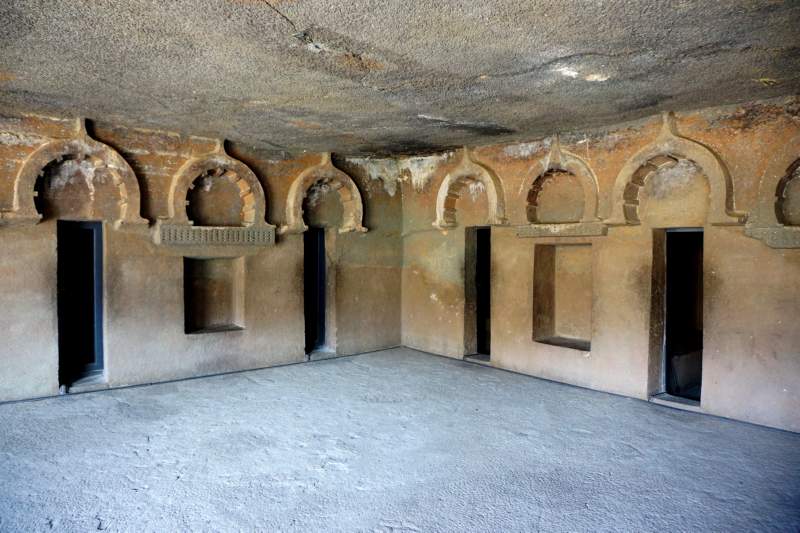
This Hinayana monastery consists of a hall (14.9 X 17.82 m) the front wall is completely collapsed sided by twelve cells arranged on three sides and palaeographically datable to 2nd – 1st century B.C. perhaps slightly later than Cave 10.

🏛️ General Description

Ajanta Cave 12 is one of the earliest monastic excavations at the site, belonging to the Hinayana phase of Buddhism.
It represents a simple rock-cut vihara, intended primarily for residence and meditation of monks, without any sculptural image of Buddha (as image worship had not yet developed in Hinayana Buddhism).

The front wall of the cave has entirely collapsed, but the plan and interior layout are still identifiable.

🏗️ Architectural Features

  1. The monastery consists of a square hall (approximately 11 m) with a flat ceiling, opening into twelve residential cells arranged along three sides.
  2. The front façade and entrance are missing due to collapse, but remnants show the typical early plain design.
  3. The walls above the cell doors are decorated with chaitya-window motifs, some of which are connected with railing designs — characteristic of early Buddhist cave architecture.
  4. The right wall bears additional decoration of stepped merlons (crenellations) resembling Assyrian patterns.
  5. Each cell contains two stone-cut beds, indicating the residential purpose for monks.
  6. Doorway sockets and hinge holes on sills and lintels show that each cell was originally fitted with wooden single-leaf doors.

📜 Inscription

A Brahmi inscription survives on the back wall, to the left of the right corner cell.
It records the donation of the cave by a merchant named Ghanamadada, and its palaeography indicates that it belongs to a date slightly later than the record of Vasithiputa Katahadi (from Cave 10, c. 2nd century B.C.).

This makes Cave 12 contemporary with or just after Cave 10, firmly placing it within the early Hinayana period.

🎨 Paintings and Decoration

  1. The cave once bore mural paintings, though only traces survive today due to extensive damage and collapse of the façade.
  2. Decorative motifs such as chaitya arches and rail patterns indicate an aesthetic continuity with early wooden prototypes used in Buddhist architecture.

🪔 Significance

Ajanta Cave 12 is a purely monastic Hinayana excavation, serving as an early model for the later, more elaborate viharas of the Mahayana phase (like Caves 1, 2, and 16).
Its simplicity, lack of ornamentation, and focus on functional space highlight the ascetic ideals of early Buddhism.

The inscriptional evidence of merchant patronage also shows how trader communities actively supported Buddhist monastic establishments in early India.

🛕 Ajanta Cave 13 – Early Hinayana Monastery (Vihara)

This is a small monastery and belongs to the first phase datable to 2nd – 1st century B.C.

🏛️ General Description

Ajanta Cave 13 is a small, simple monastery belonging to the earliest Hinayana phase of Buddhist excavations at Ajanta.
It reflects the austere monastic character of the early Buddhist period, when image worship was not yet practiced, and the focus remained on providing functional residential quarters for monks.


🏗️ Architectural Layout

  1. The cave consists of an astylar (pillarless) hall, surrounded by seven small cells cut into three sides of the rock.
  2. Each cell contains rock-cut stone beds, and in one cell, the beds are even furnished with raised stone pillows, showing thoughtful adaptation for comfort.
  3. The cells are narrow and compact, similar to those found in Cave 12, indicating that they probably served as simple dormitories for monks rather than meditation chambers.
  4. The front façade of the cave has completely perished, though it once likely had a simple verandah or entrance wall similar to other early viharas.


🪔 Art and Decoration

  1. There are no traces of paintings or plaster inside Cave 13.
  2. Its plain walls and minimal ornamentation reflect the early Hinayana tradition, emphasizing simplicity and ascetic living over decorative expression.

🛕 Ajanta Cave 14 – Unfinished Monastery (Vihara)

This unfinished monastery (13.43 X 19.28 m) was excavated above Cave 13 at a higher level. It was originally planned on a large scale. The depiction of sala bhanjikas on the top corners of doorway is beautifully depicted datable to Circa 5th century A.D. (Later Mahayana Phase).

🏛️ General Description

Ajanta Cave 14 is an unfinished monastery excavated directly above Cave 13 at a higher level in the rock face.
It was planned on a much larger scale than the earlier caves, suggesting an ambitious architectural intention that was never completed.

Access to the cave is provided through an ancient staircase that ascends from the level of Cave 13 to this upper excavation.

🏗️ Architectural Layout

  1. The cave measures approximately 43 × 19.28 meters.
  2. The plan suggests a spacious central hall intended to be surrounded by cells for monks, but excavation was abandoned midway, leaving the inner hall and several structural details incomplete.
  3. The verandah at the front shows unique decorative treatment, distinct from any other at Ajanta.


🎨 Artistic and Decorative Features

  1. The pillars of the verandah are remarkable for their unusual decoration, differing from the typical Ajanta pillar designs.
  2. The top corners of the central doorway leading into the hall are adorned with beautifully modeled figures of sala-bhanjikas (graceful women depicted as breaking sala tree branches), accompanied by attendants.
  3. These sculptural details reveal the refined artistic sensibility and graceful ornamentation style of the late Mahayana period.
  4. The cave interior, however, remains unfinished and undecorated, with no signs of paintings.

🛕 Ajanta Cave 15 – Monastery (Vihara)

The late 5th century A.D. (Mahayana Phase) monastery (19.62 X 15.98 m) consists of an astylar hall with eight cells, an antechamber, sanctum sanctorum and a pillared verandah.

🏛️ General Description

Ajanta Cave 15 is a fully excavated monastery (vihara) located between Caves 14 and 16. It represents one of the later Mahayana excavations and is relatively well-preserved compared to several unfinished caves nearby.

The cave measures approximately 19.62 × 15.98 meters, consisting of an astylar hall, eight residential cells, an antechamber, a sanctum sanctorum (shrine), and a pillared verandah in front.


🏗️ Architectural Layout

  1. Verandah:
    The original verandah once had pillars, but these have now collapsed, leaving only the moulded plinth
    The doorway lintel is richly decorated in the form of two tiers of a shikhara (miniature tower):
    • The lower tier features a stupa sheltered by serpent hoods (Naga canopy).
    • The upper tier has a chaitya-window motif, flanked by two pigeons carved with remarkable realism — one of the most delicate carvings at Ajanta.
  2. Hall (Astylar):
    The main hall, without supporting pillars, has eight cells arranged on two sides (four on each). Each cell was used as a monk’s residence, similar to other vihara caves.
  3. Antechamber & Shrine:
    The antechamber leads to the sanctum (garbhagriha), which houses a large image of Buddha seated on a simhasana (lion throne), representing the teaching or dharma-chakra posture.
    On the back wall, to the left of the antechamber, two sculptural panels depict standing Buddhas in graceful postures.
  4. Pillars:
    The pillars of the antechamber display a fine design transition —
    from square → octagonal → sixteen-sided → octagonal → square, ending without a capital, showcasing refined craftsmanship typical of the later period.

🎨 Artistic and Decorative Features

  1. The cave exhibits traces of ancient paintings, indicating it was once fully painted.
  2. Patches of plaster still adhere to the ceiling of the hall, and faint remains of mural paintings can be seen on the ceiling of the antechamber and shrine.

The themes likely represented Buddha’s life scenes and Mahayana devotional motifs, though much of the artwork is now lost.

🛕 Ajanta Cave 15A – The Smallest Monastery at Ajanta

Ajanta Cave 15A is the smallest excavation in the entire Ajanta complex and belongs to the earliest phase of construction, likely dating to the 2nd–1st century BCE. This tiny vihara represents an early Hinayana monastic dwelling, simple in design yet significant as one of the first architectural experiments in the development of Buddhist cave monasteries.

🏛️ General Description

Cave 15A lies on a lower terrace between Caves 14 and 15, accessed by descending a flight of steps. It consists of a small central hall without pillars, opening into three cells on the sides. The simplicity of its layout and its restrained ornamentation make it an important example of early Buddhist rock-cut architecture. Each cell opens directly from the hall, reflecting the modest requirements of early monks who used the space for meditation and residence.

🏗️ Architectural Layout

The cave follows an extremely simple plan centred around an astylar, or pillarless, hall. Three rock-cut cells are arranged on three sides of this hall, while the entrance side remains open. The now-collapsed front wall once displayed railing (vedikā) patterns, characteristic of early Buddhist design.
Each cell contains rock-cut platforms on three sides that served as beds for monks. In the left cell, one of these platforms includes a rectangular recess, possibly meant for storing belongings or used during rituals.
The cave originally had a single central entrance doorway. An inscription in shell characters was once carved to the right of this doorway, similar to the script seen in Cave 9, but it has now disappeared. The entrance was later found bricked up, suggesting reuse or later occupation.

🎨 Decorative and Artistic Features

The decorative elements of Cave 15A reflect the earliest artistic phase of Ajanta. Above each cell doorway appears a chaitya-window motif, rising from a vedikā or railing design, symbolizing sacred architectural forms.
A horizontal moulding with stepped pyramidal patterns runs above these motifs, adding a simple yet structured ornamentation.
On the façade, chaitya-window reliefs rise above the railing design, with the central motif placed directly over the entrance doorway. These features closely resemble the stylistic elements found in the early caves such as Caves 9, 10, and 12, underscoring Cave 15A’s place in the earliest developmental phase of Ajanta art and architecture.

🛕 Ajanta Cave 16 – The Monastery of Varahadeva (Vakataka Period)

Ajanta Cave 16, known as the Monastery of Varahadeva, is one of the grandest and most historically valuable monasteries in the Ajanta complex. Built during the Vakataka period between 475 and 500 CE, it was excavated by Varahadeva, a minister of King Harishena. Designed as a Mahayana vihara, this spacious monastery measures 19.5 × 22.25 × 4.6 meters and served as a residential, devotional, and educational space for Buddhist monks.

🏛️ Historical Importance

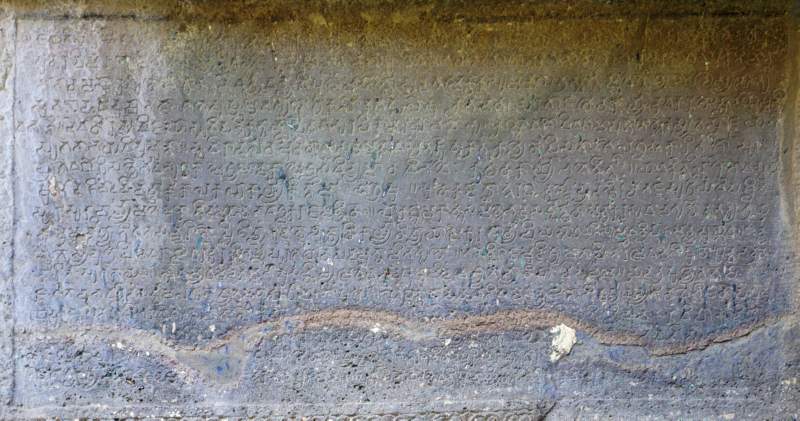
A long inscription engraved on the left side of the verandah records that the cave was commissioned by Varahadeva, the loyal minister of Vakataka king Harishena. The inscription praises this superb “vesma” or dwelling, describing its windows and doors, its decorated picture galleries, its celestial nymph sculptures, finely carved pillars, staircases, chaitya-mandira, mandapa, broad water reservoir, and even a dwelling for the naga-lord. Remarkably, all these features still exist in the cave, matching the inscription’s details and highlighting the sophistication of Vakataka craftsmanship.

🧭 Approach to the Cave

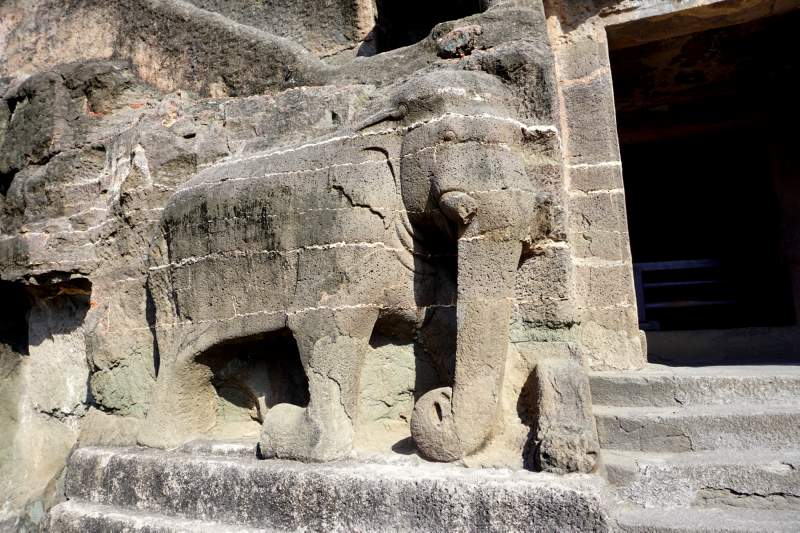
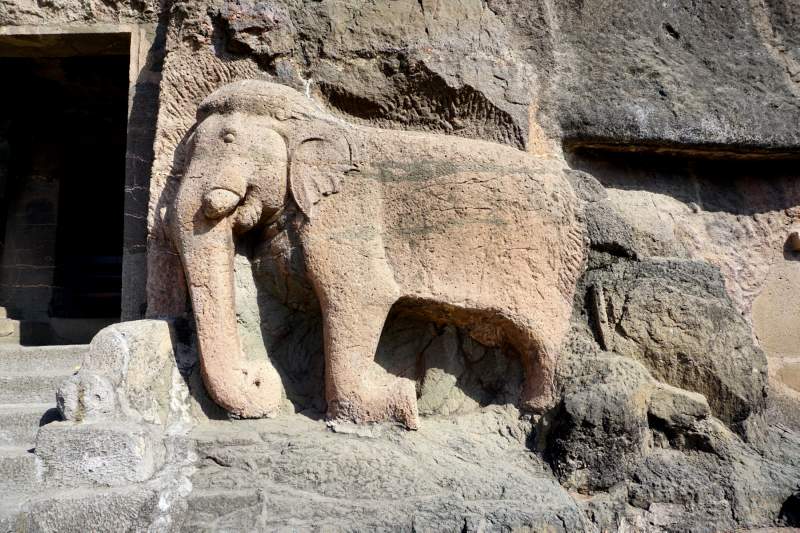
After passing Cave 15A, an entrance marked by two sculpted elephants leads toward Cave 16. A stairway climbs upward from the left, giving access to the expansive forecourt of this magnificent monastery.

🏛️ Verandah and Entrance

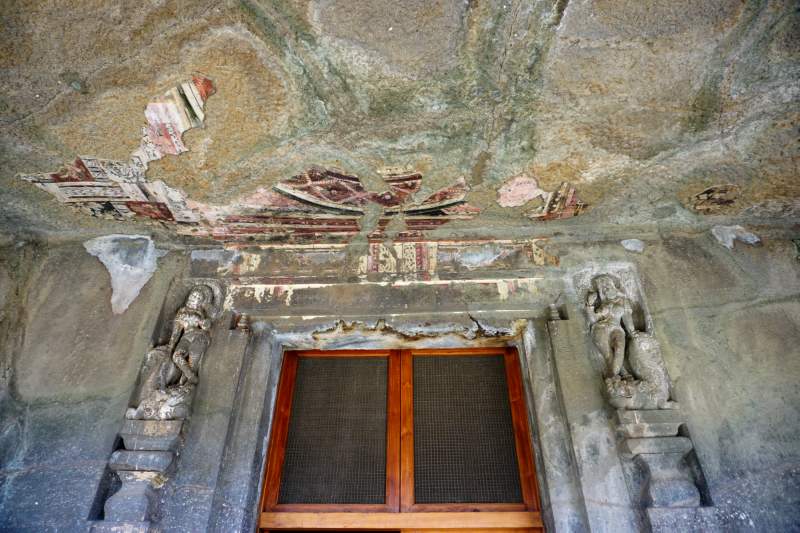
The verandah was richly decorated in its original state. Reliefs of elephants, nagas, and symbolic motifs adorn the approach and create an impressive prelude to the hall inside.

🏛️ Main Hall

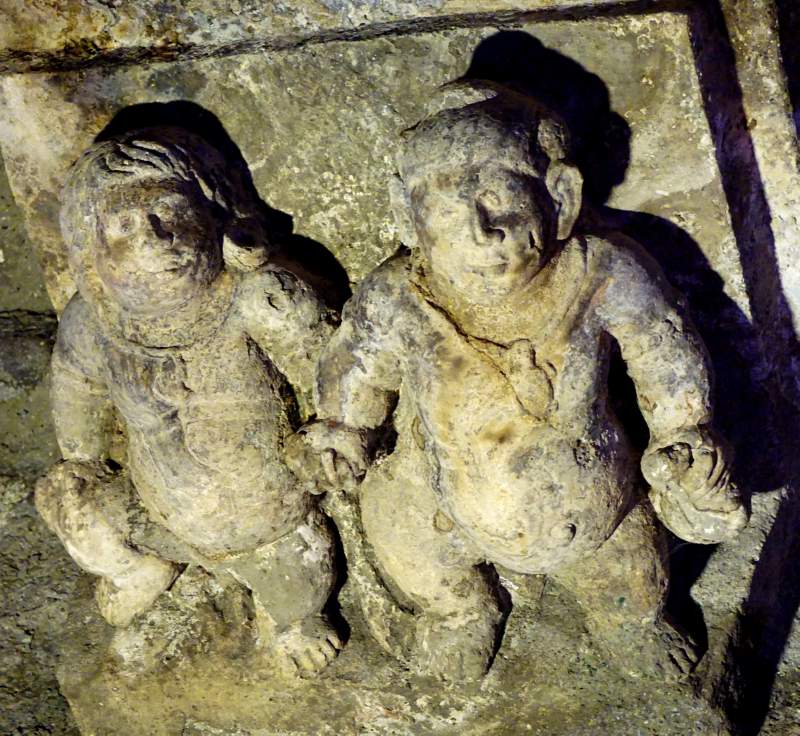
The central hall is large and supported by twenty pillars arranged symmetrically. Fourteen recessed cells open on three sides and were intended for monks’ living quarters. Most pillars are plain, slightly tapering, and octagonal. Only the central pair of pillars at the front and back are more elaborate, transitioning from square to octagonal to sixteen-sided forms before returning to square profiles. The front aisle is deeper than the others, and its ceiling is carved with wooden beam patterns accompanied by charming bracket-figures. These bracket sculptures include dwarfs straining under weight, musicians, flying couples, and expressive beings that range from solemn to playful, making them some of Ajanta’s most admired sculptural achievements.

🏛️ Cells

Fourteen monastic cells are carved into the three sides of the hall. Each contains rock-cut interiors intended for residence and meditation.

🛕 Shrine and Buddha Image

The shrine of Cave 16 is unique because it lacks an antechamber. The sanctum features two side aisles defined by pillars and pilasters, and receives light from a window-and-door combination at the rear. The front pillars of the shrine are richly carved and have fluted rectangular shafts. Inside the sanctum sits a massive Buddha image in pralamba-pada posture, shown preaching in the dharmachakra-mudra. The figure is carved in high relief with a circumambulatory path around it. The back slab is adorned with chāmara-bearers, makaras, and gaja-vyāla motifs.

💧 The Ancient Cistern

A large ancient cistern stands at a higher level to the left of the cave. Steps lead up to this reservoir, perfectly matching the Varahadeva inscription that mentions a large water tank.

🎨 Paintings of Ajanta Cave 16

Although several murals have deteriorated, Cave 16 once housed some of the most celebrated paintings at Ajanta. Many themes remain identifiable, showcasing exquisite storytelling, emotion, and artistic sophistication.

🎭 Life of Nanda – Princess Sundaris Fainting

Located on the left wall near the entrance, this is one of Ajanta’s most iconic scenes. Princess Sundari collapses upon seeing the crown and realizing that Nanda, her beloved and Buddha’s step-brother, is being forced into monastic life. The narrative continues with Buddha revealing divine nymphs to Nanda to help him overcome desire, eventually leading him to arhatship. This panel is praised for its emotional depth and expressive facial renderings.

✨ Miracle of Sravasti

Painted on the back wall to the left of the shrine, this mural shows the Buddha miraculously multiplying himself into countless identical forms to silence sceptical heretics.

🐘 Elephant Procession

A partially preserved scene believed to depict a royal visit, showing attendants and elephants in ceremonial movement.

🧘 Buddha Teaching the Congregation

Located above the right aisle door behind the shrine, this painting represents the Buddha addressing a devotional gathering.

📜 Episodes from the Buddha’s Life

The right wall carries several narrative scenes associated with Gautama Buddha: Sujata offering payasa, Trapusha and Bhallika’s offering, Buddha collecting alms in a town, King Bimbisara’s visit, Gautama’s first meditation at the ploughing festival, sage Asita’s prediction, Gautama’s schooling, his archery practice, and Queen Maya’s dream of conception rendered inside a three-dimensional pavilion.

📚 Jataka Paintings

  1. 🐘 Hasti Jataka
    Depicts the Bodhisattva as a compassionate elephant who sacrifices himself by leaping off a cliff to save starving travellers.
  2. 🧠 Maha-Ummagga Jataka
    Shows multiple episodes from the life of Mahosadha, the child prodigy, including the Riddle of the Son, the Riddle of the Chariot, the Riddle of the Cotton Ball, and the scene of Mahosadha advising four visitors at a tank.
  3. 🦁 Sutasoma Jataka
    Painted on the architrave of the verandah’s front pillars, this scene depicts a lion licking the feet of a sleeping man.
  4. 🌀 Ceiling Paintings
    The central nave’s ceiling reveals large concentric decorative patterns, distinct from the motifs in the other Ajanta caves. These designs once created a grand visual canopy over the monastery’s main hall.

🛕 Ajanta Cave 17 – The finest Monastery of Vakataka Period

🏛️ Overview of the Cave

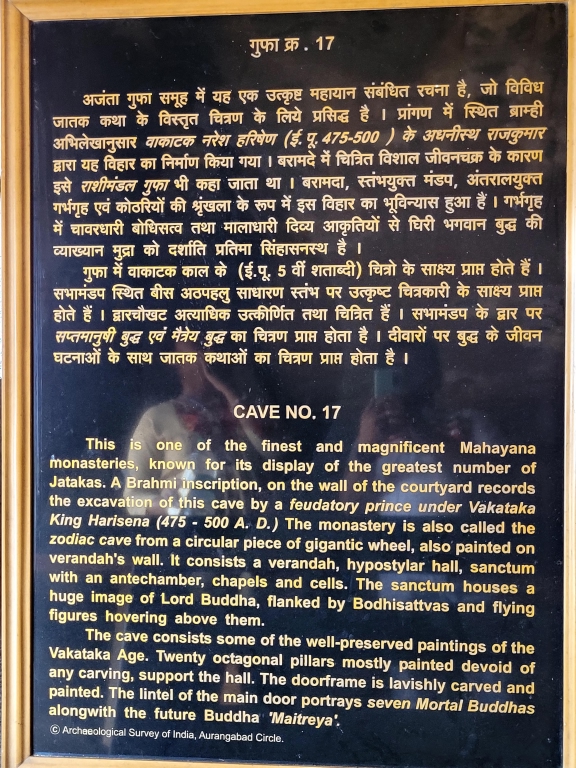
Ajanta Cave 17 is one of the finest monasteries of the Vakataka period. A Brahmi inscription records that this cave was excavated by a feudatory prince under the patronage of Vakataka King Harishena. The monastery measures 34.5 × 25.63 metres and includes a spacious hall, seventeen cells on three sides, a vestibule and a shrine containing an image of Buddha. Among the Ajanta caves, Cave 17 preserves the largest number of murals, making it a treasure house of ancient Indian painting.


📜
Historical Inscription & Patronage

An inscription on the left wall outside the verandah notes that this monastery was created due to the devotion of a local feudatory of King Harishena.
Beneath the inscription are reliefs of Buddha. The inscription also mentions a cistern, now closed.

🏯 Architectural Features

🏛️ Layout

The layout is similar to Cave 16, with some notable differences. Cave 17 lacks side aisles but includes an antechamber before the shrine.

🐒 Pillars and Capitals

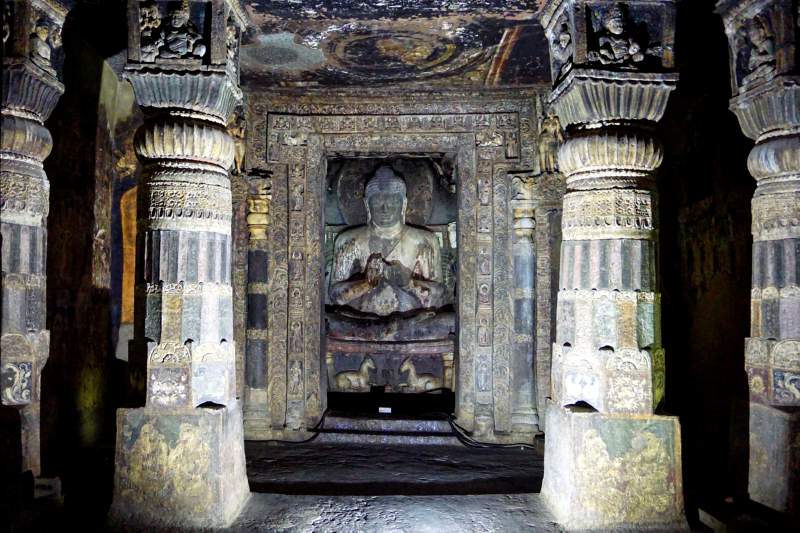
Except for two central columns in the front and back rows, all pillars are simple octagons with bracket capitals.
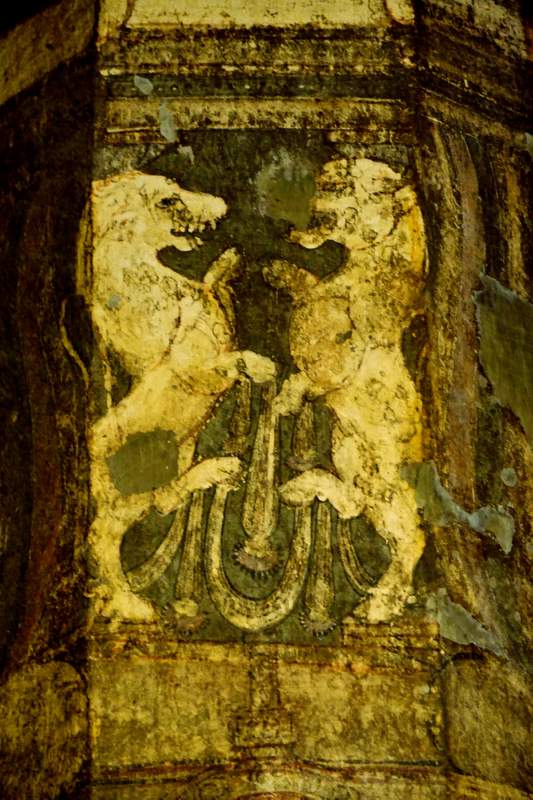
The central pillars are richly carved, with the back row pillars resting on bases supported by eight lions seated back-to-back, each lion with four heads.

🚪 Shrine Doorway

The shrine doorway is elaborately decorated with floral patterns, Buddha figures, female doorkeepers, scroll designs, twisted rope motifs, pilasters and lotus petals.
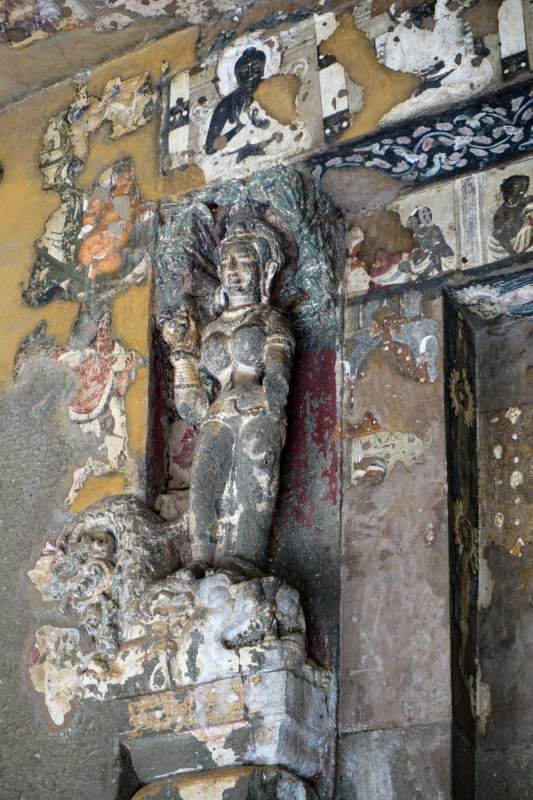
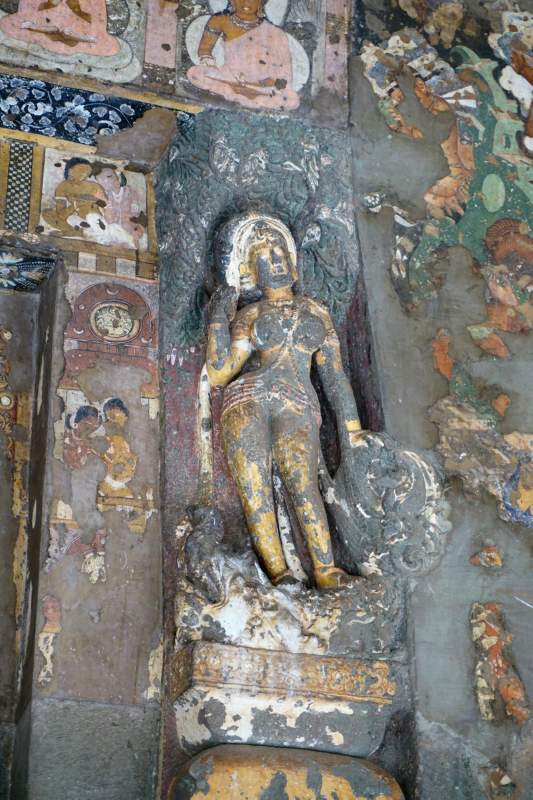
A striking feature is the pair of graceful female figures standing on makaras at the corner projections.

🧘 Buddha Image in the Shrine

Inside the shrine, Buddha sits in the teaching gesture on a back-slab detached from the rear wall. He is flanked by Padmapani and Vajrapani holding chamaras. Two additional figures, one holding a bowl, stand near the pedestal, which displays the dharmachakra between two deer.

🪜 Verandah Pillars and Access

The verandah pillars have moulded bases and bracket capitals. A stairway outside the verandah leads downward to the ravine.

🎨 Masterpieces of Murals

Cave 17 hosts some of the finest and most well-preserved murals of Ajanta, ranging from Jataka tales to iconic scenes from Buddha’s life.


👑
Panels on the Doorway

🌳 Seven Buddhas & Maitreya

The topmost panel shows seven past Manushi Buddhas and Maitreya, each seated under their respective Bodhi trees.

💞 Eight Amorous Couples

Below them is a beautifully rendered panel of eight amorous couples.


☁️
Verandah Wall Paintings

👼 Apsaras and Celestial Beings

To the left of the doorway on the back wall, despite damage, are floating figures of the king of the gods with apsaras and musicians.
A flute-player with her back turned is a highlight, showcasing the artist’s mastery of posture and motion. Nearby, a pair of kinnaras rest on a rocky ledge.

🍷 Royal Couple Scene

A princely couple is shown in a porch, with the prince offering his consort wine. Their departure through a city gate follows, and a later scene shows the prince distributing alms—episodes from the Vessantara Jataka.

🔱 The Gigantic ‘Wheel of Life’

A famed partially damaged painting shows a large Wheel of Life upheld by green hands, illustrating life’s many manifestations.
Below it is the green figure of Manibhadra.

🙏 Avalokitesvara & the Eight Great Perils

The adjacent wall depicts the Buddhist litany to Avalokitesvara saving beings from the Eight Great Perils.

👸 Flying Apsaras

To the right of the door, a panel shows stunning apsaras, including one wearing a distinctive turban-like headgear.

🐘 Subjugation of Nalagiri

A major panel shows Buddha taming the wild elephant Nalagiri at Rajagriha, one of the Eight Great Miracles.
Scenes include Devadatta’s conspiracy with Ajatasatru, havoc in Rajagriha’s streets and the elephant bowing before Buddha.

📖 Buddha Preaching

The right wall of the verandah features Buddha addressing a congregation.

🎨 Ceiling Paintings

The verandah ceiling is divided into compartments with varied designs.
A unique central panel shows six figures arranged so cleverly that they appear to have two hands each though each figure has only one.


📚 Jataka Tales on the Hall Walls

The hall walls are adorned with numerous Jataka scenes.

🐘 Chhaddanta Jataka

Depicts the queen plotting the elephant Chhaddanta’s death, the elephant playing in a lotus lake, hunter Sonuttara shooting him and the queen dying at the sight of the tusks.

🐒 Mahakapi Jataka I

Shows Bodhisattva as the monkey king forming a bridge with his body to save his troop, Devadatta’s betrayal and the monkey giving his final discourse to king Brahmadatta.

🐘 Hasti Jataka

Represents hungry travellers cutting the flesh of a benevolent elephant (Bodhisattva).

🐒 Hamsa (Harhsa) Jataka

Includes the fowler catching two geese and the king of Varanasi listening to Bodhisattva’s discourse with the geese seated on thrones.

🎁 Vessantara Jataka

Covers the full left wall: Vessantara’s banishment, journey with family, giving away of horses, chariot, children, and reunion with wife and children.

🐒 Mahakapi Jataka II

Shows Bodhisattva rescuing a husbandman from a pit, the man’s betrayal by throwing a stone and his later repentance.

⚔️ Maha-Sutasoma Jataka

A complex multi-panel story of prince Saudasa, born of a lioness, his cannibalism, his education, his violent deeds and his eventual conversion by Sutasoma.

🦌 Sarabha-miga Jataka

Shows Bodhisattva as a stag rescuing the king of Varanasi from a pit and carrying him on his back.

🐟 Machchha Jataka

Displays the large Bodhisattva fish making the god of rain help during a drought to save fellow fish.

🐘 Mati-posaka Jataka

Shows a compassionate elephant refusing food in captivity, thinking of his blind mother, and his release by the king.

🧍 Sama Jataka

Depicts Sama carrying his blind parents, being struck by the king and later preaching to him.

🐃 Mahisa Jataka

Shows Bodhisattva as a patient buffalo tormented by a mischievous monkey, and how another buffalo punishes the monkey.

🐎 Simhala’s Voyage & Battle (Valahassa Jataka elements)

A large composition shows Simhala’s shipwreck, ogresses luring merchants, Bodhisattva as the divine horse saving Simhala, the terrible fate of those who stayed back, the ogress deceiving the king, destruction of the palace and Simhala’s final victory and coronation.

💄 The Famous Toilet Scene

A celebrated artistic masterpiece on a pilaster shows a lady at her toilette.

👁️ Sibi Jataka

Depicts king Sibi solemnly vowing self-sacrifice, giving his eyes to a blind Brahmana (Sakra in disguise), the reactions of the courtiers, the alms hall and the restoration of Sibi’s eyesight.

🦌 Ruru Jataka (Attributed)

Shows hunters reporting about a deer to their king, the miraculous punishment of the hunters and the honoured return of the deer.

🐻 Bear & Deer Scene

A faint panel possibly shows a bear freeing a deer from a hunter’s trap, the hunter being punished as his hands fall off.

🛕 Ajanta Cave 18

🏛️ Overview

Ajanta Cave 18 is a small excavation located close to the main group of caves. It is comparatively simple in design and represents one of the more modest architectural features of the Ajanta complex. Though small, it provides insight into the functional spaces used by monks during the development of the monastery.

📐 Architectural Layout

Cave 18 consists of a rectangular hall measuring 3.38 × 11.66 metres. The space opens inward to a single inner cell. Much of the structural area beyond the hall has collapsed over time, leaving only the basic outline of its original plan.

🐒 Pillars and Interior Features

The hall contains two pillars with moulded bases and octagonal shafts. These pillars once supported the small interior space and may have framed the passage leading into the now-collapsed inner cell. Even in their simplicity, the pillars follow the stylistic vocabulary of the period, reflecting the standard monastic architecture of early Ajanta.

🏚️ Collapsed Cell

The hall originally led into an additional cell, but this portion is mostly collapsed today. Only remains of the entrance survive, indicating that the cave served as a functional living or meditation space rather than a richly decorated shrine or assembly hall.

🛕 Ajanta Cave 19

🏛️ Overview

Ajanta Cave 19 is a beautifully proportioned chaityagriha dating to the late fifth century CE. Though created centuries after the earlier chaitya halls of Ajanta, it faithfully follows the traditional plan while incorporating new artistic features. The cave possibly corresponds to the gandhakuti mentioned in the inscription of Cave 17, believed to have been built by a feudatory of Vakataka King Harishena.

📐 Architectural Layout

The chaityagriha measures 16.05 × 7.09 metres. It consists of a central nave, side aisles, an apse housing the votive stupa and a façade of exceptional sculptural richness. The plan preserves the orthodox chaitya format, yet adopts innovations such as the addition of Buddha’s image on the stupa and elaborate surface ornamentation.

🪨 Structural and Stylistic Features

🛕 The Votive Stupa

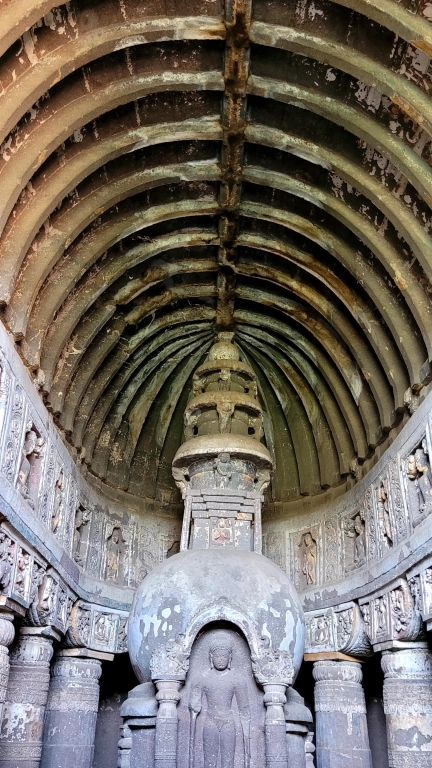
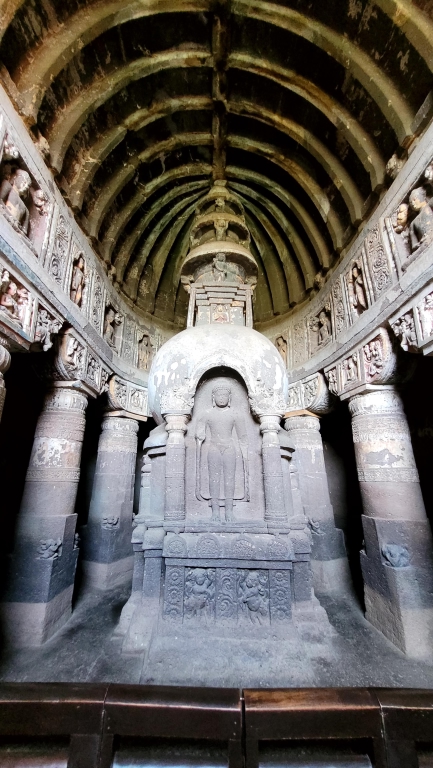
At the centre of the apse stands a richly carved stupa. The drum is elongated and ornamented, supporting a globular dome. The front niche of the dome contains a standing Buddha beneath an arch that springs from makaras resting on pilasters. The stupa is crowned with a harmikā and three diminishing umbrella-like chattravalis supported by figures, topped by a miniature stupa whose harmikā almost touches the vaulted roof. Garlands hang from the lower harmikā, enhancing the stupa’s ceremonial character.

🪷 The Pillars and Capitals

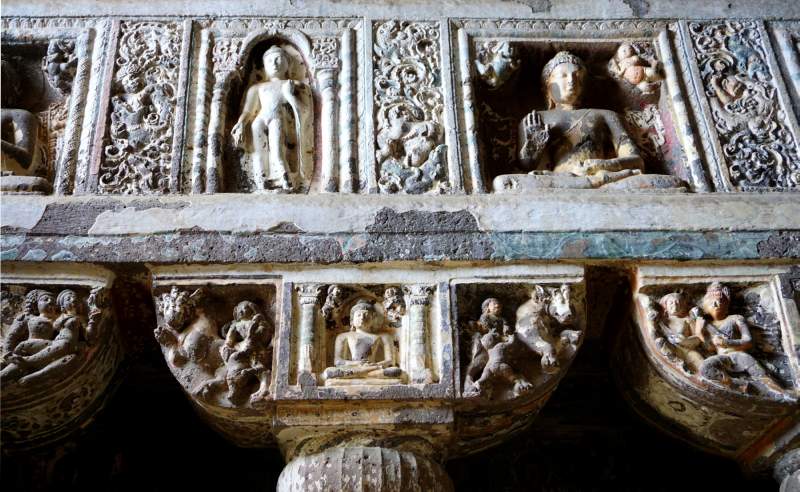
The hall contains seventeen pillars. Thirteen pillars resemble those of Cave 1, their capitals adorned with seated Buddhas at the centre and brackets featuring elephants or sardulas with riders, flying couples, ascetics and musicians. Four pillars in the front row resemble those of the verandah of Cave 2. The two foremost pillars are distinguished by bracket-figures of graceful salabhanjikas.

🏛️ Triforium and Ceiling

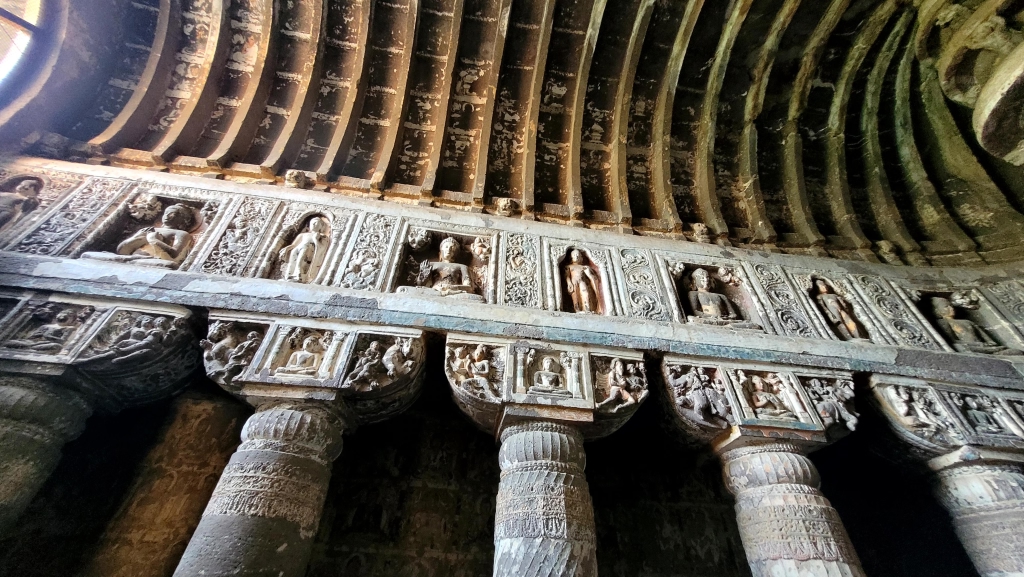
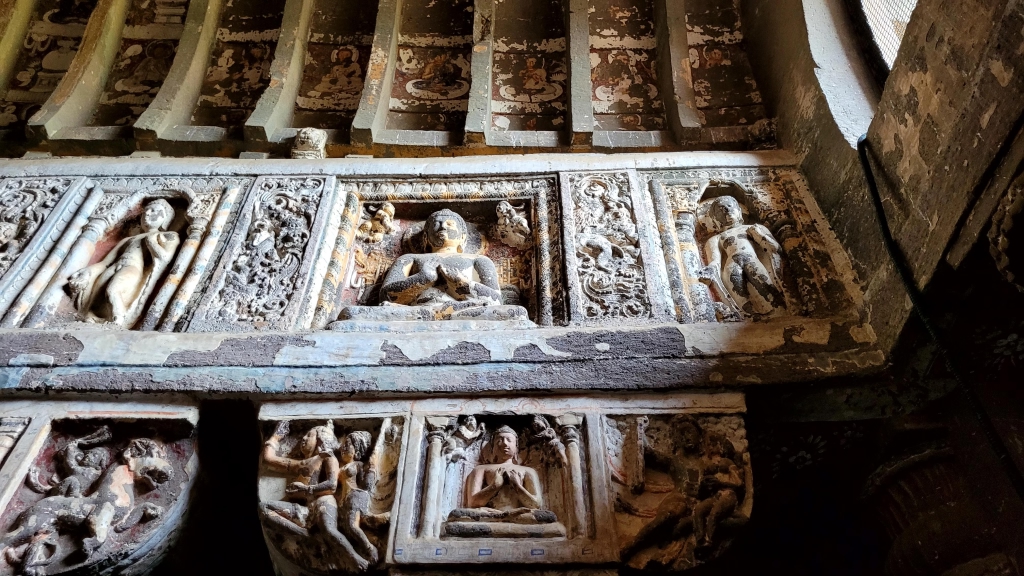
The triforium above the pillars displays seated and standing Buddhas set in compartments divided by panels of scrollwork intertwined with animals and human figures. The vaulted ceiling continues the ancient tradition of imitated wooden ribs, though actual wooden supports—common in early chaityas—were no longer used. The ceilings of the side aisles are flat.

🧱 Apse Floor and Guardian Figures

The floor of the apse is slightly elevated compared to the nave. At the front corners originally stood two guardian figures emerging from the adjoining pillars. Only their leg portions survive today.


🎨 Sculptural Grandeur of the Facade

🕍 External Design

The façade of Cave 19 is one of the most magnificent in Ajanta, combining refined proportions with dense ornamentation. A small but elegant pillared portico stands beneath a richly carved projecting cornice. Above it rises the chaitya window framed by sculpted friezes.

🧿 Yaksha Guardians

Flanking the great chaitya-arch (chaitya-vatayana) stand two monumental yaksha figures, robust and commanding. These life-size guardians are among the finest examples of late-Vakataka sculpture.

🧘 Buddha Images on the Facade

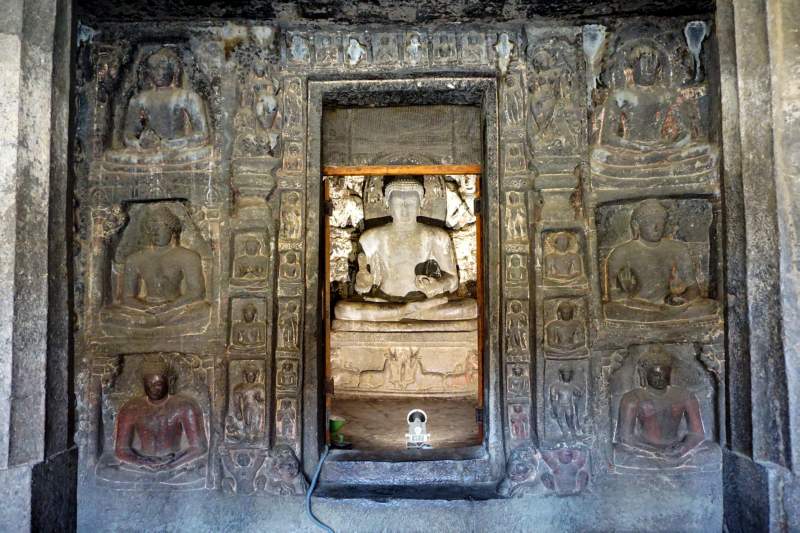
The facade and side walls display numerous Buddha figures, harmoniously arranged. Two standing Buddhas on either side of the entrance wear ornate crowns held aloft by flying ganas. These crowned Buddhas foreshadow later iconographic developments in Indian Buddhist art.


🌿 Courtyard and Side Chapels

🏞️ Layout of the Forecourt

In front of the chaitya lies a courtyard with side-chapels framed by two cells. The right chapel remains intact and features pillars with exceptionally graceful ornamentation. Among their carvings, an overflowing vase filled with fruits and foliage stands out for its delicacy.

🐍 Naga Couple Panel

On the left wall, at right angles to the facade, is a serene depiction of a naga couple seated on a rock, attended by a female chamara-bearer. Despite erosion, the figures retain remarkable poise and elegance.
 

🎨 Paintings in the Hall

🧘 Painted Buddha Panels

The interior walls contain surviving paintings of Buddha in various poses. On the left wall, opposite the sixth pillar, a panel illustrates Buddha giving his begging bowl to his son Rahula, who is brought forward by his mother Yasodhara.

🌸 Painted Ceilings

The ceilings of the side aisles are decorated with a continuous floral motif cleverly interwoven with birds, animals and human figures. The ceiling of the front aisle is painted with small narrative panels, including a striking scene of an elephant fight.
🛕 Ajanta Cave 20 – Overview

Ajanta Cave 20 is a pillar-less monastery dating between AD 450–525. It consists of a spacious hall measuring 16.2 × 17.91 m, surrounding cells, a sanctum sanctorum, and a beautifully designed pillared verandah. A Brahmi inscription on the verandah records the gift of the mandapa by Upendra, offering valuable historical evidence of patronage during the Vakataka period.
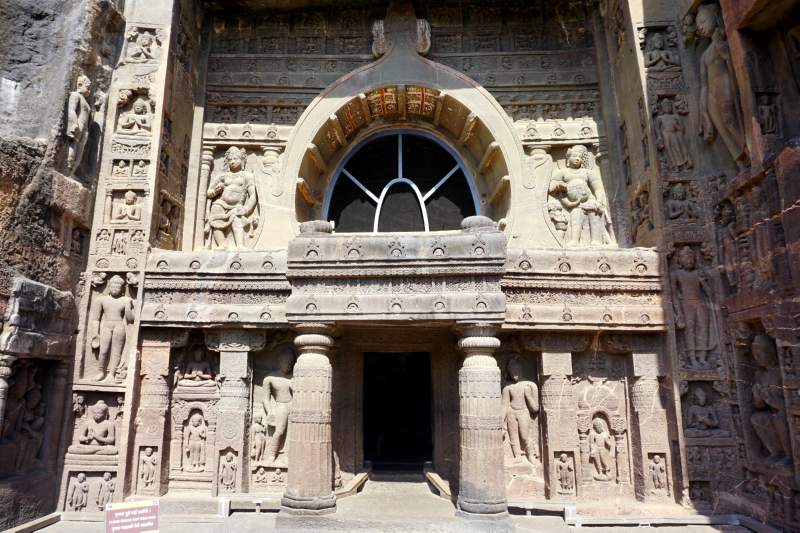

🏛️ Architectural Layout

🏠 Hall and Monastery Plan

The monastery features a pillar-less hall, giving the interior an open and expansive appearance. Several of the cells remain unfinished, showing that cave excavation continued in phases.

🕉️ Sanctum Sanctorum

A serene image of Buddha in preaching (teaching) attitude is carved on the back wall of the shrine. The Buddha is accompanied by the customary chamara-bearers and flying celestial figures, typical of late Ajanta iconography.

🪷 Verandah and Antechamber Features

🏛️ Pillared Verandah

The verandah pillars and pilasters resemble those in Cave 1 but introduce a graceful innovation. Each capital carries bracket figures of elegant salabhanjikas, adding dynamic beauty to the facade. The verandah ceiling displays imitation wooden beams and rafters, reflecting craftsmanship inspired by earlier timber architecture.

🔱 Innovative Lintel Design

One of the most striking decorative elements is the door lintel, carved with two arch motifs shaped like elephant trunks emerging from makara mouths. This design is a unique innovation in the Ajanta complex.

🏯 Antechamber Sculptures

The capitals of the antechamber pillars resemble those from the verandah of Cave 2. These support an entablature carved into panels showcasing seven Buddhas accompanied by attendants, an important iconographic feature in the cave.

🐉 External and Side Wall Carvings

🌳 Narrative Panels

The narrow side walls beyond the pilasters are carved into three vertical compartments, featuring:
1. Nagas
2. Amorous couples with attendants
3. Female figures standing on makaras beneath a tree

One noteworthy detail is the male companion of the right-side panel, who stands on a tortoise, an unusual and intriguing sculptural choice.

🛕 Architectural Motifs in the Cells

Two of the cell doors contain lintel designs resembling the śikhara (tower) of a structural temple, showing the influence of evolving temple architecture on late rock-cut design.

🧘 Sculptural Highlights

🕉️ Seven Buddhas Panel

A significant sculptural composition inside the cave depicts seven Buddhas with attendants, one of the most notable panels in Cave 20 and an indicator of its devotional significance.

🔱 Buddha in Teaching Attitude

The shrine image of Buddha seated in the teaching pose symbolizes the transmission of dharma and is consistent with the late Vakataka artistic style.

🎨 Paintings and Their Condition

Most of the original paintings in Cave 20 have now disappeared, though traces still indicate that the hall and verandah were once richly decorated.


🗒️ Inscription and Dating

The left pilaster of the verandah contains a fragmentary Brahmi inscription recording the gift of the mandapa by Upendra. Based on palaeographic analysis, this inscription dates the cave to AD 450–525, placing it within the late Vakataka artistic phase.

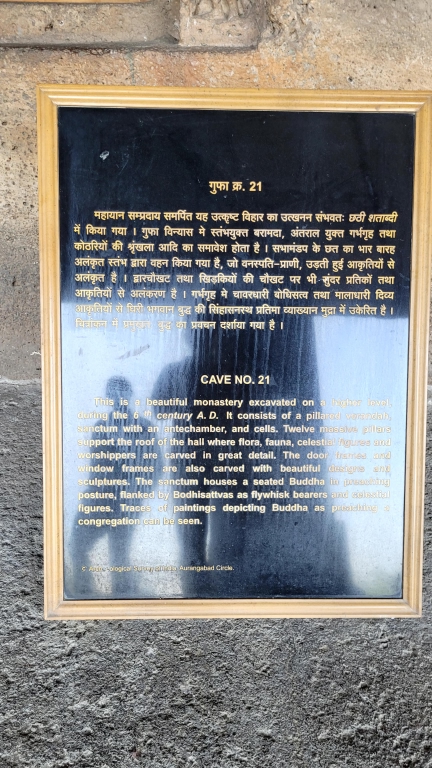
🛕 Ajanta Cave 21

Ajanta Cave 21 is a large monastery measuring 28.56 × 28.03 m, consisting of a pillared hall, twelve residential cells, a sanctum sanctorum with a seated Buddha, and a pillared verandah whose pillars have now been restored. The cave preserves traces of paintings, including a surviving panel showing Buddha preaching to a congregation.

🏛️ Architectural Layout

🏠 Monastery Structure

The monastery comprises a spacious hall supported by twelve pillars, surrounded by twelve cells on three sides. Four of these cells are distinctively designed with pillared porches, showing an advanced stage of architectural refinement.

🕉️ Sanctum Sanctorum

The sanctum houses a seated Buddha in preaching (teaching) attitude, carved in high relief on the back wall. This image forms the spiritual focal point of the cave.


🪷 Verandah and Porch Features

🏛️ Verandah Design

The original pillars of the verandah have perished, but the pilasters survive. These pilasters display half and full lotus medallions with makaras at their centers, adding mythological elegance to the façade.

🏯 Ornate Cell Porches

Each end of the verandah contains a cell with a richly decorated porch supported on carved pillars.
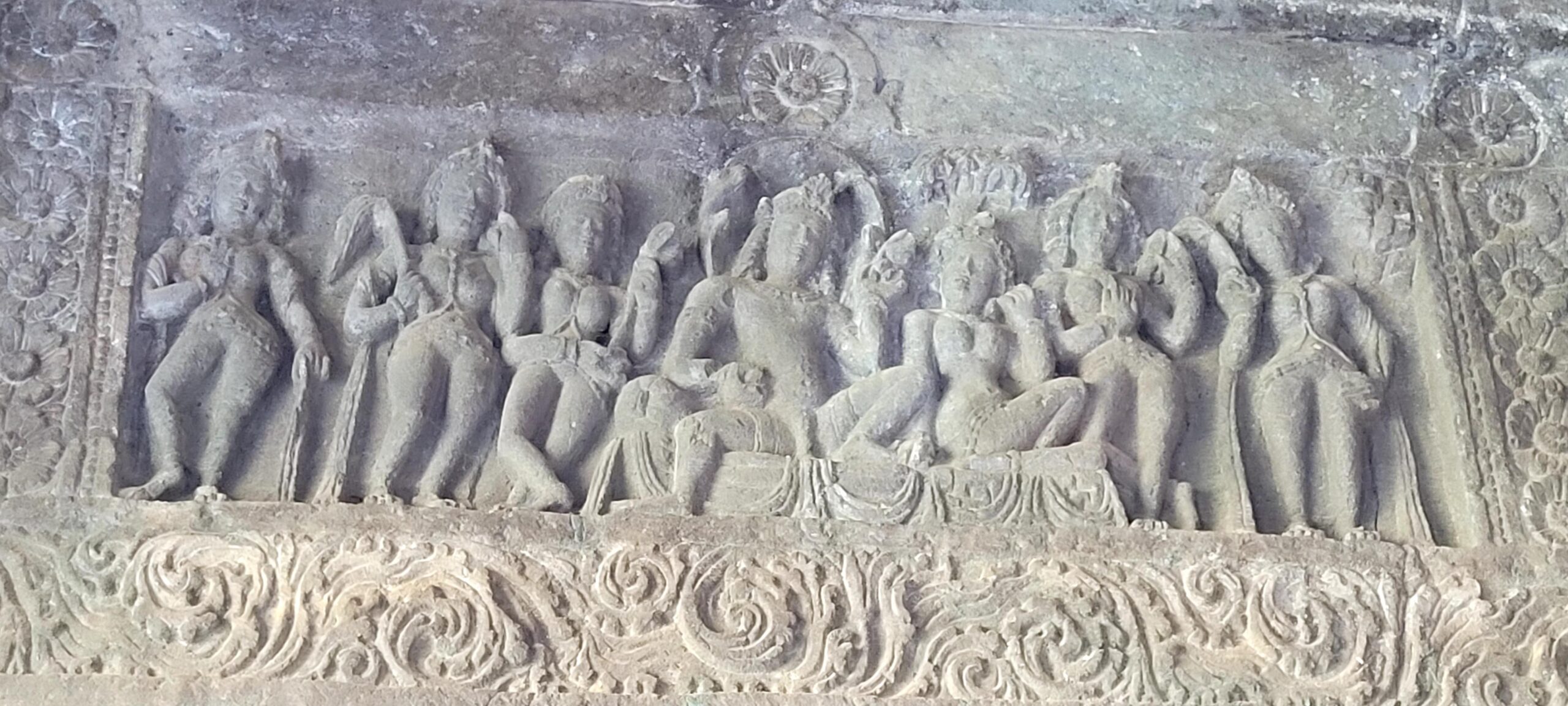
The left porch features an entablature carved in three narrative panels. The central panel shows a Nāga king with queens and attendants, while the flanking panels depict yakshas.
The right porch façade likely represents Hariti with attendants, a protective mother-goddess figure associated with Buddhist monastic spaces.


🧱 Inner Hall and Cell Arrangement

🏚️ Pillared Hall

The interior hall contains twelve pillars resembling those in Cave 1, but they appear heavier and rest on tall, disproportionately high square bases, giving the hall a distinctive structural rhythm.

🏡 Distribution of Cells

There are four cells with ornate pillared porches, located on three sides of the hall — one on each side of the antechamber and one in the middle of each side wall.
In addition, eight more plain cells complete the monastery’s residential layout, totaling twelve.


🧘 Sculptural Highlights

🪶 Buddha in Teaching Attitude

The shrine’s back wall showcases Buddha seated in teaching attitude, accompanied by rich detailing. This sculpture represents the devotional aesthetic typical of the late Ajanta phase.


🎨 Painting Fragments and Artistic Traces

🖌️ Surviving Wall and Ceiling Paintings

Most of Cave 21’s paintings have perished, but important fragments remain. On the left wall, between the porch and the pilaster, a panel survives showing Buddha preaching before a gathered congregation.
The ceiling retains traces of vibrant blue pigment, still visible in a few sections, highlighting the original brilliance of the cave’s paintings.

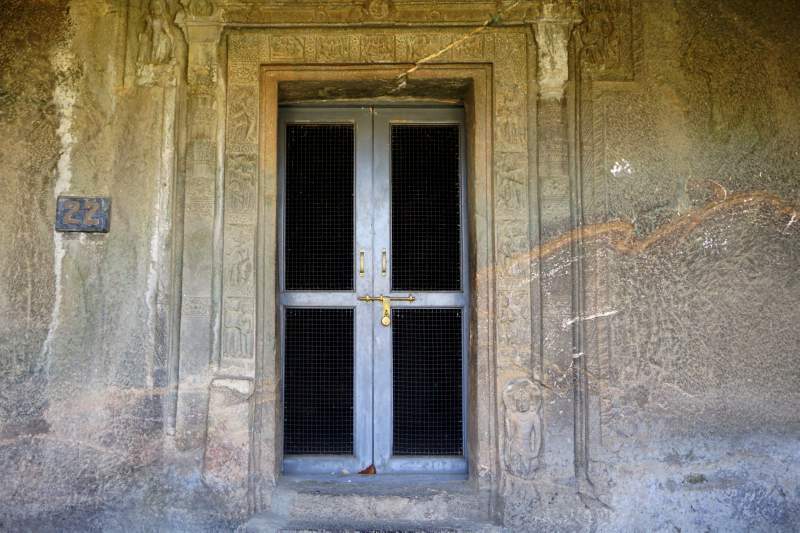
🛕 Ajanta Cave 22

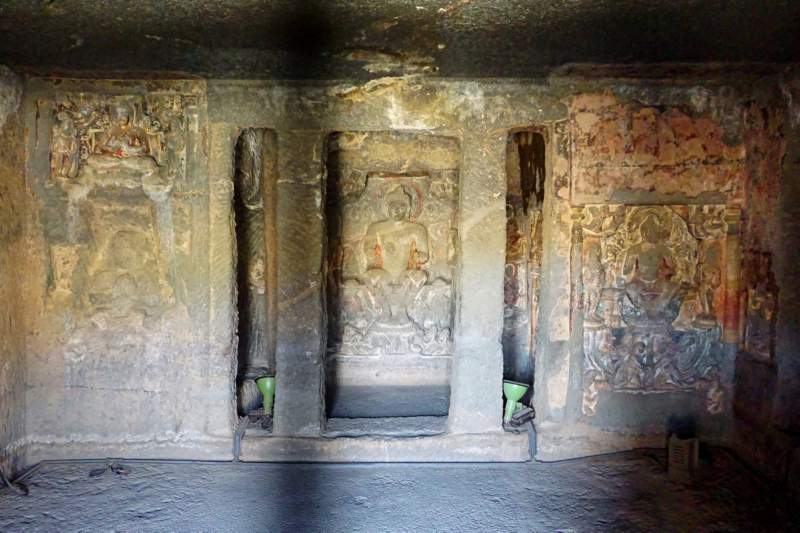
Ajanta Cave 22 is a small monastery measuring 12.72 × 11.58 m, carved at a higher level and reached through a flight of steps. It consists of an astylar hall, four unfinished cells, a narrow verandah, and a sanctum sanctorum that houses a seated Buddha in pralamba-padasana. The cave is notable for sculptural as well as painted representations of Buddha, including the rare sequence of seven Manushi-Buddhas with Maitreya.


🏛️ Architectural Layout

🏯 Elevated Monastery Structure

This cave is excavated at a higher level than the surrounding caves, and visitors reach it by ascending a flight of steps. The narrow verandah leads directly into the monastery’s interior spaces.

🏠 Astylar Hall and Cells

The hall is astylar, meaning it has no pillars, and the usual antechamber found in many Ajanta caves is absent. Four side cells were planned but remain unfinished, reflecting an incomplete stage of excavation.


🕉️ Sanctum Sanctorum

🔱 Buddha in Pralamba-Padasana

On the back wall of the shrine is a carved figure of Buddha seated in pralamba-padasana, with the feet resting on a lotus. The sculpture is somewhat crude compared to other caves, indicating either an early or hurried phase of craftsmanship.


🎨 Sculptures and Paintings

🧘 Multiple Forms of Buddha

The cave contains sculptural depictions of Buddha in various forms, enhancing its devotional character. These are complemented by painted narratives and symbolic representations.

🌳 Manushi-Buddhas with Maitreya

On the right wall of the shrine, above the row of carved seated Buddhas, appear painted images of the seven Manushi-Buddhas, each seated under their respective Bodhi trees.
Beneath them stands Maitreya, the future Buddha.
The names of each Buddha and each sacred tree are inscribed below and above the figures respectively, making this an important textual-pictorial record.

🐍 Naga Panels and Painted Records

Near the junction of the right wall and the back wall is a painted scene showing nagas holding the stalk of a lotus, atop which sits another carved figure of Buddha. Below this grouping is a second dedicatory painted record.
Together, these inscriptions provide rare documentation of artistic and devotional activity within the cave.

🛕 Ajanta Cave 23

Ajanta Cave 23 is an unfinished monastery measuring 28.32 × 22.52 m, closely resembling the layout and proportions of Cave 21. It includes an astylar hall, sanctum sanctorum, an antechamber, side cells with porches, and a pillared verandah. The cave is admired for its finely ornamented pillars, richly carved pilasters, and the distinctive nāga doorkeepers guarding the shrine entrance.


🏛️ Architectural Layout

🏯 Incomplete Monastery Plan

Although similar in plan to Cave 21, the shrine, antechamber, and the side cells with pillared porches were left unfinished. This incomplete state offers a rare glimpse into the excavation process of Ajanta caves.

🏠 Astylar Hall

The main hall is astylar, lacking interior pillars, creating a broad open floor space. Surrounding cells indicate the planned monastic arrangement, though some remain partially carved.


🪷 Pillared Verandah

🏛️ Intact Verandah Pillars

The verandah features a full set of intact pillars, showcasing refined stone craftsmanship. Their decorative details are among the most attractive elements of this cave.

🎨 Ornamented Hall Pillars and Porches

The pillars of the hall and the porches reveal intricate ornamental designs, with a level of skill comparable to the finest Ajanta carvings. Their motifs and proportions highlight the artistic sophistication of the late Vakataka period.


🗿 Sculptural Highlights

🌊 Makara Medallion Carving

A standout sculptural detail is found on the front pilaster on the right wall of the hall, depicting a dynamic figure prying open the jaws of a makara within a medallion. This expressive composition showcases both narrative energy and delicate craftsmanship.

🐍 Nāga Doorkeepers

The doorway of the shrine is guarded by impressive nāga doorkeepers, each standing with one foot placed on a raised platform. Their dignified posture and serpent hoods make them one of Cave 23’s most striking features.


🎨 Plaster and Surface Details

🏺 Traces of Ancient Plaster

Faint traces of ancient plaster survive on portions of the verandah ceiling, indicating that the cave interior was once intended to be plastered and decorated with paintings, similar to other finished caves at Ajanta.

🛕 Ajanta Cave 24

Ajanta Cave 24 is an incomplete monastery measuring 29.3 × 29.3 m, the second-largest excavation at Ajanta after Cave 4. Planned on a grand scale, it consists of a large hall, a pillared verandah, a sanctum sanctorum with a seated Buddha, and an external chapel with a pillared porch. If completed, it would have been one of the most magnificent monasteries of the entire complex.


🏛️ Architectural Layout

🏯 Grand Monastery Plan

Cave 24 was designed as a vast monastery with a large central hall, a sanctum, and numerous pillars. Although incomplete, the dimensions and layout clearly reflect an ambitious architectural project belonging to the late phase of Ajanta’s development.

🏠 Pillared Verandah

The verandah originally had pillars that had mostly perished over time. These have now been reconstructed, restoring the intended façade to an extent.

🕉️ Sanctum Sanctorum

Inside the shrine is a carved figure of Buddha seated in pralamba-padasana, accompanied by attendants and flying figures. This seated form, with dangling legs, is characteristic of late-period Ajanta iconography.


🎨 Sculptural and Decorative Elements

🪷 Exquisite Pilaster Decorations

The surviving decorative fragments, especially the right pilaster, exhibit exceptionally rich and refined workmanship. The bracket-capital, although based on common designs, is executed here with unmatched detail, representing a culmination of the pilaster-motif tradition in Ajanta.

👑 Lintel With Flying Figures

The door lintel features a beautifully carved frieze of flying celestial beings, with the two central figures holding a crown. This elegant composition adds a sense of grandeur to the entrance of the shrine.


🏛️ Hall and Pillars

🗿 Unfinished Pillars

The hall was designed to contain twenty pillars, but only one pillar is partially completed. Its design resembles the ornate pillars of Cave 1, indicating the stylistic direction intended for the entire space.


🛕 External Chapel

🔱 Chapel With Pillared Porch

On the left side, outside the verandah, an independent chapel with a pillared porch has been carved.
The back wall of this chapel portrays Buddha seated in pralamba-padasana, flanked by attendants and celestial figures.

🏠 Ancient Staircase

Beyond the modern protective parapet, remains of an ancient staircase can still be observed, showing the original access pathway associated with this cave.


📜 Historical Significance

⌛ One of the Last Ajanta Excavations

Cave 24 is believed to be among the last monasteries excavated at Ajanta, marking the culmination of the site’s architectural and artistic evolution.

🛕 Ajanta Cave 25

Ajanta Cave 25 is a small unfinished monastery measuring 11.37 × 12.24 m, excavated at a higher level within the complex. It features an enclosed courtyard, a pillared verandah, and an astylar hall, but notably lacks both cells around the hall and a central shrine.


🏛️ Architectural Layout

🏯 Elevated Excavation

The monastery is carved at a higher level than the surrounding caves, giving it a slightly elevated approach and a distinct structural presence.

🏠 Enclosed Courtyard

Before entering the interior spaces, visitors pass through a modest enclosed courtyard, forming the initial transitional zone of the cave.


🪷 Verandah and Pillar Design

🏛️ Pillared Verandah Structure

The verandah is supported by pillars featuring moulded bases, octagonal shafts, and bracket-capitals, showcasing typical late-Ajanta architectural elements.

🏡 Two Side Cells

At the left end of the verandah, two cells have been excavated. These are the only completed cells in the cave, as the hall interior contains none.


🕉️ Interior Hall

🌄 Astylar Hall Without a Shrine

The main hall is astylar, meaning no pillars stand within the interior space.
Unlike most Ajanta monasteries, Cave 25 does not contain a shrine, making it structurally unique and indicating an unfinished or abandoned excavation phase.

🛕 Ajanta Cave 26

Ajanta Cave 26 is a grand chaityagriha, similar in plan to Cave 19 but significantly larger at 25.34 × 11.52 m and enriched with far more elaborate sculptural detail. An inscription dated between A.D. 450–525 on the verandah records that the chaityagriha was the gift of the monk Buddhabhadra, a friend of Bhavviraja, minister of the king of Asmaka (Vidarbha).


🏛️ Architectural Plan

🕍 Chaitya Layout

The chaityagriha contains a large hall, side aisles for circumambulation (pradakshina), and a rock-cut stupa fronted by an image of the Buddha. While following the traditional plan of early Buddhist chaityas, Cave 26 introduces richer ornamentation and a more sculptural emphasis.

🏛️ Pillared Verandah

A wide pillared verandah extends across the façade, originally featuring three entrances. Each surface—pillars, façade, triforium, and inside walls—is carved with intricate designs dominated by images of Buddha.


🪷 Sculptural Features

🧘 Buddha on the Stupa

The stupa itself is pushed visually into the background, becoming more ornamental than structural. The elongated plinth is especially striking, carved with Buddha seated in pralamba-padasana beneath a decorated pavilion. The crowning elements above the harmika have mostly collapsed.

🌳 Key Narrative Reliefs

The walls of the aisles are filled with carved Buddhas, but two monumental scenes stand out prominently on the right aisle wall.

🛏️ Mahaparinirvana of Buddha

A colossal relief of the Buddha reclining on his right side beneath two śāla trees marks the scene of his final passing. Below are grieving disciples and followers; above are celestial beings witnessing the event.

⚔️ Assault and Temptation by Mara

Another major panel depicts Buddha seated in bhumisparsha-mudra beneath the Bodhi tree. Mara on an elephant advances with demon forces to disturb Buddha’s meditation; his daughters tempt him with dance and music; on the right, Mara retreats; in the foreground sits a defeated Mara filled with despair.

🎨 Painted Details

Very little of the painting survives due to the heavily carved walls leaving limited plain surfaces. On the uncarved sides of the brackets, fragments of paintings show four-armed dwarfs supporting the superstructure.


🏛️ Facade and Exterior Structures

🏯 Front Verandah and Chambers

Much of the verandah has collapsed. At both ends were pillared chambers—one leading to two cells and the other to a single cell. The inscription of monk Buddhabhadra is engraved above the right-side door inside the verandah.

🏞️ Courtyard Complex

In front of the verandah lies a courtyard containing a subsidiary chapel with additional cells. The right portion is mostly destroyed.

🙏 Avalokiteshvara Panels

On the left wall of the landing are two sculpted panels depicting the Litany of Avalokiteshvara.

🧘 Buddha Images

The verandah wall continuing from this landing has a standing Buddha in abhaya-mudra. Inside the chapel, a Buddha in teaching attitude is carved on the left wall; beside it lies a stone bed with a raised pillow.

🚰 Water Arrangement

Beyond the courtyard is a cistern associated with the chaityagriha. The courtyard originally had a front screen with an entrance approached by steps.

🛕 Ajanta Cave 27

A Two-Storeyed Monastic Annex Linked to Cave 26

🧭 Overview

Ajanta Cave 27 appears to have been an extension of Cave 26. It consists of two storeys, although the upper floor is now mostly collapsed. The surviving portions include a hall, four cells, an antechamber and a sanctum sanctorum. Inside the sanctum, Buddha is depicted in the teaching attitude.

🏞️ Layout and Architecture

The landing and left verandah of Cave 26’s courtyard lead directly to Cave 27. The entrance opens into a small hall that contains both a shrine and an antechamber. The antechamber projects forward into the hall.

🎨 Decorative Elements

The narrow wall of the antechamber, to the right of the pilaster, is divided vertically into three sculpted compartments. These depict a naga-raja, a standing couple, and a graceful female figure poised on a makara. She holds a bird on her right hand, while her left hand rests on the head of a dwarf.

🕉️ Sanctum and Buddha Image

The sanctum houses an image of Buddha in the teaching attitude, carved on the back wall.

🏚️ Surviving Cells and Ruined Sections

Only four cells survive on the right side of the hall, including one with a small porch. The left side of the hall, along with the roofs of the shrine and the antechamber, has collapsed. Due to its structural connection and incomplete nature, Cave 27 cannot be regarded as a fully independent monastery.

⚠️ Damage and Upper Storey

The upper storey, which remained unfinished, has been heavily damaged, most likely due to a landslide.

🛕 Ajanta Cave 28

An Unfinished Monastery at Ajanta

🧭 Overview

Ajanta Cave 28 is one of the smallest and least developed caves in the complex. It represents an unfinished monastic excavation that was abandoned early in its construction.

🏞️ Architectural Features

The only completed architectural element of this cave is its pillared verandah. No hall, cells or shrine were carved beyond this point, making Cave 28 one of the simplest structures at Ajanta.

🔨 State of Completion

Since the excavation stopped before the interior could be started, the cave remains a basic structural outline. Its incomplete nature provides valuable insight into the stages of cave construction at Ajanta.

🛕 Ajanta Cave 29

Unfinished Chaityagriha at the Highest Level

🧭 Location

Ajanta Cave 29 is situated at the highest level of the Ajanta complex. It lies between Cave 20 and Cave 21, slightly above them in elevation.

🏞️ Architectural Type

Cave 29 was planned as a chaityagriha, a prayer hall traditionally featuring a vaulted ceiling, side aisles and a stupa. However, the excavation stopped very early in its development.

🔨 Stage of Excavation

This chaityagriha remains in its first stage of carving, indicating that only the rough outline of the cave was initiated. The hall measures 22.8 × 12.84 metres, but no architectural details were completed.

🕳️ Unfinished Condition

Since work ended at the preliminary stage, Cave 29 does not contain finished pillars, a stupa or interior carvings. Its incomplete form helps historians understand the early phases of cave construction at Ajanta.

🛕 Ajanta Cave 30

Chaitya Hall of the Later Phase

🕰️ Historical Phase

Ajanta Cave 30 belongs to the later phase of excavation at Ajanta. It reflects the architectural and stylistic evolution seen in the final stages of the site’s development.

🏞️ Architectural Type

Cave 30 is designed as a chaitya hall, the traditional Buddhist prayer hall meant for congregational worship and circumambulation.

🌀 Apsidal Layout

The cave follows an apsidal layout, featuring a rounded rear end typical of many chaitya-grihas. This form highlights the continuity of classical Buddhist architectural traditions in the later Ajanta period.

How to Visit the Ajanta Caves

✈️ By Air
  • Nearest Airport: Aurangabad (IXU)

  • Then: Taxi/bus to Ajanta (~100 km, 3 hrs)

🚉 By Train
  • Best Railway Station: Jalgaon Junction (JLG) – 60 km from Ajanta (~1.5 hrs by road)

  • Also: Aurangabad Station – then taxi/bus (100 km)

🚗 By Road
  • From Aurangabad: 100 km, taxis & state buses available

  • From Jalgaon: 60 km, frequent transport

  • From Mumbai: Drive/take bus to Aurangabad first (~400 km)

🗺️ Coordinates

20°33’12″N 75°42’01″E

Reference

1) World Heritage Series – AJANTA by the Archaeological Survey of India
2) My Pilgrimages to Ajanta and Bagh by Shri Mukul Chandra Dey
3) The Cave Temples Of India By James Fergusson & James Burgess
4) The Caves of India: Ajanta, Ellora and Elephanta by David Raezer and Jennifer Raezer
5) Buddha Rock-Temples of Ajanta Their Paintings and Sculptures by James Burgess

Photo Credits

Some photographs in this article are courtesy of Venerable Anandajoti Bhikkhu
(PhotoDharma – https://photodharma.net/).
Remaining photographs are by the author.

Leave a Reply

Your email address will not be published. Required fields are marked *