

Gomashi Buddhist Caves - A Hidden Link Between Western and Eastern India’s Buddhist Heritage
In the Konkan region of Maharashtra, the Gomashi Buddhist Caves represent one of the most intriguing yet lesser-known chapters of India’s rock-cut heritage. Located near the Saraswati River, these caves lie about 19 km southwest of Pali in Raigad district, just 1 km south of the small settlement of Gomashi. The exact coordinates of the site are approximately 18.467965° N, 73.318292° E.
📍Location & Connectivity
The Gomashi Caves stand about 9 km from the major early Buddhist monastery site of Nenavali, once an important monastic and trade center in the region. Historically, the caves were positioned along an ancient trade route that connected the inland settlements to the old coastal port city of Chaul, enabling the movement of monks, merchants, and ideas between the Western Ghats and the Arabian Sea coast.
🧏♂️Discovery & Protection
The site was first documented by Rev. J. E. Abbott in 1889, marking its introduction to the scholarly world. Recognizing its historical and cultural importance, the Archaeological Survey of India granted the site protected status in 1954.
🪔Architecture
Unlike the grand cave complexes of Ajanta or Kanheri, the Gomashi cave features a single rock-cut cell, suggesting that it served as a solitary retreat for one or two monks. Interestingly, traces on the rock show that two additional chambers were planned but never completed, giving us a glimpse of the excavators’ halted ambitions.
The architectural simplicity reflects the Hinayana (Theravada) phase of Buddhism, which flourished in western India during the 1st–2nd century CE. This early monastic tradition emphasized meditation and personal practice over ritual imagery.
🧘♂️Transition to Mahayana Period
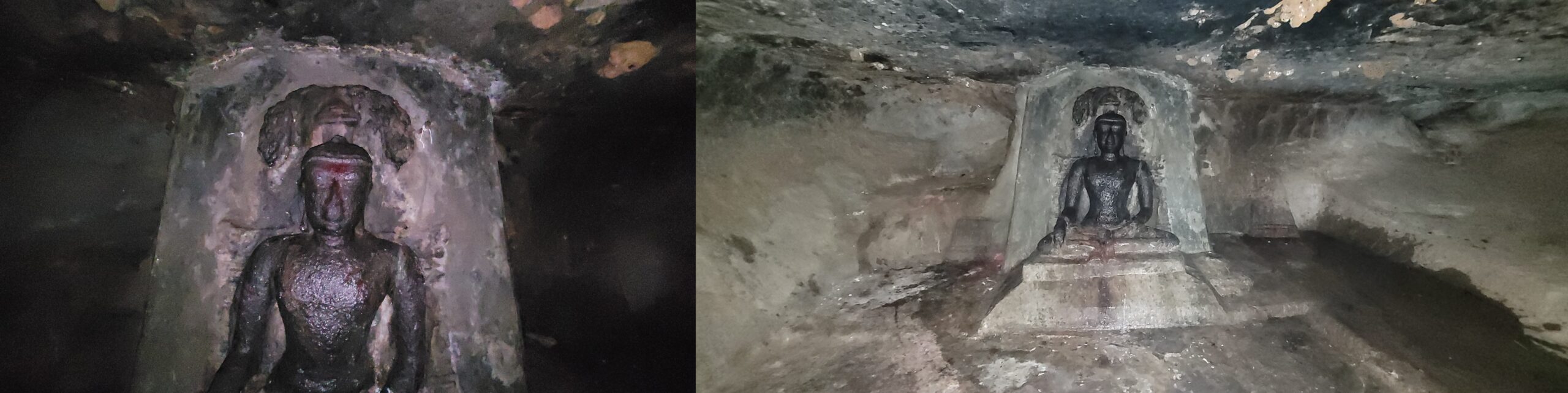
Centuries later, the Gomashi site experienced a Mahayana revival. During this second phase, a beautifully carved black basalt image of the Buddha seated under the Bodhi tree was installed within the cave. The artistry and iconography of this sculpture indicate a stylistic date between the late 6th century and mid-7th century CE.
Art historians note that the design of the Gomashi Buddha bears strong similarities to Eastern Indian Buddhist art, especially from regions like Bihar and Bengal. This stylistic affinity provides rare and valuable evidence of cultural and artistic exchange between the Buddhist communities of eastern and western India—a connection seldom preserved so tangibly in rock-cut remains.
Significance
The Gomashi Cave may be small, but its story bridges centuries of Buddhist evolution.
It stands as a two-phase monument:
- Hinayana Architecture – a simple monastic cell from the early centuries of the Common Era.
- Mahayana Artistic Revival – marked by the installation of the refined Buddha image centuries later.
Together, these layers narrate how Buddhist ideology and aesthetics transformed over time, linking early ascetic simplicity with later devotional art.
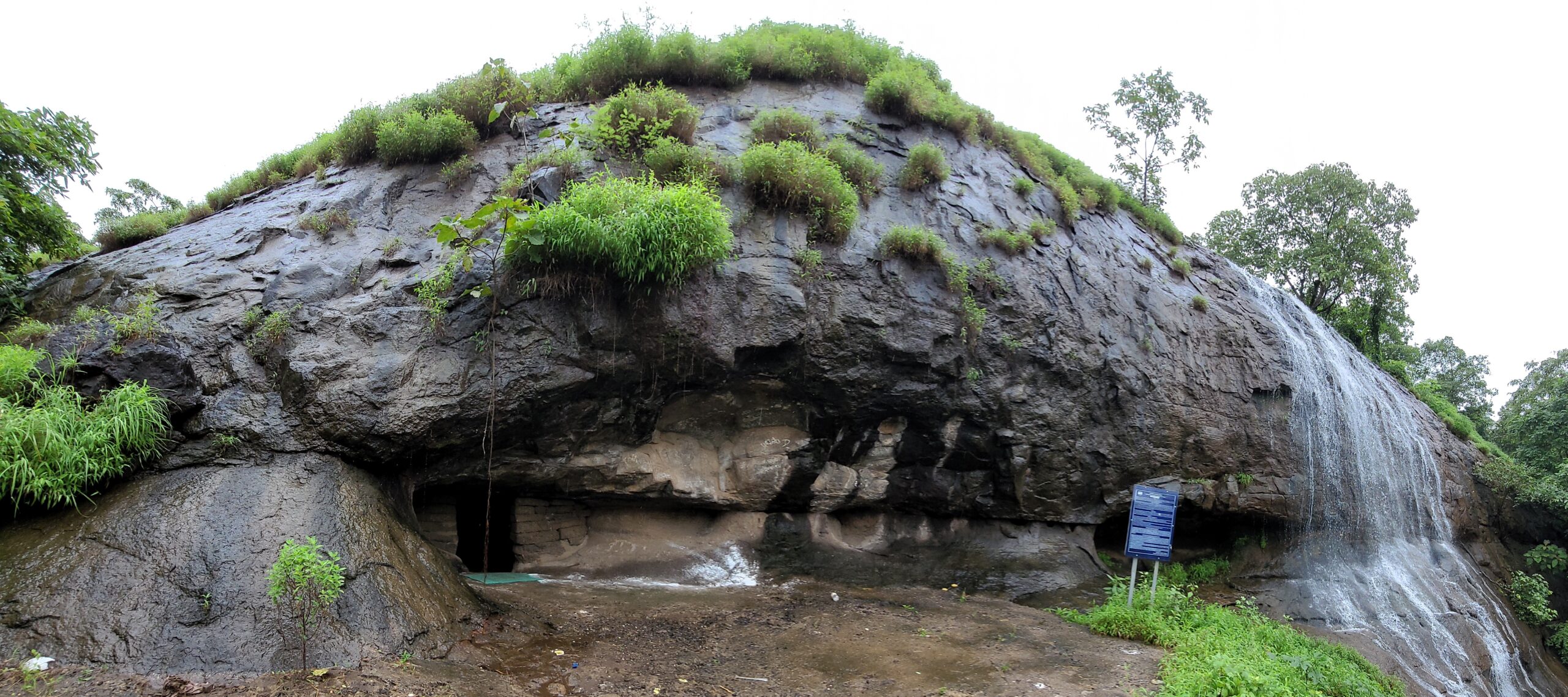
Today, Gomashi’s single-celled shrine remains an intimate and contemplative space, quietly preserving the legacy of monks who once sought solitude here. It is a rare example of continuity and transformation—from the plain austerity of Hinayana to the expressive devotion of Mahayana.
The Gomashi Buddhist Cave stands as a modest yet profound reminder of how faith, art, and cultural exchange shaped India’s spiritual landscape.
📸 Tip for Visitors:
If you plan to visit, consider exploring the nearby Nenavali Caves and the historic routes toward Chaul, which together tell the wider story of early Buddhist presence in the Konkan region.
🚗 How to Visit the Gomashi Caves
By Road:
Gomashi village is about 19 km southwest of Pali in Raigad district. Pali is well connected by road from Mumbai (≈110 km) and Pune (≈120 km) via the Mumbai–Goa Highway (NH66). From Pali, hire a local cab or auto to Gomashi (≈30 min drive).
By Rail:
The nearest railway stations are Khopoli (≈40 km) and Nagothane (≈35 km) on the Konkan line. From there, take a taxi or bus toward Pali → Gomashi.
By Air:
The nearest airports are Mumbai (Chhatrapati Shivaji Maharaj International Airport, ≈120 km) and Pune Airport (≈135 km). From either airport, continue by road via Pali to reach Gomashi village.
🗺️ Coordinates: 18.467965 N, 73.318292 E