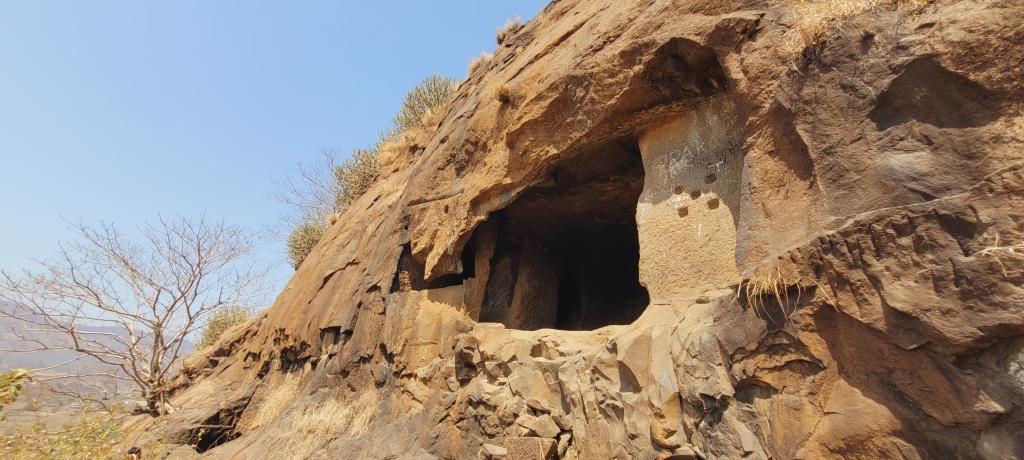
One of the lesser-known archaeological site Hal Khurd Buddhist Caves, located near Khopoli in Raigad district. Visiting these caves offers a glimpse into an ancient past that still survives in the rocky hills of the Western Ghats.
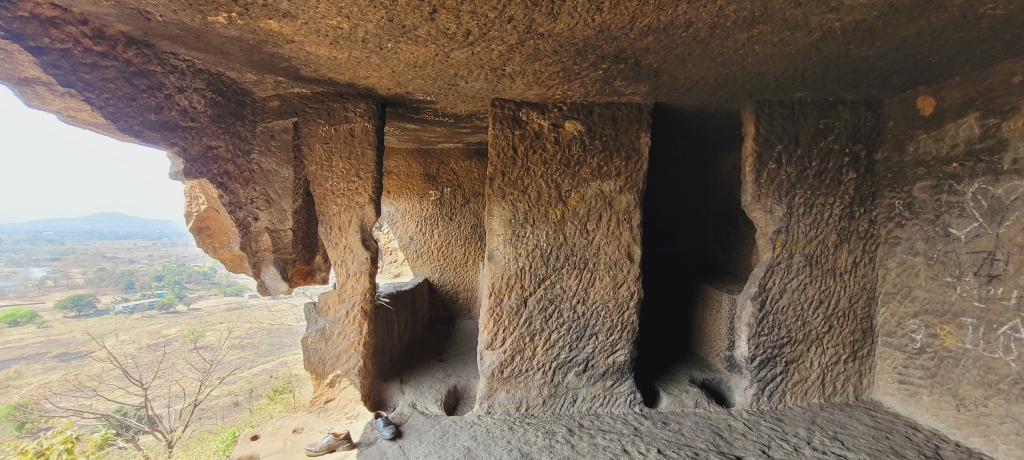
Hal Cave - Side Front View
Location and Historical Setting
The Hal Khurd Buddhist Caves are situated in Hal Khurd village, near Khopoli in Khalapur Taluka of Raigad district, Maharashtra. The caves are carved into a rocky hill located behind the village. This site lies not far from the old Mumbai–Pune route and close to the historic Bhor Ghat trade pass, which was an important ancient connection between the Konkan coast and the Deccan plateau.
During ancient times, this region formed part of an active trade network linking coastal ports such as Panvel and Uran with inland settlements. Buddhist monasteries were often established along these trade routes to provide shelter and spiritual guidance to travelling merchants and pilgrims. It is likely that the Hal Khurd caves served a similar purpose, offering accommodation for monks as well as temporary refuge for travellers passing through the region.
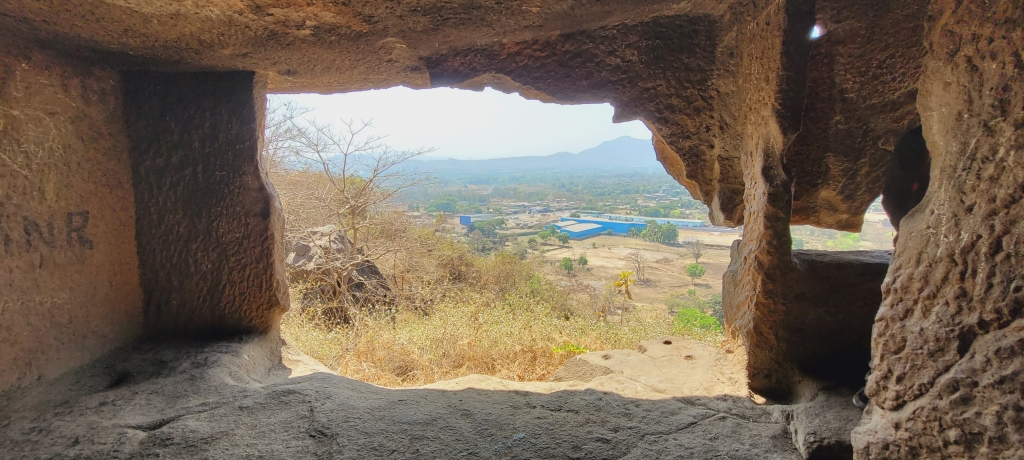
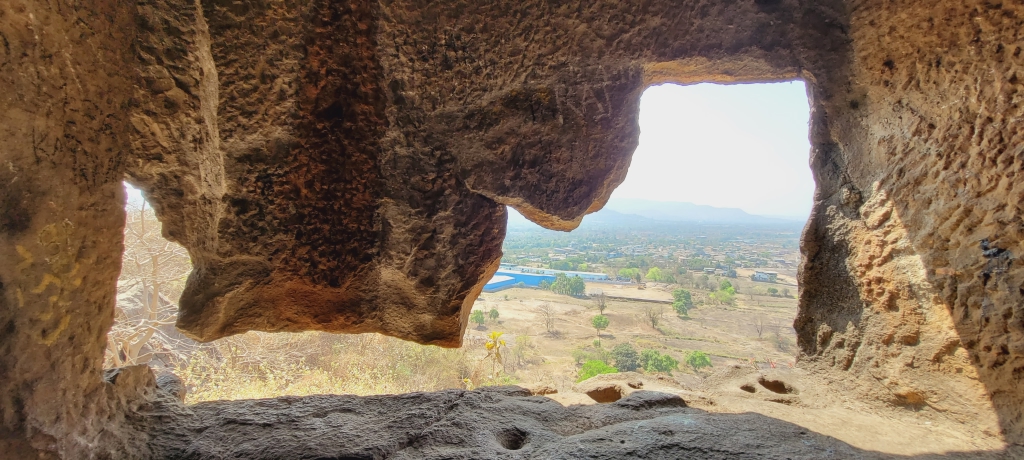
Hal Cave - Road View from main Vihar
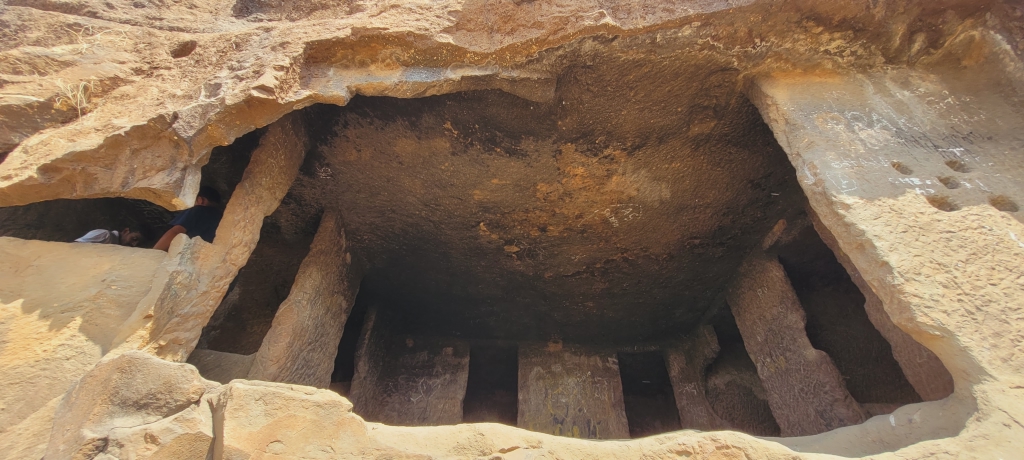
Hal Cave - Front View
Hal Cave - Road Side View from Cell 6
Architectural Features of the Cave
The Hal Khurd cave complex is a simple monastic excavation belonging to the Hiyan (Thervad) Buddhist tradition. Unlike the elaborate cave complexes seen at larger sites, this cave monastery is modest in design but still historically important.
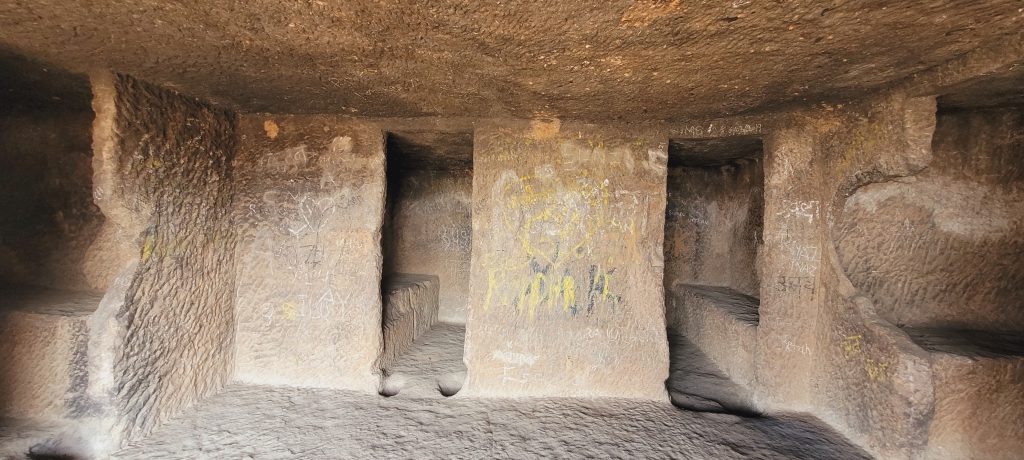
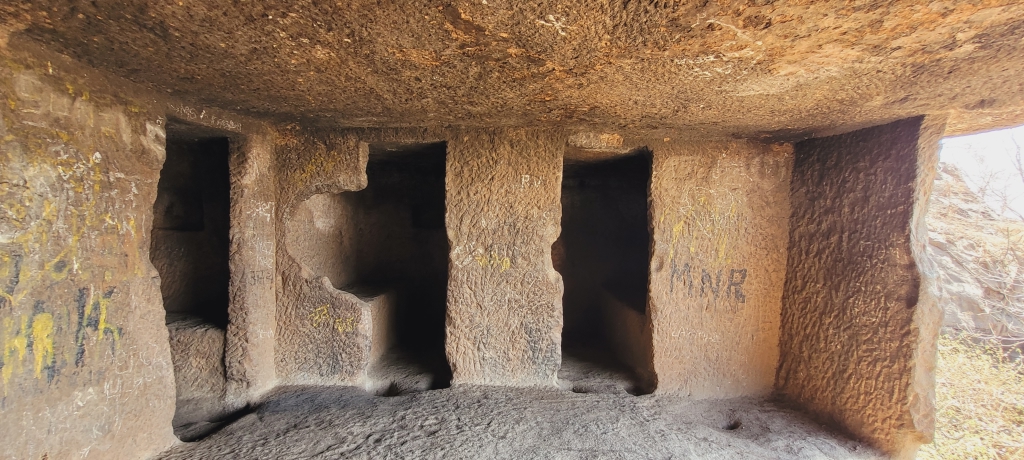
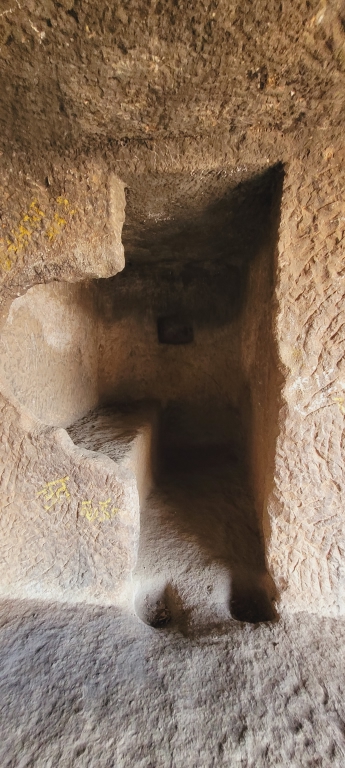
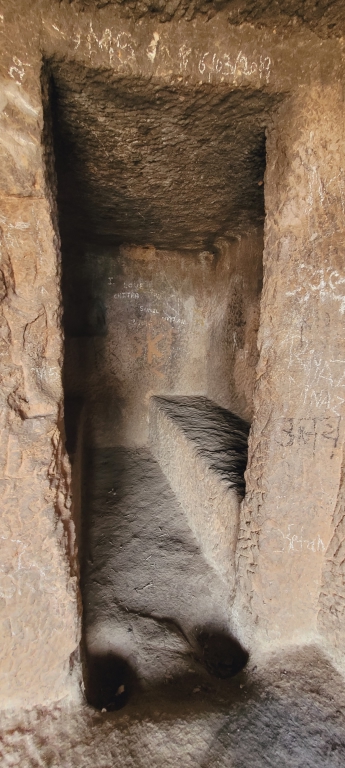
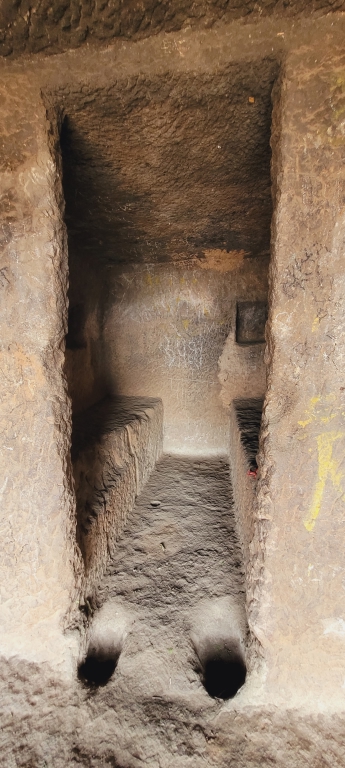
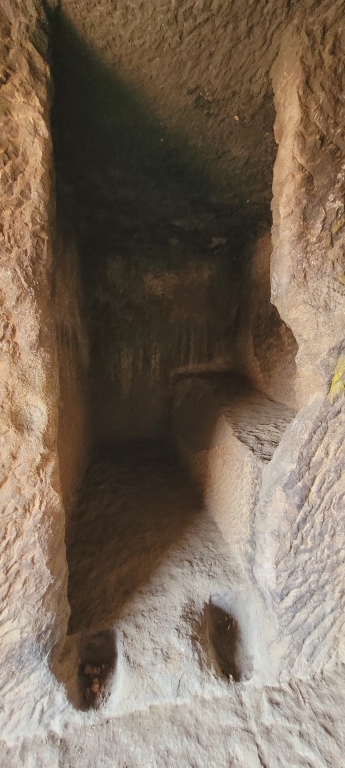
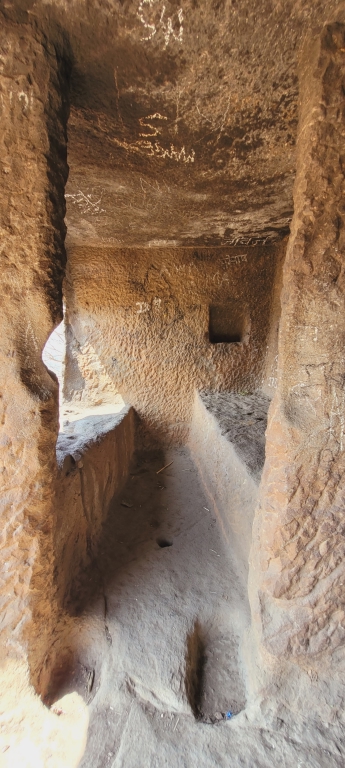
The cave consists of a vihara (monastic residence) carved into the rock. The central portion of the cave consists of a rectangular hall that was used as a common living and meeting space for monks. The monastic arrangement of the cave consists of six residential cells built around the central hall. Two cells are positioned at the front of the hall, while the remaining four are symmetrically arranged on either side, with two cells on the left and two on the right. These cells were intended to serve as individual living and meditation spaces for the resident monks.
Hal Cave - Left Side Cells
Hal Cave - Center Cells
Hal Cave - Right Side Cells
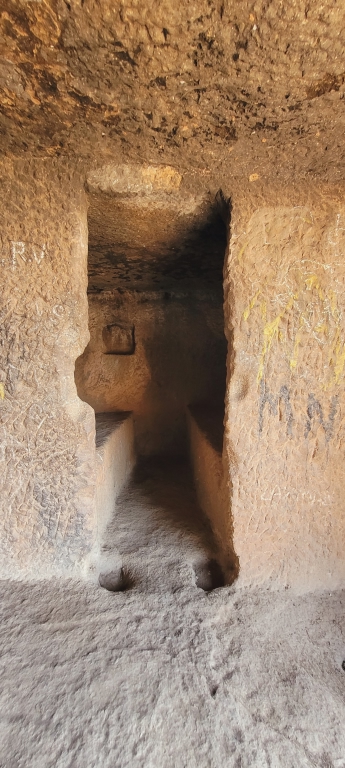
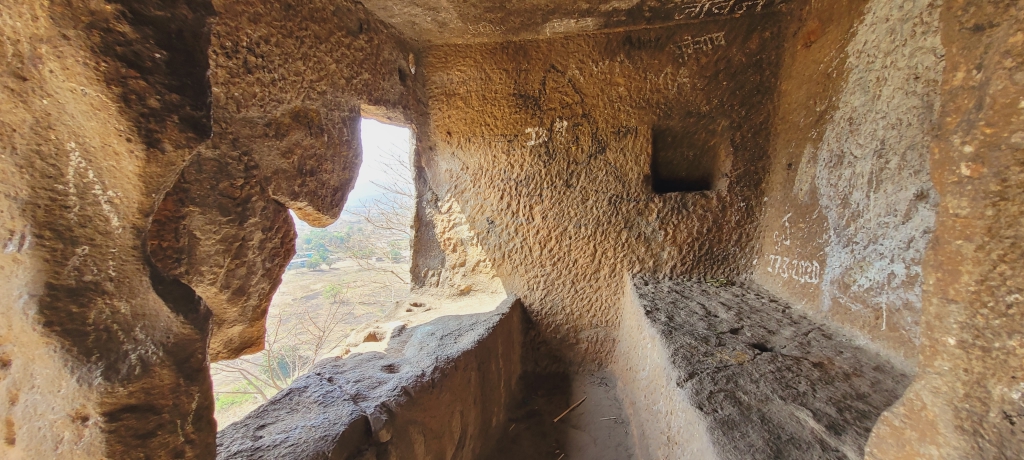
Among the six cells, four cells are provided with double stone benches, while the remaining two cells contain a single stone bench. These benches were carved directly from the rock and were most likely used as sleeping platforms or seating areas by the monks.
In addition to the benches, some of the cells also contain small cubical niches carved into the interior walls. These niches appear to have been designed for storing personal belongings or everyday objects used by the monks. The cells with double benches generally contain two wall niches, while the cells with a single bench typically have one niche. Such features reflect the practical design of early Buddhist monastic caves, where simplicity and functional living spaces were prioritized.
The presence of these architectural elements indicates that the cave functioned as a vihara, or monastic residence, providing basic but well-organized accommodation for a small community of monks.
Hal Cave - Cell 1
Hal Cave - Cell 2
Hal Cave - Cell 3
Hal Cave - Cell 4
Hal Cave - Cell 5
Hal Cave - Cell 6
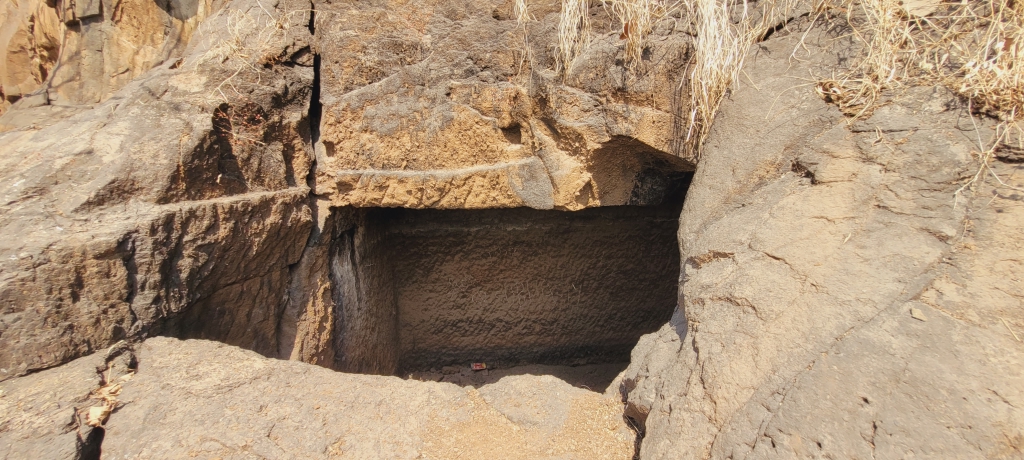
Near the cave entrance, there is also a rock-cut water cistern, which would have collected rainwater and provided a water supply for the resident monks. Unfortunately, today the cistern has developed cracks, and due to leakage, it can no longer retain water effectively.
Although architecturally simple, the layout clearly reflects the early Buddhist monastic tradition where functionality and simplicity were more important than decorative elements.
Hal Cave - Water Cistern
Present Condition
Today, the Hal Khurd Buddhist Cave remains largely unknown to visitors. Only a few researchers, heritage enthusiasts, and local residents occasionally visit the site. Over time, parts of the cave structure have deteriorated. Historical records suggest that the front wall of the vihara hall was demolished in the recent past, possibly during local religious modifications.
Because of its neglected condition, the site deserves greater awareness and conservation attention. Preserving such caves is important for understanding the spread of Buddhism in the western coastal region of India and the role of monastic establishments along ancient trade routes.
Hal Cave - Cell 6 Front
Historical References
The Hal Khurd caves are mentioned in several historical studies and colonial-era surveys.
One of the earliest references appears in the book The Cave Temples of India by James Fergusson and James Burgess. The authors describe a simple vihara located on a rocky cliff above the village of Hal Khurd. According to their description, the cave consists of a hall measuring approximately 12 feet by 11 feet, surrounded by six monastic cells, two of which contain double stone benches. They also mention that an inscription was once believed to exist at the site.
Another reference appears in the 1964 Kolaba District Gazetteer (now Raigad Gazetteer). The Gazetteer records that the cave monastery consists of a central hall with six rooms and notes that the front wall of the structure had collapsed or been removed. It also repeats the earlier observation that the cave may once have contained an inscription.
Although the inscription is no longer visible today, these historical references confirm the antiquity of the site and its recognition by earlier scholars.
How to Reach
The caves are accessible from Khopoli railway station on the Central Railway line.
After exiting the station, visitors can reach Hal Khurd village by local transport such as auto-rickshaws or buses travelling toward Belapur or Panvel. The caves are located in the hill behind the village. A short trek from the settlement leads to the cave site.
Because the caves are not well marked, it is advisable to seek guidance from local residents while visiting the area.
Importance of Preserving Lesser-Known Heritage
Sites like the Hal Khurd Buddhist Caves remind us that India’s archaeological heritage is not limited to famous monuments alone. Many smaller and lesser-known sites played an equally important role in the cultural and religious history of the region.
These modest rock-cut monasteries once served as centres of learning, meditation, and hospitality along ancient travel routes. Even today, they continue to preserve silent traces of the Buddhist past in the hills of Maharashtra.
Recognizing, documenting, and conserving such sites is essential so that future generations can better understand the historical landscape in which Buddhism flourished across western India.
References
1) Fergusson, James & Burgess, James. The Cave Temples of India. London.
2) Kolaba District Gazetteer. Government of Maharashtra, 1964.