
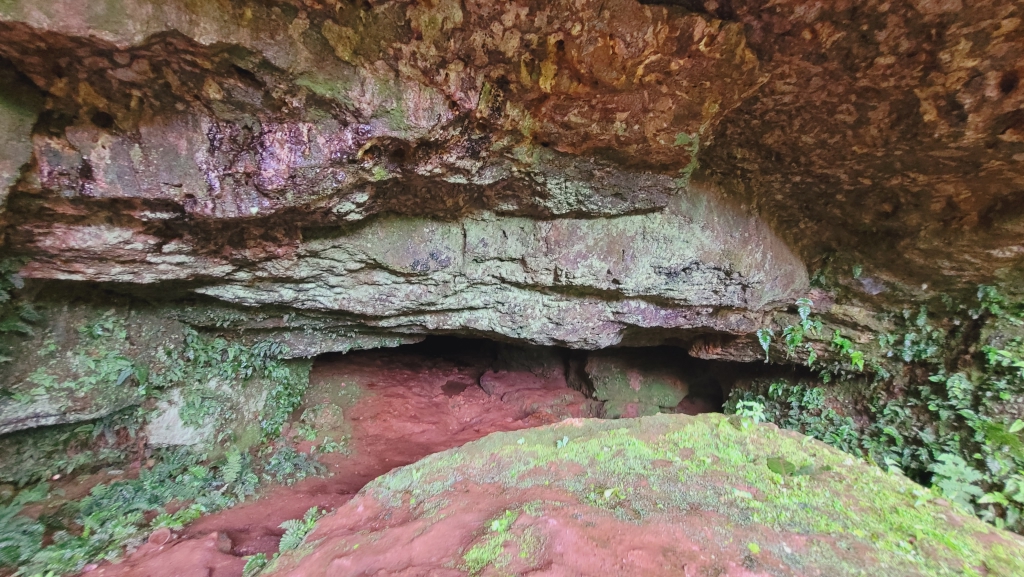
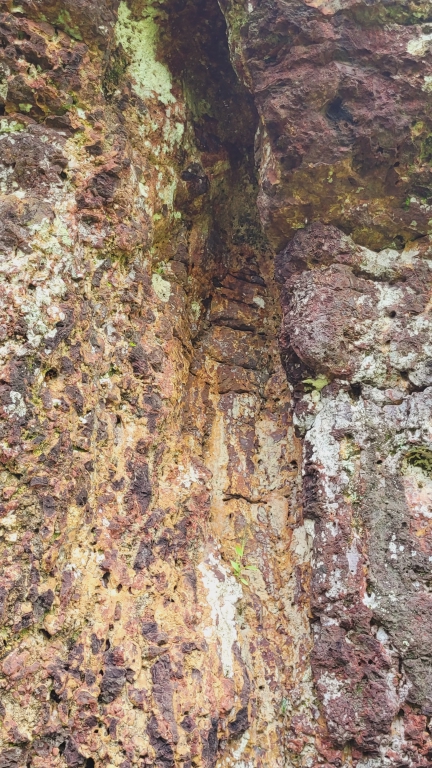
The Masai Pathar Buddhist Cave (Pandav Dara Caves) near Badewadi village in Kolhapur district are an important set of ancient Buddhist rock-cut monuments with a distinct architecture and history, thoroughly documented in the Kolhapur district gazette. These caves are cut into a semi-circular scarp about 25 feet high, overlooking lush hillsides above the plains, approximately 28 KM northwest of Kolhapur city and 10 KM west of Panhala.
Historical Background
The caves date back to the 7th century AD, a period associated with a transition from Kadamba rule to the Western Chalukyas in the region. But as per vihara/chaitya layout, cells and relic-shrine forms — places it with early rock-cut Buddhist site between 2nd to 3rd century AD. Their origin is distinctly Buddhist, reflecting the religious and cultural shifts in southern Maharashtra during this era. The caves were constructed as places for meditation, study (vihara), and worship (chaitya), serving Buddhist monks and their communities.
Detailed Cave Architecture
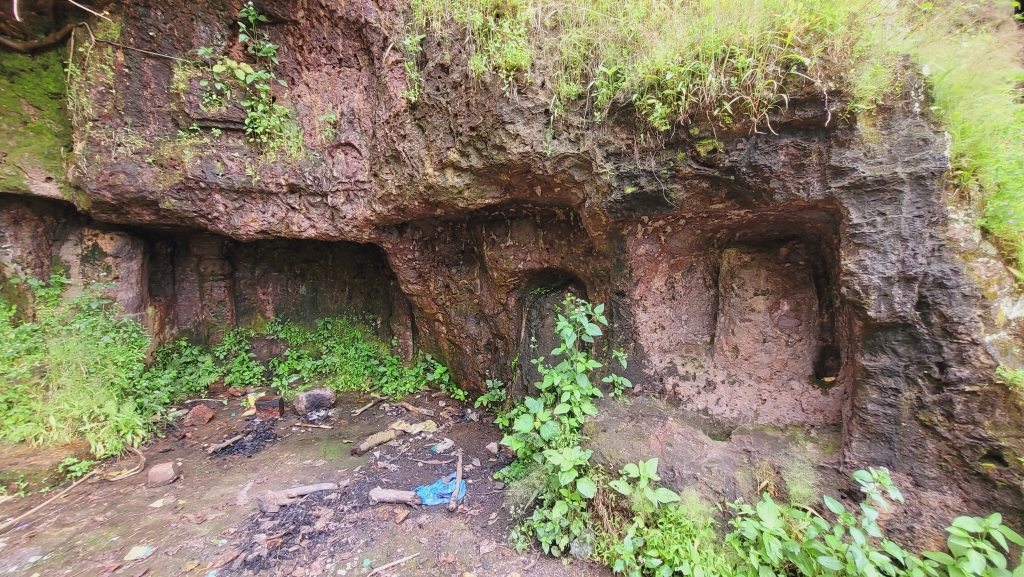
The cave complex consists of a large cistern, eight dwelling cells, and two principal caves identified as a Chaitya and a Vihar.
Main Chaitya Cave (Cave 1) –
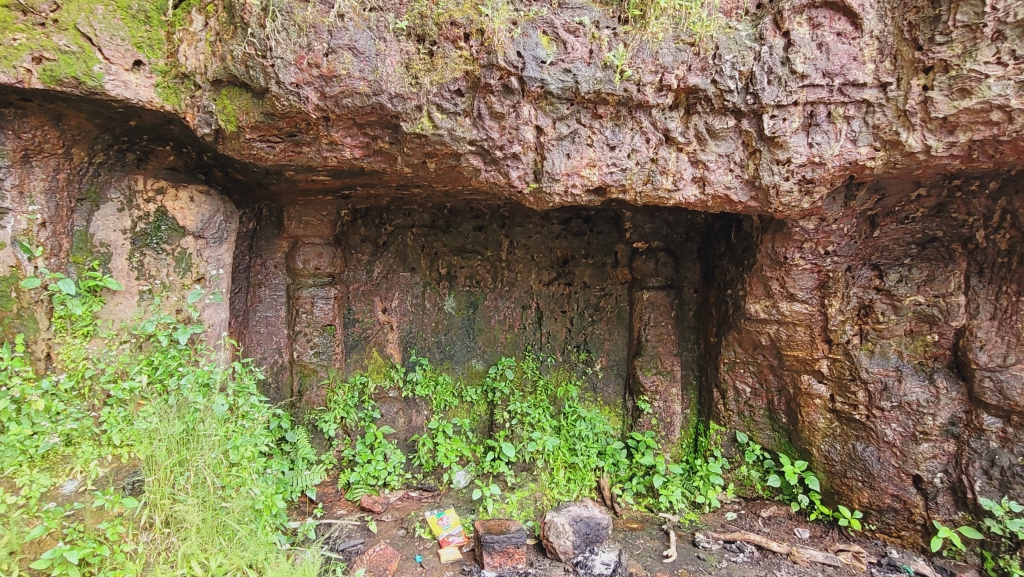
In front of the caves were once a pillared verandah, now mostly destroyed and fallen into the ravine beneath the site.
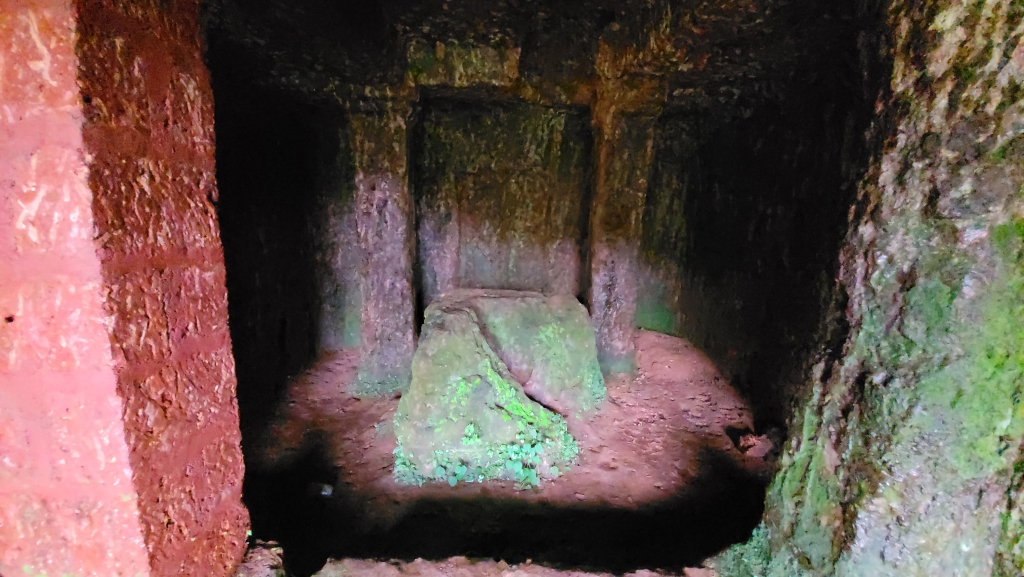
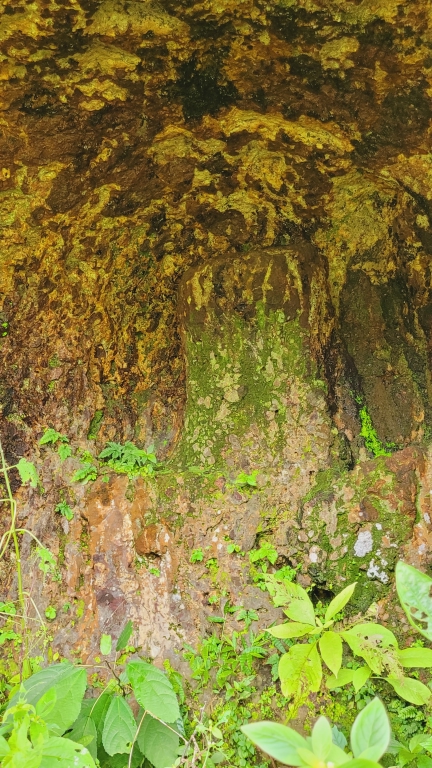
This cave has a verandah, a large hall divided into three sections or rooms (with remains of side wall pillars), and an inner cell or shrine, which features a carved central elevation, likely representing a stupa or dagoba or relic shrine.
The Chaitya cave’s verandah measures 15 feet by 7 feet. The three sections of verandah hall measure approximately 27′ x 12′, 28′ x 10′, and 29′ x 3.5′, with a flat roof and a total height of 8 feet. The hall’s back wall has an inner shrine room (10′ x 7′ x 8′), containing a carved central relic shrine (stupa). The entrance to this inner shrine is 6.5′ x 2.5′.
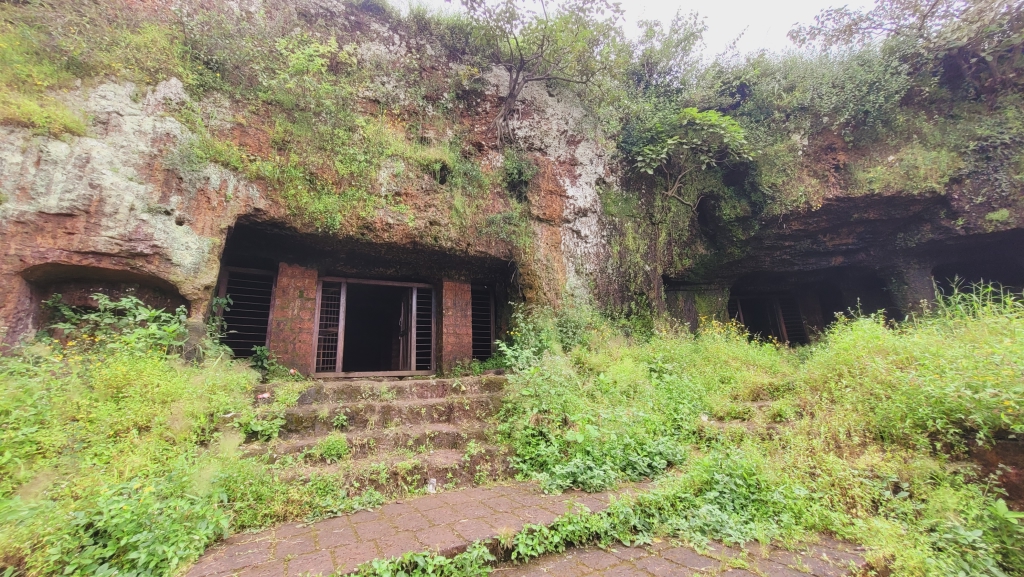
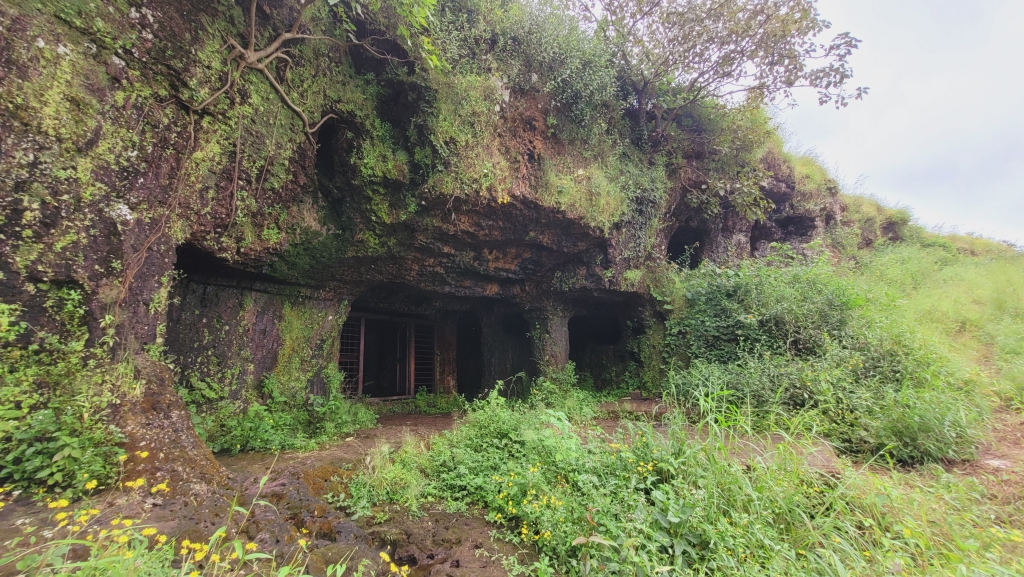
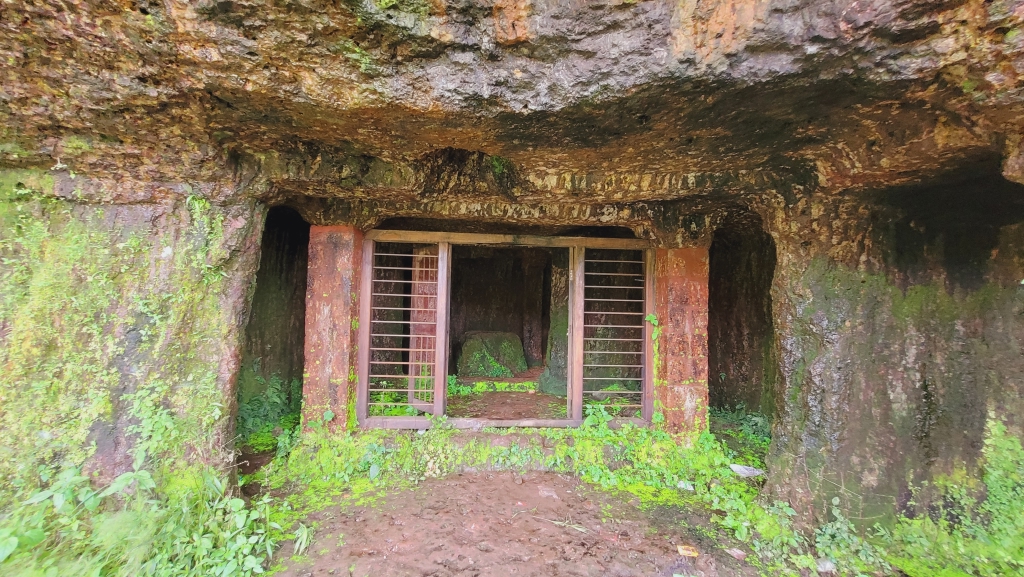
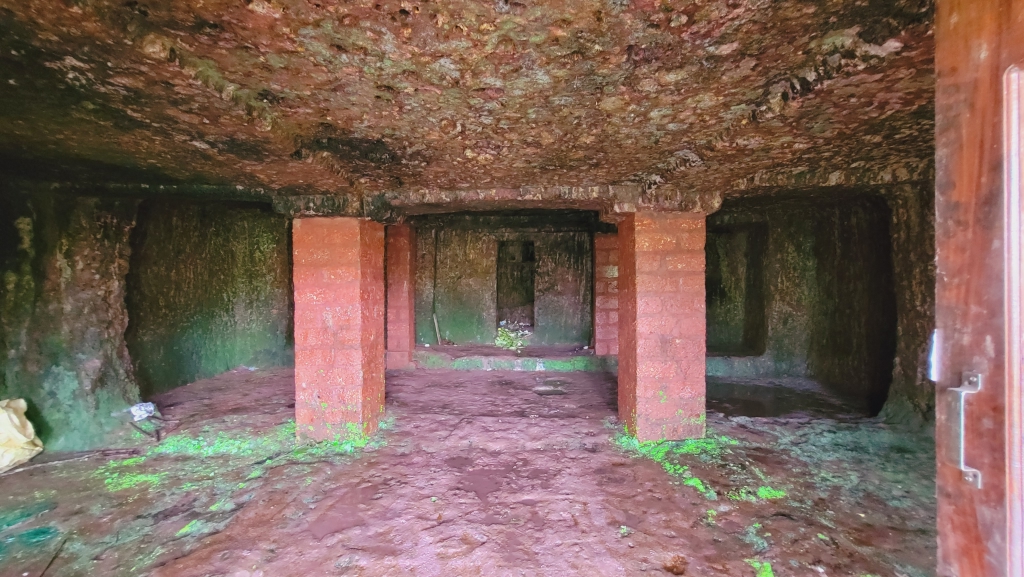
Vihara (Cave 2) –
The Vihar Hall also has a flat roof, 7.5 feet high, and is divided into three sections: outer (32′ x 6.5′), central (15′ x 9′), and inner (12′ x 9′). The Vihar cell also contains a similar central elevation as the Chaitya with relic/dagoba/stupa symbolism., indicating its function for worship or study.
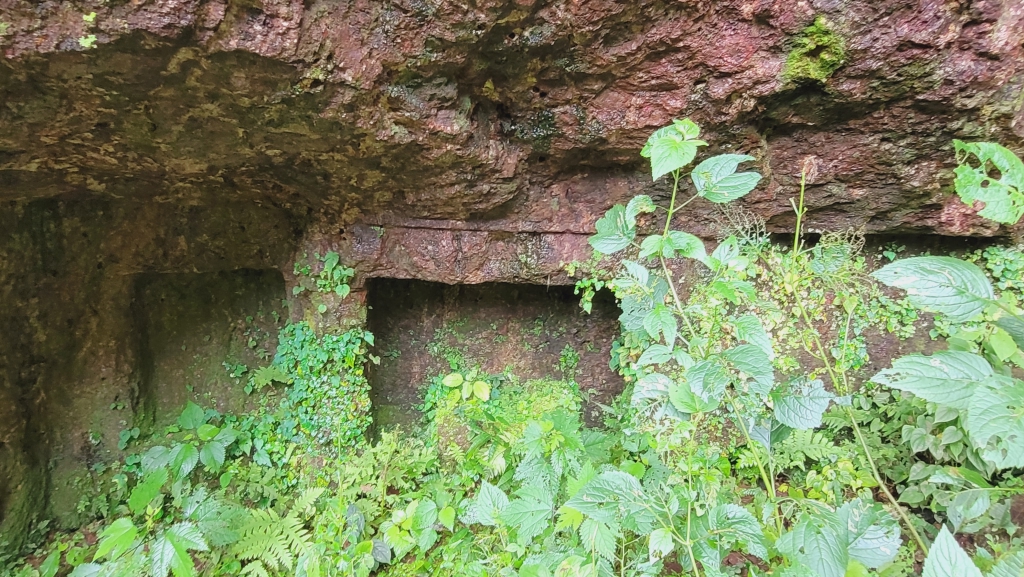
Dwelling Cells: There are eight single monk cells used for habitation, each cut into the rock. Precise individual dimensions may vary but typically small (around 7–9 feet per side).
Other Features: The caves are fronted by remains of a pillared verandah, currently destroyed.
Cistern: A large water tank or cistern is cut into the rock at the site’s beginning for water collection.

Conservation Status
The Pandavdara / Masai Pathar caves are included in the set of local cave groups that the ASI or State archaeology authorities have identified in the Kolhapur area; local news and tender notices (2023–2024) show conservation/repair projects and state archaeology activity for the Pandavdara/ Masai Pathar caves. That means the site is on official lists and has received conservation attention recently.
How to Reach
- The caves are located about 30 kilometers from Kolhapur bus station, accessible via Kolhapur–Ambewadi–Kerle–Waghabil–Budhwar Peth–Masai Pathar. The last stretch requires walking from Masai Pathar.
- Badewadi village serves as a nearby landmark for the caves in Kolhapur district.
- Masai Pathar, known for its scenic landscape and historic significance, provides the approach route to the caves, which are carved into thickly wooded slopes.
