Location:
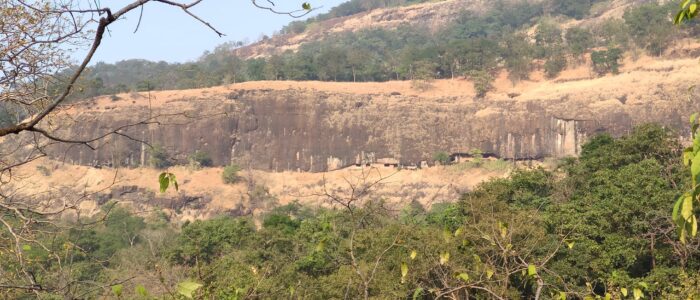
The Thanale Caves (or Nadsur Caves) are a group of 18 Buddhist rock-cut caves located in Thanale village, Sudhagad taluka, Raigad district, Maharashtra, India. They are situated 72 km (45 miles) southeast of Mumbai and 18 km from Pali.
Description:
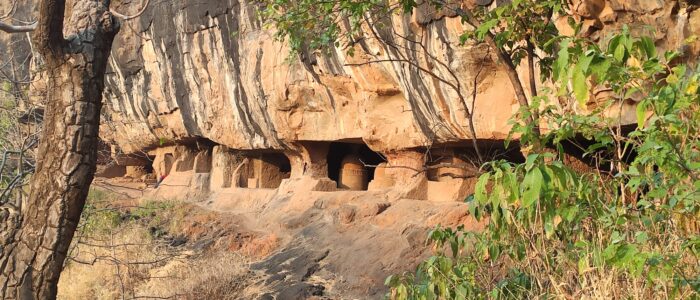
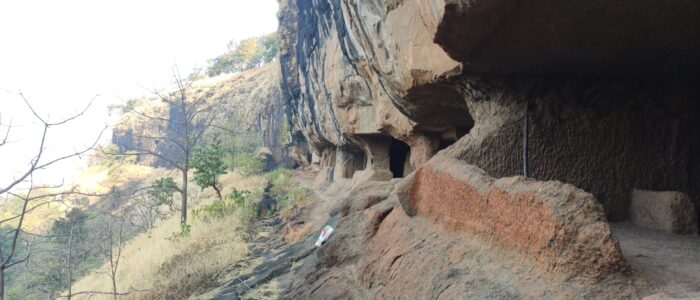
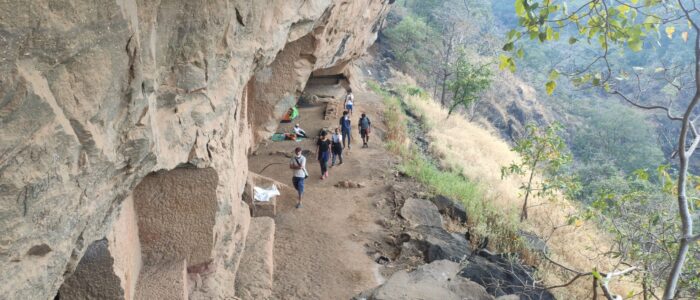
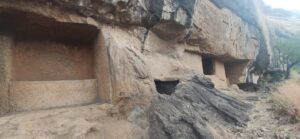
From Thanale village, there is a steep climb followed by a two-mile trek eastward along the edge of the hills leading to the excavated caves. The caves are carved into a long trap cliff, facing approximately west, and consist of eighteen caves in total. The most significant among them are the third, seventh, eighth, and fifteenth caves from the southern end.
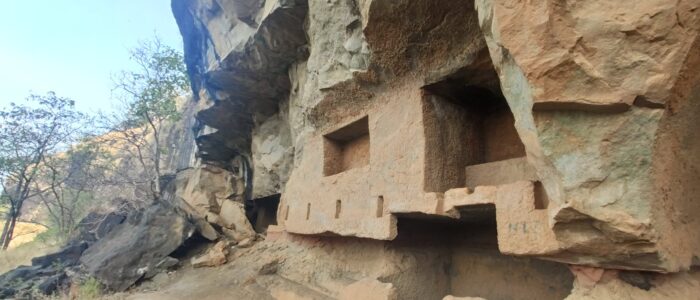
The interiors of many caves are severely damaged, and nearly all have lost their facades. Today, we can see piles of collapsed rock debris in front of the caves and along the hillside slopes.
Historical Significance:
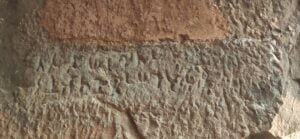
The caves contain two notable inscriptions mentioning the names of donors. Excavation of these caves likely took place between 70 and 50 BCE, as dated through epigraphic evidence. The complex includes two chaityas (prayer halls), two stupas, and the rest being viharas (monastic dwellings).
These caves are among the oldest rock-cut caves not just in Maharashtra but in all of India, strategically located along the ancient Chaula trade route. The Nadsur Caves represent one of the earliest phases of rock-cut architecture in India. The site consists of a series of viharas where monks once lived, along with a simple, unadorned chaitya. The chaitya likely served as a Buddhist worship hall, featuring a hemispherical stupa at one end.
Cave Architecture:
- Caves 1, 2, 4, 5, 6, 9, 10, and 12 mostly have stone benches along their rear walls.
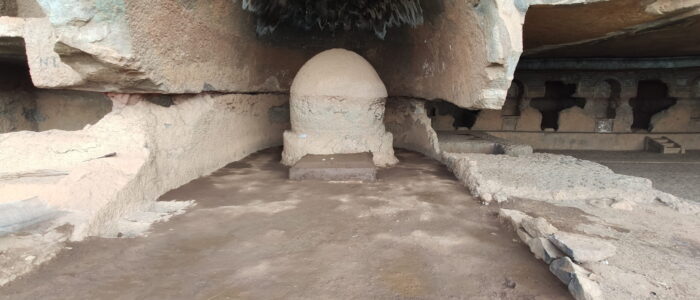
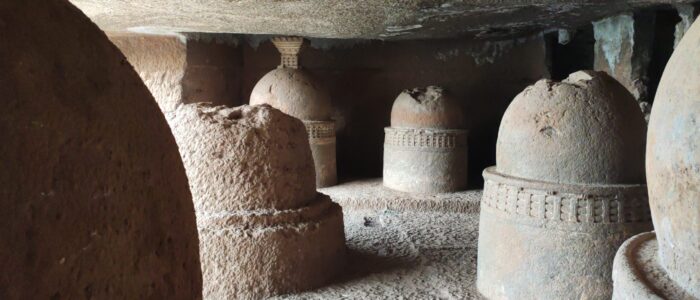
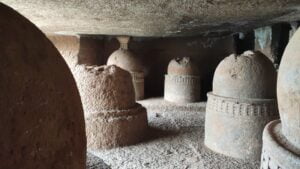
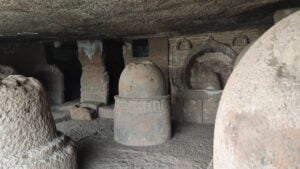
- Cave 3 contains six free-standing rock-cut stupas, ranging in diameter from 6 feet 6 inches to 4 feet, along with four smaller structural stupas made of rough rubble and mud, now mostly ruined.
These caves provide a fascinating glimpse into early Buddhist rock-cut architecture and monastic life in ancient India.
Cave No. 7 – The Most Significant Cave
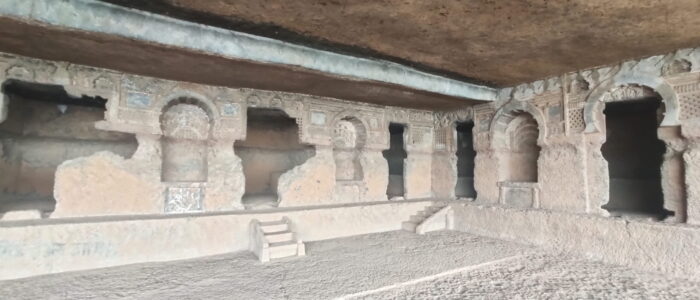
Cave No. 7 is the most important and largest cave in the entire complex. It features chambers along all three sides, each equipped with a stone bench and a small latticed window.
Southern Wall: Contains three chambers
Western (Rear) Wall: Contains four chambers
Northern Wall: Contains one chamber
Additionally, a low bench runs along all three sides of the cave as well as in front of the cell door.
This cave’s design highlights its significance, possibly serving as an important monastic meeting hall or meditation space due to its size and structured layout. The presence of lattice windows suggests careful architectural planning for ventilation and light, while the multiple chambers indicate communal or residential use by Buddhist monks
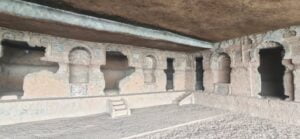
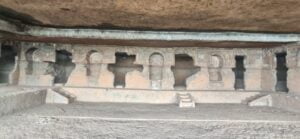
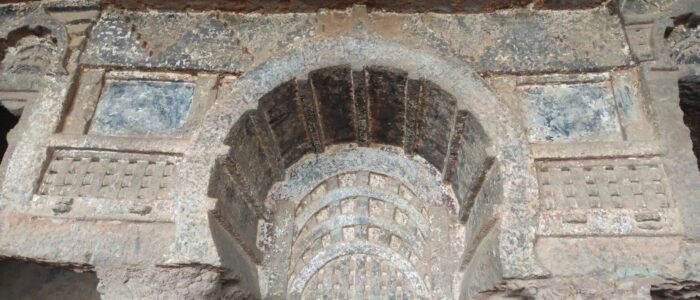
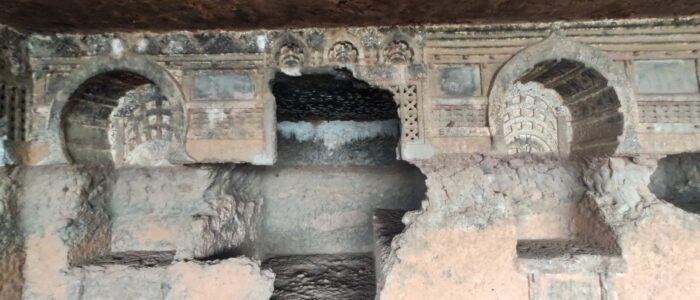
The entire rear wall, along with sections of the northern and southern walls, is exquisitely adorned with carvings of men, women, nagas (serpent deities), animals, and other intricate motifs. Above the doorways, a semi-circular arch (chaitya arch) embellishes each cell entrance, further enhancing the cave’s grandeur.
This Cave have features like:
Sculpted Decorations:
The walls feature relief carvings of human figures, mythological beings, and animals, suggesting a mix of religious and secular themes.
The semi-circular section above the main door (torana) is decorated with elaborate patterns and possibly symbolic imagery.
Chaitya Arches Over Doorways:
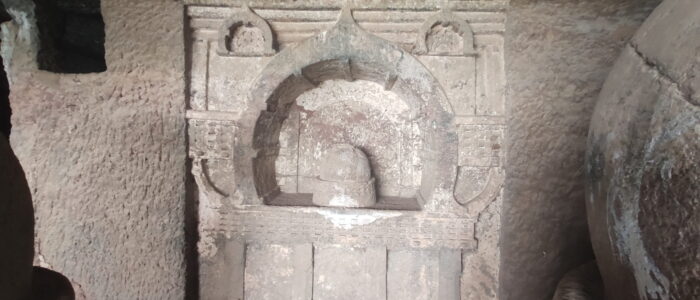
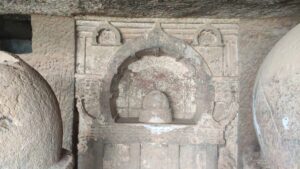
Each cell door is crowned by a chaitya-griha (prayer hall) arch, a signature element of Buddhist rock-cut architecture.
Above one doorway, two small chaitya arches flank a stupa, with two worshippers (upasakas) depicted in between.
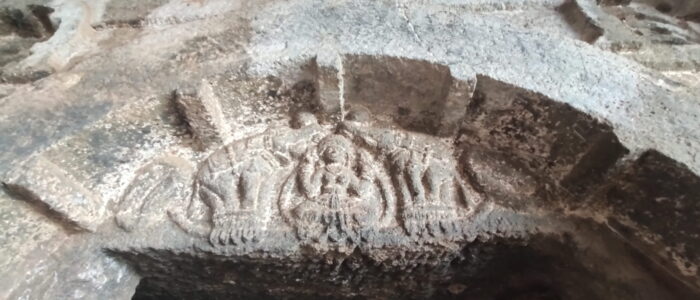
Depiction of Queen Mahamaya (Buddha’s Mother):
- One doorway showcases a larger-than-life sculpture of Mahamaya, standing gracefully on a lotus.
- She is dressed in a long pleated skirt (antariya), holding long-stemmed flowers in each hand.
- Above her, elephants are shown emptying pots of water (symbolizing the divine birth of Siddhartha), each standing on a lotus.
- Another doorway has a smaller replica of Mahamaya, reinforcing the theme of Buddha’s miraculous conception.
- The Mahamaya panel is a rare and early representation of Buddhist narrative art, highlighting the Jataka tales or Buddha’s life events.
The chaitya arches and stupa motifs emphasize the cave’s religious function, likely serving as a meditation or teaching hall for monks.
The mix of decorative and figurative art suggests that the cave was an important cultural and spiritual hub in ancient times.
This cave stands out not just for its size but also for its rich sculptural artistry, making it a masterpiece of early rock-cut Buddhist architecture in India.
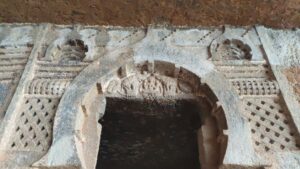
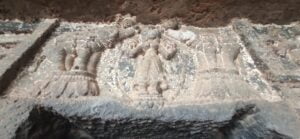
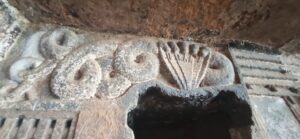
- Western Corner of the Southern Wall:
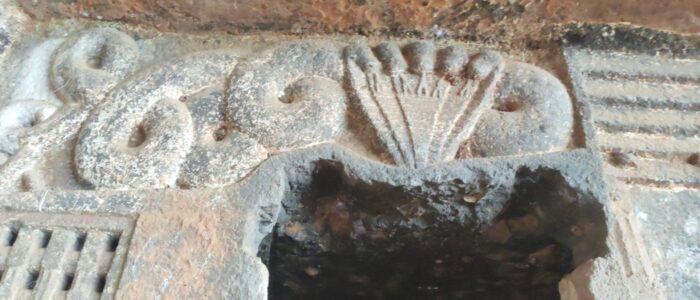
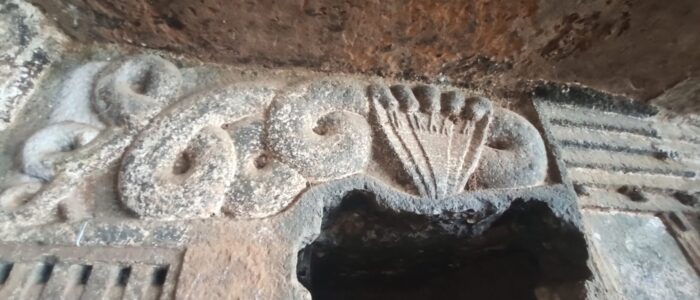
- Features a massive five-hooded serpent (naga) with large coils extending above both the doorway and window.
Each cell has a prepared panel for inscriptions.
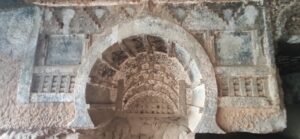
- One panel bears a short inscription:
- “Gaṇaka-putena Kṛtadattena sāva…”
- Translation: “Gift of Kṛtadatta, son of Gaṇaka…”
- Other Doorways:
- Decorated with five-hooded serpents, two bulls (possibly fighting an elephant), and a lion figure.
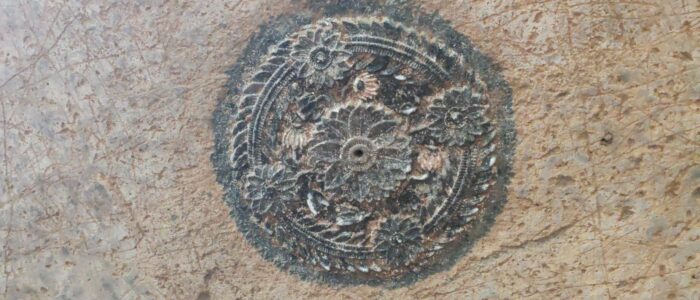
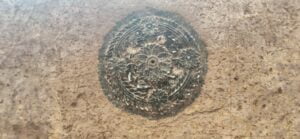
- Ceiling Design:
- A large rosette (3 ft 10 inches in diameter) at the center, consisting of:
- A central lotus surrounded by four smaller lotuses placed symmetrically on a garland of leaves.
- The space between the main lotus and garland is filled with lotus buds.
Cave No. 8 – A Chaitya Cave
Houses a 15-foot-tall free-standing stupa.
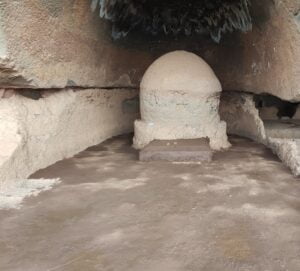
A brief inscription reads:
“Mitasa Sāgarakhitasa… dīna bhātuno thūpa sākhāsasa…”
Translation: “Gift of Mitra, (son of) Sāragarakṣita… this stupa (is) of the brother…”
Cave No. 13 –
A group of two long-chambered cells.
Contains traces of plaster with paintings, mostly in red and deep blue pigments.
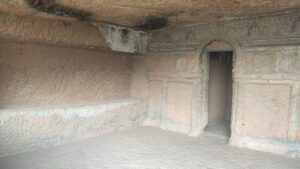
Cave No. 14 –
Similar to Cave 13 but positioned at a higher level, distinguished by a long window.
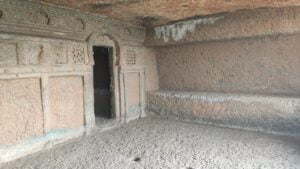
Cave No. 15 –
A neat, small square cave, similar in level to the previous ones.
Architectural Features:
Each doorway is topped by a large arched chaitya motif.
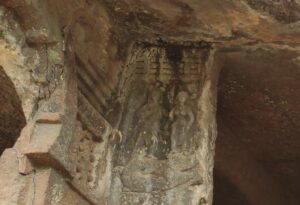
One arch depicts Queen Mahamaya with elephants (similar to Cave 7), while the other is plain.

Unique Sculpture:
Near the last doorway, a bas-relief carving shows two figures standing on a giant fish.
The fish has an open mouth (showing teeth), a curved tail, and fins (one behind the gills, two under the belly).
Cave No. 16 –
An incomplete cave, likely abandoned during excavation.
Cave No. 17 –
A small cave with stone benches.
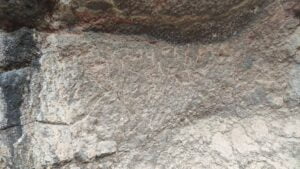
Features a dried-up water cistern and a short inscription:
“Pūjāvatī ye ye sā… koḍī…”
Partial Translation: “Pūjāvatī donated the water cistern…”
The full inscription remains undeciphered; future studies may reveal more.
Cave No. 18 –
Structurally similar to Cave 17, but further details are unclear.

Committed to research & conservation of Buddhist monuments that have a historical heritage of India.
hello
hi
nice…
khup chan…thanale leni war kadhi gelo nahi pan video madhun khup details madhe mahiti milali..va details madhe baghayla milali…khup chaan video….
Thank you very much