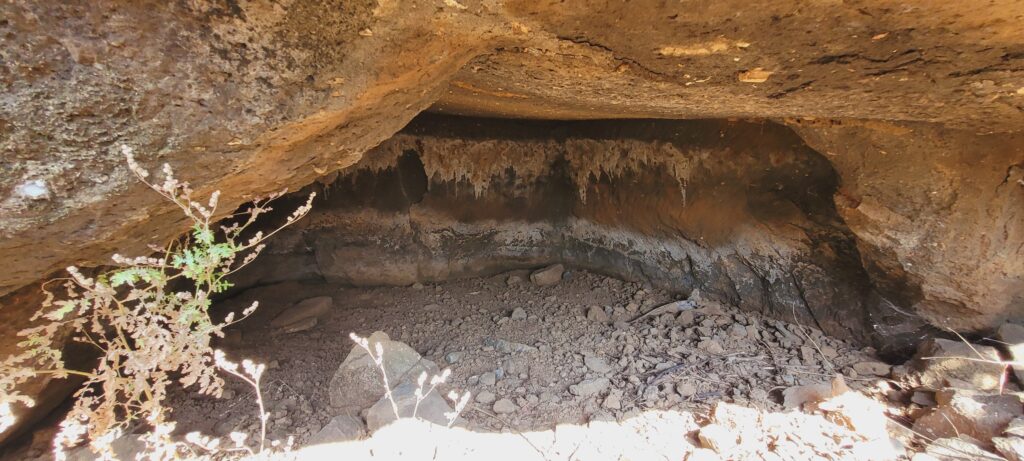
The little-known Varne Caves are located near Palasdhari railway station close to Karjat in Raigad district of Maharashtra. The village of Varne lies about 2.9 km from Palasdhari station on the Karjat–Khopoli road. On the middle slope of a small hill behind the village are a group of ancient rock-cut caves.
During the monsoon season, a large waterfall flows directly over the caves. Because of this continuous water flow, the caves have suffered heavy weathering and damage over time. Many parts are filled with mud and debris.
These caves were probably used by Buddhist monks as residential cells (viharas). The site is also located along an old route that once connected the Bor Ghat region with ancient ports such as Sopara, Kalyan, Chaul and Uran. Travellers, merchants and monks using these routes would have used the caves for rest and shelter.
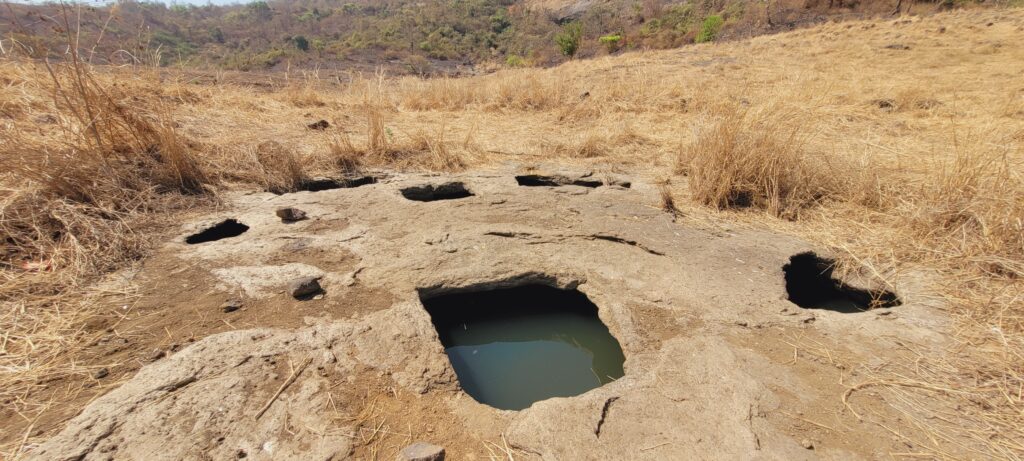
At the base of the hill there is also a unique circular water cistern, which was likely created to supply drinking water to travellers and monks.
Cave 1
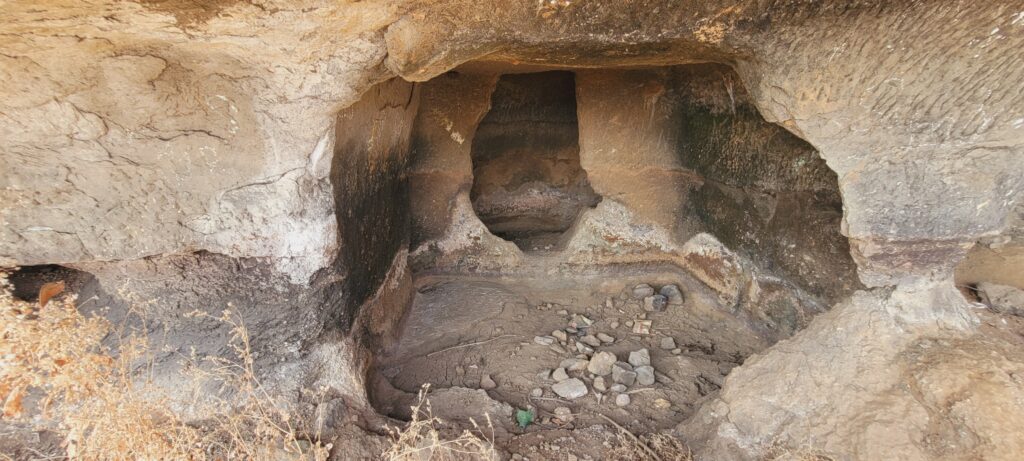
Cave 1 appears to be the largest and comparatively better preserved vihara in the group. The structure has two sections – an outer chamber and an inner living cell.
The outer chamber measures roughly 6 feet by 6 feet, while the inner monk’s cell is about 2–3 feet deep. Inside the cave, broken remains of a stone bench can still be seen. This bench was around 2.5 feet wide and about 2 feet high.
The doorway area where a wooden door may have once been fixed measures around 2.3 feet in width. Because a large amount of mud has accumulated inside the cave, the present visible height from the floor level to the ceiling is about 6.5 feet. The total length of the cave is estimated to be around 9 feet.
Varne Cave - Cave 1
Cave 2
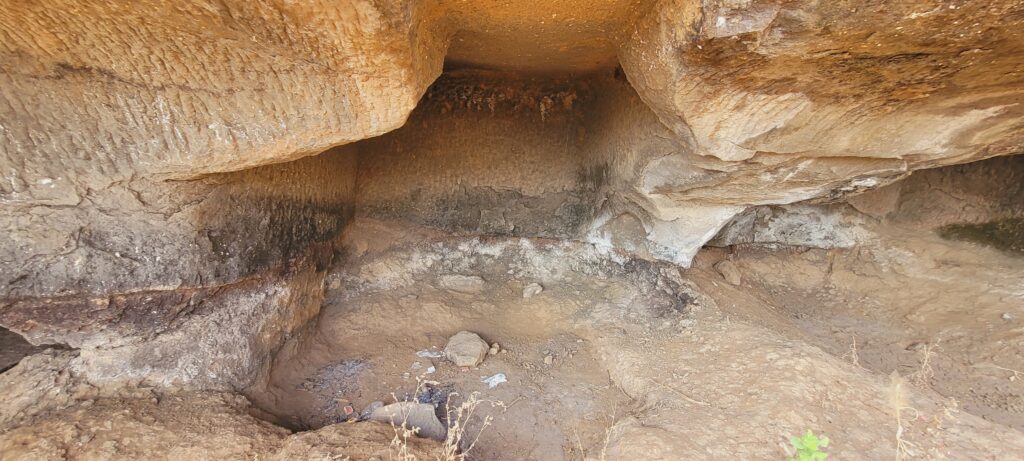
Cave 2 is another small vihara used as a monk’s residence. The chamber measures approximately 6.5 feet by 6.5 feet.
The interior height from the present mud level to the ceiling is around 7 feet. A carved arrangement for fixing a door can be noticed at the entrance, which is about 2.3 feet wide.
Traces of a stone bench can still be identified along the front side of the cave, though the bench itself is almost completely destroyed today.
Varne Cave - Cave 2
Cave 3
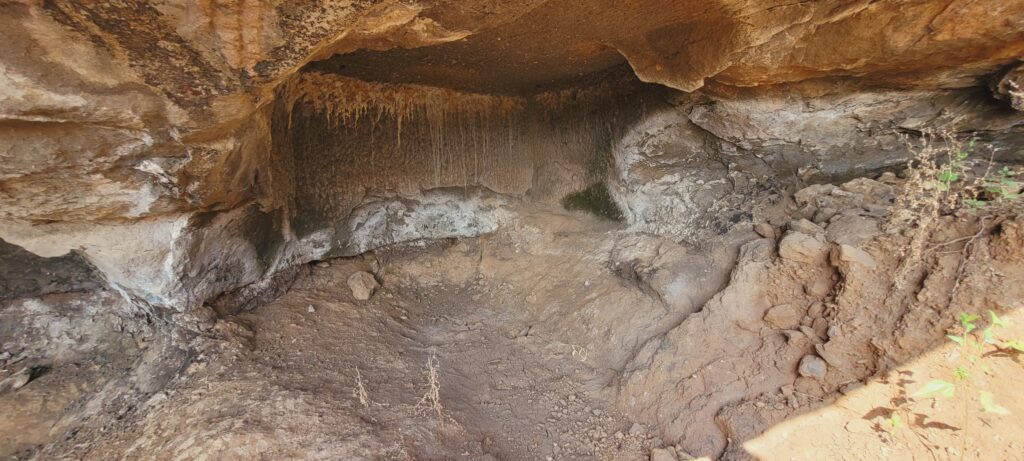
Cave 3 is quite similar in layout and size to Cave 2. It also measures roughly 6.5 feet by 6.5 feet with a height of about 7 feet from the present floor level.
The cave has an entrance designed for installing a door, with an opening width of about 2.3 feet. Like the previous cave, it once contained a stone bench, but today only faint marks of it remain.
Varne Cave - Cave 3
Cave 4 (Uncertain Structure)
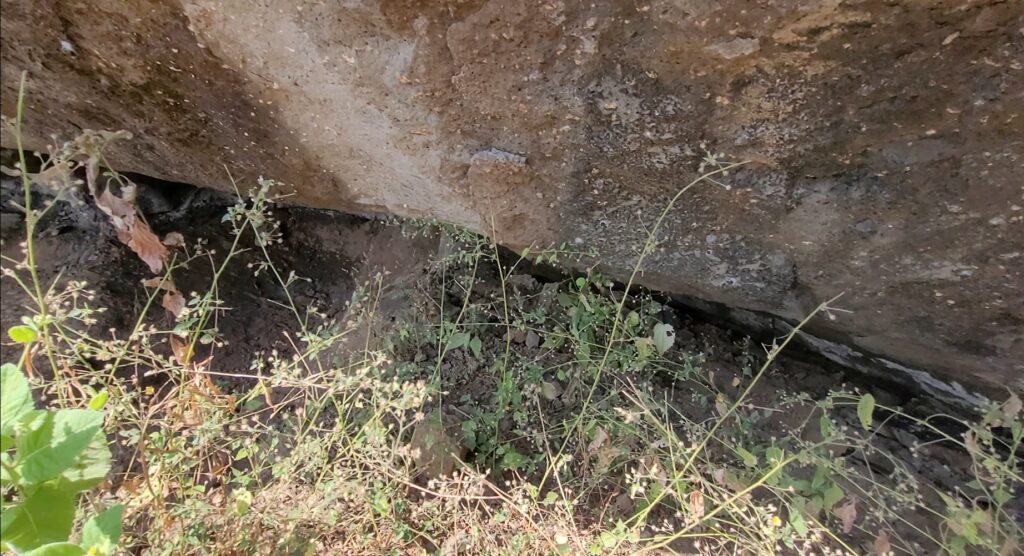
Next to Cave 3 is an unfinished or unclear rock-cut structure. It is not certain whether this space was intended to be a vihara or a water cistern.
The area appears wider than the earlier caves, and the ceiling surface is not fully carved. The floor area is currently covered with a thick layer of mud, stones and debris. Because of this accumulation, it is difficult to determine the original purpose of the structure. Only after clearing the debris could its exact nature be understood.
Varne Cave - Cave 4
Cave 5
A little away from the other caves is another structure that appears to be Cave 5. At first glance it is difficult to identify because the entire interior is filled with mud deposits.
This cave measures roughly 7 feet by 7 feet, but its actual height cannot be measured due to the accumulated soil. Inside the cave, flat carved walls can be seen on three sides.
An entrance structure is visible on the outer side, with a doorway about 2.4 feet wide.
Varne Cave - Cave 5
Circular Water Cistern
At the foot of the caves is a remarkable ancient water cistern. Unlike most rock-cut cisterns which are square or rectangular, this one has a circular design.
The cistern was carved below ground level to protect the water from direct sunlight and evaporation. The upper portion is covered by the natural rock itself, forming a stone roof without the support of pillars.
There are six small square openings made in the rock for drawing water, which is why local people call it the “Six-mouthed water tank.” The cistern is about 5 meters in diameter and around 7 feet deep.
It was most likely constructed to provide water for travellers, traders, monks and pilgrims who used the ancient hill routes in this region.
Varne Cave - Circular Water Cistern
Present Condition
Today the Varne Caves are slowly deteriorating due to natural erosion, flowing water and neglect. Apart from local villagers and a few trekking enthusiasts, this historical site remains largely unknown to tourists and researchers.
Considering its historical importance and connection with ancient trade routes, proper conservation and documentation of the Varne Caves is urgently needed.
How to Reach Varne Caves
The Varne Caves are located near Karjat in Maharashtra, close to the small village of Varne in Raigad District. The caves are situated on a hill behind the village and can be reached with a short walk.
By Train
The nearest railway station is Palasdhari Railway Station, which lies on the Central Line Mumbai Suburban Railway route between Karjat and Khopoli.
From Palasdhari station, the village of Varne is about 2.9 km away. You can reach the village by walking or by local transport. From the village, a short hike up the hill leads to the caves.
By Road
Varne village is located on the Karjat–Khopoli road. From Karjat, the distance is around 6–7 km. Visitors can reach the village by private vehicle, auto-rickshaw, or local transport.
After reaching Varne village, a short uphill walk of around 10–15 minutes will take you to the cave site.